
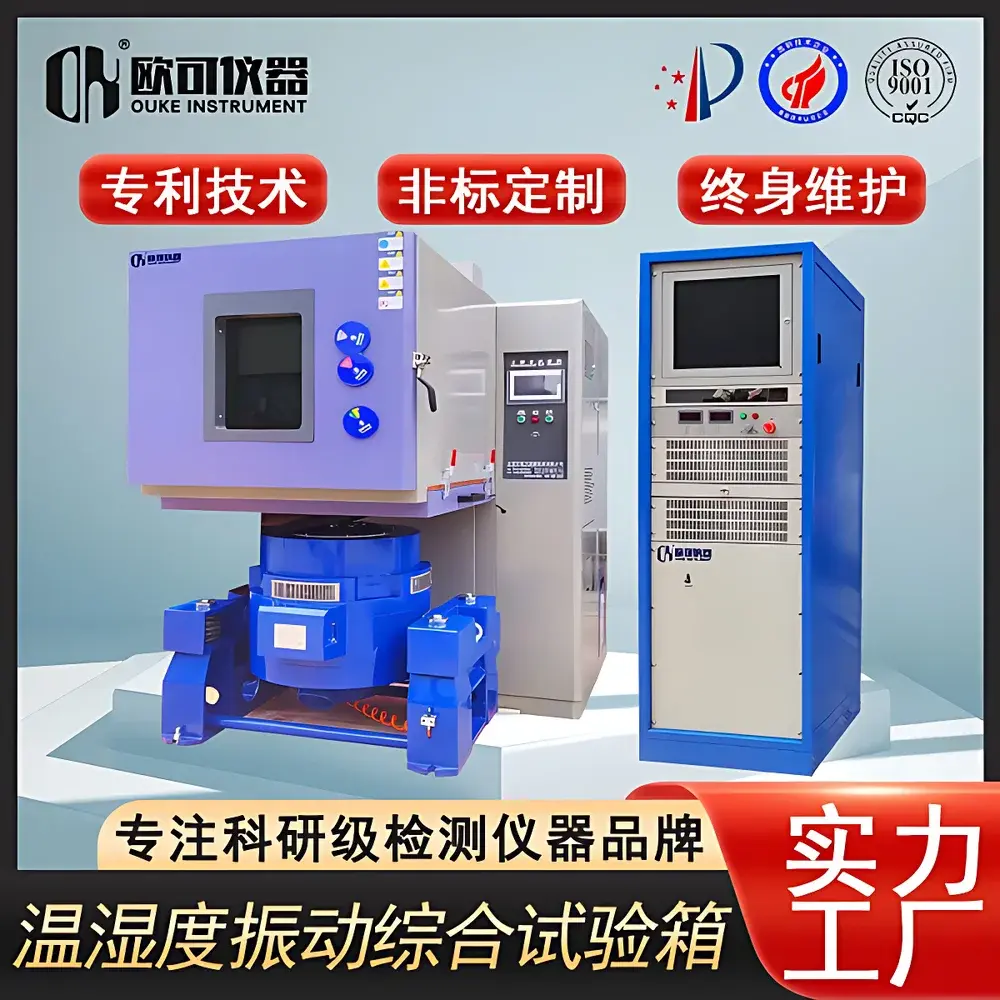
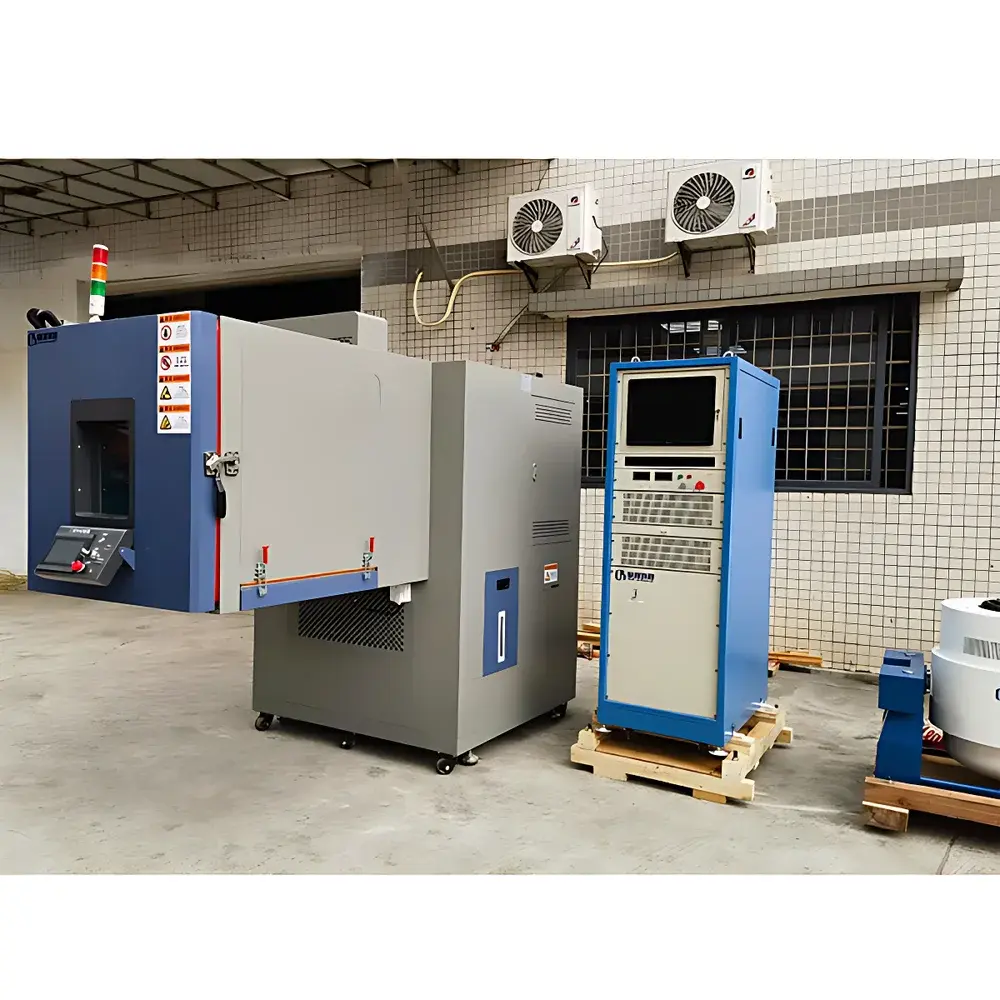
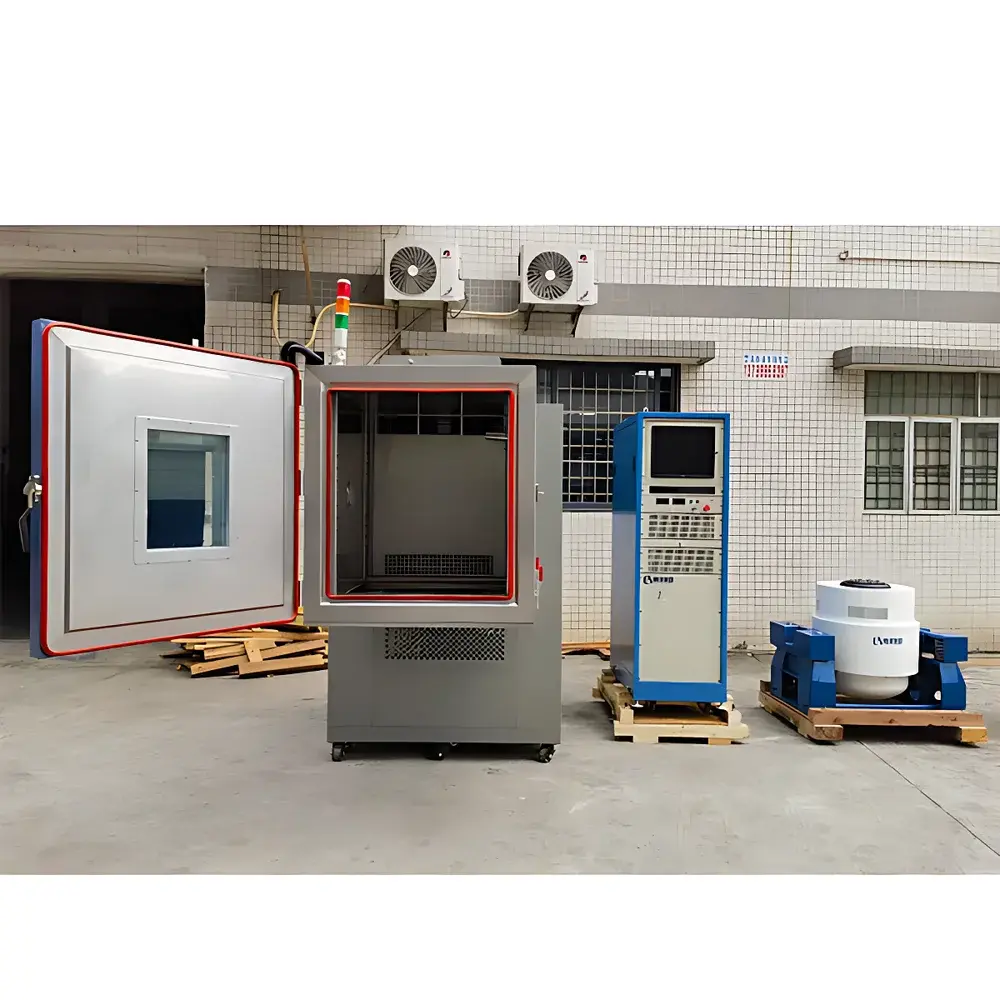
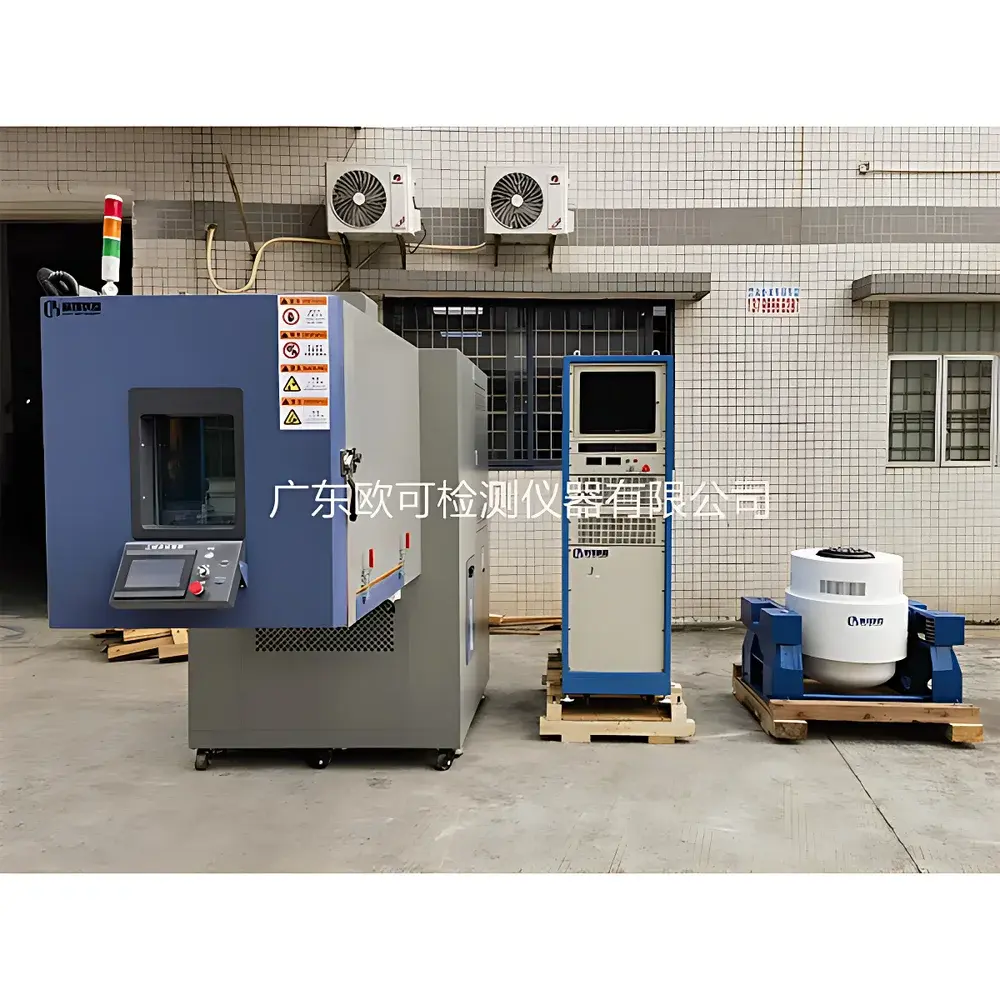
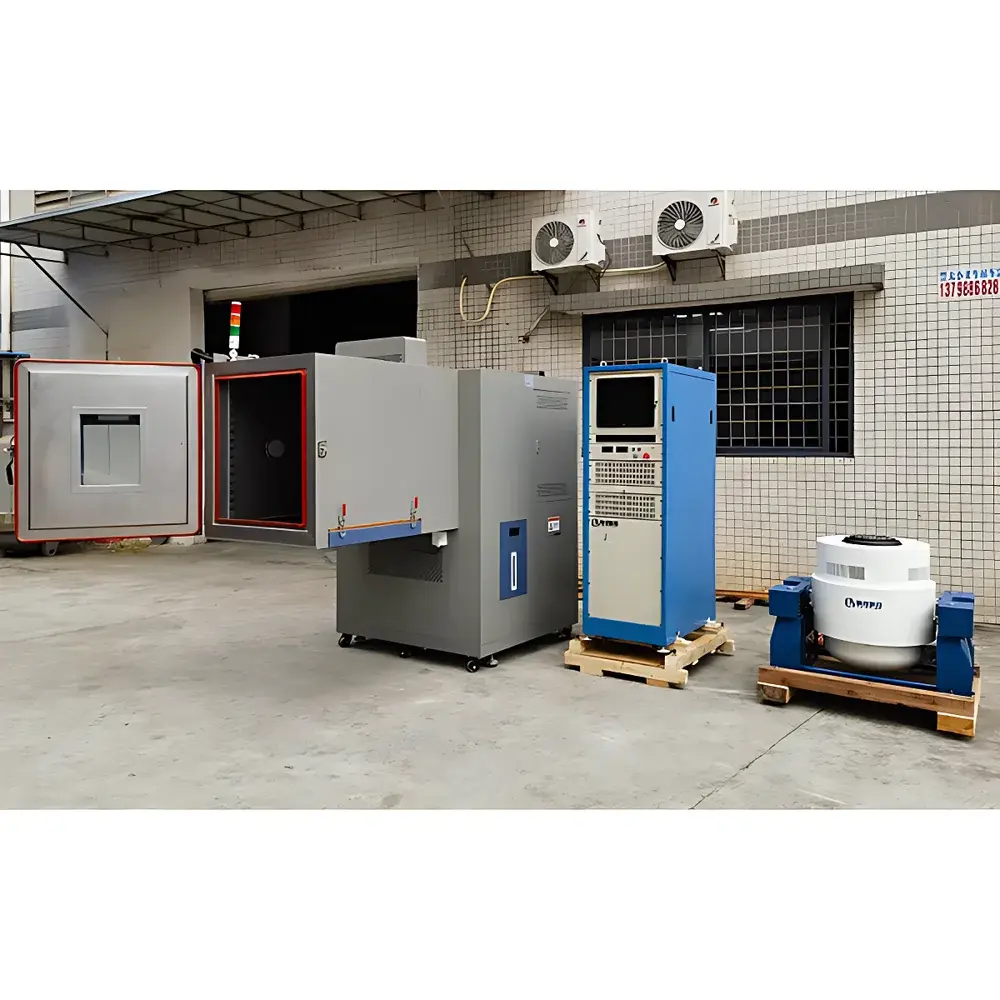
OK Instruments OK-ZTH-512.256 Combined Temperature, Humidity and Vibration Test System
| Brand | OK Instruments |
|---|---|
| Origin | Guangdong, China |
| Manufacturer Type | Direct Manufacturer |
| Product Origin | Domestic (China) |
| Model | OK-ZTH-512.256 |
| Temperature Range | −70 °C to +150 °C |
| Humidity Range | 20–98 %RH (at 20–85 °C) |
| Temperature Ramp Rate | 5 / 10 / 15 °C/min |
| Temperature Uniformity | ≤ ±0.5 °C |
| Standard Load Capacity | 15 kg aluminum mass, 350 W thermal dissipation |
Overview
The OK Instruments OK-ZTH-512.256 Combined Temperature, Humidity and Vibration Test System is an engineered platform for accelerated reliability assessment under multi-stress environmental conditions. It integrates three independent but synchronized physical stress domains—thermal cycling, humidity exposure, and mechanical vibration—within a single, tightly controlled chamber environment. The system operates on the principle of simultaneous stress application: temperature is regulated via resistive heating and dual-stage refrigeration (mechanical compression + optional liquid nitrogen assist), humidity is controlled through steam generation (electric boiler) and ultrasonic atomization combined with cold-surface condensation dehumidification, and vibration is delivered via a high-fidelity electromagnetic shaker using closed-loop acceleration feedback. This triaxial stress coupling enables replication of real-world operational or storage environments where thermal gradients, moisture ingress, and mechanical shock or fatigue co-occur—such as avionics bays during flight, automotive ECUs in engine compartments, or satellite subsystems during launch and orbital insertion.
Key Features
- Triple-domain synchronization: Independent yet time-aligned control of temperature, relative humidity, and vibration profiles within a single test sequence.
- Electromagnetic shaker subsystem: Air-cooled moving-coil actuator with integrated accelerometer feedback loop; supports sine, random, and transient vibration waveforms per ISO 10816 and MIL-STD-810H Annex G.
- High-stability climate chamber: Dual-refrigeration circuit design ensures rapid cooling to −70 °C while maintaining humidity accuracy across the full 20–98 %RH range at temperatures between 20 °C and 85 °C.
- Precision thermal ramping: Programmable heating/cooling rates of 5, 10, or 15 °C/min—enabling accelerated thermal cycling per JEDEC JESD22-A104 and IEC 60068-2-14.
- Thermal uniformity compliance: Chamber temperature deviation ≤ ±0.5 °C at steady state, verified per IEC 60068-3-5 and ASTM E145.
- Structural integration: Rigid base frame with vibration-isolated mounting interface; accommodates standard 15 kg aluminum reference load (350 W heat dissipation) without thermal drift or resonance interference.
Sample Compatibility & Compliance
The OK-ZTH-512.256 is designed for test specimens up to 512 L internal chamber volume (W×D×H: 800 × 800 × 800 mm) and nominal payload capacity of 15 kg. It supports standard mounting fixtures (e.g., ISO 5343-compliant adapters) and accommodates PCB assemblies, electronic enclosures, sensors, and small mechanical subassemblies. All control logic and data logging comply with GLP and GMP documentation requirements, including audit-trail-enabled user access logs, parameter change history, and electronic signature support. The system meets essential safety and EMC standards: IEC 61000-6-2 (immunity), IEC 61000-6-4 (emissions), and UL 61010-1. Environmental test protocols executed on this platform are traceable to ISO 16750-4 (road vehicles), RTCA DO-160G Section 25 (avionics), and MIL-STD-810H Method 514.7 (vibration) and Method 502.7 (temperature/humidity).
Software & Data Management
The embedded control software provides a deterministic real-time operating environment with deterministic scheduling of temperature, humidity, and vibration setpoints. Users define hierarchical test profiles—including dwell, ramp, and step segments—with interdependent constraints (e.g., maximum allowable humidity at low temperature). All sensor inputs (PT100 temperature probes, capacitive RH sensors, IEPE accelerometers) are sampled at ≥1 kHz and logged with microsecond-level timestamp resolution. Raw data export is supported in CSV and TDMS formats; post-processing tools include FFT spectral analysis, PSD calculation, and dew-point tracking. The software architecture supports 21 CFR Part 11 compliance through role-based access control, electronic signatures, and immutable audit trails for all configuration changes and test executions.
Applications
This system is deployed in qualification labs for product validation across aerospace, defense, automotive Tier-1 suppliers, and industrial electronics manufacturing. Typical use cases include: (1) HALT/HASS pre-screening of embedded controllers under combined thermal shock and broadband vibration; (2) Corrosion susceptibility testing of conformally coated PCBs exposed to cyclic humidity at elevated temperature while subjected to resonant-frequency sweeps; (3) Validation of hermetic seal integrity in MEMS packages via humidity soak followed by mechanical shock; (4) Lifetime modeling of battery management systems under thermal-vibrational stress coupling per UN 38.3 Section 38.3.3. The OK-ZTH-512.256 enables identification of latent failure mechanisms—such as solder joint fatigue, polymer creep, or condensation-induced short circuits—that remain undetected in single-stress tests.
FAQ
What is the maximum vibration frequency range supported by the OK-ZTH-512.256?
The electromagnetic shaker delivers frequencies from 1 Hz to 3000 Hz, with programmable acceleration limits up to 100 g peak and displacement limits up to ±25.4 mm peak-to-peak, depending on payload mass and profile type.
Can the system perform humidity-controlled vibration tests below 0 °C?
Yes—humidity control is active down to −40 °C (20–85 %RH range limited to ≥20 °C ambient); for sub-zero operation, the system defaults to dry-air purge mode to prevent frost formation on sensors and shaker components.
Is remote monitoring and control available?
Standard Ethernet (TCP/IP) and optional RS-485 interfaces enable integration into facility-wide test management networks; secure web-based remote supervision is available via optional OK-Link Server module.
Does the system support third-party test standards libraries?
Yes—the software includes built-in templates for MIL-STD-810H, IEC 60068-2, ISO 16750, and JEDEC JESD22, with editable parameters to match customer-specific qualification plans.
What maintenance intervals are recommended for long-term calibration stability?
Annual verification of temperature/humidity sensors against NIST-traceable references and biannual shaker force calibration using certified load cells are recommended per ISO/IEC 17025 guidelines.



