
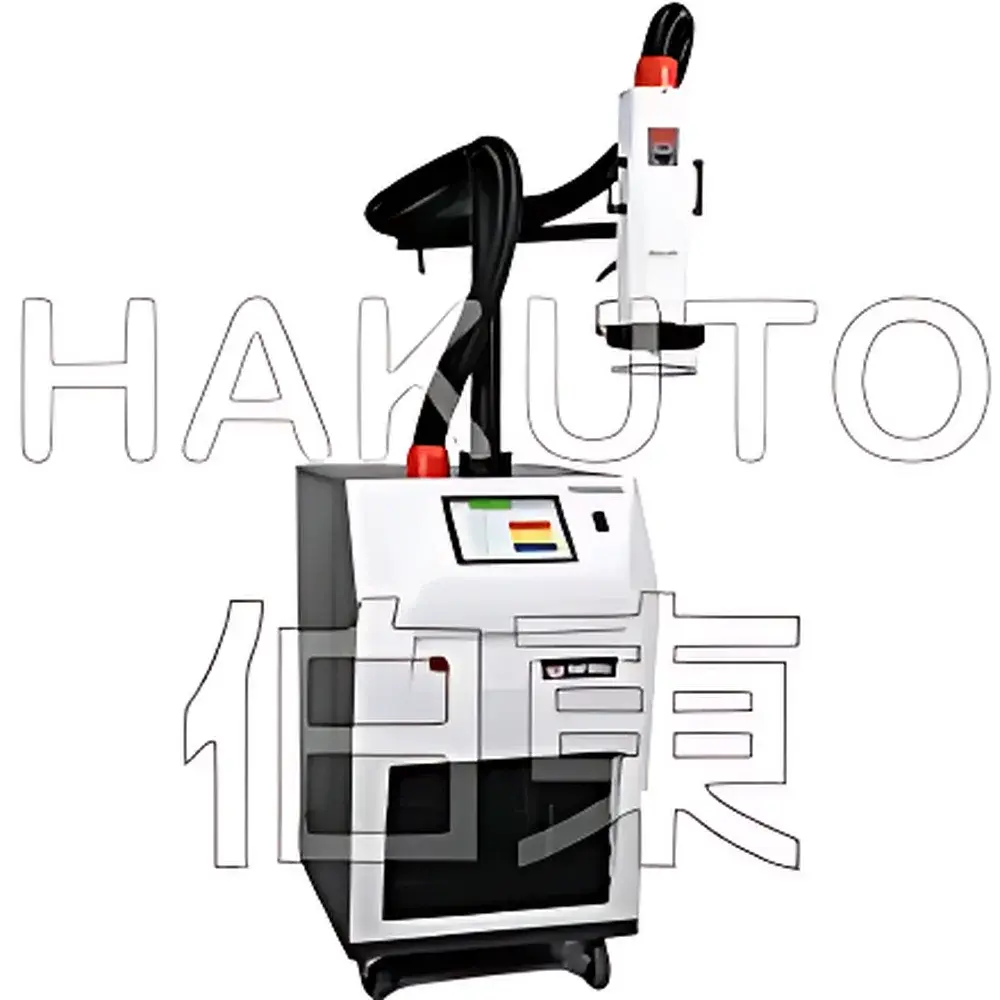
inTEST ATS-710E Thermal Shock Test System for Power Semiconductor Devices
| Brand | inTEST–Temptronic |
|---|---|
| Origin | USA |
| Model | ATS-710E |
| High-Temperature Range | 0 to 225 °C |
| Low-Temperature Range | −80 to 0 °C |
| Thermal Shock Range | −80 to +225 °C |
| Temperature Stability | ±1 °C |
| Heating Rate | ~10 s from −55 °C to +125 °C |
| Cooling Rate | ~10 s from +125 °C to −55 °C |
Overview
The inTEST ATS-710E Thermal Shock Test System is an engineered solution for high-fidelity, rapid thermal cycling of power semiconductor devices under controlled environmental conditions. Designed specifically for reliability validation and parametric characterization of high-power electronic components—including IGBTs, MOSFETs, RF transistors, GaN/SiC devices, and high-brightness LEDs—the system employs a closed-loop, forced-air thermofluid delivery architecture to achieve precise, repeatable temperature transitions between extreme thermal endpoints. Unlike conventional chamber-based thermal shock systems, the ATS-710E utilizes dynamic air-stream modulation and optimized thermal mass management to deliver sub-15-second transitions across −80 °C to +225 °C ranges—enabling accelerated life testing (ALT), failure mode analysis (FMA), and JEDEC JESD22-A104 compliant thermal shock qualification per industry standards.
Key Features
- High-speed thermal shock capability: Achieves ≤10-second transitions between −55 °C and +125 °C with traceable ramp linearity and minimal overshoot
- Stable temperature control: Maintains ±1 °C uniformity across the DUT interface surface under steady-state and transient conditions
- Integrated DUT interface design: Compatible with Keysight B1505A, B1506A, and B150XA parameter analyzers via standardized thermal coupling interfaces and IEEE-488/GPIB/USB/LAN communication protocols
- Dual-mode operation: Supports both open-test-head configuration (for direct probe station integration) and enclosed test hood mode (for condensation-sensitive or airborne-contamination-prone devices)
- Frost-free operational envelope: Active dew-point suppression and internal purge gas management eliminate ice formation during low-temperature cycles
- Energy-optimized thermal recovery: Adaptive power modulation reduces average energy consumption by up to 35% during extended test sequences without compromising cycle fidelity
Sample Compatibility & Compliance
The ATS-710E accommodates a broad range of package formats—including TO-220, TO-247, D2PAK, LFPAK, PQFN, and bare-die configurations—via configurable thermal interface plates and vacuum-assisted DUT retention. Its thermal control architecture meets critical requirements for automotive AEC-Q101 qualification, MIL-STD-883 Method 1010, and IEC 60749-25 thermal shock testing. The system supports full audit trail generation and user-access-level authentication in accordance with FDA 21 CFR Part 11 and ISO/IEC 17025 laboratory accreditation frameworks when operated with validated software configurations. All thermal profiles are fully scriptable and exportable in CSV/JSON format for third-party statistical process control (SPC) integration.
Software & Data Management
Control and monitoring are executed via inTEST’s TempTrak™ software suite—designed for seamless interoperability with Keysight PathWave Device Modeling and IC-CAP environments. The platform provides real-time temperature logging at 100 Hz sampling resolution, synchronized timestamping with instrument trigger signals, and automated correlation of thermal state with electrical measurement data. Full GLP/GMP-compliant reporting includes operator ID, calibration status, environmental ambient logs, and digital signature-enabled test certificate generation. Remote operation is supported over secure TLS 1.2 connections, enabling centralized fleet management across multi-site engineering labs. All firmware updates are digitally signed and version-locked to ensure regulatory traceability.
Applications
- Parametric drift analysis of threshold voltage (Vth), on-resistance (RDS(on)), and gate charge (Qg) across wide thermal spans
- Dynamic thermal impedance (Zth) mapping using structure function analysis in conjunction with T3Ster-compatible measurement workflows
- Thermal runaway onset detection in high-current switching applications
- Package-level thermo-mechanical stress evaluation for solder joint and die-attach integrity assessment
- Qualification of wide-bandgap devices (SiC, GaN) under JEDEC JEP180 accelerated thermal cycling conditions
- Pre-screening of production lots prior to HAST or uHAST reliability stress testing
FAQ
What is the maximum thermal shock ΔT rate supported by the ATS-710E?
The system achieves ≥20 °C/s average ramp rates between −55 °C and +125 °C under standard operating conditions, verified per ASTM E2269-21 Annex A2 calibration methodology.
Can the ATS-710E be integrated into an automated handler environment?
Yes—it supports SECS/GEM protocol integration via optional RS-232/RS-485 serial gateway modules and provides discrete I/O triggers for handler synchronization.
Is NIST-traceable calibration documentation available?
Each unit ships with a factory-issued calibration certificate traceable to NIST Standard Reference Materials (SRMs), including point-to-point verification at −80 °C, 25 °C, and +225 °C.
Does the system support liquid nitrogen or CO₂ assist for ultra-low temperature extension?
No—the ATS-710E is a compressor-based, closed-cycle refrigeration system; it does not support cryogenic augmentation. For sub-−80 °C requirements, inTEST recommends the ATS-720 series with cascade refrigeration.
How is thermal uniformity validated across the DUT interface surface?
Uniformity is characterized using a 9-point thermocouple grid per IEC 60068-3-5, with spatial deviation maintained within ±0.8 °C at all setpoints in the operational range.



