
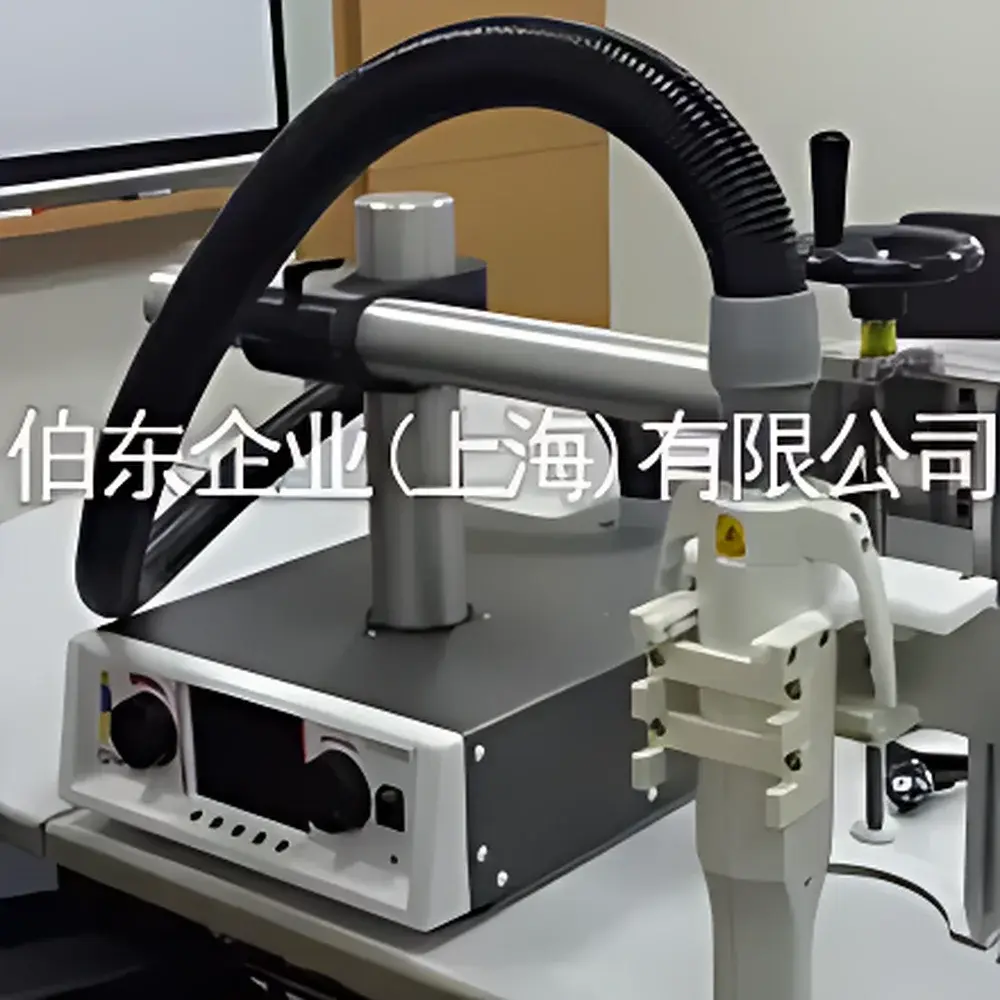
inTEST Temptronic ATS-505 ThermoStream Rapid Thermal Test System for IC Card and Semiconductor Device Environmental Testing
| Brand | inTEST–Temptronic |
|---|---|
| Origin | USA |
| Model | ATS-505 |
| Temperature Range | –20 °C to +225 °C |
| Ramp Rate | Up to 18 °C/s (heating/cooling) |
| Temperature Accuracy | ±1 °C |
| Control Interface | Rotary Knob Panel |
| Cooling Method | Compressed Dry Air + Integrated Refrigeration Unit |
| Heating Method | Resistive Heated Air Stream |
| Safety Protection | Adjustable Over-Temperature Cutoff (factory default: +230 °C) |
| Form Factor | Benchtop |
Overview
The inTEST Temptronic ATS-505 ThermoStream Rapid Thermal Test System is an engineered benchtop thermal test platform designed specifically for high-fidelity, real-time temperature conditioning of integrated circuits (ICs), smart cards, bare die, packaged devices, and PCB assemblies during functional electrical testing. It operates on a forced-air convective principle—delivering precisely controlled, dry, filtered air streams directly onto the device-under-test (DUT) via a thermally optimized nozzle or thermal hood assembly. Unlike conventional environmental chambers, the ATS-505 eliminates thermal mass lag by decoupling heating and cooling subsystems: compressed dry air is first chilled through an integrated refrigeration module, then rapidly heated via a high-response resistive heater before delivery. This architecture enables bidirectional thermal transients up to 18 °C per second—critical for accelerated thermal cycling, cold/hot shock validation, burn-in screening, and parametric characterization across JEDEC JESD22-A104 (Thermal Cycling), JESD22-A106 (Highly Accelerated Temperature and Humidity Stress Test), and MIL-STD-883H Method 1010.8 (Temperature Cycling). Its compact footprint and open DUT access support integration into automated test equipment (ATE) environments, probe stations, and wafer-level test setups.
Key Features
- Benchtop form factor with minimal floor space requirement—ideal for lab-scale qualification and production line deployment
- Wide operational temperature range from –20 °C to +225 °C, covering extended commercial, industrial, and automotive-grade specifications
- Dynamic thermal control with ±1 °C accuracy and repeatability validated per ASTM E220–2017 (Calibration of Thermocouples)
- Dry air delivery system ensures low dew point (< –40 °C) and eliminates condensation risk during sub-zero transitions
- Adjustable over-temperature safety cutoff with user-configurable limits—default factory setting at +230 °C
- Intuitive rotary-knob interface for manual operation; optional analog/digital I/O for ATE synchronization and remote scripting
- Modular thermal hood design accommodates variable DUT geometries—from contactless card-level testing to direct-die thermal mapping
Sample Compatibility & Compliance
The ATS-505 supports non-contact thermal conditioning of IC cards (ISO/IEC 7816, EMV-compliant), QFN, BGA, LGA, and flip-chip packages without mechanical clamping or vacuum coupling. Its airflow-based methodology avoids thermal stress from conductive fixtures and enables rapid reconfiguration between test configurations. The system complies with key industry requirements including ISO/IEC 17025 for laboratory competence, supports GLP/GMP-aligned audit trails when integrated with compliant data acquisition software, and meets electromagnetic compatibility (EMC) standards per FCC Part 15 Class A and CE EN 61326-1. While not certified as a standalone medical device, its thermal performance aligns with IEC 60601-1 essential performance criteria for temperature-controlled diagnostic electronics validation.
Software & Data Management
The ATS-505 operates in standalone mode via front-panel controls, but also supports external command via 0–10 V analog input or TTL-triggered digital signals for synchronized thermal profiling within ATE workflows. When paired with inTEST’s ThermoStream Control Suite (optional), users gain access to programmable ramp/soak sequences, real-time temperature logging (10 Hz sampling), CSV export, and timestamped event tagging. All thermal profiles are traceable and exportable for FDA 21 CFR Part 11 compliance when deployed in regulated environments—supporting electronic signatures, user access levels, and immutable audit logs for qualification reports under ISO 9001 or IATF 16949.
Applications
- Pre-production environmental stress screening (ESS) of contactless smart cards and secure microcontrollers
- Wafer-level thermal mapping for 300 mm process qualification—used by semiconductor manufacturers to correlate thermal gradients with parametric yield loss
- Failure analysis (FA) support: localized thermal excitation to isolate thermally sensitive defects (e.g., gate oxide leakage, solder joint fatigue)
- JEDEC-compliant thermal cycling validation for automotive ICs operating in AEC-Q100 Grade 1 (–40 °C to +125 °C) and Grade 0 (–40 °C to +150 °C)
- Accelerated life testing (ALT) of embedded NFC antennas and RF front-end modules under dynamic thermal loads
- Qualification of MEMS sensors and power management ICs subjected to rapid ambient shifts in portable electronics
FAQ
What distinguishes the ATS-505 from traditional thermal chambers?
It uses direct forced-air convection instead of chamber-based ambient conditioning—eliminating thermal inertia and enabling sub-second response times.
Can the ATS-505 be integrated with automatic test equipment (ATE)?
Yes—via analog voltage input (0–10 V), TTL triggers, or optional RS-232/Ethernet interfaces for full script-driven thermal sequencing.
Is humidity control available on this model?
No—the ATS-505 delivers only dry air; for combined temp/humidity testing, inTEST recommends the ThermoStream ATS-710 or environmental chamber-integrated solutions.
Does the system require external chiller or compressed air supply?
It requires a clean, oil-free, desiccated compressed air source (minimum 80 psi, < –40 °C dew point); no external chiller is needed—the refrigeration module is fully self-contained.
How is temperature uniformity verified across the DUT surface?
Uniformity is validated using calibrated thermal imaging and micro-thermocouple arrays per ASTM E1256–21; typical spatial deviation is ≤ ±1.5 °C over a 25 mm × 25 mm area at steady state.



