
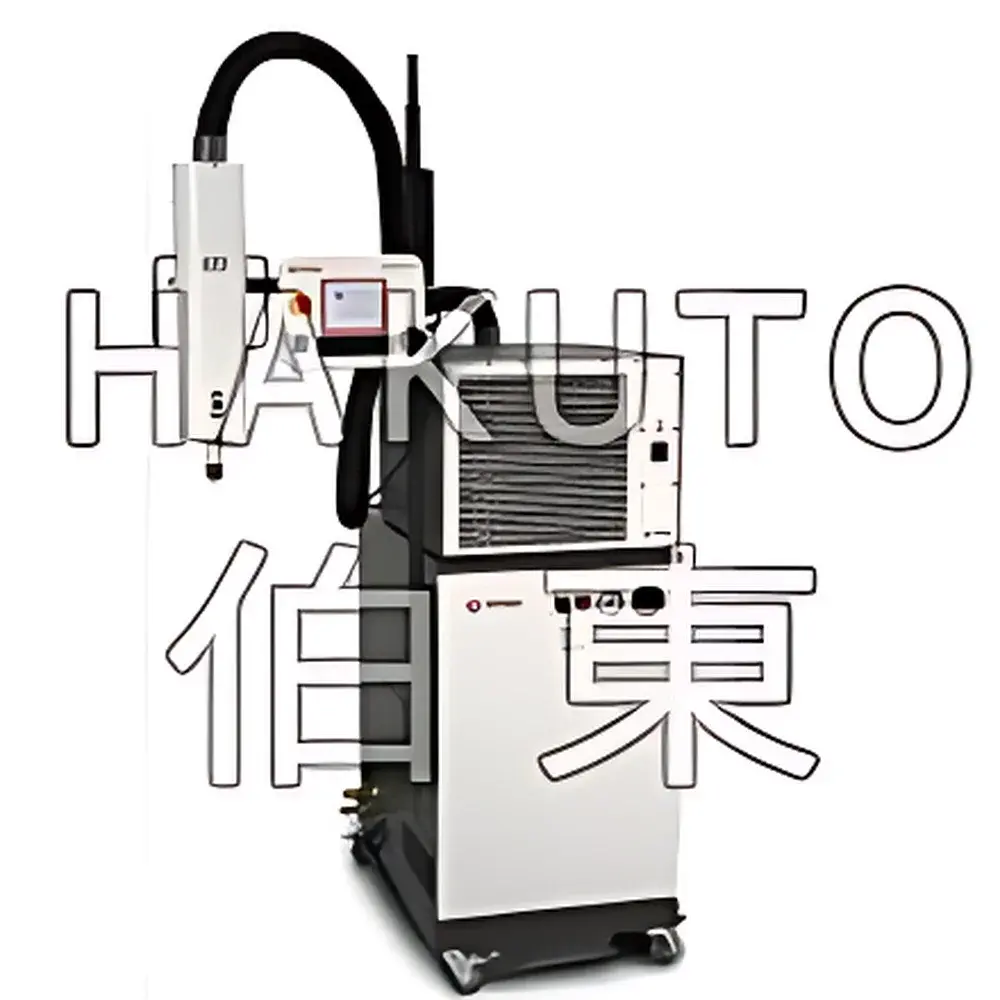
inTEST Temptronic ATS-535 Thermal Shock Test System with Integrated Air Compressor
| Brand | inTEST-Temptronic |
|---|---|
| Origin | USA |
| Model | ATS-535 |
| High Temperature Range | +225°C |
| Low Temperature Range | -60°C |
| Thermal Shock Range | -60°C to +225°C |
| Temperature Stability | ±0.1°C |
| Ramp Rate (Heating) | -40°C to +125°C in <12 s |
| Ramp Rate (Cooling) | +125°C to -40°C in <40 s |
| Airflow Output | 5 SCFM (2.4 L/s) |
| Temperature Resolution | ±0.1°C |
| Temperature Accuracy | ±1.0°C (NIST-traceable calibration) |
| DUT Sensor Support | Type T & K Thermocouples |
| Refrigerant | CFC-free, non-toxic, non-flammable |
| Power Supply (Chiller) | 220 VAC ±10%, 50/60 Hz, 16 A |
| Power Supply (Compressor) | 220 VAC ±10%, 50/60 Hz, 30 A |
| Dimensions (H×W×D) | 194.7 × 61.7 × 108.6 cm |
| Weight | 249.5 kg |
| Noise Level | <70 dBA |
| Compliance | CE, RoHS, FDA 21 CFR Part 11-ready data logging |
Overview
The inTEST Temptronic ATS-535 Thermal Shock Test System is an engineered solution for high-fidelity, rapid thermal cycling of electronic components and semiconductor devices under controlled environmental conditions. Unlike conventional thermal shock chambers requiring external compressed air infrastructure, the ATS-535 integrates a high-efficiency, oil-free air compressor within its chassis—making it the only commercially available thermal stream system with fully self-contained pneumatic operation. It operates on the principle of directed convective heat transfer: precisely conditioned air is delivered at high velocity and low turbulence directly onto the device under test (DUT), enabling sub-second thermal response times and exceptional temperature uniformity across small-footprint test zones. This architecture eliminates dependency on facility-supplied compressed air, mitigates installation complexity, and ensures compliance with stringent acoustic requirements (<70 dBA) in office-based R&D labs, cleanrooms, and qualification testing suites.
Key Features
- Fully integrated, maintenance-optimized air compressor—no external air supply, piping, or pressure regulation required
- Rapid thermal transition: achieves -40°C → +125°C in under 12 seconds; +125°C → -40°C in under 40 seconds
- Wide operational envelope: stable thermal shock range from -60°C to +225°C with ±0.1°C stability and ±1.0°C NIST-traceable accuracy
- DUT-centric temperature control algorithm—directly regulates based on real-time thermocouple feedback (Type T or K) placed on the device surface
- Energy-efficient dual-mode operation: refrigeration system enters standby during heating phases to reduce power draw
- Intuitive rotary control interface with programmable upper/lower thermal limits and overtemperature safety cutoff (factory-set at +225°C)
- CFC-free, environmentally compliant refrigerant with zero ozone depletion potential (ODP = 0) and low global warming potential (GWP)
- CE-marked, RoHS-compliant, and designed for integration into GLP/GMP environments with audit-ready data logging capabilities
Sample Compatibility & Compliance
The ATS-535 is optimized for thermal stress validation of packaged ICs, bare die, PCBAs, MEMS sensors, optoelectronic modules, and other miniaturized electronic assemblies. Its localized airflow delivery—via interchangeable thermal shrouds—creates a confined thermal environment that minimizes ambient moisture ingress and prevents condensation on sensitive DUT surfaces during low-temperature transitions. The system meets key international standards for reliability testing, including JEDEC JESD22-A104 (Temperature Cycling), MIL-STD-883 Method 1010 (Thermal Shock), and IEC 60068-2-14. All temperature measurements are traceable to NIST standards, and the instrument supports full calibration documentation per ISO/IEC 17025 requirements. Its electrical architecture complies with EN 61000-6-3 (EMC emission limits) and EN 61000-6-2 (immunity), ensuring stable operation in shared laboratory infrastructure.
Software & Data Management
The ATS-535 provides native instrumentation-level interfaces—including IEEE-488 (GPIB) and RS-232—for seamless integration into automated test environments. LabVIEW™ drivers are supplied for custom sequence development, while optional PC-based software enables full test protocol definition, real-time DUT temperature monitoring, and timestamped data export in CSV or XML formats. All logged thermal profiles include metadata such as operator ID, test step, sensor channel, and environmental timestamps—supporting 21 CFR Part 11 compliance when deployed with validated user access controls and electronic signature workflows. Data integrity is preserved via internal non-volatile memory buffering, ensuring no loss during brief network interruptions or host system reboots.
Applications
- Qualification testing of automotive-grade ICs per AEC-Q100 stress profiles
- Failure analysis (FA) support through accelerated thermal cycling to induce latent defects
- Process validation for wafer-level packaging and flip-chip reflow processes
- Thermal interface material (TIM) performance evaluation under dynamic load conditions
- Reliability screening of 5G RF front-end modules exposed to wide ambient excursions
- Pre-compliance thermal shock verification prior to third-party certification (e.g., UL, TÜV)
- Research-grade thermal modeling validation using empirical boundary condition data
FAQ
Does the ATS-535 require liquid nitrogen or CO₂ for cooling?
No. It employs a closed-loop mechanical refrigeration system with an environmentally safe, CFC-free refrigerant—eliminating consumables, logistical constraints, and safety hazards associated with cryogenic media.
Can the system operate continuously in a standard office environment?
Yes. With noise output below 70 dBA and no external air or exhaust ducting, it is certified for deployment in Class A office spaces, university labs, and ISO Class 7 cleanrooms without HVAC modifications.
How is DUT temperature measured and controlled?
Via direct-contact thermocouples (Type T or K) mounted on the DUT surface; proprietary PID-based control logic uses this feedback—not chamber air temperature—to regulate thermal output in real time.
Is remote monitoring and control supported?
Yes. Standard GPIB and RS-232 interfaces enable integration with SCADA systems, test sequencers, and enterprise MES platforms. Optional Ethernet module adds TCP/IP and web-based status visualization.
What maintenance is required for the integrated air compressor?
The oil-free, brushless DC compressor is rated for >20,000 hours of operation with no scheduled lubrication. Filter replacement is recommended annually under continuous use, per inTEST’s preventive maintenance schedule.



