
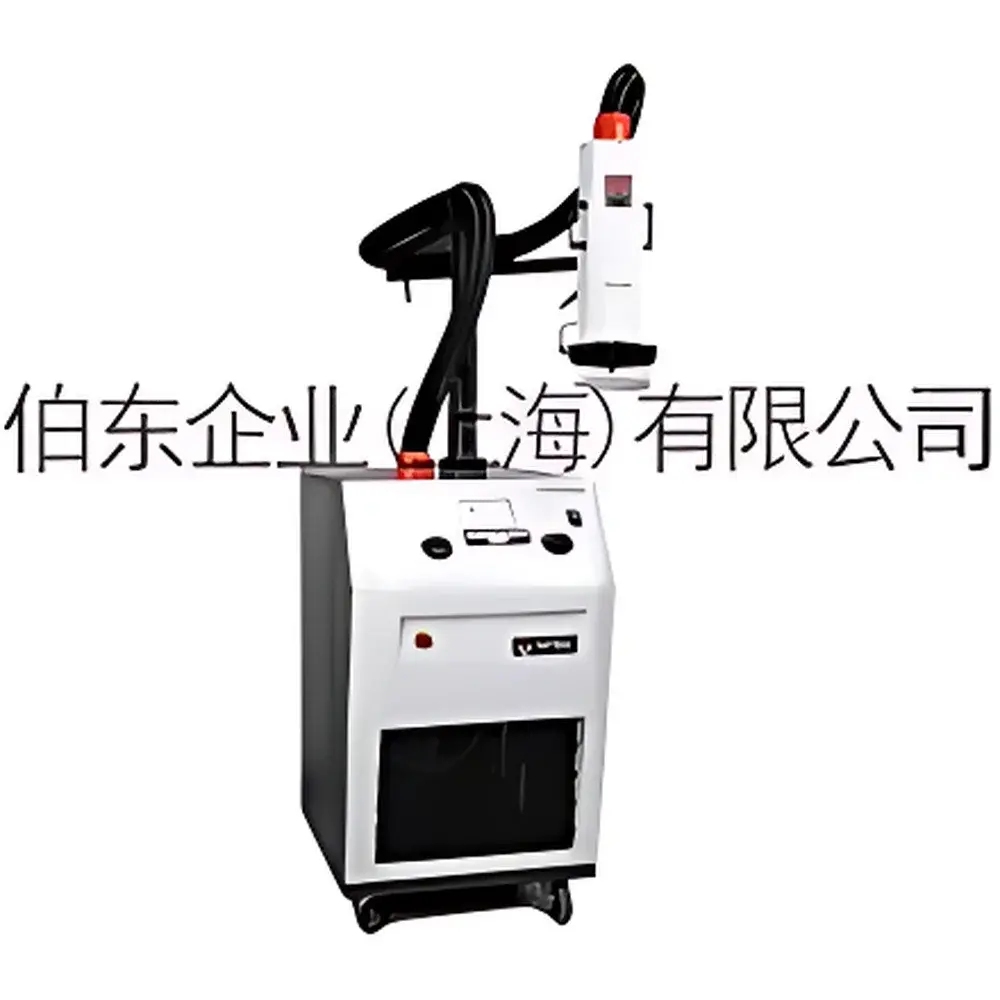
inTEST Temptronic ATS-545-M ThermoStream® Air-Based Thermal Shock Test System for LED and LCD Display Reliability Testing
| Brand | inTEST Temptronic |
|---|---|
| Origin | USA |
| Model | ATS-545-M |
| Temperature Range | –80°C to +225°C |
| Cooling/Heating Medium | Compressed Dry Air |
| Control Mode | Air Mode (Direct Air Delivery) |
| Safety Features | Dual-Stage Over-Temperature Protection (Factory-Set Max +230°C, User-Configurable Limits) |
| Form Factor | Mobile Benchtop Unit |
| Compliance | Designed for ISO/IEC 17025-aligned test environments, supports GLP/GMP audit trails when integrated with validated software platforms |
| Interface | Integrated touchscreen HMI with real-time temperature logging and setpoint programming |
Overview
The inTEST Temptronic ATS-545-M ThermoStream® is a high-precision, air-based thermal shock test system engineered specifically for rapid, localized thermal cycling of optoelectronic components—including LED backlights, OLED panels, TFT-LCD modules, and driver IC assemblies—during reliability qualification and failure analysis. Unlike conventional chamber-based thermal shock systems that rely on mechanical door transfer or dual-zone immersion, the ATS-545-M delivers controlled, laminar streams of conditioned air directly onto device-under-test (DUT) surfaces via flexible, insulated delivery nozzles. This enables precise, non-contact thermal loading with sub-second response times and exceptional spatial resolution—critical for simulating real-world thermal transients experienced by display electronics during power-on/off cycles, ambient environmental shifts, or operational self-heating events. Its design adheres to fundamental thermodynamic principles of convective heat transfer (governed by Newton’s law of cooling), calibrated using NIST-traceable reference sensors and validated per ASTM E2269 (Standard Practice for Thermal Shock Testing of Electronic Components).
Key Features
- Mobile benchtop architecture with casters and integrated air dryer/compressor interface—enables seamless integration into existing lab workflows and production line validation stations.
- Wide operational temperature range from –80°C to +225°C in Air Mode, achieved through cascaded refrigeration stages coupled with high-efficiency resistive heating elements in the thermal head assembly.
- Real-time temperature monitoring via embedded Pt100 RTD sensors at both inlet and nozzle exit points; data logged at 10 Hz with timestamped CSV export capability.
- Dual-stage over-temperature protection: hardware-limited cutoff at +230°C (factory default), plus user-configurable software limits for both upper and lower bounds—ensuring DUT safety during extended thermal cycling protocols.
- Intuitive touchscreen HMI with pre-programmable thermal profiles (ramp rates, dwell times, cycle counts), password-protected parameter locking, and event-driven alarm notifications (e.g., airflow loss, sensor fault, temperature deviation > ±1.5°C).
- Modular nozzle system compatible with standard ¼”–28 UNF ports; optional custom nozzles available for uniform thermal coverage across large-area displays (up to 15.6″) or focused application on micro-LED subpixels.
Sample Compatibility & Compliance
The ATS-545-M is routinely deployed in display manufacturing R&D labs and quality assurance facilities for thermal stress screening of assembled modules—including edge-lit and direct-lit LED backlights, AMOLED flexible substrates, and integrated touch-controller hybrids. It accommodates samples up to 300 mm × 300 mm × 50 mm (W×D×H) under active airflow. The system supports test execution per industry-relevant standards including JEDEC JESD22-A104 (Temperature Cycling), JESD22-A106 (Thermal Shock), and IEC 60068-2-14 (Change of Temperature). When operated within validated SOPs and paired with calibrated ancillary instrumentation (e.g., AUTRONIC DMS-803 photometric measurement platform), it meets traceability requirements for ISO/IEC 17025 accreditation and supports 21 CFR Part 11-compliant electronic records when interfaced with qualified LIMS or MES systems.
Software & Data Management
The built-in firmware provides native support for automated thermal profile execution, real-time graphing of nozzle outlet temperature versus time, and export of raw sensor data in IEEE-compliant CSV format. Optional Ethernet/IP or RS-485 connectivity enables remote control and data streaming to third-party test management software (e.g., Keysight PathWave, NI TestStand). Audit trail functionality—covering user login events, parameter changes, start/stop timestamps, and safety interlock triggers—is enabled by default and conforms to GLP/GMP documentation expectations. All calibration constants and sensor drift compensation coefficients are stored in encrypted onboard memory and persist across firmware updates.
Applications
- Qualification of LED backlight thermal resilience under repeated cold-to-hot transitions (e.g., –40°C → +85°C in < 15 s).
- Failure mode identification in OLED encapsulation layers subjected to moisture ingress accelerated by thermal cycling.
- Correlation of display luminance shift (ΔY, Δu′v′) with transient junction temperature of blue-emitting micro-LED arrays.
- Validation of adhesive bond integrity between glass cover and TFT substrate under asymmetric thermal gradients.
- Pre-screening of driver IC solder joints prior to board-level reflow simulation.
FAQ
What distinguishes the ATS-545-M from traditional two-chamber thermal shock testers?
The ATS-545-M eliminates mechanical transfer mechanisms and thermal mass lag by delivering conditioned air directly to the DUT surface—achieving faster transition rates (≤15 s between extremes), superior repeatability (< ±0.8°C inter-cycle variation), and minimal thermal overshoot.
Can the system be used for humidity-controlled thermal shock testing?
No—the ATS-545-M operates exclusively in dry-air mode. For combined temperature/humidity stress, a dedicated climatic chamber (e.g., inTEST TCT series) is recommended.
Is NIST-traceable calibration documentation included with shipment?
Yes—each unit ships with a factory calibration certificate referencing NIST SRM 1750a (Industrial Platinum Resistance Thermometers), valid for 12 months from date of issue.
What maintenance intervals are recommended for optimal performance?
Compressed air filtration cartridges require replacement every 6 months or 2,000 operating hours; refrigerant charge verification is advised annually by authorized inTEST service personnel.
Does the system support custom thermal profiles with variable ramp rates per segment?
Yes—up to 99-step profiles can be defined, with independent ramp rate (°C/s), dwell time (s), and temperature setpoint for each step.
Related Products



