
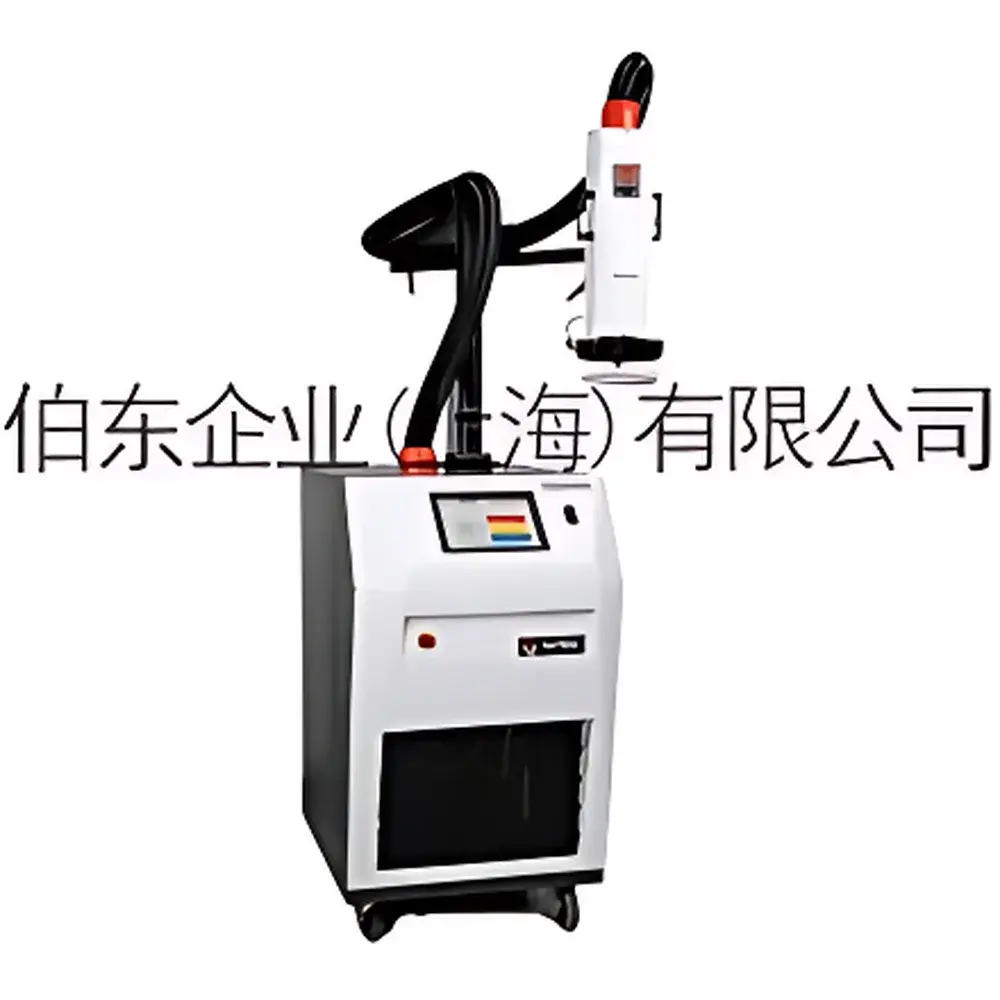
inTEST Temptronic ATS-710 High-Speed Thermal Shock Test System
| Brand | inTEST Temptronic |
|---|---|
| Origin | USA |
| Model | ATS-710 |
| Temperature Range | −80 °C to +225 °C |
| Transition Rate | <10 s (−55 °C ↔ +125 °C) |
| Airflow Capacity | 4–18 scfm (1.8–8.5 L/s) |
| Temperature Resolution & Accuracy | ±1 °C (NIST-traceable calibration) |
| Control Interface | Touchscreen HMI |
| Remote Interfaces | IEEE-488 (GPIB), RS-232 |
| Operating Modes | Air Mode, DUT Mode (T-type or K-type thermocouple support) |
| Compliance | CE, RoHS, CFC-free |
| Optional Configurations | ATS-710-M (robotic arm), ATS-710-H (extended-height arm), ATS-710-T (test chamber) |
Overview
The inTEST Temptronic ATS-710 High-Speed Thermal Shock Test System is an engineered thermal test solution designed for rapid, repeatable, and highly controllable temperature cycling of electronic devices under test (DUTs). Utilizing forced-air convection with dual-stage refrigeration and resistive heating, the ATS-710 achieves sub-10-second transitions between −55 °C and +125 °C without reliance on cryogenic consumables such as liquid nitrogen or CO₂—enabling stable, low-maintenance operation in production test, reliability qualification, and design validation environments. Its closed-loop airflow architecture delivers precise thermal energy delivery directly to the DUT surface, minimizing thermal lag and ensuring high reproducibility across thousands of thermal cycles. The system operates within a full temperature range of −80 °C to +225 °C, supporting both steady-state thermal soak and dynamic shock profiles required by JEDEC JESD22-A104, MIL-STD-883 Method 1010, and AEC-Q200 stress testing standards.
Key Features
- Ultra-fast thermal transition: <10 seconds between −55 °C and +125 °C—optimized for high-throughput burn-in and HALT/HASS screening
- NIST-traceable temperature control with ±1 °C resolution and accuracy, verified via internal thermocouple-based feedback and factory calibration documentation
- Dual operating modes: Air Mode (for ambient air temperature profiling) and DUT Mode (for direct device-surface temperature regulation using integrated T-type or K-type thermocouples)
- Intuitive touchscreen human-machine interface (HMI) with programmable profile storage, real-time trend logging, and alarm event history
- Energy-efficient thermal management: automatic power reduction during low-temperature hold phases and standby-mode power conservation
- CFC-free refrigeration system with integrated auto-defrost cycle to prevent moisture accumulation in the cold stage
- Modular mechanical integration: supports optional robotic arm (ATS-710-M), extended-height arm (ATS-710-H), or enclosed test chamber (ATS-710-T) configurations for automated handler interfacing
- Compliant with CE marking requirements and RoHS Directive 2011/65/EU; fully compatible with LabVIEW™ via IEEE-488 (GPIB) and RS-232 drivers
Sample Compatibility & Compliance
The ATS-710 accommodates a broad spectrum of electronic components—from bare die and flip-chip packages to populated PCBAs, optoelectronic modules, and RF front-end assemblies. Its handheld thermal probe and optional benchtop mounting fixtures allow flexible positioning over discrete DUTs, while the ATS-710-T chamber version enables batch-level thermal profiling under controlled airflow conditions. All configurations maintain strict adherence to industry-standard thermal test protocols including JEDEC J-STD-020 (moisture sensitivity level reflow simulation), IPC-9701 (thermal cycling reliability), and IEC 60068-2-14 (change of temperature testing). The system’s NIST-traceable calibration records support GLP/GMP audit readiness and FDA 21 CFR Part 11-compliant data integrity when used with validated software environments.
Software & Data Management
The ATS-710 includes embedded firmware supporting up to 100 user-defined thermal profiles, each with multiple segments, dwell times, ramp rates, and conditional triggers. Real-time temperature data from both ambient air and DUT sensors is logged at configurable intervals (100 ms to 10 s) and exportable in CSV format. For automated test systems, the IEEE-488 and RS-232 interfaces enable seamless integration with ATE platforms—including Advantest V93000, Teradyne UltraFLEX, and Verigy 93000—allowing synchronized thermal stimulus delivery during parametric and functional test sequences. LabVIEW™ drivers are provided with full API documentation, supporting custom GUI development and integration into enterprise MES or QMS frameworks requiring traceable thermal exposure records.
Applications
- Qualification testing of semiconductor devices per JEDEC JESD22-A104 (Temperature Cycling) and JESD22-A106 (Highly Accelerated Temperature and Humidity Stress Test)
- Thermal characterization of power modules, GaN/SiC transistors, and automotive-grade ICs under AEC-Q100/Q200 stress conditions
- Reliability assessment of PCB assemblies subjected to repeated thermal expansion mismatch stresses
- Pre-reflow moisture sensitivity level (MSL) preconditioning and post-reflow solder joint integrity verification
- Optical component testing—including VCSELs, photodiodes, and transceivers—under rapid thermal transients affecting wavelength stability and threshold current
- Design validation of thermal interface materials (TIMs), heat spreaders, and active cooling solutions in compact form factors
FAQ
Does the ATS-710 require liquid nitrogen or other cryogenic media to achieve low temperatures?
No—the system uses a proprietary dual-stage mechanical refrigeration circuit capable of reaching −80 °C without external cryogens, reducing operational cost and safety hazards.
Can the ATS-710 be integrated into an automated test cell with handler or prober systems?
Yes—optional robotic arm variants (ATS-710-M, ATS-710-H) and chamber configurations (ATS-710-T) are designed for OEM integration with standard SEMI E10/E12 interfaces and pneumatic actuation signals.
Is temperature calibration data provided with the instrument?
Yes—each unit ships with a NIST-traceable calibration certificate covering the full operating range, including as-found and as-left data points at key setpoints (−55 °C, 25 °C, +125 °C, +225 °C).
What thermocouple types are supported in DUT Mode?
T-type and K-type thermocouples are natively supported; cold-junction compensation is performed automatically by the internal reference sensor.
How is condensation prevented during low-temperature testing?
The system employs a heated lid assembly and optional dry-air purge capability (via external nitrogen supply) to suppress dew-point formation on DUT surfaces during sub-zero thermal transitions.



