
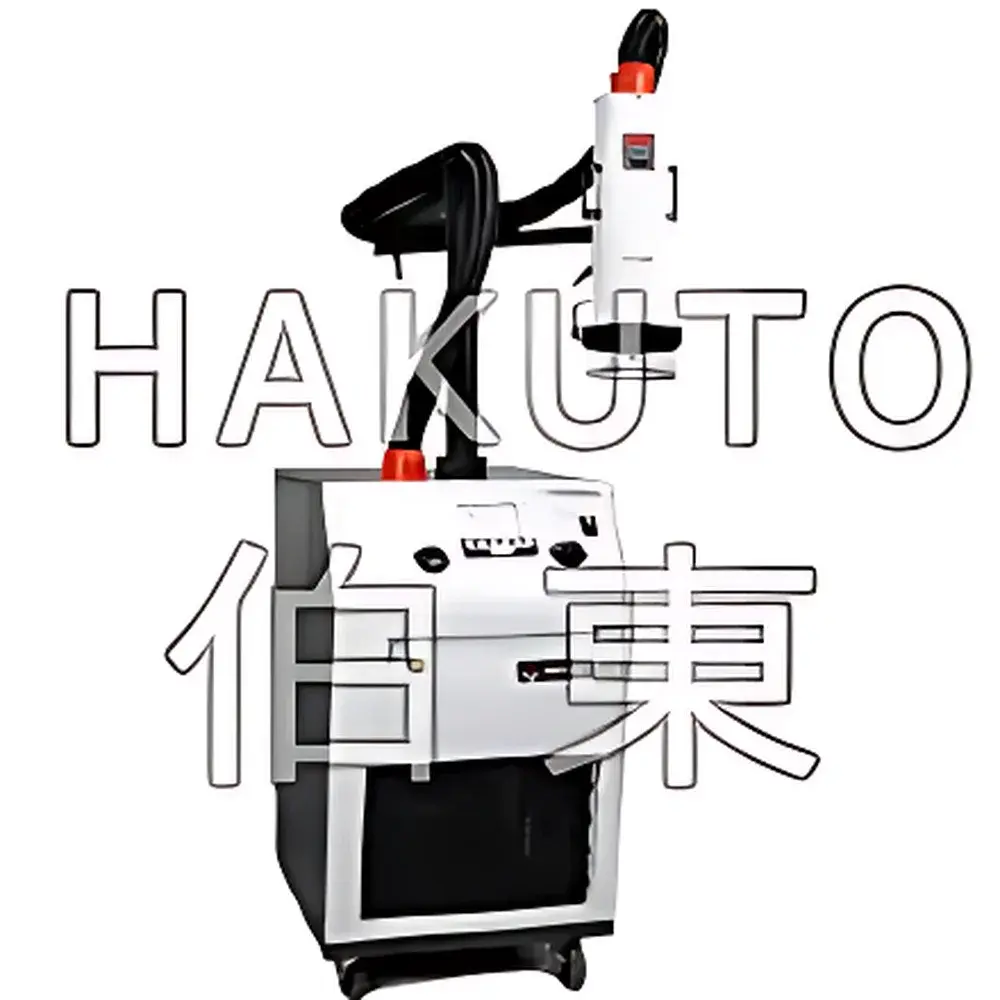
inTEST Temptronic ATS710E Thermal Shock Test System for 5G Module Characterization
| Brand | inTEST–Temptronic |
|---|---|
| Origin | USA |
| Model | ATS710E |
| Temperature Range | −75 °C to +225 °C |
| Temperature Stability | ±0.1 °C |
| Transition Time (−55 °C ↔ +125 °C) | ~10 s |
| Compliance | NIST-traceable calibration, CE-marked, UL-listed enclosure |
| Control Interface | RS-232 / IEEE-488 (GPIB), touchscreen HMI |
| Integrated Air Compressor | No |
| Gas Flow Rate | 4–18 SCFM |
| Temperature Resolution | 0.01 °C |
| Over-Temperature Protection | Dual-stage hardware + user-configurable limits |
Overview
The inTEST Temptronic ATS710E Thermal Shock Test System is an engineered solution for high-fidelity, rapid thermal transient characterization of advanced electronic modules—specifically optimized for 5G RF front-end components, mmWave transceivers, and power amplifier assemblies. Unlike conventional environmental chambers, the ATS710E employs a closed-loop forced-gas convection architecture with dual independent temperature zones (hot and cold) and high-mass thermal reservoirs, enabling precise, repeatable thermal shock profiles per IEC 60068-2-14, MIL-STD-810H Method 503.5, and JEDEC JESD22-A104F. Its core operational principle relies on controlled, high-velocity nitrogen or compressed air flow directed across the device-under-test (DUT) mounted on a thermally conductive fixture—ensuring minimal thermal mass interference and sub-second thermal response at the DUT interface. This design eliminates chamber wall lag effects and supports true “point-of-use” thermal profiling critical for validating solder joint integrity, die attach reliability, and polymer-based substrate behavior under extreme thermal cycling.
Key Features
- Rapid thermal transition: Achieves −55 °C ↔ +125 °C transitions in approximately 10 seconds—validated per ASTM E2019 for thermal shock system qualification.
- High-stability temperature control: Maintains ±0.1 °C stability over full operating range (−75 °C to +225 °C) using PID-controlled dual-zone heating/cooling and real-time thermocouple feedback from integrated Class A PT100 sensors.
- Modular DUT interface: Compatible with standard PCB test fixtures, socket adapters, and custom thermal interface plates; accommodates DUTs up to 150 mm × 150 mm with active backside cooling support.
- Dual safety architecture: Includes redundant hardware over-temperature cutoffs (independent of controller firmware) plus user-definable thermal limits via touchscreen HMI—fully compliant with ISO 13857 and EN 61000-6-2.
- Automated protocol execution: Supports programmable thermal shock sequences (e.g., dwell time, ramp rate, cycle count) with event-triggered data logging synchronized to external instrumentation (oscilloscopes, VNA, power analyzers).
Sample Compatibility & Compliance
The ATS710E is routinely deployed in R&D labs and reliability engineering groups for thermal stress validation of GaN HEMT modules, phased-array antenna units, and 5G baseband ICs. It accommodates both powered-in-operation (bias-stressed) and unpowered storage/transport simulation testing. All thermal profiles are traceable to NIST standards via factory calibration certificates (including as-found/as-left data). The system meets electromagnetic compatibility requirements per CISPR 11 Group 1 Class A and satisfies mechanical safety directives under EU Machinery Directive 2006/42/EC. For regulated industries, audit-ready operation logs—including timestamped setpoints, actual temperatures, alarm events, and operator IDs—are retained locally and exportable in CSV/Excel format for GLP/GMP documentation workflows.
Software & Data Management
Control and monitoring are performed via the embedded 7-inch capacitive touchscreen HMI running Temptronic’s proprietary TSC-OS firmware. For integration into automated test systems, the ATS710E provides native RS-232 and IEEE-488 (GPIB) interfaces supporting SCPI command syntax. Optional Ethernet connectivity enables remote supervision through inTEST’s THERMALink™ software suite—offering script-based sequence definition, live multi-channel thermal mapping visualization, and automatic report generation aligned with ISO/IEC 17025 clause 7.8. All logged thermal data includes metadata (UTC timestamps, sensor IDs, configuration checksums) to satisfy FDA 21 CFR Part 11 requirements for electronic records and signatures when paired with appropriate IT infrastructure controls.
Applications
- Qualification of 5G NR FR2 (24–47 GHz) modules under accelerated thermal cycling per Telcordia GR-468-CORE.
- Solder fatigue modeling using Coffin–Manson-derived ΔT profiles for BGA and LGA interconnects.
- Thermal boundary condition validation for thermal interface material (TIM) selection in compact RF module packaging.
- Pre-compliance screening for automotive-grade 5G telematics units (AEC-Q200 stress categories).
- Process window definition for reflow profile optimization in high-density mmWave assembly lines.
FAQ
What is the maximum recommended DUT power dissipation during thermal shock testing?
The ATS710E is rated for continuous DUT heat loads up to 150 W when using external liquid-cooled fixture plates; for air-cooled configurations, limit DUT self-heating to ≤30 W to maintain thermal fidelity.
Does the system support custom gas media such as dry air or argon?
Yes—the gas delivery manifold accepts any clean, oil-free, non-corrosive gas within 4–18 SCFM flow range; nitrogen is recommended for inert environments and low dew-point stability.
Can thermal shock profiles be synchronized with electrical parametric measurements?
Absolutely—via TTL trigger outputs and analog voltage inputs, the ATS710E can initiate oscilloscope captures or pause SMU sweeps at defined temperature thresholds or transition midpoints.
Is third-party calibration certification available post-installation?
Yes—inTEST partners with ISO/IEC 17025-accredited laboratories to provide on-site verification against NIST-traceable reference standards, including uncertainty budgets per GUM (JCGM 100:2008).
How is firmware updated and version history maintained?
Firmware updates are delivered via encrypted USB key with SHA-256 hash verification; all versions are logged in the system audit trail with date/time stamps and operator authentication.



