
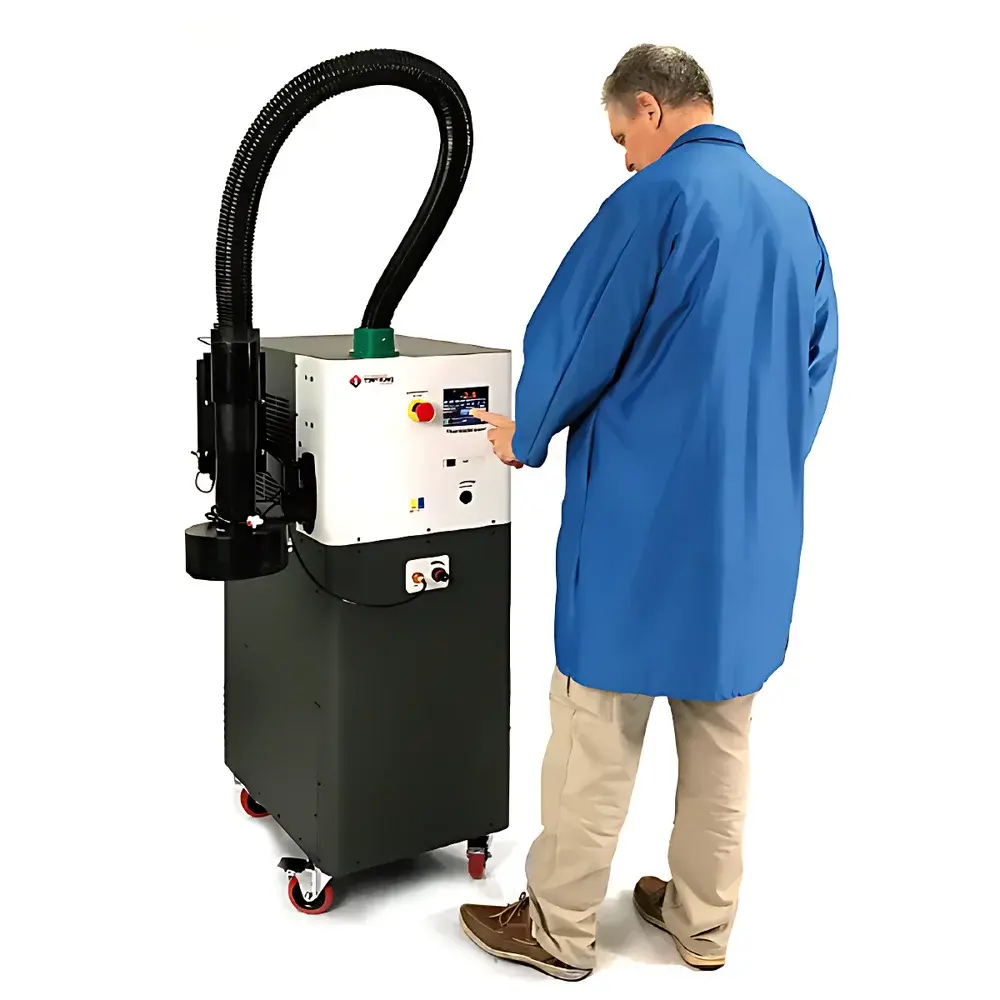
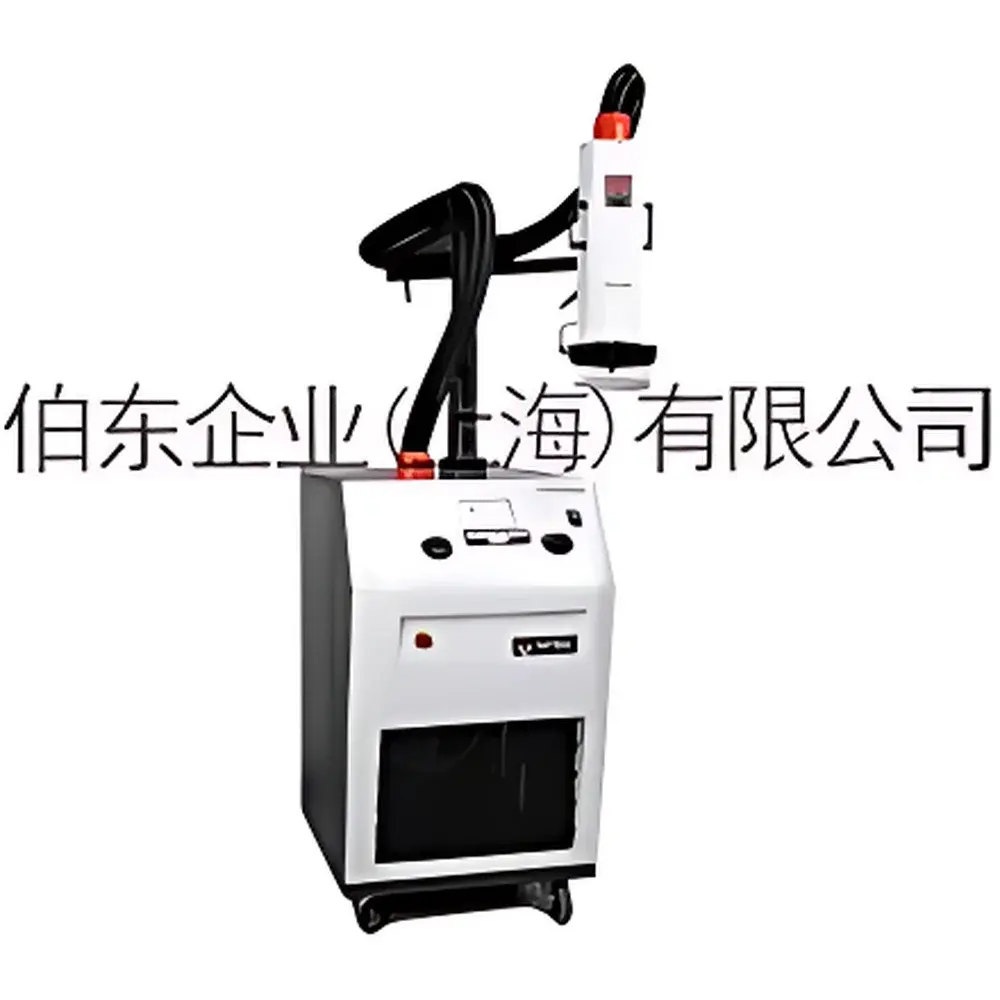
inTEST ThermoStream ATS-545-M Thermal Shock Test System for Optical Transceivers
| Brand | inTEST–Temptronic |
|---|---|
| Origin | USA |
| Model | ThermoStream ATS-545-M |
| Temperature Range | –80 °C to +225 °C |
| Cooling/Heating Medium | Dry, Filtered Compressed Air |
| Control Interface | Rotary Knob Panel with Real-Time Sensor Feedback |
| Safety Protection | Dual-Stage Over-Temperature Cut-Off (Factory-Set at +230 °C, User-Configurable Limits) |
| Form Factor | Mobile Benchtop Unit Compatible with Robotic Handler Integration |
| Compliance | Designed for ASTM F1876, Telcordia GR-468-CORE, IEC 61300-2-22, and JEDEC JESD22-A104 thermal cycling protocols |
Overview
The inTEST ThermoStream ATS-545-M is a high-performance, mobile thermal shock test system engineered specifically for precision temperature stress testing of optical transceivers and other optoelectronic components during design validation, production screening, and reliability qualification. Unlike conventional environmental chambers that rely on convective air circulation within large insulated enclosures, the ATS-545-M employs a directed, high-velocity stream of thermally conditioned compressed air—cooled via an integrated refrigeration unit and heated through a rapid-response ceramic heating head—to deliver localized, dynamic thermal excursions directly onto the device under test (DUT). This jet-based thermal transfer mechanism enables exceptional ramp rates (>150 °C/min typical), precise spatial targeting, and minimal thermal crosstalk—critical when testing individual transceivers mounted on densely populated test boards or burn-in carriers. The system operates on the principle of forced-convection thermal shock, where controlled, repeatable transitions between extreme low and high temperatures induce mechanical and interfacial stresses that accelerate latent defects such as solder joint fatigue, die attach delamination, and fiber alignment drift.
Key Features
- Mobile benchtop architecture with casters and ergonomic handle—designed for integration into automated test lines or manual lab workflows.
- Dual-stage over-temperature protection: factory-calibrated hardware cut-off at +230 °C plus user-definable software limits for both upper and lower thresholds.
- Real-time closed-loop temperature control using integrated Pt100 sensor feedback from the DUT proximity zone—ensuring traceable, NIST-traceable thermal profiles.
- Modular airflow path: dry, oil-free compressed air (dew point ≤ –40 °C) passes sequentially through refrigeration coil, heater assembly, and laminar-flow thermal shroud before impinging on the DUT.
- Rotary-knob front panel interface with LED display—enabling intuitive parameter entry without reliance on external PCs; supports pre-programmed thermal profiles (e.g., 100-cycle thermal shock per Telcordia GR-468).
- Compatible with third-party robotic handlers and custom DUT fixtures—validated for use with industry-standard transceiver form factors including SFP+, QSFP28, OSFP, and COBO modules.
Sample Compatibility & Compliance
The ATS-545-M accommodates a broad range of optical transceiver packages—from single-channel 10G SFPs to multi-lane 400G DR4/FR4 modules—via customer-designed thermal interface fixtures that ensure consistent airflow coupling and thermal sensor placement adjacent to the laser diode and TIA die. All operational parameters comply with internationally recognized reliability standards for optoelectronic devices, including IEC 61300-2-22 (thermal shock), JEDEC JESD22-A104 (temperature cycling), and Telcordia GR-468-CORE (hermeticity and thermal endurance). The system’s documented calibration procedures, audit-ready event logs, and configurable alarm thresholds support GLP and GMP-aligned quality systems. While not inherently 21 CFR Part 11 compliant, optional firmware upgrades enable electronic signature capture and secure audit trail generation for regulated manufacturing environments.
Software & Data Management
Although the ATS-545-M operates autonomously via its embedded controller, optional Ethernet and RS-232 interfaces allow remote command execution (SCPI-compatible) and real-time data streaming to host systems. Temperature vs. time profiles, alarm events, and system status flags are timestamped and exportable in CSV format. When integrated into larger ATE platforms, the unit supports trigger synchronization with source-measure units (SMUs) and bit-error-rate testers (BERTs), enabling correlated electro-thermal stress analysis. All firmware updates are digitally signed and delivered via secure HTTPS—maintaining integrity across product lifecycle revisions.
Applications
- Pre-screening of optical transceivers prior to board-level assembly to identify early-life failures linked to thermal expansion mismatch.
- Accelerated life testing (ALT) for qualification of new packaging materials, including molded compound formulations and advanced substrate laminates.
- Root cause analysis (RCA) of field returns involving wavelength drift, extinction ratio degradation, or loss of modulation bandwidth under thermal load.
- Validation of thermal management solutions—including micro-heatsinks, phase-change pads, and vapor chamber integration—on active optical cables (AOCs) and co-packaged optics (CPO) prototypes.
- Support for IEEE 802.3bs, 802.3cd, and OIF CEI-112G compliance testing where thermal stability across operating margins is mandatory.
FAQ
What is the minimum DUT footprint required for effective thermal coupling?
A clear 10 mm × 10 mm area above the active die region is recommended; fixture design must avoid airflow obstruction while ensuring thermal sensor contact within ±1 mm of the laser junction.
Can the ATS-545-M perform dwell-time-controlled thermal cycling?
Yes—user-defined dwell durations at high/low setpoints (1 s to 9999 s) are fully programmable, supporting both symmetric and asymmetric cycle definitions per JEDEC JESD22-A104.
Is nitrogen purge capability available as a factory option?
Standard operation uses instrument-grade dry air; nitrogen purging requires retrofitting of gas manifold and pressure regulation—available as a validated OEM add-on kit (PN: TS-N2-KIT).
How is temperature uniformity verified across the DUT surface?
Uniformity is characterized per IEC 60068-3-5 using a 5-point thermocouple array; typical spatial deviation is ≤ ±1.2 °C at steady-state conditions within a 15 mm diameter zone.
Does the system support automated pass/fail decision logic based on temperature deviation?
Not natively—the ATS-545-M provides raw thermal data and alarms; pass/fail evaluation must be implemented externally via host software or PLC-based logic interfacing with the digital I/O port.



