
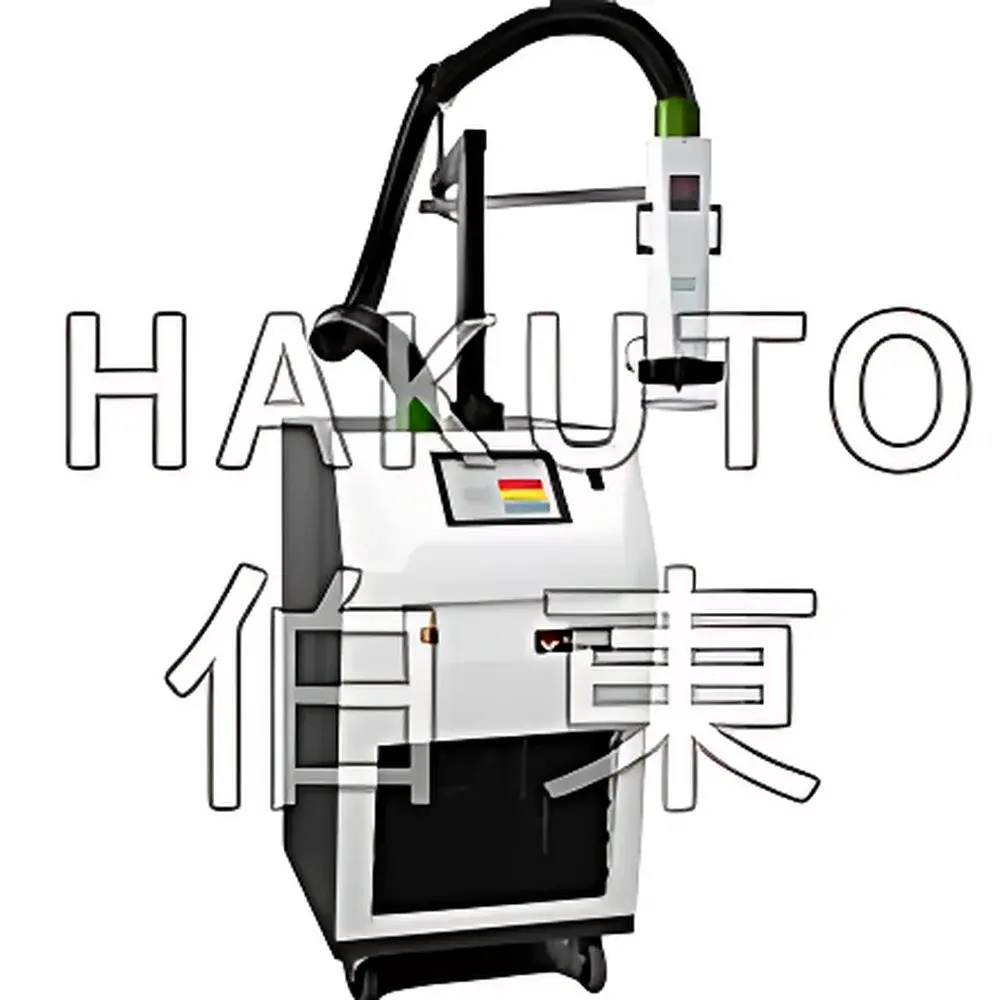
inTEST ThermoStream ATS-710-M High-Speed Thermal Shock Test System for IC and PCB-Level Temperature Cycling
| Brand | inTEST–Temptronic |
|---|---|
| Origin | USA |
| Model | ATS-710-M |
| High Temp Range | +225 °C |
| Low Temp Range | −80 °C |
| Thermal Shock Range | −80 °C to +225 °C |
| Temperature Stability | ±1 °C |
| Ramp Rate | ~10 s from −55 °C to +125 °C (or reverse) |
| Airflow Output | 4–18 SCFM (1.8–8.5 L/s) |
| Temp Display Resolution | 0.1 °C |
| Sensor Type | T-type or K-type thermocouple |
| Remote Interfaces | IEEE-488, RS232, Ethernet |
| Compliance | NIST-traceable calibration, fluorocarbon-free refrigerant, GLP/GMP-ready data logging |
Overview
The inTEST ThermoStream ATS-710-M is a high-speed, localized thermal shock test system engineered for precision temperature cycling of individual integrated circuits (ICs), bare dies, packaged devices, and discrete components mounted on printed circuit boards (PCBs). Unlike conventional environmental chambers, it employs directed, conditioned airflow—rather than bulk chamber air—to deliver rapid, repeatable thermal transients directly to the device under test (DUT). Its core measurement principle relies on closed-loop thermocouple feedback control combined with high-efficiency vapor-compression cooling and resistive heating, enabling sub-10-second transitions between extreme setpoints (−55 °C ↔ +125 °C) while maintaining ±1 °C stability at steady state. Designed specifically for semiconductor qualification, reliability screening (e.g., JESD22-A104, A106), and failure analysis labs, the ATS-710-M supports real-time DUT temperature monitoring and adaptive airflow modulation—critical for avoiding thermal crosstalk and ensuring test fidelity across densely populated boards.
Key Features
- Ultra-fast thermal ramping: Achieves −55 °C to +125 °C transitions in approximately 10 seconds, enabled by optimized refrigerant circuitry and dual-mode heating/cooling architecture.
- NIST-traceable temperature accuracy: ±1 °C uniformity over the full operating range (−80 °C to +225 °C), verified via calibrated T- or K-type thermocouples embedded in the thermal stream path.
- Fluorocarbon-free refrigeration: Uses environmentally compliant, non-toxic, non-flammable refrigerant; eliminates dependency on liquid nitrogen (LN₂) or CO₂ cryogens.
- Anti-condensation dry-air purge: Adjustable low-flow dry gas sweep (0.5–3 SCFM) prevents moisture accumulation on DUT surfaces during low-temperature exposure.
- Intuitive Windows-based touchscreen HMI: Supports recipe-driven operation, real-time temperature profiling, alarm logging, and user-configurable safety limits (e.g., max override = +230 °C).
- Modular thermal shroud system: Includes 4.5″ or 5.5″ diameter shrouds with high-temp silicone gaskets; enables localized testing without affecting adjacent components.
- Comprehensive I/O and data integrity: Equipped with IEEE-488 (GPIB), RS232, and Ethernet interfaces; supports FDA 21 CFR Part 11–compliant audit trails when paired with validated software.
Sample Compatibility & Compliance
The ATS-710-M accommodates a broad spectrum of electronic packages—including QFN, BGA, SOIC, DIP, and wafer-level CSP—as well as bare die on probe cards or load boards. Its focused thermal delivery avoids thermal mass interference, making it suitable for JEDEC-standard temperature cycling (TC), highly accelerated temperature-humidity stress tests (HAST), and early-life failure screening per MIL-STD-883 Method 1010 and AEC-Q200. The system complies with ISO/IEC 17025 requirements for calibration traceability and supports GLP/GMP documentation workflows through optional software modules. All internal sensors are calibrated against NIST-traceable references, and thermal performance validation follows ASTM E2298 (Standard Practice for Calibration of Thermal Shock Chambers) principles.
Software & Data Management
Control and data acquisition are managed via inTEST’s proprietary ThermoStream Control Suite, a Windows-native application supporting script-based test sequencing, multi-channel thermocouple logging (up to 8 inputs), and CSV/PDF report generation. The software includes built-in compliance features: electronic signatures, change history tracking, and exportable audit logs meeting FDA 21 CFR Part 11 criteria. Data synchronization over Ethernet allows integration into enterprise MES/LIMS platforms. Optional Python and LabVIEW drivers enable custom automation in R&D environments. All configuration files and measurement records are stored with timestamped metadata, supporting full traceability from test initiation to final certification.
Applications
- Qualification testing of power management ICs (PMICs), voltage regulators, and automotive-grade SoCs under extreme thermal shock conditions.
- Thermal validation of solder joint reliability in advanced packaging (e.g., fan-out wafer-level packaging, 2.5D/3D IC stacks).
- Failure mode analysis (FMA) during thermal stress-induced parametric drift or intermittent opens/shorts.
- Development of thermal interface materials (TIMs) and underfill formulations requiring dynamic thermal boundary condition simulation.
- Accelerated life testing (ALT) protocols aligned with IPC-9701 and JEDEC JEP122G reliability models.
- Production line burn-in and functional test stations where throughput and DUT-specific thermal control are mission-critical.
FAQ
What distinguishes the ATS-710-M from traditional thermal shock chambers?
Unlike large-volume chambers relying on mechanical door transfer or dual-zone air circulation, the ATS-710-M delivers targeted thermal energy via high-velocity, temperature-controlled airstreams—eliminating thermal inertia and enabling single-device isolation on live PCBs.
Is the system compatible with automated test equipment (ATE)?
Yes. Standard GPIB (IEEE-488), RS232, and TCP/IP Ethernet interfaces support seamless integration with Teradyne, Advantest, and other ATE platforms using SCPI command sets.
Can temperature profiles be programmed and repeated across multiple DUTs?
Absolutely. The ThermoStream Control Suite supports reusable test recipes with up to 999 step sequences, variable dwell times, ramp rates, and conditional branching based on real-time sensor feedback.
Does the system require external chillers or compressed air?
No. It is a fully self-contained unit with integrated compressor, heater, and desiccant dryer—only standard 208–240 VAC / 50–60 Hz power input is required.
How is calibration maintained over time?
In-field verification is supported via external reference thermocouples; annual recalibration services are available through inTEST-certified service centers with NIST-traceable documentation.
Related Products



