
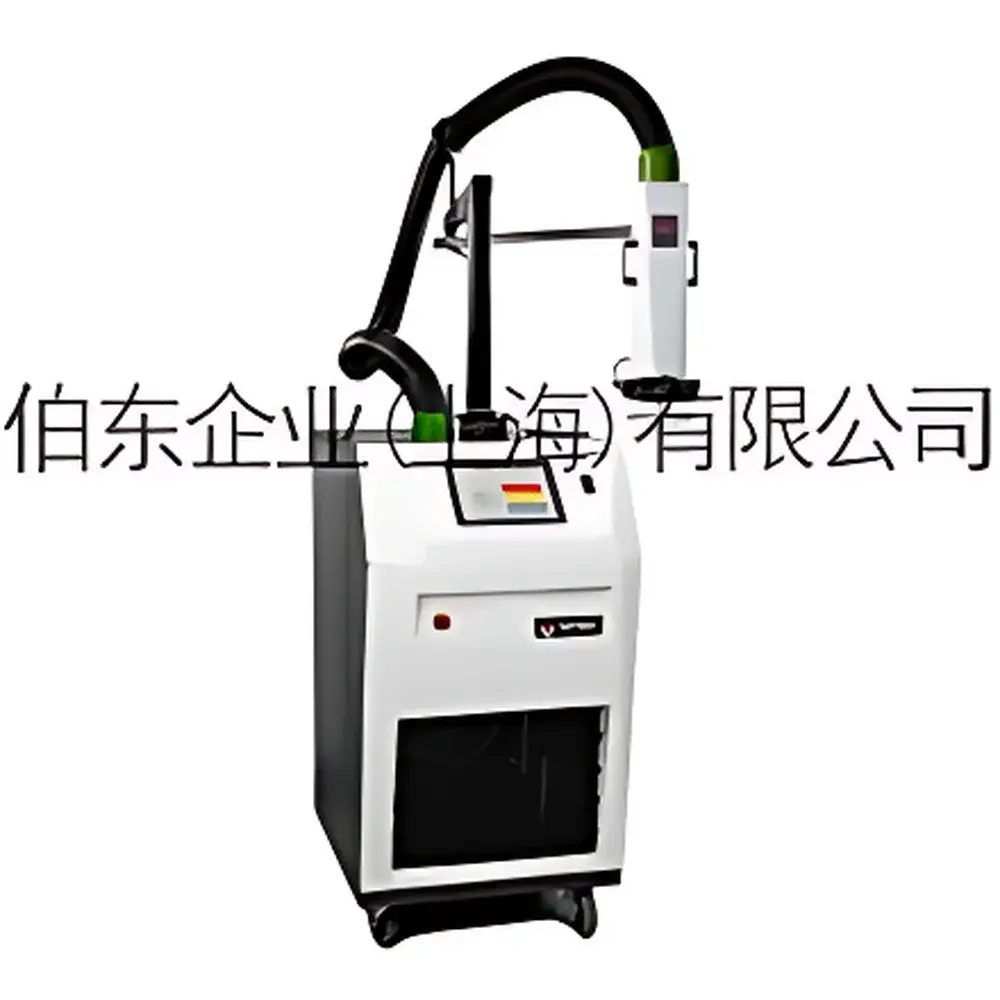
inTEST ThermoStream ECO-710 Thermal Shock Test System
| Brand | inTEST- Temptronic |
|---|---|
| Origin | USA |
| Model | ECO-710 |
| Temperature Range (°C) | -80 to +225 |
| Temperature Stability (°C) | ±0.01 |
| Transition Time (°C) | +125 to −55°C in ~10 s |
| Airflow Output | 4–18 scfm (1.8–8.5 L/s) |
| Temperature Accuracy | ±1°C |
| Temperature Resolution | 0.1°C |
| Noise Level | ≤56 dBA |
| Input Power | 20 A |
| Refrigerant | Non-ozone-depleting, non-flammable HFC blend |
| Compliance | RoHS, CE, UL 61010-1, IEC 61000-6-3 |
Overview
The inTEST ThermoStream ECO-710 is a high-performance, closed-loop thermal shock test system engineered for rapid, precise, and repeatable temperature cycling of electronic components and assemblies under dynamic operational conditions. Unlike conventional environmental chambers relying on convection or forced-air static chambers, the ECO-710 employs a proprietary high-velocity, conditioned air delivery architecture—based on thermoelectric and vapor-compression hybrid cooling—to achieve sub-10-second transitions between extreme thermal setpoints (−80°C to +225°C). This enables real-time thermal stress testing during electrical biasing (e.g., functional burn-in, parametric characterization, and failure analysis), making it an essential tool for semiconductor reliability labs, advanced packaging R&D, and automotive electronics qualification per AEC-Q200 and JEDEC JESD22-A104 standards.
Key Features
- Ultra-fast thermal transition: Achieves +125°C → −55°C (and vice versa) in approximately 10 seconds, minimizing dwell time and maximizing test throughput.
- WhisperStream® acoustic optimization: Integrated airflow path design and low-turbulence diffuser geometry limit operational noise to ≤56 dBA—critical for open-lab benchtop deployment and ISO 17025-accredited facilities.
- Energy-efficient operation: Rated at only 20 A input current; features intelligent standby mode that reduces power draw by >65% during idle periods without compromising thermal readiness.
- Fluorocarbon-free refrigeration: Utilizes a non-ozone-depleting, non-flammable HFC-based refrigerant blend compliant with EPA SNAP and EU F-Gas Regulation (EU No. 517/2014).
- Dry-air purge capability: Integrated desiccant-assisted air drying prevents condensation on DUT surfaces during low-temperature transitions—eliminating moisture-related measurement artifacts and enabling stable thermal-electrical correlation.
- Auto-defrost cycle: Microprocessor-controlled defrost logic activates only when frost accumulation is detected, avoiding unnecessary thermal interruption or energy waste.
- Configurable thermal interface: Supports interchangeable thermal shrouds (4.5″ and 5.5″ diameters) for optimal thermal coupling across diverse package types—from bare die and flip-chip CSPs to multi-layer PCBAs.
Sample Compatibility & Compliance
The ECO-710 accommodates a broad range of sample geometries—including IC packages (QFN, BGA, LGA), wafer-level probes, discrete power modules, and automotive ECUs—via its modular nozzle assembly and adjustable standoff height. All thermal control algorithms are traceable to NIST-traceable RTD and T-type thermocouple references. The system complies with multiple international safety and electromagnetic compatibility standards, including UL 61010-1 (2nd Ed.), IEC 61000-6-3 (radiated emissions), and IEC 61000-6-2 (immunity). For regulated environments, optional audit trail logging and user-access controls support FDA 21 CFR Part 11 and ISO/IEC 17025 requirements when integrated with validated data acquisition software.
Software & Data Management
The ECO-710 runs on an embedded Windows® IoT platform with a 10.1″ capacitive touchscreen interface, supporting both local operation and remote orchestration via Ethernet (TCP/IP), IEEE-488 (GPIB), and RS-232. In-built firmware provides programmable ramp/soak profiles, multi-segment thermal sequences, and real-time monitoring of airflow temperature, pressure differential, and refrigerant saturation points. Data export supports CSV, TDMS, and XML formats; time-synchronized timestamps are aligned to UTC with millisecond resolution. Optional integration with Keysight PathWave, NI TestStand, or custom Python-based test executive frameworks enables full traceability within automated test systems used in production ATE environments.
Applications
- Dynamic thermal validation of SoCs, ASICs, and microcontrollers under simultaneous electrical bias (JTAG, boundary scan, analog stimulus).
- Thermal cycling reliability assessment per JEDEC JESD22-A104E (Temperature Cycling) and MIL-STD-883 Method 1010.8.
- Failure analysis root-cause identification—correlating transient thermal gradients with leakage current spikes, timing skew, or latch-up events.
- Qualification of wide-bandgap devices (SiC, GaN) where rapid junction temperature modulation reveals latent defects not observable at steady-state.
- Pre-conditioning of sensors and MEMS devices prior to metrology-grade calibration in climate-controlled metrology labs.
- Support for accelerated life testing (ALT) protocols requiring controlled thermal shock profiles defined in IPC-9701A and IEC 60749-25.
FAQ
Does the ECO-710 require liquid nitrogen or CO₂ for operation?
No. It operates exclusively on integrated compressor-based refrigeration with no cryogenic consumables—reducing operational cost, safety risk, and logistical complexity.
Can the ECO-710 be integrated into an automated handler or prober system?
Yes. Standard Ethernet and GPIB interfaces support seamless integration with third-party handlers (e.g., Cohu, Advantest), probe stations (e.g., Cascade Microtech), and test executives.
Is temperature calibration traceable to national standards?
Yes. Factory calibration includes NIST-traceable verification of all primary thermal sensors; on-site recalibration services are available with documented uncertainty budgets per ISO/IEC 17025.
What maintenance intervals are recommended for sustained accuracy?
Compressor oil and filter replacement every 24 months; desiccant cartridge replacement every 12 months under continuous use; annual verification of thermal uniformity and transition repeatability.
How does the dry-air purge function prevent condensation during cold transitions?
Integrated desiccant beds reduce inlet air dew point to <−40°C, ensuring no moisture condenses on DUT surfaces even during rapid ramp-down from ambient to −80°C.



