
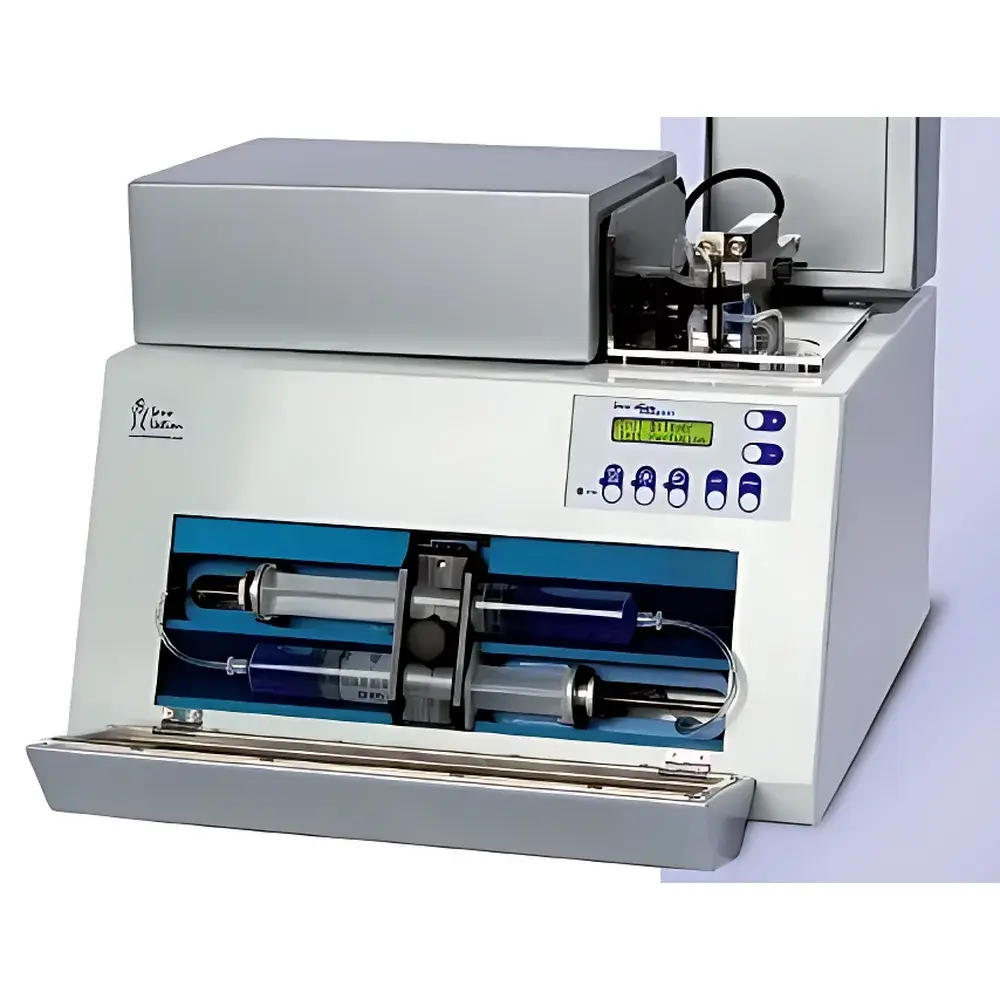
Ionovation Scout Artificial Lipid Bilayer Electrophysiology System
| Origin | Germany |
|---|---|
| Manufacturer Type | Authorized Distributor |
| Origin Category | Imported |
| Model | Scout |
| Pricing | Available Upon Request |
Overview
The Ionovation Scout Artificial Lipid Bilayer Electrophysiology System is a benchtop, high-fidelity platform engineered for reconstituting and characterizing ion-conducting membrane proteins—including ion channels, transporters, and pore-forming peptides—in planar black lipid membranes (BLMs) and supported lipid bilayers (SLBs). Unlike conventional patch-clamp systems relying on gigaseal formation with native cell membranes, the Scout employs a dual-resistance sealing architecture that enables stable, low-noise electrophysiological recordings from purified or synthetic membrane protein preparations embedded in chemically defined lipid environments. This approach eliminates dependence on viable cells, permits precise control over lipid composition, ionic gradients, and asymmetric buffer conditions across both leaflets, and supports functional interrogation of intracellular organelles (e.g., mitochondrial VDAC, chloroplast Tic20), viral K+ channels (e.g., Kcv), and neurotoxic oligomers (e.g., α-synuclein pores)—all without cellular perforation or seal instability. The system operates on the fundamental principle of voltage-clamp and current-recording across a resistive lipid dielectric, where transmembrane conductance events are resolved at single-channel resolution (pA range) with sub-millisecond temporal fidelity.
Key Features
- Dual-resistance sealing architecture eliminating reliance on gigaseal formation—enabling robust, operator-independent recordings from purified membrane proteins
- Modular fluidic design supporting symmetric and asymmetric buffer exchange on both cis and trans sides of the bilayer
- Integrated low-noise headstage amplifier with adjustable gain (106–108 V/A), bandwidth up to 100 kHz, and real-time analog filtering
- Compatible with both suspended BLMs (using Teflon apertures) and solid-supported bilayers (on SiO2, graphene, or ITO substrates)
- Temperature-controlled chamber (15–40 °C, ±0.1 °C stability) for kinetic and thermodynamic characterization
- Optical access for simultaneous fluorescence correlation spectroscopy (FCS), TIRF, or confocal imaging of labeled lipids or proteins
Sample Compatibility & Compliance
The Scout system accommodates a broad spectrum of reconstituted samples: detergent-purified or nanodisc-embedded ion channels (e.g., KcsA, hERG, TRPV1), ATP-binding cassette (ABC) transporters, mitochondrial porins (VDAC), chloroplast translocons (Tic20, OEP37), bacterial toxins (e.g., α-hemolysin), and amyloidogenic pore complexes. It supports lipid compositions ranging from simple DPhPC bilayers to complex mixtures containing cholesterol, sphingomyelin, PIP2, or cardiolipin—enabling structure–function studies under physiologically relevant membrane microenvironments. The platform complies with ISO/IEC 17025 guidelines for measurement uncertainty estimation and is routinely deployed in GLP-compliant pharmacological screening workflows. Experimental protocols align with ASTM E2919 (Standard Guide for Electrophysiological Measurements of Membrane Proteins) and support audit-ready data provenance per FDA 21 CFR Part 11 when paired with validated software modules.
Software & Data Management
Acquisition and analysis are performed via Ionovation’s ScoutControl Suite—a modular, Python-extendable application supporting real-time visualization, adaptive threshold-based event detection, dwell-time and amplitude histogramming, noise power spectral density (PSD) analysis, and hidden Markov modeling (HMM) for state identification. Raw data are stored in HDF5 format with embedded metadata (timestamp, temperature, lipid batch ID, buffer composition, electrode calibration coefficients). The software enforces electronic signatures, session-level audit trails, and version-controlled protocol templates. Export options include CSV, MAT, and ABF v2.0 formats for interoperability with Clampfit, QuB, or custom MATLAB/Python pipelines. Remote monitoring and multi-user role-based access are configurable for core facility deployment.
Applications
- Single-channel biophysics of recombinant and native ion channels under controlled lipid asymmetry
- Mechanistic studies of ligand-gated and voltage-sensitive gating transitions
- Pharmacological profiling of channel modulators (blockers, openers, allosteric effectors) with dose–response and kinetic resolution
- Investigation of lipid–protein interactions regulating channel activity (e.g., PIP2 dependence of Kir channels)
- Characterization of pathological pore formation by amyloid oligomers and antimicrobial peptides
- Development of biosensor platforms integrating DNA hybridization or antibody binding with conductance readout
- Validation of cryo-EM structural models via functional reconstitution and electrophysiological phenotyping
FAQ
Does the Scout system require live cells for operation?
No. It is designed exclusively for reconstituted systems using purified proteins in artificial lipid bilayers—eliminating variability associated with cell health, passage number, or endogenous expression.
Can asymmetric ionic conditions be established across the bilayer?
Yes. Independent fluidic ports allow independent perfusion of cis and trans chambers with distinct salt concentrations, pH, or chelators—essential for studying electrogenic transporters and proton-coupled channels.
Is the system compatible with optical microscopy techniques?
Yes. The chamber features top- and side-access optical paths optimized for TIRF, epifluorescence, and confocal modalities, enabling correlative electrophysiology–fluorescence experiments.
What level of technical expertise is required to achieve stable bilayer formation?
Bilayer formation is reproducible with standard training (<8 hours); automated aperture cleaning and pressure-controlled lipid painting reduce inter-operator variability significantly compared to manual painting methods.
How is data integrity ensured during long-duration recordings?
Continuous impedance monitoring, real-time thermal drift compensation, and hardware-based baseline subtraction minimize baseline wander and capacitance artifacts over multi-hour experiments.
Related Products





