
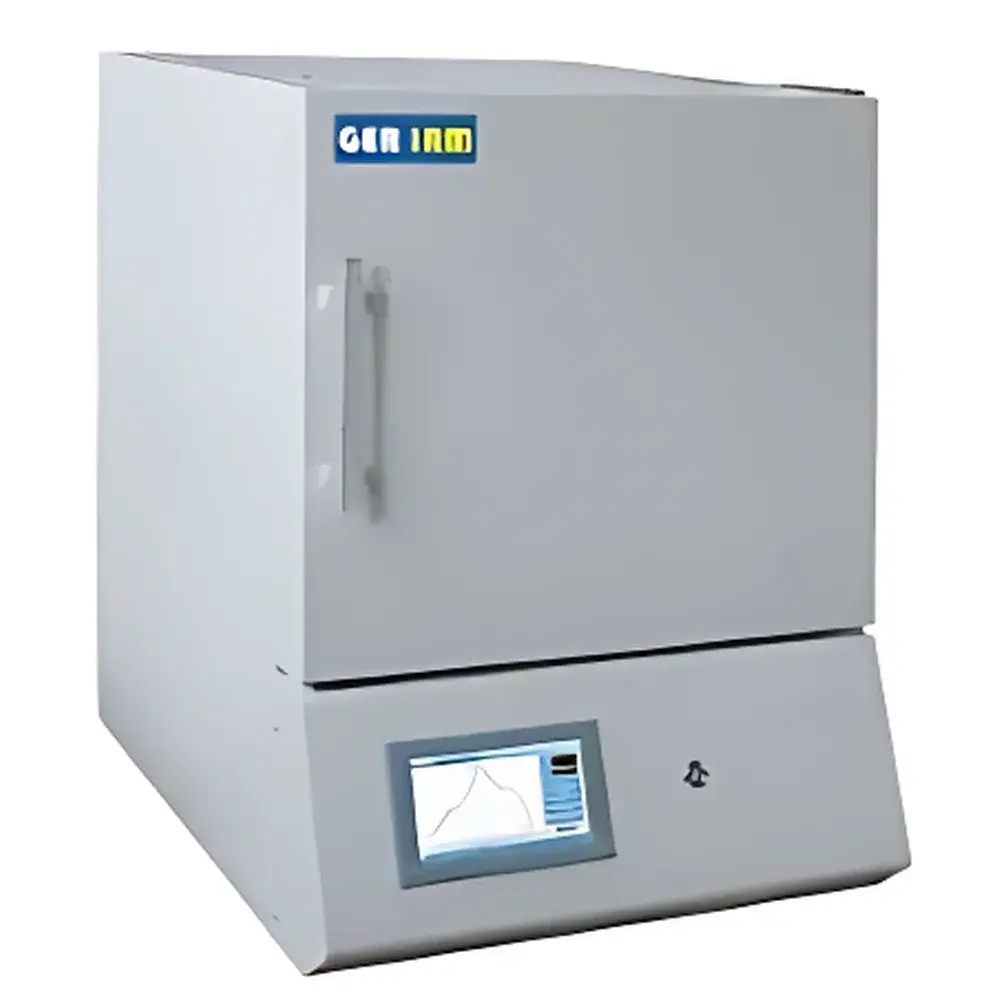
IRM FE300 High-Temperature Box Furnace
| Brand | IRM |
|---|---|
| Origin | Beijing, China |
| Manufacturer | IRM (Domestic) |
| Instrument Type | Box-Type Muffle Furnace |
| Max Operating Temperature | 1200 °C / 1500 °C / 1700 °C (model-dependent) |
| Temperature Control Accuracy | ±1 °C |
| Max Power | 3 kW |
| Heating Time to Max Temp | ≤20 min |
| Heating Element | Kanthal A1 resistance wire (FE series) or MoSi₂ heating rods (FK series) |
| Internal Chamber Dimensions | 200 × 300 × 202 mm |
| Nominal Volume | 12 L |
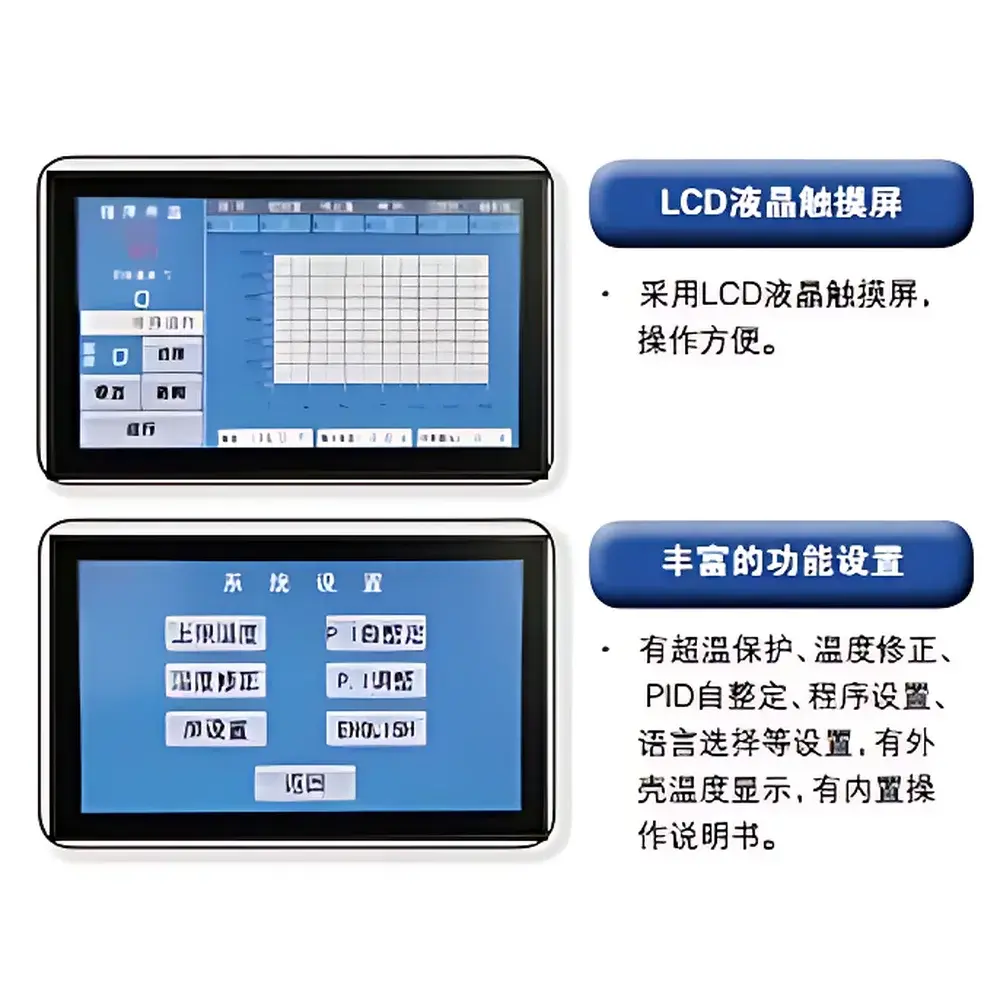
| Controller | 7-inch color LCD touchscreen with intelligent PID algorithm |
| Programmable Ramp/Soak | 30 segments per program, 15 programs stored |
| Safety Protections | Over-temperature cutoff, over-current & over-voltage protection, thermocouple failure detection, earth leakage circuit breaker |
Overview
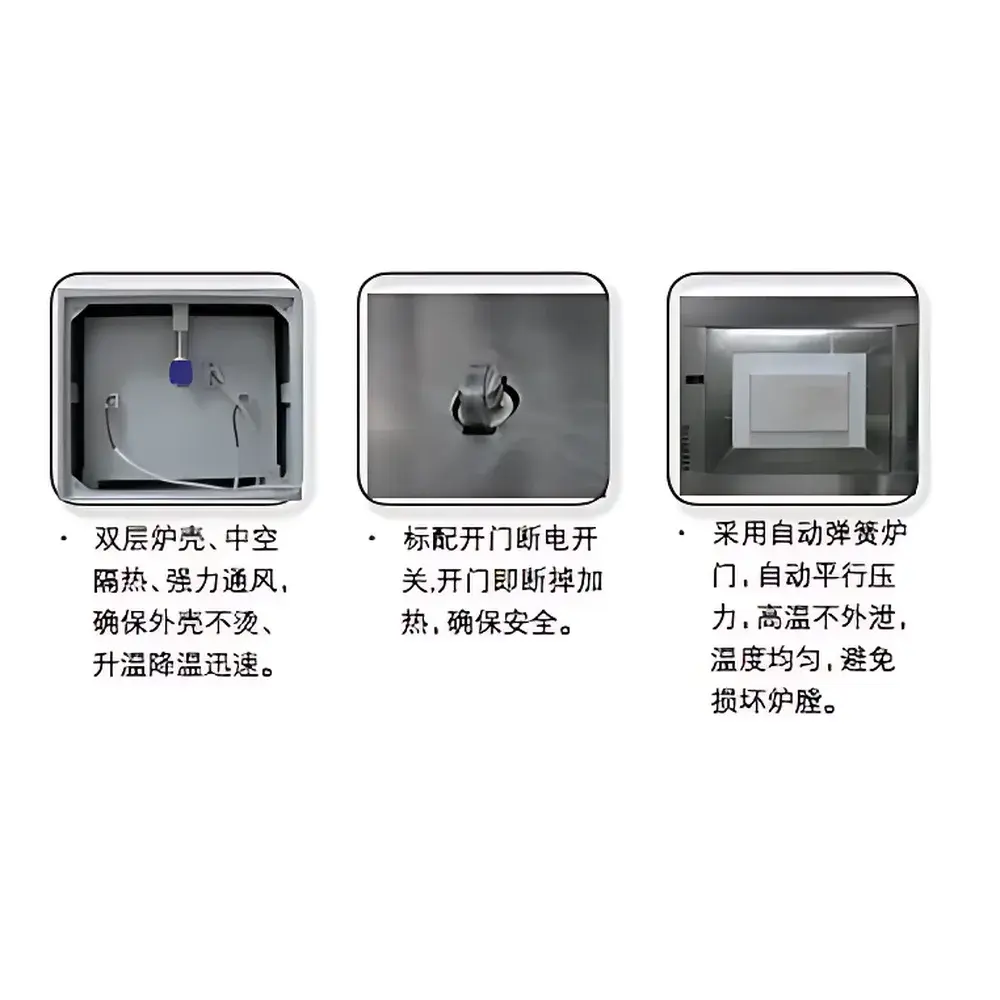
The IRM FE300 High-Temperature Box Furnace is a precision-engineered laboratory muffle furnace designed for controlled thermal processing in materials science, metallurgy, ceramics, and quality assurance laboratories. It operates on the principle of resistive heating within an insulated chamber, utilizing either high-purity Kanthal A1 alloy wire (for 1200 °C models) or sintered silicon molybdenum (MoSi₂) heating elements (for 1500 °C and 1700 °C FK-series variants), enabling stable, uniform temperature distribution across the entire working zone. The furnace chamber is lined with high-density ceramic fiber insulation—certified to ISO 10485 and compliant with ASTM C871 for low thermal conductivity and high heat retention—ensuring rapid heating rates (≤20 min to maximum temperature), energy efficiency (~70% reduction vs. traditional brick-lined furnaces), and exceptional thermal stability (±1 °C deviation under steady-state conditions). Its rigid double-walled steel construction with forced-air cooling ducts maintains external surface temperatures below 45 °C during continuous operation, satisfying OSHA 1910.132 and EN 61000-6-3 requirements for operator safety and electromagnetic compatibility.
Key Features
- 7-inch full-color LCD touchscreen interface with intuitive icon-based navigation, supporting both English and Chinese language modes and embedded digital user manual.
- Intelligent dual-mode control architecture: selectable between fixed-setpoint operation (with programmable duration up to 42,888,899,999 minutes) and multi-segment ramp-soak programming (30 segments per program, 15 programs memory).
- Self-tuning PID algorithm with manual parameter adjustment capability; configurable temperature offset correction (–99 °C to +99 °C) for sensor calibration traceability.
- Integrated safety interlock system: automatic power cutoff upon door opening, redundant over-temperature cutout (independent of main controller), and real-time monitoring of thermocouple integrity (open-circuit detection).
- Modular furnace core design: replaceable ceramic fiber chamber lining with standardized mounting interfaces, minimizing downtime during maintenance or re-lining.
- Active cooling management: intelligent fan control activated only when outer casing temperature exceeds 35 °C, extending fan service life and reducing standby power consumption.
Sample Compatibility & Compliance
The FE300 accommodates standard crucibles (alumina, quartz, graphite), ceramic setters, metal ingot molds, and powder compaction dies within its 200 × 300 × 202 mm usable chamber volume. Its inert atmosphere compatibility (when purged with N₂ or Ar via optional gas inlet ports) supports oxidation-sensitive processes such as sintering of rare-earth magnets, annealing of thin-film substrates, and ashing of organic matrices per AOAC 984.27 and EPA Method 3050B. All electrical components conform to IEC 61000-4-30 for harmonic immunity, while thermal performance validation follows ISO/IEC 17025-accredited procedures—including temperature uniformity mapping (±3 °C tolerance across load zone at 1200 °C) and stability verification per ASTM E220. The unit meets CE marking requirements under the EU Machinery Directive 2006/42/EC and Low Voltage Directive 2014/35/EU.
Software & Data Management
While the FE300 operates autonomously via its embedded controller, it supports RS485 Modbus RTU communication for integration into centralized lab automation systems (e.g., LabVantage, Thermo Fisher SampleManager). Optional analog output (4–20 mA) enables connection to standalone chart recorders or PLC-based environmental monitoring networks. For audit-ready environments, optional data logging modules provide timestamped temperature profiles with GLP-compliant metadata (operator ID, program name, start/stop times), satisfying FDA 21 CFR Part 11 requirements when paired with validated third-party software. Firmware updates are performed via USB port using signed binary packages, ensuring integrity and version traceability.
Applications
- Thermal gravimetric analysis (TGA) sample pre-conditioning and residue quantification.
- Sintering of advanced ceramics (ZrO₂, SiC, AlN) and metal matrix composites under controlled heating/cooling ramps.
- Ash content determination in pharmaceutical excipients (USP ) and food products (AOAC 942.05).
- Heat treatment of calibration standards (e.g., Pt-Rh thermocouples per ITS-90) and reference materials (NIST SRM 720).
- Pre-firing of catalyst supports and calcination of battery cathode precursors (LiCoO₂, NMC).
- Residue testing for heavy metals in herbal raw materials (Chinese Pharmacopoeia ChP 2302).
FAQ
What thermocouple types are supported for different temperature ranges?
K-type thermocouples (chromel-alumel) are standard for FE-series models up to 1200 °C. FG-series (1500 °C) use S-type (Pt-10%Rh/Pt), and FK-series (1700 °C) require B-type (Pt-30%Rh/Pt-6%Rh) sensors—each calibrated per IEC 60584-2.
Is the furnace suitable for inert or reducing atmospheres?
Yes—optional gas inlet/outlet ports (M10 threaded) allow connection to regulated N₂, Ar, or forming gas (5% H₂/95% N₂) supply lines. Chamber sealing integrity is verified to 0.5 mbar/min leak rate per ISO 10648-2.
How is temperature uniformity validated across the chamber?
Uniformity is measured using nine-point mapping (center + eight equidistant locations) per ASTM E220 Annex A3, with results documented in the factory calibration certificate shipped with each unit.
Can the FE300 be integrated into a LIMS or MES environment?
Yes—via Modbus RTU over RS485, the furnace exposes real-time setpoint, process value, program status, and alarm flags, enabling bidirectional control and event logging in validated industrial software platforms.
What maintenance intervals are recommended for the heating elements and insulation?
Under normal usage (≤8 h/day at rated temperature), MoSi₂ rods require inspection every 1,000 operating hours; ceramic fiber lining should be assessed for shrinkage or cracking annually or after 500 thermal cycles—replacement kits include dimensional drawings and torque specifications.



