
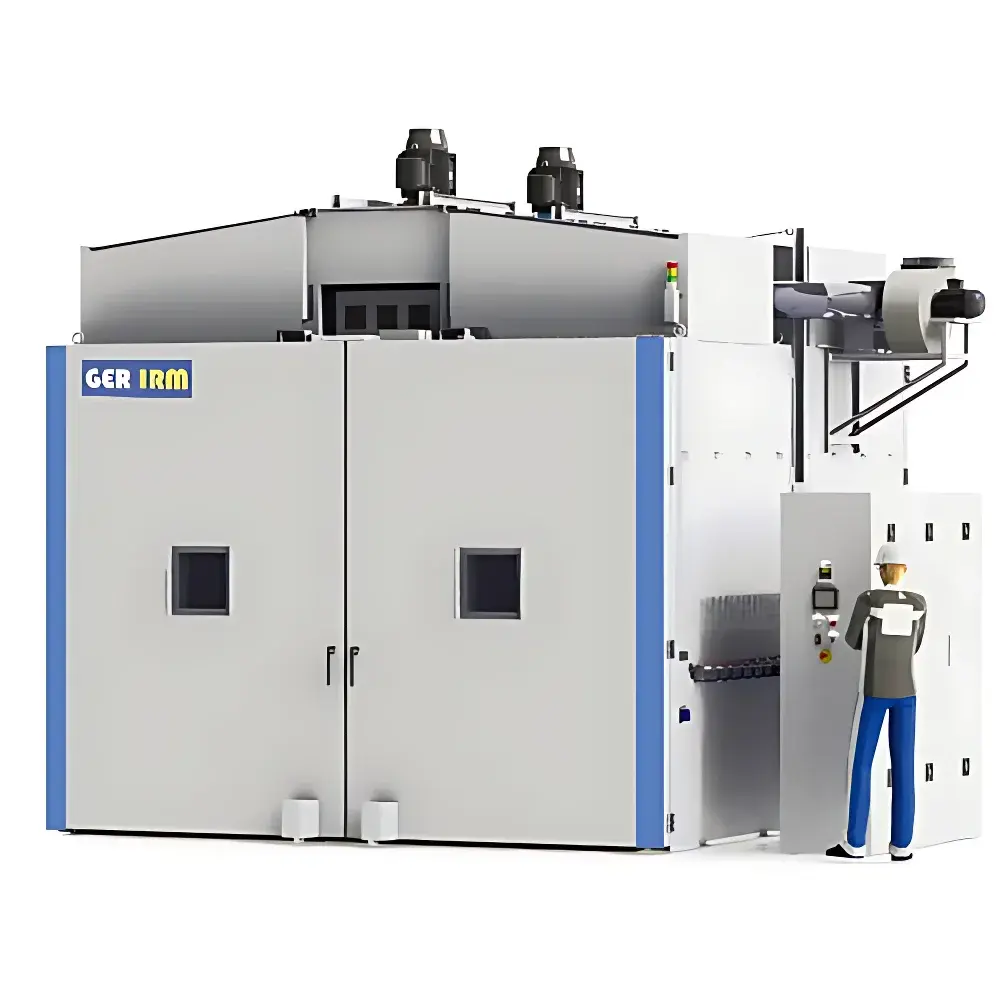
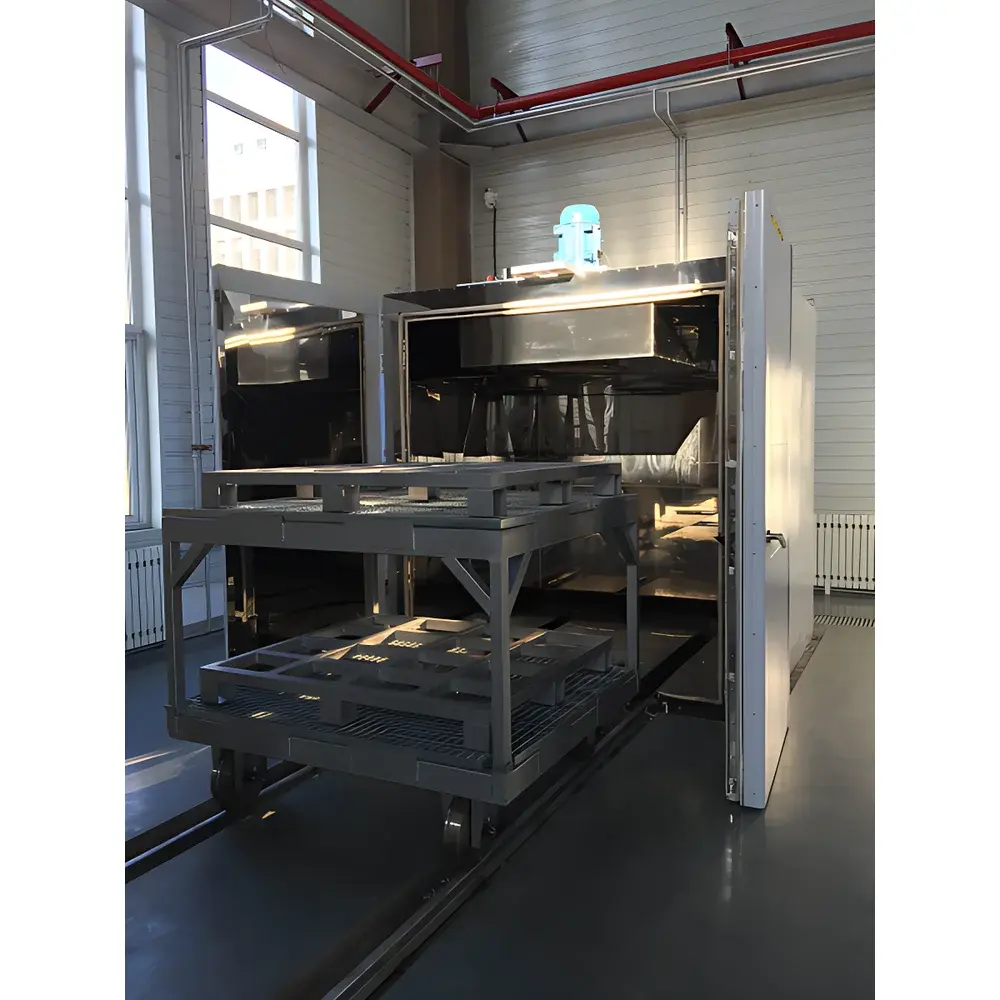
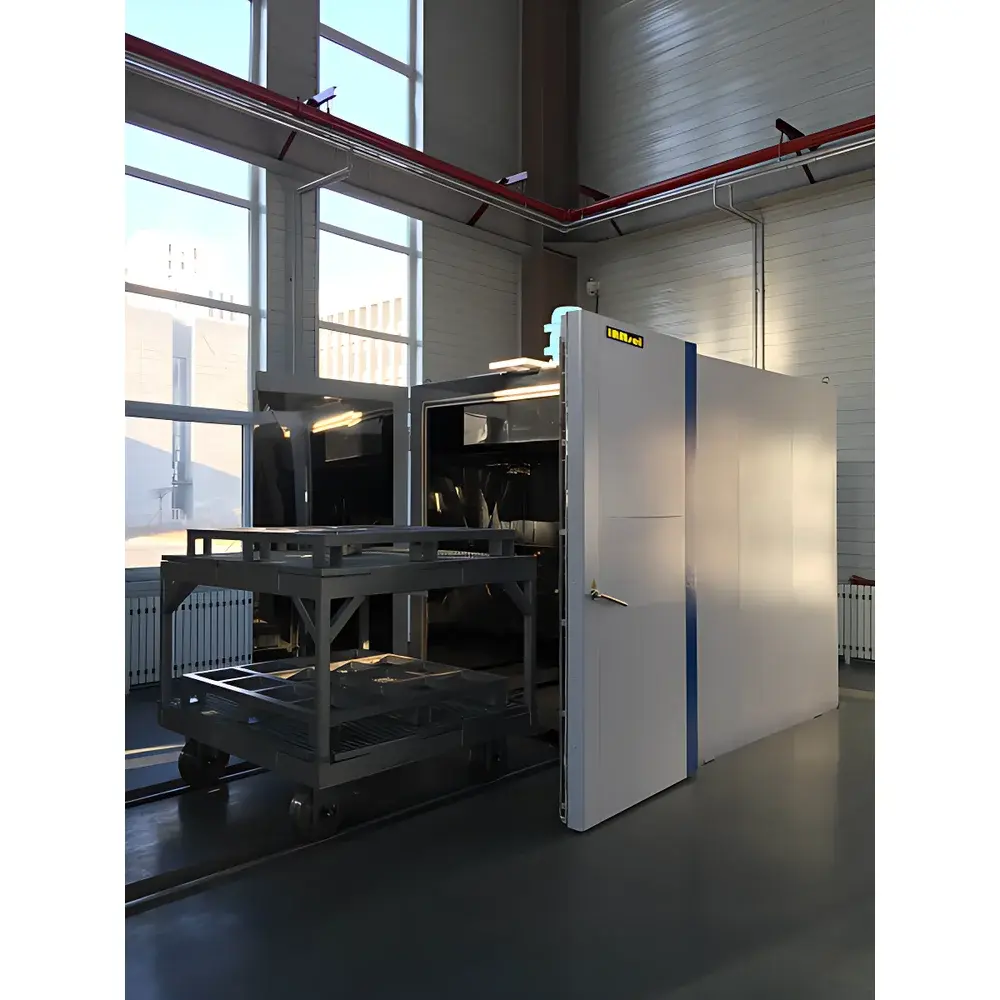
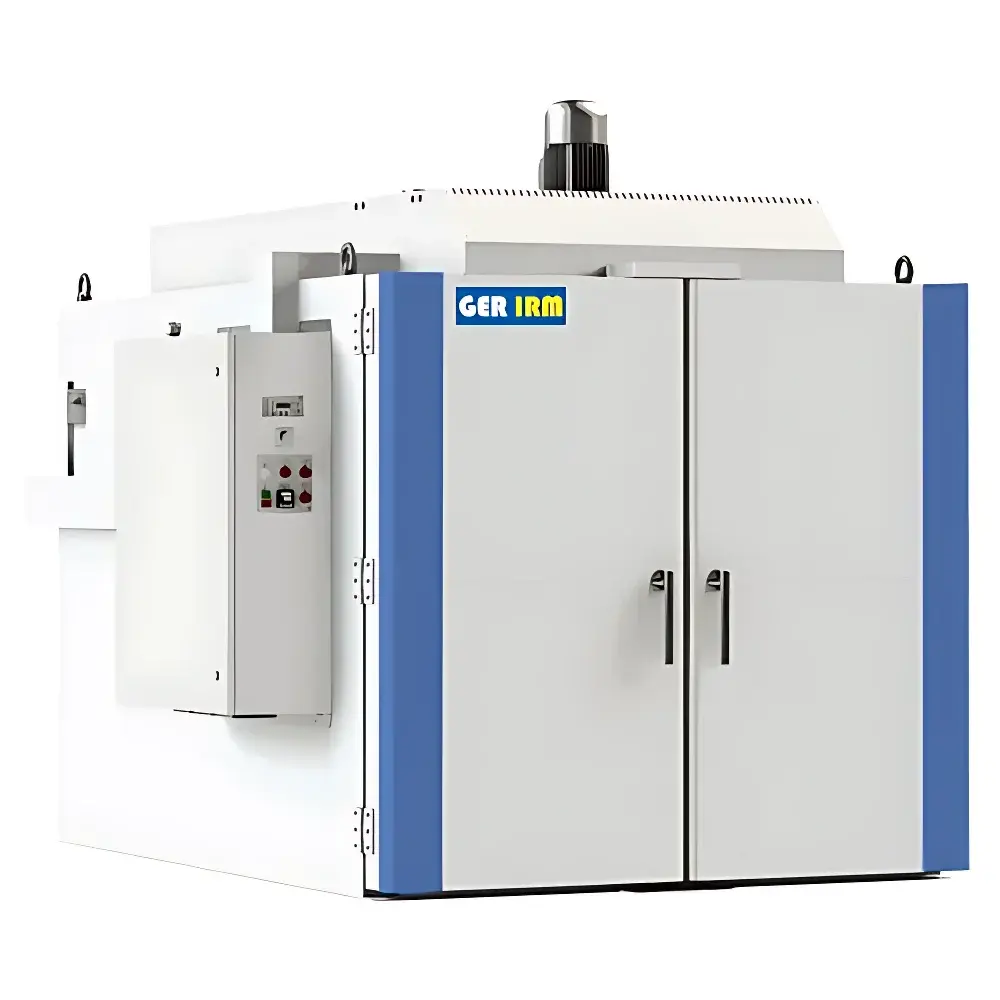
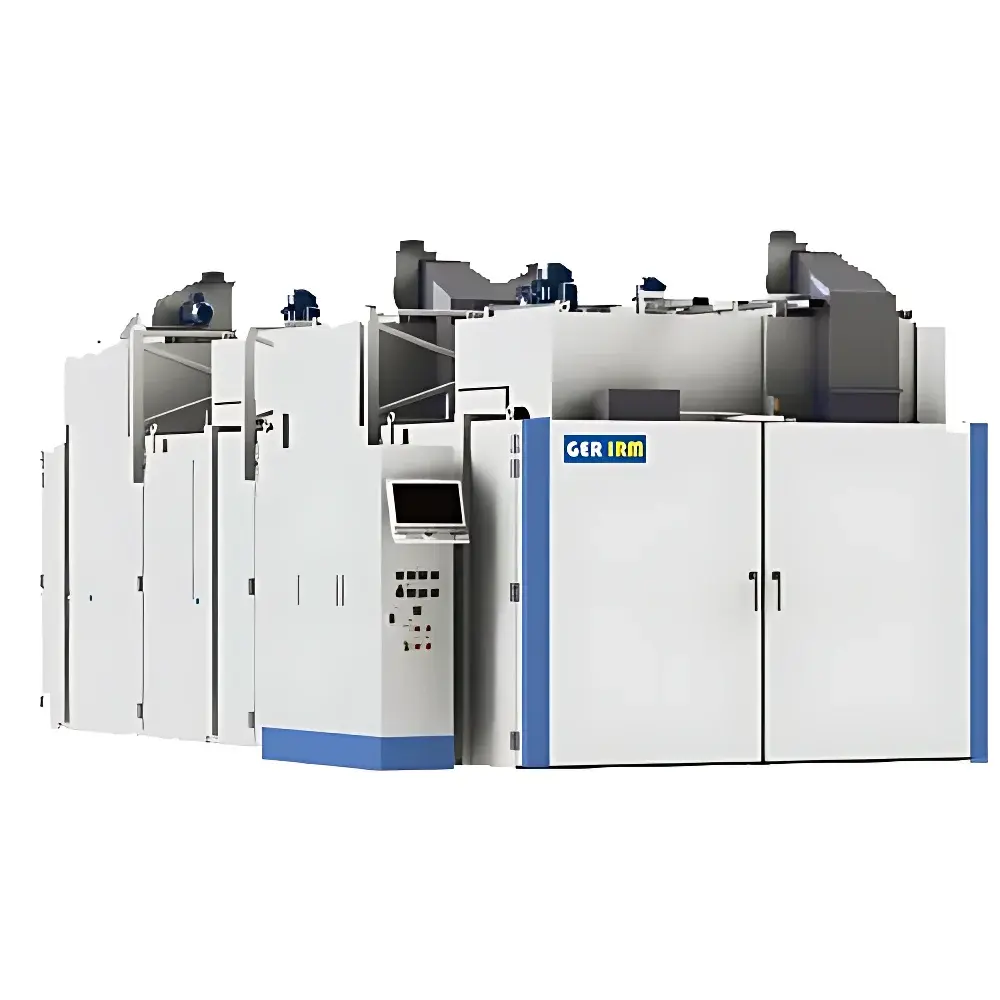
IRM L08 Industrial High-Temperature Forced-Air Circulation Drying Oven
| Brand | IRM |
|---|---|
| Origin | Hebei, China |
| Manufacturer Type | Direct Manufacturer |
| Product Category | Domestic |
| Model | L08 |
| Temperature Range | 200–500 °C |
| Temperature Uniformity | ±0.2 °C |
| Chamber Material | Stainless Steel (304 or 316 optional) |
| Heating Method | Forced-Air Convection |
| External Dimensions | Customizable |
| Internal Chamber Volume | 1–15 m³ (custom) |
| Instrument Type | High-Temperature Industrial Drying Oven |
Overview
The IRM L08 Industrial High-Temperature Forced-Air Circulation Drying Oven is an engineered thermal processing system designed for continuous, uniform, and repeatable drying, curing, aging, and preheating applications in demanding industrial and R&D environments. Utilizing precision-controlled forced-air convection—where heated air is actively circulated via high-efficiency axial fans and optimized baffle systems—the L08 ensures exceptional temperature homogeneity across large working volumes (1–15 m³). Its operational range of 200 °C to 500 °C places it within the class of high-temperature industrial ovens used for polymer crosslinking, ceramic sintering support, metal stress-relieving, catalyst activation, and thermal stability testing per ASTM E145 and ISO 27926. The oven’s structural integrity, thermal insulation performance, and control architecture are developed to meet long-term operational reliability under sustained elevated temperatures.
Key Features
- High-precision temperature control with digital PID regulation and dual-sensor redundancy (working + safety cutoff), achieving ±0.2 °C temperature fluctuation at setpoint
- Stainless steel chamber construction (standard 304; optional 316 for aggressive chemical or high-corrosion environments)
- Robust forced-air circulation system with variable-speed fans and adjustable airflow distribution baffles to minimize thermal stratification
- Customizable internal chamber dimensions and external footprint—engineered for integration into production lines, cleanrooms, or dedicated test laboratories
- Insulation composed of multiple-layer high-density ceramic fiber modules (≥150 mm thick), minimizing surface temperature rise and energy consumption
- Comprehensive safety architecture including over-temperature protection, door interlock switches, and real-time fault logging
Sample Compatibility & Compliance
The L08 accommodates a broad spectrum of sample types—including bulk powders, coated substrates, composite laminates, electronic assemblies, and metallic components—without compromising thermal uniformity or process repeatability. Its stainless steel interior resists oxidation and facilitates cleaning and validation. The oven complies with general-purpose industrial safety standards including IEC 61000-6-2 (EMC immunity) and IEC 61000-6-4 (EMC emissions). Optional configurations support GLP/GMP-aligned operation, featuring audit-trail-enabled controllers compliant with FDA 21 CFR Part 11 requirements when paired with IRM’s certified data acquisition software. Calibration documentation follows ISO/IEC 17025 traceability protocols upon request.
Software & Data Management
The L08 integrates with IRM’s proprietary THERMO-LOGIC™ control interface—a touchscreen HMI running on a real-time embedded OS. It supports multi-segment programmable profiles (up to 99 steps), event-triggered data logging (temperature, fan speed, elapsed time), and USB export of CSV-formatted datasets. Optional Ethernet or RS-485 connectivity enables remote monitoring and centralized fleet management via SCADA or MES platforms. All recorded thermal profiles include timestamped metadata, operator ID, and version-controlled firmware identification—critical for quality audits and regulatory submissions. Raw sensor data is stored locally with non-volatile memory backup and can be exported for third-party statistical process control (SPC) analysis.
Applications
- Thermal aging of elastomers and composites per ASTM D573 and ISO 188
- Curing of epoxy, silicone, and polyimide coatings in aerospace and electronics manufacturing
- Moisture removal from hygroscopic materials prior to analytical testing (e.g., Karl Fischer titration sample prep)
- Pre-drying of refractory bricks and ceramic green bodies before kiln firing
- Stress relief annealing of welded assemblies and machined aluminum components
- Validation of thermal stability in battery electrode materials and cathode precursors
FAQ
What is the maximum validated uniformity across a 10 m³ chamber at 450 °C?
At 450 °C, temperature uniformity is maintained within ±0.5 °C (9-point mapping per ASTM E2207), verified during factory acceptance testing.
Can the L08 be equipped with inert gas purging for oxygen-sensitive processes?
Yes—optional nitrogen or argon purge ports with mass flow controllers and O₂ monitoring sensors are available as a factory-installed configuration.
Is third-party calibration certification included with delivery?
A NIST-traceable calibration certificate for chamber temperature sensors is provided standard; ISO/IEC 17025-accredited calibration is available as an add-on service.
How is access control managed for GxP environments?
Role-based user authentication (admin/operator/auditor), electronic signatures, and full audit trail logging are enabled via optional software licensing and controller firmware upgrade.
What maintenance intervals are recommended for the forced-air system?
Fan motor lubrication and filter inspection are scheduled every 2,000 operating hours; ceramic fiber insulation integrity is assessed annually during preventive maintenance.



