
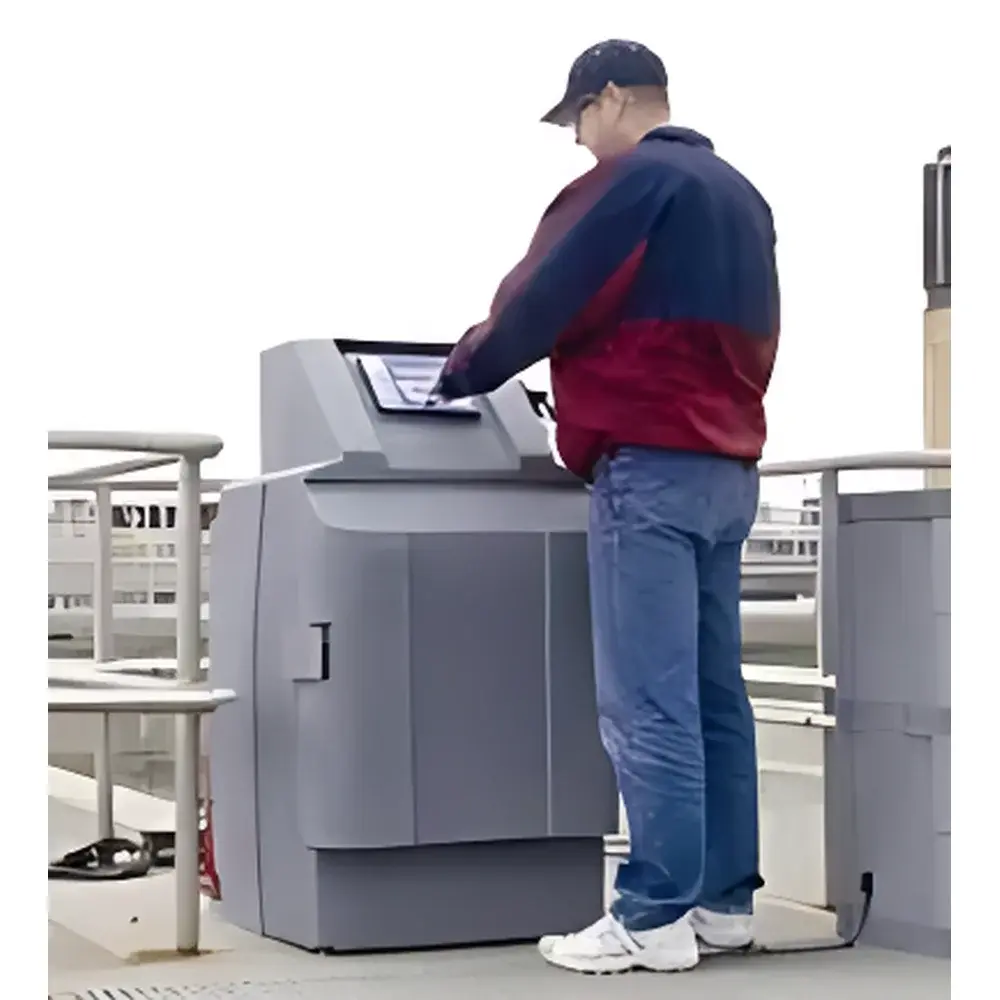
ISCO 4700 Refrigerated Automatic Wastewater Sampler
| Brand | ISCO |
|---|---|
| Origin | USA |
| Model | ISCO 4700 |
| Enclosure Material | Rotomolded Linear Low-Density Polyethylene (LLDPE) |
| Operating Temperature Range | –29 °C to +49 °C |
| Refrigeration System | High-Efficiency Compressor with Thermal-Insulated Cabinet |
| Pump Type | Heavy-Duty Peristaltic Pump |
| Maximum Lift Height | 7.6 m |
| Minimum Flow Velocity | 0.6 m/s (per US EPA requirements) |
| Sampling Modes | Time-Proportional, Flow-Proportional (Volume- or Time-Triggered), Composite or Discrete Bottle Sampling |
| Alarm Outputs | 4 Digital Relay Outputs |
| Input Compatibility | 4–20 mA and Pulse Flow Signals |
| Data Logging | Internal 24-hour Temperature & Event Log |
| Software Interface | RS-232 Serial Communication (HyperTerminal-Compatible) |
Overview
The ISCO 4700 Refrigerated Automatic Wastewater Sampler is an engineered solution for representative, time- and flow-proportional sampling of municipal and industrial wastewater streams under demanding field conditions. Designed in accordance with U.S. Environmental Protection Agency (EPA) Method 1664 and aligned with ISO 5667-10 (Water Quality — Sampling — Part 10: Guidance on Sampling of Wastewater), the 4700 integrates robust mechanical architecture with thermally stable sample preservation. Its core measurement principle relies on programmable peristaltic pumping combined with real-time flow signal integration (via 4–20 mA or pulse inputs) to execute precise composite or discrete sampling protocols. The unit maintains sample integrity through active refrigeration—sustaining cabinet temperatures between 1 °C and 4 °C for up to 24 hours—critical for preserving biochemical oxygen demand (BOD), nutrient speciation, and microbial viability during transport and laboratory analysis.
Key Features
- Rotomolded dual-wall linear low-density polyethylene (LLDPE) enclosure—resistant to UV degradation, chemical corrosion, and thermal shock; certified for outdoor deployment in ambient temperatures from –29 °C to +49 °C without auxiliary heating.
- High-efficiency hermetic compressor refrigeration system with vacuum-insulated cabinet walls—minimizes energy consumption while ensuring consistent cold-chain compliance for EPA-compliant holding times.
- Industrial-grade peristaltic pump with integrated pump tube counter and patented liquid detection circuitry—guarantees volumetric accuracy within ±5% of set volume across lift heights up to 7.6 m and flow velocities ≥0.6 m/s.
- Sliding bottle rack and rotating distribution arm—enabling ergonomic access and reducing operator fatigue during bottle loading/unloading; supports standard 1-L or 2-L HDPE or glass bottles (up to 24 positions).
- Intuitive membrane keypad interface with backlit LCD display—supports multilingual menu navigation (English, Spanish, French); stores up to 99 independent sampling programs with timestamped event logging.
- Four configurable digital alarm relays—programmable for pump fault, temperature excursion, power failure, or bottle full conditions; outputs comply with NEMA 4X-rated dry-contact specifications.
Sample Compatibility & Compliance
The ISCO 4700 accommodates heterogeneous wastewater matrices—including grit-laden influent, chemically treated effluent, and high-solids sludge streams—without clogging or cross-contamination. Its non-metallic fluid path (FDA-compliant silicone tubing, LLDPE manifold, and inert valve train) eliminates leaching risks and meets NSF/ANSI Standard 61 for drinking water system components (where applicable in reuse contexts). The sampler satisfies regulatory requirements for unattended operation under 40 CFR Part 136 (EPA-approved methods), ASTM D3370 (Standard Practices for Sampling Water), and EU Directive 2000/60/EC (Water Framework Directive) monitoring frameworks. All firmware operations generate audit-trail-capable logs compliant with GLP and GMP documentation standards.
Software & Data Management
Data acquisition and configuration are performed via RS-232 serial interface using terminal emulation software (e.g., Windows HyperTerminal or PuTTY). The internal memory records timestamped events—including refrigeration status, pump actuation cycles, temperature profiles (±0.5 °C resolution), and alarm triggers—for minimum 24-hour retention. Exported logs are CSV-formatted and compatible with LIMS integration or custom QA/QC validation scripts. Firmware updates are delivered via ASCII-based command-line protocol and require no proprietary drivers—ensuring long-term maintainability and IT security alignment with air-gapped network policies.
Applications
- Municipal wastewater treatment plant (WWTP) influent/effluent compliance monitoring per NPDES permit requirements.
- Industrial pretreatment program sampling at discharge points subject to 40 CFR Part 403 regulations.
- Combined sewer overflow (CSO) and sanitary sewer overflow (SSO) event-triggered sampling.
- Research-grade longitudinal studies requiring preserved nutrient (NH₄⁺, NO₃⁻, PO₄³⁻) or organic carbon (TOC, COD) stability.
- Calibration verification of online analyzers (e.g., UV-Vis spectrophotometers, ion-selective electrodes) using reference grab samples.
FAQ
Does the ISCO 4700 meet U.S. EPA requirements for composite sampling?
Yes—the 4700 complies with EPA Guidance Document QA/G-5 and Method 1664 for flow-weighted composite sampling when interfaced with certified flow meters.
Can the unit operate continuously in direct sunlight or high-humidity environments?
Yes—its rotomolded LLDPE shell and thermal insulation enable stable refrigeration performance without external shading or dehumidification.
Is pump tube replacement possible without tools or system shutdown?
Yes—pump head disengages automatically upon tube compartment opening; power interruption is hardware-enforced for operator safety.
What flow signal types does the 4700 accept for proportional sampling?
It accepts analog 4–20 mA signals and TTL-compatible pulse outputs from electromagnetic, ultrasonic, or magnetic flow meters.
How is temperature data retrieved and validated?
Temperature logs are exported via serial command “GET TEMPLOG” and support third-party validation against NIST-traceable thermistors per ISO/IEC 17025 calibration protocols.
Related Products







