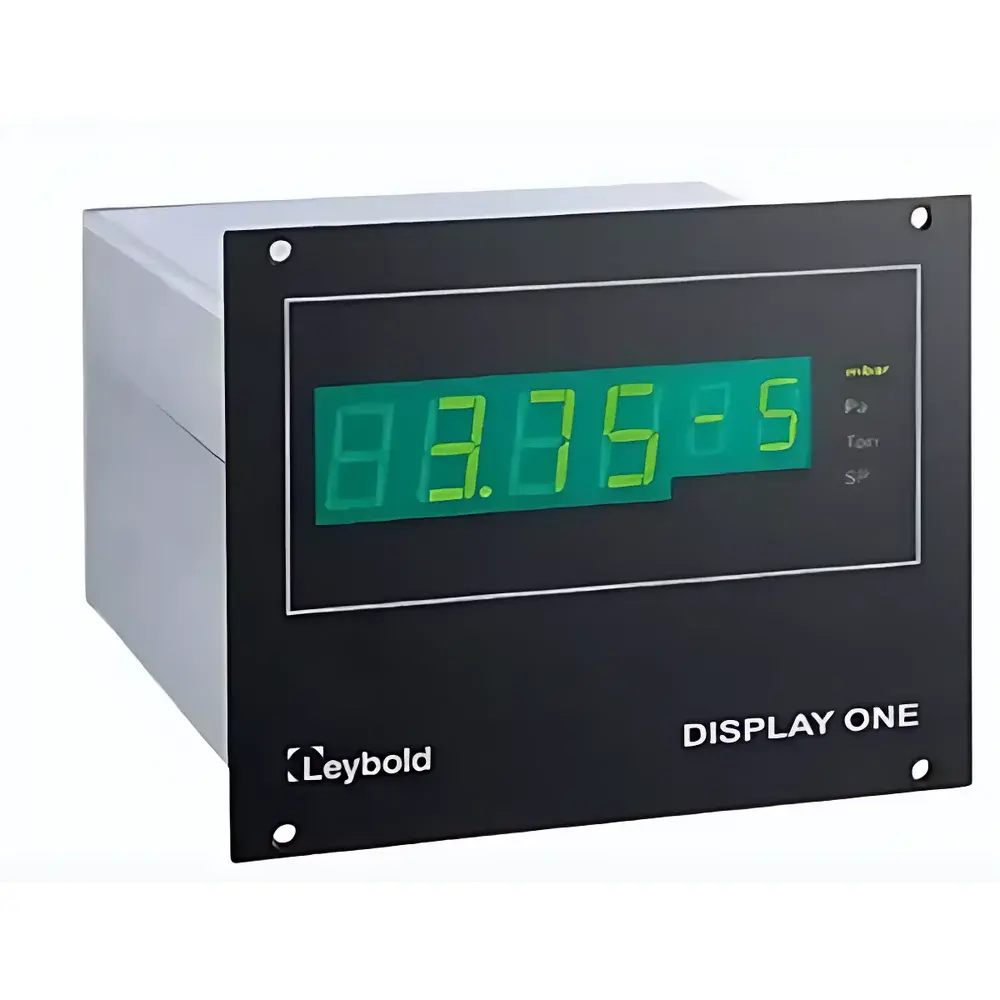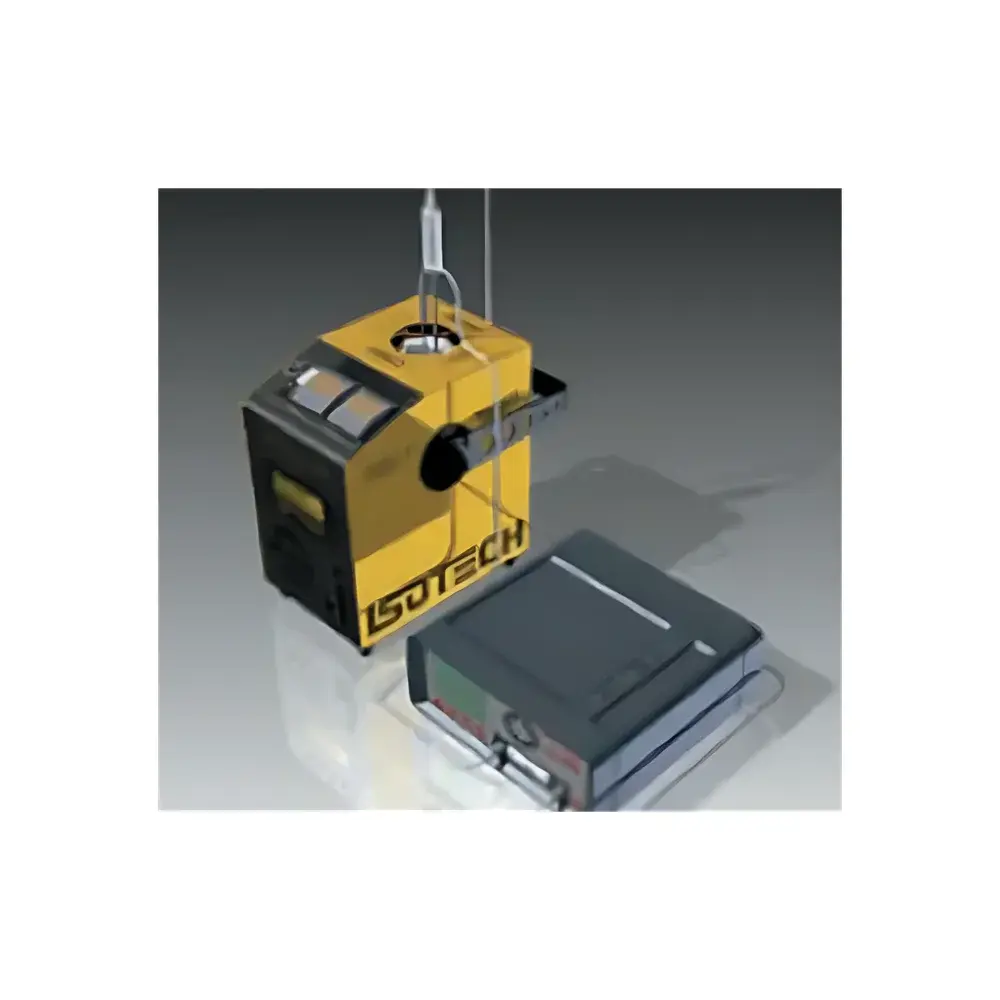
ISOTECH Millik-Based Portable Temperature Calibration System
| Brand | ISOTECH |
|---|---|
| Origin | United Kingdom |
| Product Type | Portable Dry-Block Temperature Calibration System |
| Primary Components | Millik Precision Thermometer + ISOTECH Dry-Block Furnace (Model B) |
| Temperature Range | −45 °C to 1200 °C |
| Measurement Channels | 3 independent inputs (simultaneous differential measurement supported) |
| Input Types | Thermocouples (all standard types), RTDs (Pt100, Pt1000), Thermistors (2-wire/3-wire/4-wire), and 4–20 mA current loops |
| Internal Reference | Built-in ITS-90 temperature conversion algorithms |
| Compliance | Designed for traceable calibration per ISO/IEC 17025, ASTM E2877, and IEC 60584 |
| Software Interface | USB and RS232 connectivity with optional ISOTECH CalSoft™ for automated calibration reporting and audit trails |
Overview
The ISOTECH Millik-Based Portable Temperature Calibration System is an integrated, field-deployable solution engineered for high-accuracy verification and calibration of contact temperature sensors under laboratory or industrial conditions. Combining the Millik precision thermometer—a 6½-digit, multi-input metrological-grade instrument—with the ISOTECH Dry-Block Furnace (Model B), this system implements a dual-stage traceable calibration architecture. The furnace establishes a stable, uniform thermal environment via resistive heating and active PID-controlled air circulation within a high-emissivity metal block; the Millik simultaneously acquires raw sensor outputs (voltage, resistance, or current), applies real-time ITS-90–compliant polynomial conversion, and displays calibrated temperature values directly in °C or °F. Unlike single-instrument calibrators, this system decouples thermal source stability from measurement electronics—enabling uncertainty budgets compliant with ISO/IEC 17025 Clause 6.4 and supporting uncertainty contributions as low as ±0.01 °C (k=2) for Pt100 probes at 0 °C when operated within specified environmental conditions.
Key Features
- Three independent analog input channels with configurable excitation, enabling concurrent measurement of two reference sensors and one device-under-test (DUT), or differential readings between any two channels
- Built-in ITS-90 temperature conversion tables for all standard thermocouple types (B, C, D, E, G, J, K, N, R, S, T), Pt100/Pt1000 RTDs (DIN/IEC 60751), and common NTC/PTC thermistors
- Dry-block furnace with axial temperature uniformity ≤ ±0.15 °C over 60 mm depth and stability ≤ ±0.02 °C/15 min at 100 °C (typical)
- Millik thermometer featuring 0.1 µV resolution on thermocouple inputs, 0.001 Ω on RTD inputs, and 1 µA resolution on 4–20 mA loops
- Full compliance with EN 61000-6-3 (EMC) and EN 61000-6-2 for industrial environments; CE-marked and UKCA-certified
- Integrated cold-junction compensation (CJC) using multiple platinum RTD sensors embedded in the terminal block for <0.05 °C uncertainty contribution
Sample Compatibility & Compliance
This system supports calibration of all common industrial and laboratory contact temperature sensors, including sheathed thermocouples (Type K, T, J, S), thin-film and wire-wound Pt100 RTDs, glass-encapsulated and epoxy-coated thermistors, and loop-powered temperature transmitters. Sensor immersion depth requirements follow ASTM E2877 guidelines: minimum 15× probe diameter or 75 mm—whichever is greater—for valid thermal equilibrium. The dry-block design eliminates fluid contamination risks and enables rapid cooldown (−45 °C achieved in <35 min from ambient). All measurement functions are documented in accordance with ISO/IEC 17025:2017 Section 7.7 (Uncertainty of Measurement) and support full traceability to NPL (UK) and NIST (USA) standards. Optional calibration certificates include expanded uncertainty statements with coverage factor k=2 and detailed sensitivity coefficients.
Software & Data Management
The system interfaces via USB or RS232 to ISOTECH CalSoft™ v4.x—a Windows-based calibration management application qualified for FDA 21 CFR Part 11 compliance. CalSoft supports automated procedure execution, dynamic tolerance assignment per sensor type, electronic signature capture, and generation of PDF/CSV reports conforming to ISO 17025 Annex A.3 requirements. Audit trails record all user actions—including parameter changes, calibration point edits, and report approvals—with immutable timestamps and operator ID linkage. Raw data export includes millivolt/resistance/mA values alongside converted temperatures, CJC readings, and furnace block temperature profiles—enabling post-hoc uncertainty re-evaluation per GUM (JCGM 100:2008).
Applications
- On-site verification of process temperature sensors in pharmaceutical cleanrooms (aligned with EU GMP Annex 15 and USP <1058>)
- Periodic performance checks of HVAC temperature sensors in ISO Class 5–8 controlled environments
- Factory acceptance testing (FAT) of sterilization autoclaves and lyophilizers
- Calibration of reference thermometers used in metrology labs accredited to ISO/IEC 17025
- Troubleshooting thermal drift in semiconductor manufacturing thermal chucks and wafer probers
- Validation of temperature data loggers prior to environmental stress screening (ESS) per MIL-STD-810H
FAQ
What temperature standards does the Millik thermometer use for conversion?
The Millik implements the full ITS-90 fixed-point interpolation polynomials defined in CCT/2007-1 and NIST Monograph 175, with individual coefficients stored per thermocouple type and RTD class.
Can the dry-block furnace be used with non-ISOTECH probes?
Yes—the furnace accepts any probe with diameter ≤16 mm and length ≥120 mm; however, optimal uniformity requires adherence to ASTM E2877 probe geometry recommendations.
Is GLP-compliant data archiving supported?
CalSoft™ provides full electronic record retention with role-based access control, versioned procedures, and tamper-evident audit logs meeting OECD GLP Principles Section 1.3.2.
Does the system support external reference thermometers?
Yes—via the Millik’s auxiliary input channel; users may connect a certified SPRT or PRT and configure it as a primary reference for in-situ comparison.
How is calibration interval determined?
Interval recommendations follow ISO 10012 and ANSI/NCSL Z540.3, based on historical stability data, usage frequency, and criticality of measurement—typically 6–12 months for routine industrial use.