
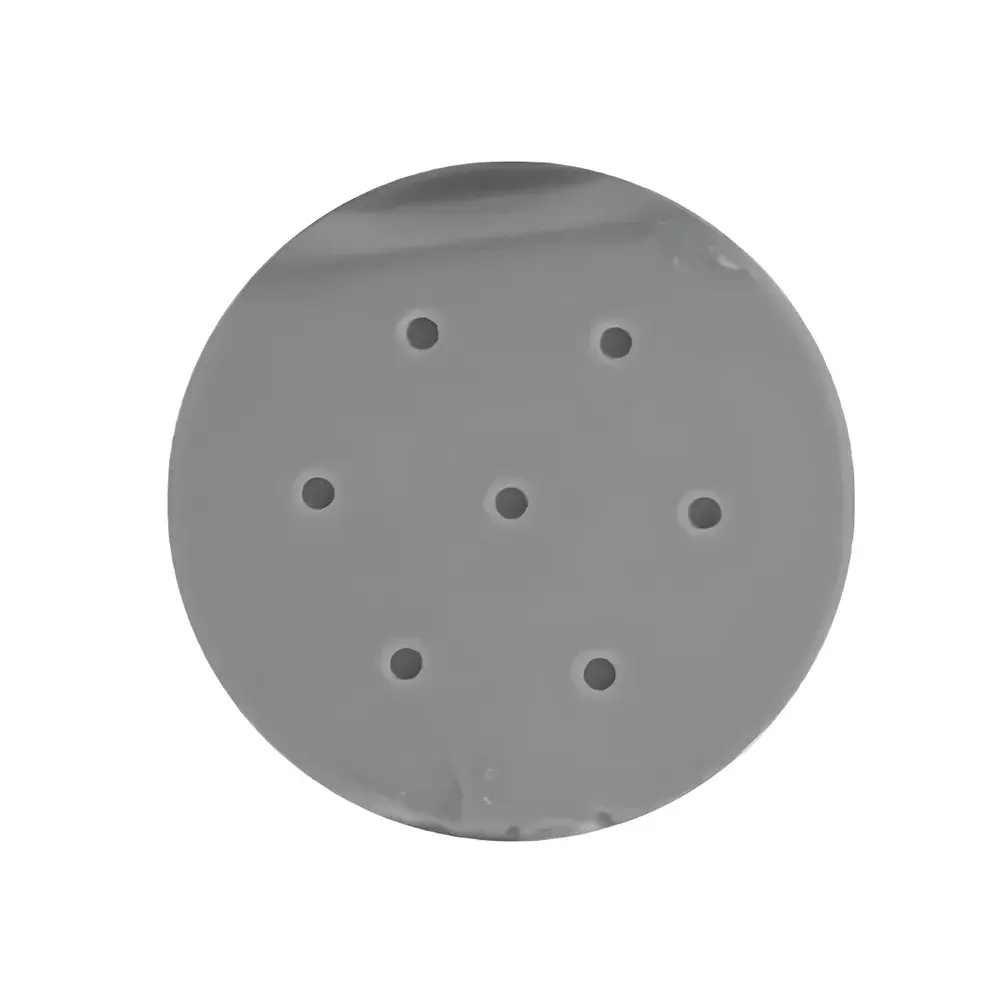
Ixblue Multicore Fiber (MCF) – Photonic Sensing & SDM-Optimized Optical Component
| Brand | Ixblue / Ixblue Photonics |
|---|---|
| Origin | France |
| Manufacturer Type | Authorized Distributor |
| Category | Imported Optical Component |
| Model Series | Specialty Multicore Fiber |
| Core Count | 4–12 Cores |
| Photosensitivity | Yes (FBG-compatible) |
| Fiber Types | Active-doped (e.g., Er-doped radiation-hardened) & Passive Power Delivery Variants |
| Compliance | ITU-T G.652.D / G.657.A1 baseline architecture, compatible with standard fiber splicing and grating inscription platforms |
Overview
Ixblue Multicore Fiber (MCF) is a precision-engineered optical waveguide structure designed for advanced photonic applications requiring spatial multiplexing, distributed sensing, or coherent beam combination. Unlike conventional single-mode fiber, this MCF integrates 4 to 12 geometrically arranged, independently guided cores within a shared cladding—enabling simultaneous propagation of multiple spatial modes while maintaining low inter-core crosstalk (< −30 dB over 1 km at 1550 nm, typical). The fiber’s design adheres to industry-standard mechanical and geometrical tolerances (outer diameter: 125 ± 1 µm; coating diameter: 245 ± 5 µm), ensuring compatibility with commercial fusion splicers, cleavers, and FBG inscription systems. Its photosensitive germanosilicate composition supports direct UV-induced refractive index modulation, making it suitable for femtosecond laser or phase-mask-based Bragg grating fabrication—critical for high-fidelity shape, strain, and temperature sensing arrays.
Key Features
- Scalable core architecture: Configurable 4-, 7-, or 12-core layouts optimized for specific coupling efficiency and mode isolation requirements
- Uniform core-to-core pitch (typically 38–45 µm) and matched numerical aperture (NA ≈ 0.12–0.14) enabling robust multicore interferometry and modal decomposition
- Photosensitivity certified for Type-I and Type-II FBG inscription under 248 nm KrF or 193 nm ArF excimer lasers
- Radiation-hardened erbium-doped variants available for space-qualified or nuclear environment instrumentation
- Low bend loss performance compliant with ITU-T G.657.A1 specifications—supports tight routing in compact sensor housings or robotic endoscopes
- Hermetically coated options (carbon or aluminum) available for long-term stability in humid or corrosive atmospheres
Sample Compatibility & Compliance
This MCF series is fully compatible with standard telecom-grade connectorization (FC/APC, SC/APC), fusion splicing (using core-alignment splicers such as Fujikura CT-50 or INNOVA S178), and polarization-maintaining pigtailing. It meets the mechanical reliability benchmarks defined in IEC 60793-2-50 (category A1a) for multimode and multicore fibers. For regulated environments—including aerospace structural health monitoring or medical device OEM integration—the fiber supports traceable lot documentation and can be supplied with full material declarations per RoHS 2011/65/EU and REACH Annex XIV. While not intrinsically certified to FDA 21 CFR Part 11, its use in Class I/IIa optical sensing subsystems complies with ISO 13485 design control requirements when integrated into validated instrument platforms.
Software & Data Management
Though the fiber itself is a passive component, its deployment in sensing systems benefits from Ixblue’s open API-enabled software suite, FiberSens, which supports real-time demultiplexing of core-resolved spectral data from broadband interrogators (e.g., Micron Optics sm125 or HBM QuantumX). The software implements matrix inversion algorithms for cross-talk compensation and provides calibrated output of curvature, torsion, and thermal drift vectors across the full length of the fiber. All raw spectral acquisitions and post-processed shape trajectories are exportable in HDF5 or CSV format, supporting integration into MATLAB, Python (via scipy and h5py), or LabVIEW-based DAQ frameworks. Audit trails and user-defined metadata tagging align with GLP-compliant laboratory workflows.
Applications
- Shape Sensing: Real-time 3D reconstruction of catheters, robotic surgical tools, and UAV wing deformation using multi-core interferometric or FBG-based strain mapping
- Distributed Temperature & Strain Monitoring: Multiplexed quasi-distributed sensing along pipelines, composite wind turbine blades, or civil infrastructure with sub-millimeter spatial resolution
- Space-Division Multiplexing (SDM): Enabling >10 Tbps transmission capacity in next-generation datacenter interconnects via mode-division multiplexing in conjunction with MIMO DSP
- Coherent Beam Combining: Phase-stabilized superposition of outputs from fiber amplifiers across discrete cores for high-brightness laser sources
- Quantum Photonics Interferometry: Multi-path entanglement distribution and on-chip quantum state tomography leveraging deterministic core coupling
FAQ
Is this fiber compatible with standard FBG inscription equipment?
Yes—its photosensitive germanosilicate composition has been validated with commercial UV phase-mask and point-by-point femtosecond laser inscription systems operating at 248 nm and 193 nm wavelengths.
What is the typical inter-core crosstalk level after 1 km propagation?
Measured values range from −32 dB to −38 dB at 1550 nm depending on core count and pitch configuration; lower crosstalk is achieved in 4-core designs optimized for sensing coherence.
Can I order custom core arrangements or doping profiles?
Ixblue offers engineering collaboration for bespoke multicore geometries, including asymmetric layouts and co-doping with ytterbium or thulium—subject to minimum order quantities and lead time assessment.
Do you provide splice loss data between MCF and SMF-28?
Typical fusion splice loss is 0.15–0.25 dB per joint using core-alignment splicing protocols; detailed loss matrices and mode-field diameter matching reports are available upon request.



