
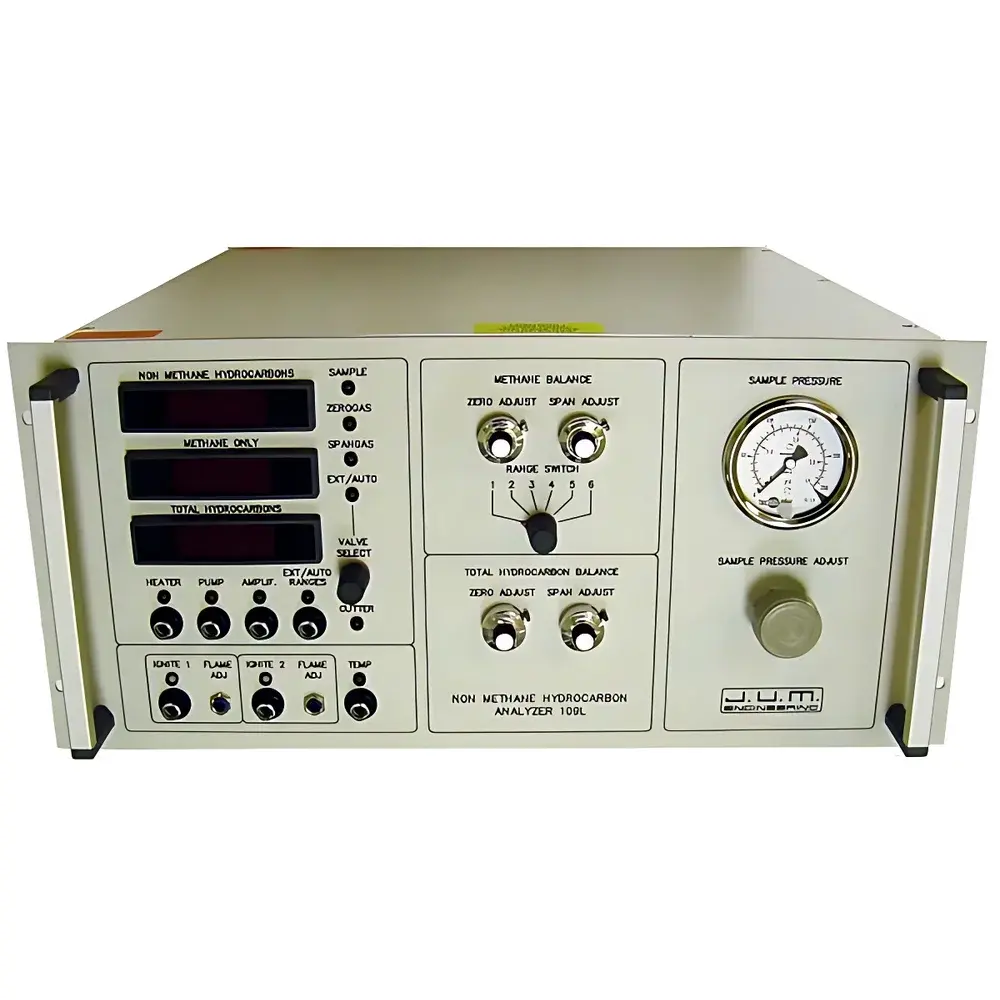
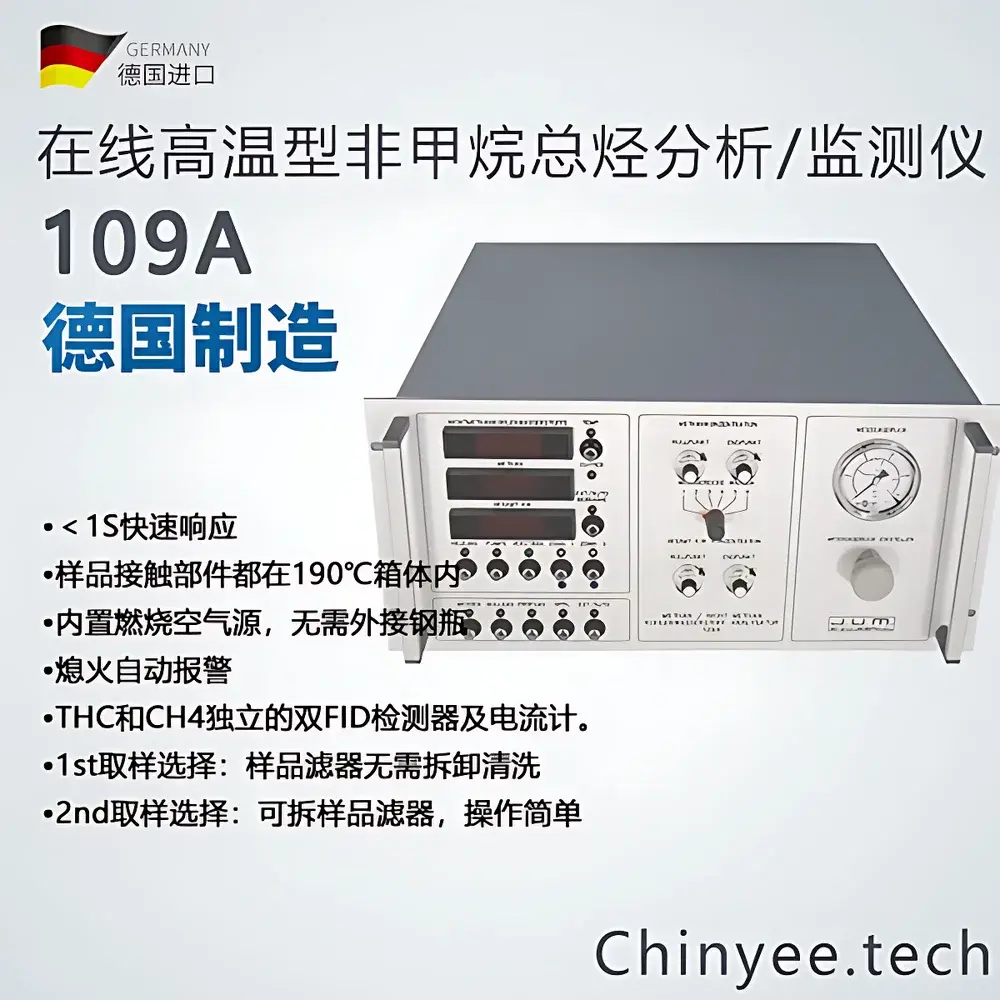
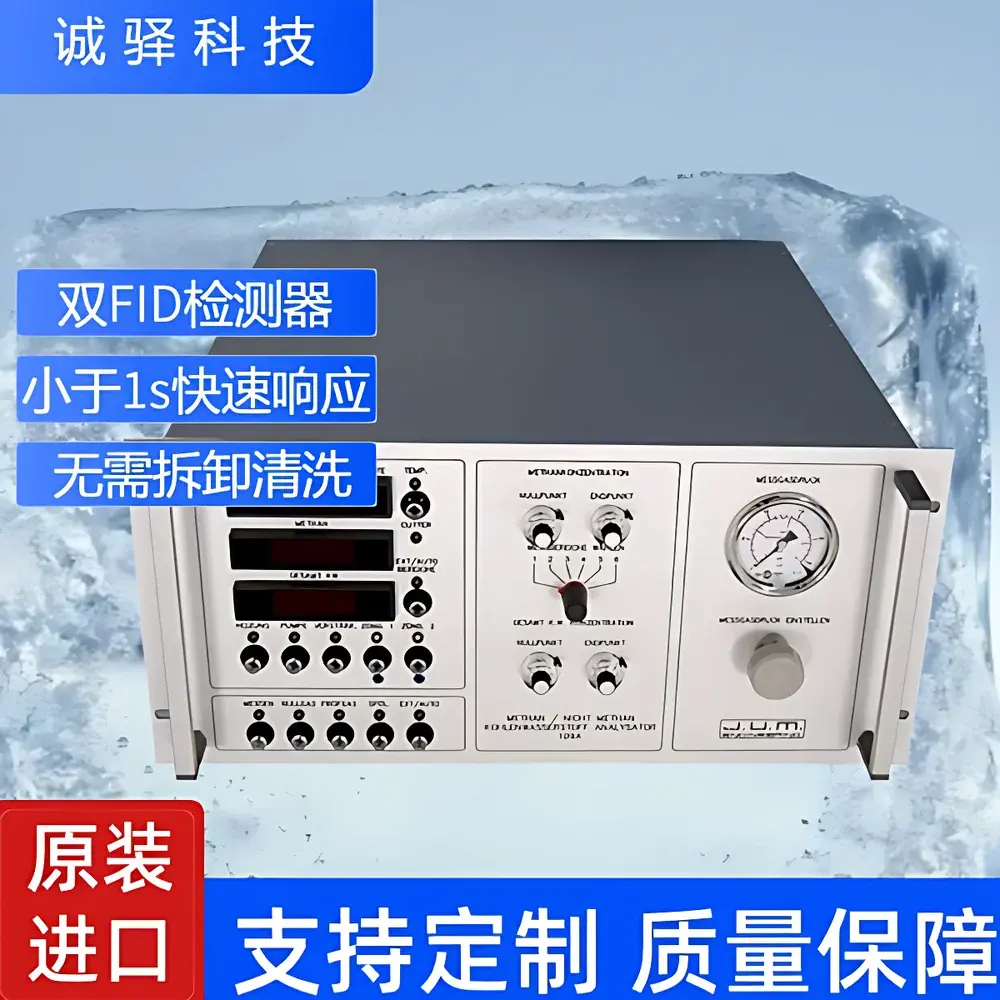
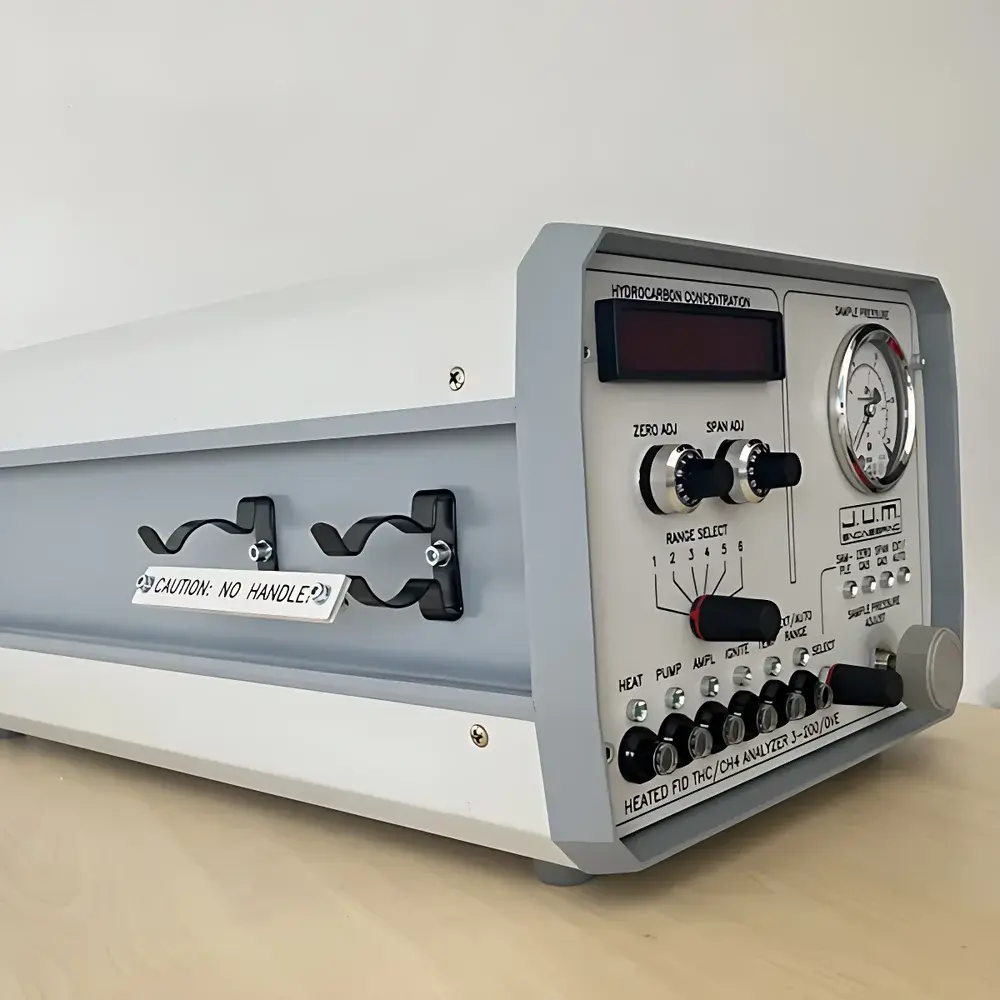
J.U.M. 109A-OVE Online Total Hydrocarbons (Non-Methane VOC) Analyzer with Flame Ionization Detection
| Brand | J.U.M. |
|---|---|
| Origin | Germany |
| Model | 109A-OVE |
| Detection Principle | Flame Ionization Detection (FID) |
| Instrument Type | Online Continuous Analyzer |
| Configuration | Total VOC (TVOC) Monitoring System |
| Measurement Range | 0–1000 ppm (as propane equivalent) |
| Resolution | 0.1 ppm |
| Accuracy | ±5% of reading |
| Response Time (T90) | <60 s |
Overview
The J.U.M. 109A-OVE is a certified online continuous analyzer engineered for the precise, real-time quantification of total hydrocarbons (THC) and non-methane volatile organic compounds (NMVOCs) in gaseous streams. Utilizing flame ionization detection (FID)—a reference-grade, carbon-selective measurement principle—the instrument delivers high sensitivity, linearity, and long-term stability across dynamic environmental and industrial sampling conditions. Unlike photoionization detectors (PID) or metal oxide sensors, FID provides stoichiometric response to virtually all organic compounds (except methane, which is selectively removed via catalytic methanizer or chromatographic separation when configured for NMVOC compliance), making it the internationally recognized method for regulatory-grade emissions monitoring per EPA Method 25A, EN 12619, and ISO 11890-2. The 109A-OVE is designed for permanent installation in fixed-site monitoring stations, stack emission control systems, and ambient air quality networks where trace-level hydrocarbon detection, low maintenance intervals, and metrological traceability are operationally essential.
Key Features
- Robust dual-stage FID detector with temperature-controlled combustion chamber and optimized hydrogen/air flow regulation for stable baseline and minimal drift (<0.5% FS/24 h)
- Integrated catalytic methane removal module (optional configuration) enabling compliant NMVOC determination per EU Directive 2008/50/EC and US EPA 40 CFR Part 60 Subpart Ja
- Heated sample line and conditioning system (up to 180 °C) preventing condensation and adsorption losses of high-boiling VOCs (e.g., C8–C12 aromatics, terpenes)
- Automated zero/span calibration capability with integrated solenoid valves and certified gas manifold—supports unattended operation for ≥7 days
- IP65-rated stainless-steel enclosure with NEMA 4X compatibility, suitable for outdoor deployment in harsh climatic environments (−20 °C to +50 °C operating range)
- Modular architecture permitting field-upgradable components including data logger, analog I/O expansion, and digital communication interfaces (RS-485, Modbus TCP, optional Profibus DP)
Sample Compatibility & Compliance
The 109A-OVE accepts sample gas streams from ambient air, flue gas (diluted or conditioned), process vent lines, and fugitive emission sources. Sample inlet pressure is regulated to 100–120 kPa (abs), with particulate filtration (0.3 µm PTFE membrane) and moisture removal via Nafion™ dryer or chilled mirror dew point control. The analyzer meets CE marking requirements under the EU Measuring Instruments Directive (MID 2014/32/EU) for Class 0.5 accuracy class instruments. It supports full audit trail functionality aligned with GLP and ISO/IEC 17025 laboratory quality management systems. Data integrity complies with FDA 21 CFR Part 11 when paired with J.U.M.’s certified firmware version 3.2+ and optional electronic signature module.
Software & Data Management
Instrument operation and data handling are managed through J.U.M.’s proprietary WinControl 5 software suite, compatible with Windows 10/11 (64-bit). The software provides real-time waveform visualization, configurable alarm thresholds (pre-set and user-defined), automatic report generation (PDF/CSV), and seamless integration into SCADA or EMS platforms via OPC UA. All raw FID current signals, calibration logs, system diagnostics, and environmental sensor readings (temperature, pressure, flow) are timestamped and stored locally on an industrial-grade SD card (≥32 GB) with cyclic overwrite protection. Remote access is enabled via secure TLS 1.2 encrypted web interface, supporting role-based user permissions and encrypted data export for third-party validation.
Applications
- Continuous monitoring of non-methane hydrocarbon concentrations at municipal landfill perimeter sites and biogas upgrading facilities
- Regulatory compliance reporting for stationary source emissions under national air quality management frameworks (e.g., China’s HJ 1013–2018, Germany’s TA Luft)
- Real-time leak detection in aerosol manufacturing plants, coating application lines, and solvent recovery units
- Mobile monitoring vehicle integration for roadside vehicle exhaust screening and urban hotspot mapping
- Boundary monitoring around chemical storage zones and pharmaceutical cleanroom exhaust stacks to verify containment integrity
FAQ
Does the 109A-OVE require carrier gas? Why?
No carrier gas is required—the FID operates using sample gas as both analyte stream and combustion matrix; only ultra-high-purity hydrogen (≥99.999%) and synthetic air (hydrocarbon-free) are consumed as detector gases.
Can it distinguish between individual VOC species?
No—this is a total hydrocarbon analyzer. For speciated VOC analysis, GC-FID or GC-MS coupling is required; the 109A-OVE reports sum concentration as ppmv propane-equivalent.
What maintenance schedule is recommended for routine operation?
Monthly verification with certified span gas (±2% tolerance), quarterly FID jet cleaning, and annual replacement of hydrogen filter and combustion catalyst—documented in J.U.M.’s Maintenance Logbook (EN ISO 9001-compliant template included).
Is the instrument certified for use in explosion-hazardous areas?
Standard configuration is rated for Zone 2 (non-hazardous); ATEX/IECEx-certified variants (109A-OVE-Ex d) are available upon request with flameproof enclosure and intrinsic safety barriers.
How is methane interference eliminated in NMVOC mode?
Via a heated catalytic converter upstream of the FID that oxidizes methane to CO₂ and H₂O, followed by selective scrubbing—verified by daily zero-check with certified methane-free air per EN 15267-3 Annex B.







