
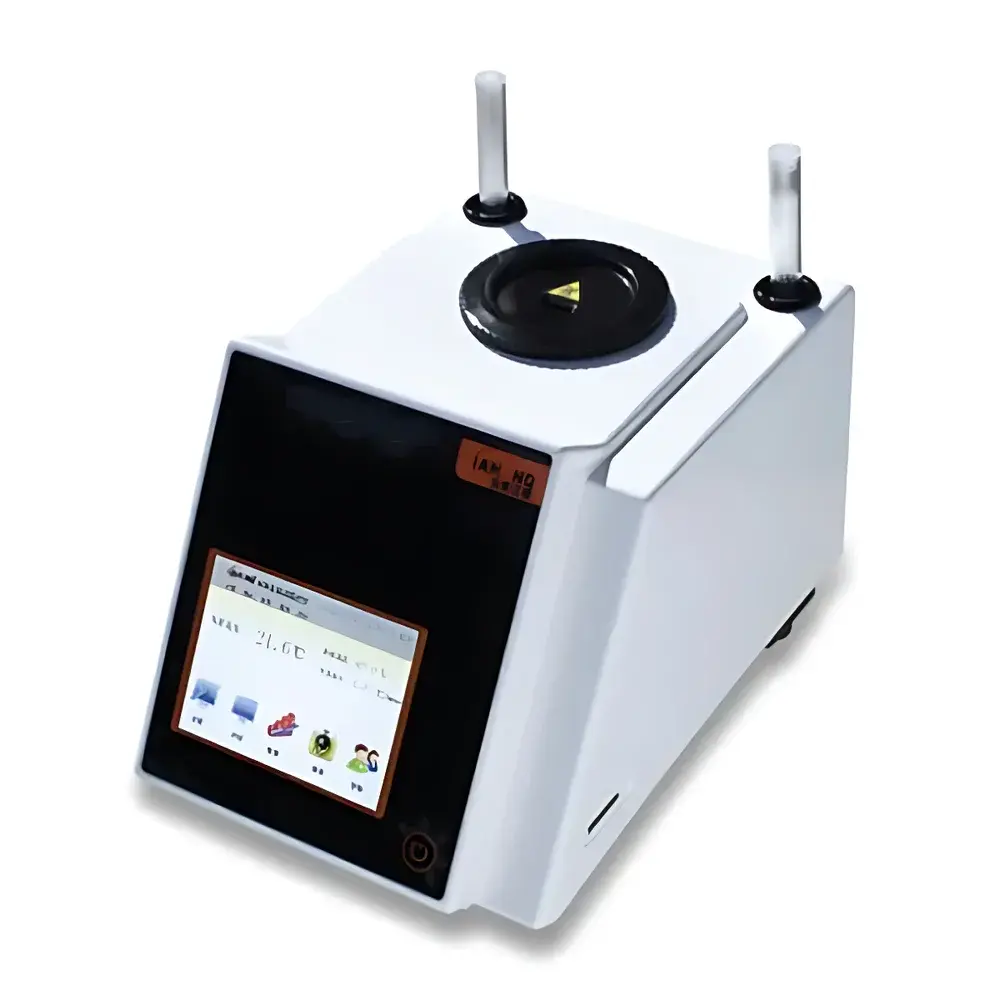
J40 Automated Melting Point Apparatus
| Origin | Shanghai, China |
|---|---|
| Manufacturer Type | Authorized Distributor |
| Origin Category | Domestic (PRC) |
| Model | J40 |
| Price Range | USD 7,000–14,000 (FOB) |
| Temperature Range | Ambient to 350 °C |
| Heating Rate | 0.1–20 °C/min (200-step continuous adjustment) |
| Temperature Repeatability | ±0.1 °C at 0.1 °C/min heating rate |
| Temperature Accuracy | ±0.3 °C (<250 °C), ±0.5 °C (>250 °C) |
| Capillary Dimensions | OD 1.4 mm, ID 1.0 mm |
| Sample Capacity | 2 positions (dual-channel simultaneous analysis) |
| Temperature Resolution | 0.1 °C |
| Display | TFT high-definition color LCD |
| Power Supply | 220 V AC, 50 Hz, 120 W |
| Data Interfaces | USB, RS-232, Ethernet |
| User Accounts | 8 configurable profiles |
| Melting Curve Storage | 10 full thermal profiles |
| Data Log Capacity | 200 test records |
| Detection Mode | Fully automated optical endpoint detection only (no manual override) |
Overview
The J40 Automated Melting Point Apparatus is a precision thermal analysis instrument engineered for reliable, operator-independent determination of melting onset (onset temperature), clear point (final melt), and melting range (melting interval) of crystalline organic solids. Based on the standard capillary tube method per ASTM E324 and ISO 6377, the J40 employs high-stability Peltier-based heating control coupled with real-time digital image acquisition and algorithmic endpoint recognition. Unlike traditional analog or semi-automated units, the J40 eliminates subjective visual interpretation by continuously monitoring optical transmittance changes across the sample column during controlled heating. This enables unambiguous, reproducible identification of phase transition boundaries under strictly defined thermal protocols—critical for regulatory submissions in pharmaceutical development, quality control of active pharmaceutical ingredients (APIs), and raw material qualification in fine chemical synthesis.
Key Features
- Dual-sample independent measurement channels allow parallel analysis of two distinct compounds or replicate determinations without cross-contamination or thermal crosstalk.
- 200-step continuously adjustable heating rate (0.1–20 °C/min) ensures compliance with pharmacopeial methods requiring specific ramp profiles—for example, USP <741> mandates 1 °C/min for official monographs, while accelerated screening may use higher rates.
- High-resolution temperature control (0.1 °C resolution) with verified accuracy (±0.3 °C below 250 °C) meets GLP/GMP calibration traceability requirements when paired with NIST-traceable reference standards.
- TFT color display provides real-time visualization of the melting curve, including derivative (dT/dt) overlay, enabling immediate assessment of sample purity via melting range width and shape.
- Embedded user management supports up to eight password-protected accounts with role-specific access levels—essential for audit-ready environments governed by FDA 21 CFR Part 11 and EU Annex 11.
- Native USB, RS-232, and Ethernet interfaces enable seamless integration into laboratory information management systems (LIMS) and support automated report generation with time-stamped, tamper-evident data export.
Sample Compatibility & Compliance
The J40 accepts standard thin-wall glass capillaries (OD 1.4 mm, ID 1.0 mm), compatible with all major pharmacopeial specifications (USP, EP, JP). It accommodates both dry and solvent-dried crystalline powders, including hygroscopic, low-melting, or polymorphic substances—provided samples are loaded consistently to 3–5 mm height. The system complies with ISO/IEC 17025:2017 general requirements for competence of testing and calibration laboratories. Its thermal performance has been validated against certified reference materials such as indium (156.6 °C), tin (231.9 °C), and potassium nitrate (334 °C), confirming linearity and repeatability across the full 25–350 °C operating window. No external cooling or purge gas is required, making it suitable for standard analytical lab environments without dedicated HVAC modifications.
Software & Data Management
Instrument firmware includes embedded data logging with automatic timestamping, user attribution, and session-level metadata capture (heating rate, capillary ID, ambient conditions if logged externally). Up to 10 complete melting thermograms—including raw transmittance vs. temperature plots and first-derivative curves—are retained onboard. Export formats include CSV (for spreadsheet analysis), PDF (with embedded digital signature for QA review), and XML (for LIMS ingestion). All data entries maintain immutable audit trails compliant with ALCOA+ principles (Attributable, Legible, Contemporaneous, Original, Accurate, Complete, Consistent, Enduring, Available). Firmware updates are delivered via secure HTTPS download and require administrative authentication prior to installation.
Applications
- Pharmaceutical QC/QA: Identity confirmation and purity assessment of APIs and excipients per ICH Q5 and Q6 guidelines.
- Academic research: Polymorph screening, eutectic mixture characterization, and thermal stability profiling of novel synthetic intermediates.
- Regulatory filing support: Generation of GMP-compliant melting data packages for ANDA, NDA, and DMF submissions to FDA, EMA, and PMDA.
- Contract manufacturing organizations (CMOs): Batch release testing aligned with client-specified SOPs and internal quality agreements.
- Food & fragrance chemistry: Verification of melting behavior in fatty acids, waxes, and aroma compound crystals where texture and release kinetics depend on thermal transitions.
FAQ
Does the J40 support manual observation mode?
No—the J40 operates exclusively in fully automated optical detection mode. Manual visual interpretation is not supported, ensuring consistency and eliminating inter-operator variability.
Can the instrument be calibrated in-house using certified reference standards?
Yes—calibration verification is performed using three NIST-traceable reference substances across the temperature range. Full calibration requires authorized service technician intervention per ISO/IEC 17025 Clause 6.5.
Is network connectivity mandatory for routine operation?
No—standalone operation is fully functional. Network connectivity is optional and used only for remote diagnostics, centralized data backup, or LIMS synchronization.
What is the maximum allowable ambient temperature for stable operation?
The J40 is rated for continuous operation at ambient temperatures between 15 °C and 30 °C, with relative humidity ≤70% non-condensing. Operation outside this range may affect thermal gradient stability and optical sensor response.
How often does the capillary holder require maintenance or replacement?
The quartz-fused capillary stage is designed for >10,000 cycles. Routine cleaning with lint-free swabs and isopropanol is recommended after every 50 analyses involving volatile or residue-prone samples.



