
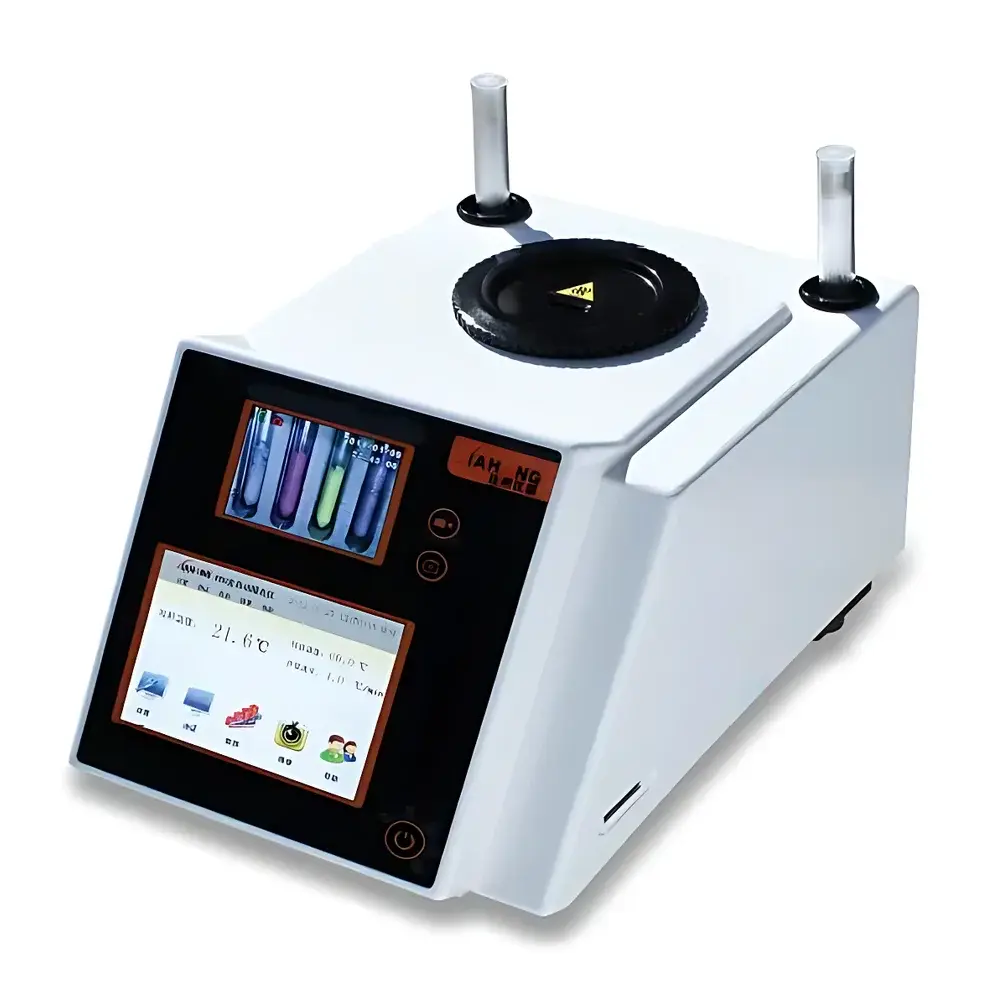
J90 Automated Video Melting Point Apparatus
| Origin | Shanghai, China |
|---|---|
| Manufacturer Type | Authorized Distributor |
| Origin Category | Domestic (PRC) |
| Model | J90 |
| Price Range | USD 7,000–14,000 |
| Temperature Range | Ambient to 420 °C |
| Heating Rate | 0.1–20 °C/min (200-step continuous adjustment) |
| Temperature Repeatability | ±0.1 °C at 0.1 °C/min |
| Temperature Accuracy | ±0.3 °C (<250 °C), ±0.5 °C (>250 °C) |
| Capillary Dimensions | OD 1.4 mm, ID 1.0 mm |
| Sample Capacity | 4 samples per run |
| Temperature Resolution | 0.1 °C |
| Data Storage | 32 GB internal SSD |
| Image/Video Storage | Up to 1,000 frames + 80 complete melting profiles |
| User Accounts | 20 configurable roles with password protection |
| Operating Interface | 7-inch TFT full-color touchscreen |
| Connectivity | USB 2.0, RS-232, Ethernet |
| Optical Magnification | 7× |
| Integrated Thermal Printer | Yes |
| Reference Standard Set Included | Yes |
Overview
The J90 Automated Video Melting Point Apparatus is a precision thermal analysis instrument engineered for high-reproducibility determination of solid-phase transition temperatures in crystalline organic compounds. It employs a closed-loop PID-controlled heating block coupled with real-time high-definition video imaging (7× optical magnification) to capture and analyze the morphological evolution of samples during thermal ramping. Unlike conventional capillary-based analog melt point testers relying on subjective visual interpretation through ocular lenses, the J90 digitizes the entire melting event—detecting onset (initial softening), clear point (complete liquefaction), and intermediate stages—with algorithmic edge-detection processing applied directly to live video streams. This eliminates observer bias and ensures traceable, auditable results compliant with pharmacopeial guidelines including USP <741>, EP 2.2.17, and JP 2.60.
Key Features
- Simultaneous four-channel independent sample analysis using standardized 1.4 mm OD × 1.0 mm ID glass capillaries—enabling parallel testing without cross-contamination or thermal crosstalk.
- Programmable heating rate from 0.1 to 20 °C/min in 200 discrete steps, supporting both rapid screening and high-resolution melt interval profiling.
- Thermal accuracy validated to ±0.3 °C below 250 °C and ±0.5 °C above 250 °C, calibrated against NIST-traceable reference standards (e.g., indium, caffeine, phenacetin).
- Integrated 7-inch capacitive touchscreen interface with intuitive workflow navigation, multi-language support (English, German, French, Japanese), and GLP-compliant electronic signature capability.
- Onboard 32 GB SSD storage for ≥1,000 raw image frames and up to 80 full melting profile datasets—including time-stamped video clips, temperature vs. time curves, and annotated detection markers.
- Full audit trail functionality: system logs record user login/logout events, method modifications, calibration history, and result exports—meeting FDA 21 CFR Part 11 requirements when deployed with network authentication and role-based access control.
Sample Compatibility & Compliance
The J90 accommodates both powdered and small solid fragments (≤2 mm) loaded into standard thin-wall capillaries. Its non-contact video detection mechanism eliminates reliance on sample transparency or color contrast, making it suitable for pigmented APIs, metal complexes, and thermally sensitive intermediates. The instrument complies with ISO 11357-3 for differential scanning calorimetry correlation, ASTM D1519 for polymer melting behavior assessment, and ICH Q5C stability protocol requirements for biopharmaceutical excipients. All firmware and software modules undergo annual verification against current versions of USP Chapter <741> and Ph. Eur. 2.2.17 validation protocols.
Software & Data Management
Built-in firmware supports method-driven operation via preloaded templates (100 customizable protocols) and “Explore Mode” for manual thermal ramp exploration. Data export options include CSV (for LIMS integration), PDF reports with embedded video thumbnails, and proprietary .MPD binary files containing synchronized thermal and image metadata. USB and Ethernet interfaces enable direct connection to laboratory networks; RS-232 allows legacy printer or PLC interfacing. The system supports automated report generation with configurable headers, footer stamps (including analyst ID, instrument ID, and QA approval fields), and digital watermarking for integrity assurance.
Applications
- Pharmaceutical QC/QA: Identity confirmation and purity assessment of active pharmaceutical ingredients (APIs) and excipients per compendial monographs.
- Chemical R&D: Reaction endpoint monitoring, polymorph screening, and thermal stability evaluation of novel synthetic intermediates.
- Food & Flavor Industry: Verification of melting characteristics in fats, cocoa butter equivalents, and encapsulated flavor crystals.
- Academic Research: Teaching laboratories requiring reproducible, visually verifiable phase-transition demonstrations aligned with undergraduate physical chemistry curricula.
- Regulatory Submissions: Generation of ALCOA+ compliant data packages for ANDA, NDA, and CMC sections requiring documented thermal characterization evidence.
FAQ
Does the J90 meet 21 CFR Part 11 requirements for electronic records?
Yes—the system implements role-based user authentication, electronic signatures with biometric or token-based second-factor options, immutable audit trails, and encrypted data storage when configured with enterprise network policies.
Can the instrument be calibrated in-house using certified reference materials?
Yes—calibration routines support user-loaded NIST-traceable standards with automatic slope/offset correction and certificate generation.
Is remote monitoring or control possible?
Remote status viewing and method initiation are supported via secure HTTPS web interface; full remote operation requires optional VNC-enabled firmware upgrade and IT-approved firewall configuration.
What maintenance is required for long-term thermal accuracy?
Annual verification using certified reference substances is recommended; no consumables other than capillaries and thermal printer paper are required.
How does video-based detection improve repeatability over traditional visual methods?
Algorithmic pixel-intensity gradient analysis removes inter-operator variability, detects sub-pixel morphological changes, and provides timestamped event markers unattainable by human observation alone.



