
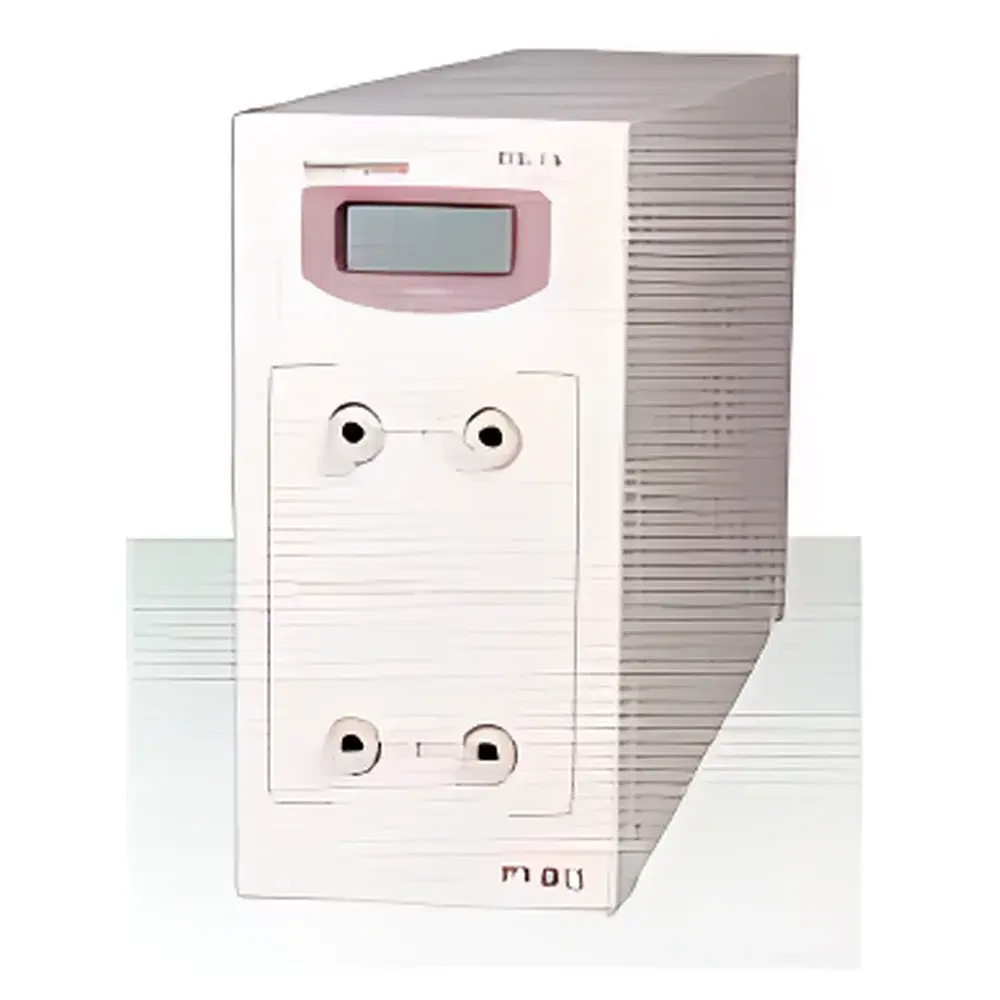
JAI GASTORR PG-11/12 Solvent Degassing System
| Brand | JAI |
|---|---|
| Origin | Japan |
| Model | GASTORR PG-11 / GASTORR PG-12 |
| Flow Paths | 1 / 2 |
| Internal Chamber Volume | 62.0 mL |
| Max. Flow Rate | 50.0 mL/min |
| Ultimate Vacuum | 150 hPa |
| Vacuum Control Resolution | ±5 hPa |
| Wetted Materials | PTFE, ETFE, SUS316L, PEEK |
| Dimensions (W×H×D) | 66 × 180 × 285 mm (excl. protrusions) |
| Power Supply | AC 100–240 V, 50/60 Hz, 250 VA |
| Weight | 2.0 kg / 2.4 kg |
Overview
The JAI GASTORR PG-11 and PG-12 Solvent Degassing Systems are precision-engineered benchtop vacuum degassers designed for continuous, contamination-free solvent conditioning in HPLC, UHPLC, LC-MS, and other high-sensitivity analytical workflows. Operating on the principle of membrane-assisted vacuum degassing, these systems remove dissolved gases—including oxygen, nitrogen, and carbon dioxide—from organic and aqueous mobile phases without introducing volatile contaminants or altering solvent composition. Unlike sonication or helium sparging, the GASTORR platform employs a sealed, multi-chamber vacuum architecture with physically isolated flow paths, ensuring strict segregation between solvents and eliminating cross-contamination risk during multi-solvent gradient applications. Each unit integrates a thermally stable vacuum chamber, digitally regulated vacuum control, and chemically inert fluidic pathways—enabling reproducible baseline stability and extended column lifetime in chromatographic separations.
Key Features
- Independent dual-chamber design (PG-12) or single-chamber configuration (PG-11), enabling simultaneous degassing of two immiscible or incompatible solvents without intermixing
- Vacuum control accuracy of ±5 hPa across the full operating range (down to 150 hPa absolute), supporting consistent bubble point suppression for diverse solvent blends (e.g., acetonitrile/water, THF/methanol)
- Chemically resistant wetted materials: PTFE and ETFE tubing, SUS316L chamber body, and PEEK fittings—validated for compatibility with aggressive solvents including chlorinated hydrocarbons, strong acids, and basic buffers
- Compact footprint (66 × 180 × 285 mm) optimized for integration beneath HPLC autosamplers or within confined fume hood spaces
- Low thermal mass chamber design minimizes temperature-induced solvent expansion artifacts and supports stable flow delivery at ambient lab conditions (15–30 °C)
- Universal power input (AC 100–240 V, 50/60 Hz) with internal line filtering—compliant with IEC 61000-4 electromagnetic immunity standards
Sample Compatibility & Compliance
The GASTORR PG series accommodates standard HPLC-grade solvents (e.g., water, methanol, acetonitrile, isopropanol, tetrahydrofuran) and common buffer systems (e.g., ammonium acetate, ammonium formate, phosphate buffers up to 50 mM). Its inert fluid path meets ASTM D4052 requirements for solvent purity preservation and is routinely deployed in laboratories adhering to ISO/IEC 17025 accreditation protocols. The system’s vacuum integrity and material certification support compliance with USP Chromatography guidelines and FDA 21 CFR Part 11 expectations when integrated into validated chromatographic data systems—particularly where audit-trail-enabled software controls vacuum setpoints and runtime logs.
Software & Data Management
While the PG-11/12 operates as a standalone hardware module, its vacuum setpoint and status indicators are accessible via front-panel LED display (no external software required). For integration into automated environments, optional analog output (0–10 V) provides real-time vacuum level feedback to PLCs or chromatography data systems (CDS). When paired with JAI’s optional GASTORR Link Interface Module (sold separately), users gain USB-based monitoring, event logging (vacuum deviation >10 hPa, power interruption), and timestamped operational history—supporting GLP/GMP traceability requirements. All firmware updates follow secure signed-binary protocols compliant with IEC 62443-3-3.
Applications
- Pre-conditioning mobile phases prior to HPLC/UHPLC injection to suppress baseline noise and prevent pump cavitation
- Maintaining oxygen-sensitive reagents (e.g., cobalt complexes, radical initiators) in synthesis support labs
- Stabilizing electrochemical detector baselines in IC and CE systems
- Preparing low-particulate solvents for nanoparticle dispersion studies and DLS sample preparation
- Enabling reproducible retention time alignment across multi-day method validation runs per ICH Q2(R2)
FAQ
What is the maximum recommended solvent viscosity for use with the GASTORR PG-11/12?
The system is rated for solvents with dynamic viscosity ≤5 mPa·s at 25 °C; higher-viscosity fluids (e.g., glycerol/water mixtures) require pre-dilution or alternative degassing methods.
Can the PG-12 degas two solvents at different vacuum levels simultaneously?
No—both chambers share a common vacuum manifold and operate at the same setpoint; independent vacuum control requires two separate PG-11 units.
Is the internal chamber volume adjustable or user-serviceable?
The 62.0 mL chamber is fixed and sealed; no user-accessible internal components exist—maintenance is limited to external cleaning and periodic vacuum pump oil replacement per JAI Technical Bulletin TB-PG-03.
Does the system include a built-in vacuum pump?
Yes—the integrated diaphragm vacuum pump is maintenance-free for ≥10,000 hours under normal lab usage and features automatic pressure regulation and thermal cut-off protection.
How does the GASTORR compare to online membrane degassers integrated into HPLC pumps?
Unlike inline membrane units, the GASTORR provides larger residence time (>30 s at 50 mL/min), deeper vacuum capability (150 hPa vs. typical 200–300 hPa), and physical solvent isolation—critical for method development involving solvent switching or gradient re-equilibration.



