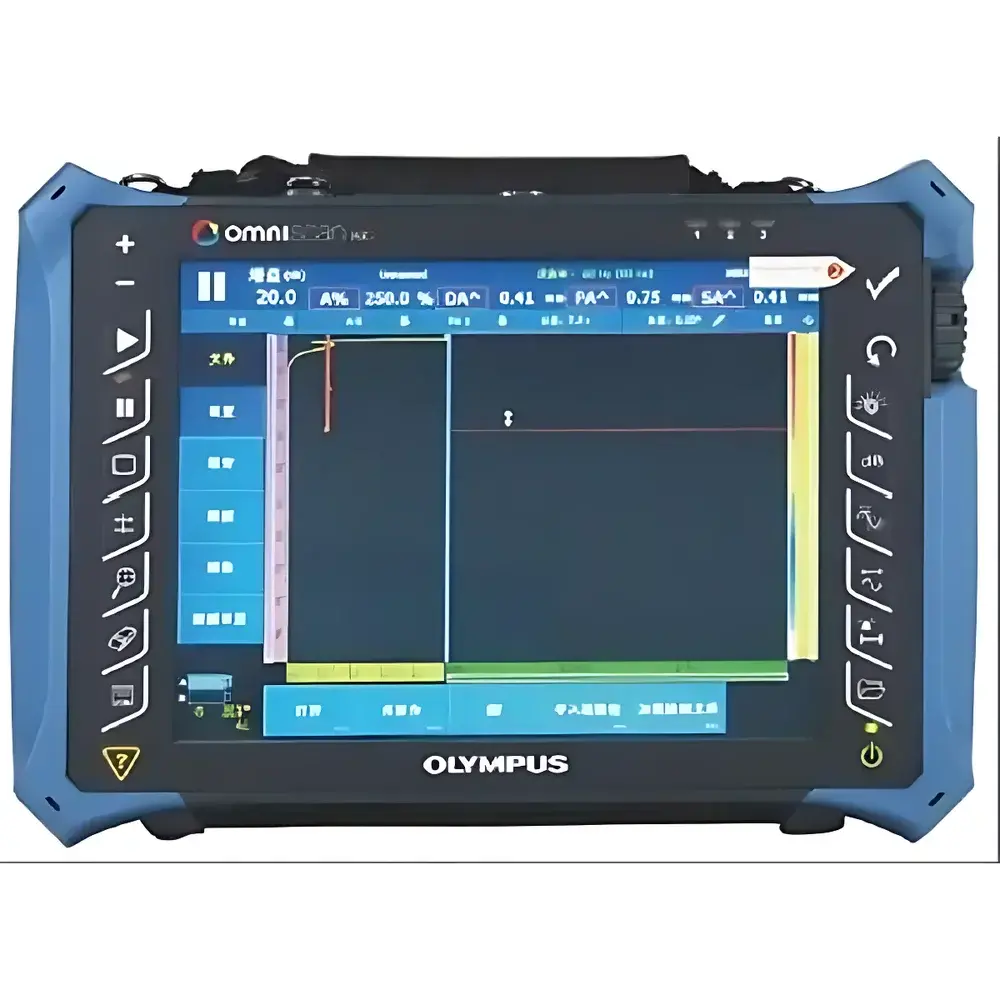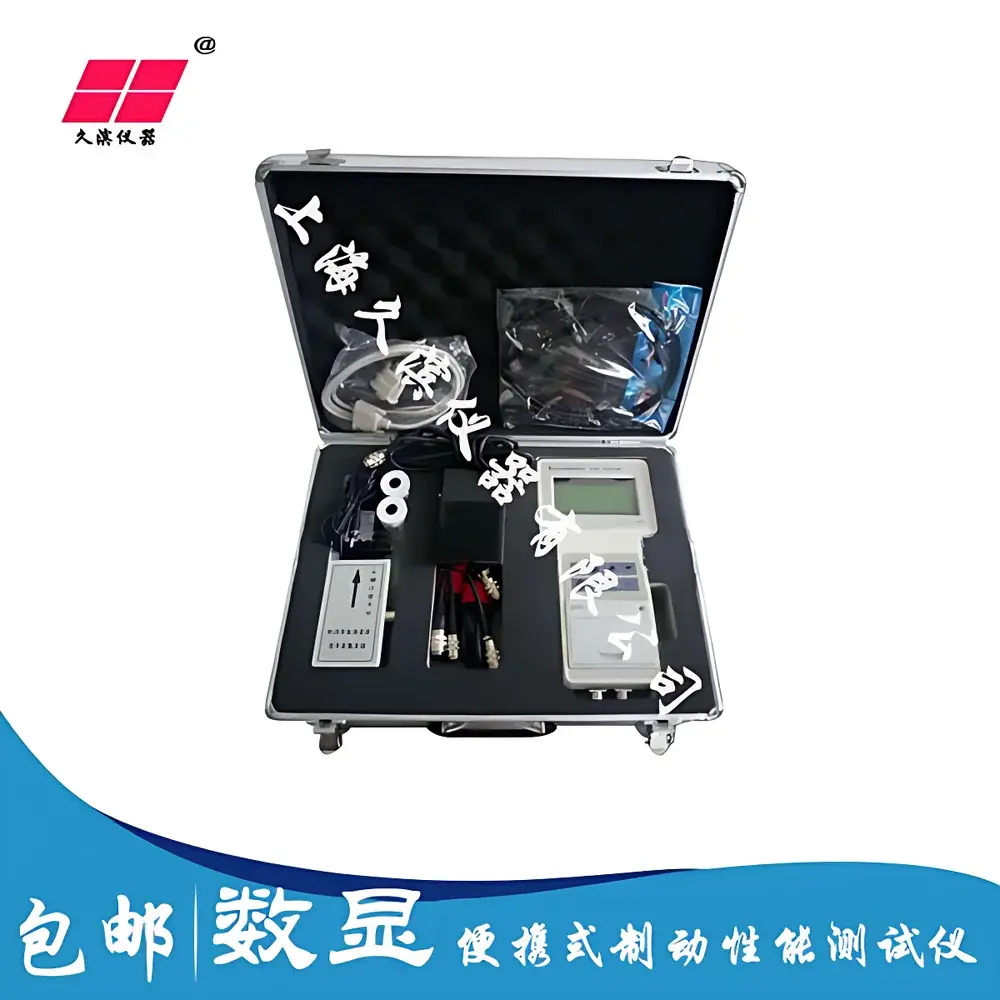
JB-630C Portable Brake Performance Tester by Jiubin Instruments
| Key | Brand: Jiubin Instruments |
|---|---|
| Model | JB-630C |
| Origin | Shanghai, China |
| Power Supply (Main Unit) | DC 9.6 V (8 × 1.2 V / 800 mAh Ni-MH batteries) |
| Power Supply (Wireless Sensor) | DC 8.4 V (7 × 1.2 V / 600 mAh Ni-MH batteries) |
| Acceleration Range | ±1.5 g |
| Time Measurement Range | ≤12 s |
| Acceleration Resolution | 0.001 m/s² |
| Speed Resolution | 0.01 km/h |
| Time Resolution | 0.001 s |
| Distance Resolution | 0.001 m |
| Tilt Angle Resolution | 0.01° |
| Accuracy | ±1.5% |
| Wireless Transmission Range | 200 m (line-of-sight, open field) |
| Dimensions (Main Unit) | 205 × 145 × 55 mm |
| Weight (Main Unit, incl. battery) | 0.4 kg |
| Display | 192 × 64 dot-matrix LCD |
| Data Storage Capacity | 999 test records |
| Interface | RS232 (9-pin, 9600 bps, 8N1), USB 2.0 |
| Compliance | GB/T 28945–2012, GB 7258–2012 |
Overview
The JB-630C Portable Brake Performance Tester is an engineering-grade field instrument designed for objective, real-time measurement of deceleration, braking time, stopping distance, initial speed, and vehicle tilt angle during on-road brake system evaluation. It operates on the principle of high-fidelity inertial sensing—integrating a triaxial accelerometer, GPS-assisted velocity calculation, and angular rate compensation—to deliver traceable kinematic data in accordance with regulatory road-test protocols. Unlike laboratory-based dynamometer testing, the JB-630C enables direct validation of service brake effectiveness, parking brake holding capacity, and emergency stop performance under actual operating conditions, making it essential for vehicle inspection stations, traffic accident reconstruction units, automotive safety compliance laboratories, and municipal transportation regulatory bodies.
Key Features
- Field-deployable architecture: Compact main unit (205 × 145 × 55 mm, 0.4 kg) with integrated rechargeable Ni-MH battery pack (DC 9.6 V, 800 mAh), enabling >8 hours of continuous operation per charge.
- Dual-mode sensor connectivity: Supports both wired and IEEE 802.15.4-compatible wireless communication between main unit and external brake sensor (transmission range up to 200 m in unobstructed outdoor environments).
- High-resolution inertial measurement: Acceleration resolution of 0.001 m/s² across ±1.5 g range; time-stamped event capture with 0.001 s resolution; distance tracking accuracy referenced to integrated wheel-speed pulse input or GPS-derived displacement.
- Regulatory-grade display and storage: 192 × 64 monochrome LCD with real-time waveform visualization; non-volatile memory stores up to 999 complete test sessions—including raw acceleration curves, metadata (license plate ID, province code, vehicle class tags such as “Jing”, “Xue”, “Gua”), and timestamped parameter sets.
- Standardized I/O interfaces: RS232 serial port (9-pin D-sub, configurable at 9600 bps, 8N1) for legacy printer integration or data relay to external controllers; USB 2.0 interface for firmware updates and bulk data export to Windows-based analysis workstations.
Sample Compatibility & Compliance
The JB-630C is validated for use across light-duty passenger vehicles, commercial trucks, buses, motorcycles, and special-purpose motor vehicles subject to China’s national roadworthiness standards. Its magnetic-mount external sensor (110 × 70 × 40 mm, DC 8.4 V) ensures rapid installation on steel chassis components without mechanical modification—critical for roadside inspections and post-accident forensic surveys. The instrument conforms to GB/T 28945–2012 (“Portable Brake Performance Testers”) and supports mandatory test procedures defined in GB 7258–2012 (“Technical Requirements for Safe Operation of Motor Vehicles”). While not certified for ISO/IEC 17025 accredited calibration labs, its ±1.5% full-scale accuracy meets routine verification requirements for Type II and Type III brake testing under national administrative inspection frameworks.
Software & Data Management
Dedicated Windows-compatible software provides secure, structured data ingestion via USB connection. Each test record includes embedded audit trail elements: operator ID, test date/time (GPS-synchronized), environmental temperature (optional external probe input), and user-entered contextual fields (e.g., license plate, jurisdictional prefix). Export formats include CSV for statistical analysis in MATLAB or Minitab, PDF for official reporting, and XML for integration into enterprise-level fleet management systems. Software logs all configuration changes and supports digital signature-enabled report generation compliant with internal QA documentation policies. No cloud synchronization or remote telemetry is implemented—data sovereignty remains fully under end-user control.
Applications
- Routine safety inspections at authorized motor vehicle inspection stations (MVIS) conducting periodic brake efficiency checks per GB 7258–2012 Annex E.
- Traffic accident reconstruction: Quantifying pre-impact deceleration profiles, estimating braking distance under varying road friction conditions, and validating driver-reported maneuvers.
- Fleet maintenance optimization: Trend analysis of brake pad wear progression across vehicle groups using longitudinal deceleration decay metrics.
- Automotive training academies: Real-world demonstration of brake system dynamics, including fade characterization during repeated high-speed stops.
- Third-party certification support: Supplemental field verification for OEM brake component validation where dynamometer results require correlation with on-road behavior.
FAQ
What standards does the JB-630C comply with?
It complies with GB/T 28945–2012 (Portable Brake Performance Testers) and implements test methodologies specified in GB 7258–2012 (Motor Vehicle Safety Technical Conditions), particularly Sections 7.10–7.12 covering brake system performance evaluation.
Can the device be used for ABS-equipped vehicles?
Yes—the instrument captures transient deceleration spikes and modulation frequency signatures typical of anti-lock braking events; however, it does not decode CAN bus ABS status messages, as it relies solely on inertial measurement.
Is calibration traceable to national metrology institutes?
The unit supports user-performed zero-offset and sensitivity verification using certified reference accelerometers; formal calibration certificates are issued by authorized service centers accredited under CNAS guidelines.
Does the wireless sensor require line-of-sight for reliable operation?
Optimal RF link stability is achieved within 200 m under open-sky conditions; performance may degrade near metallic obstructions or in urban canyons, though error detection and packet retransmission protocols maintain data integrity.
How is data security managed during USB transfer?
No encryption is applied during local USB transfer; users are advised to enforce endpoint security policies (e.g., Group Policy restrictions on removable storage) consistent with organizational IT governance frameworks.