
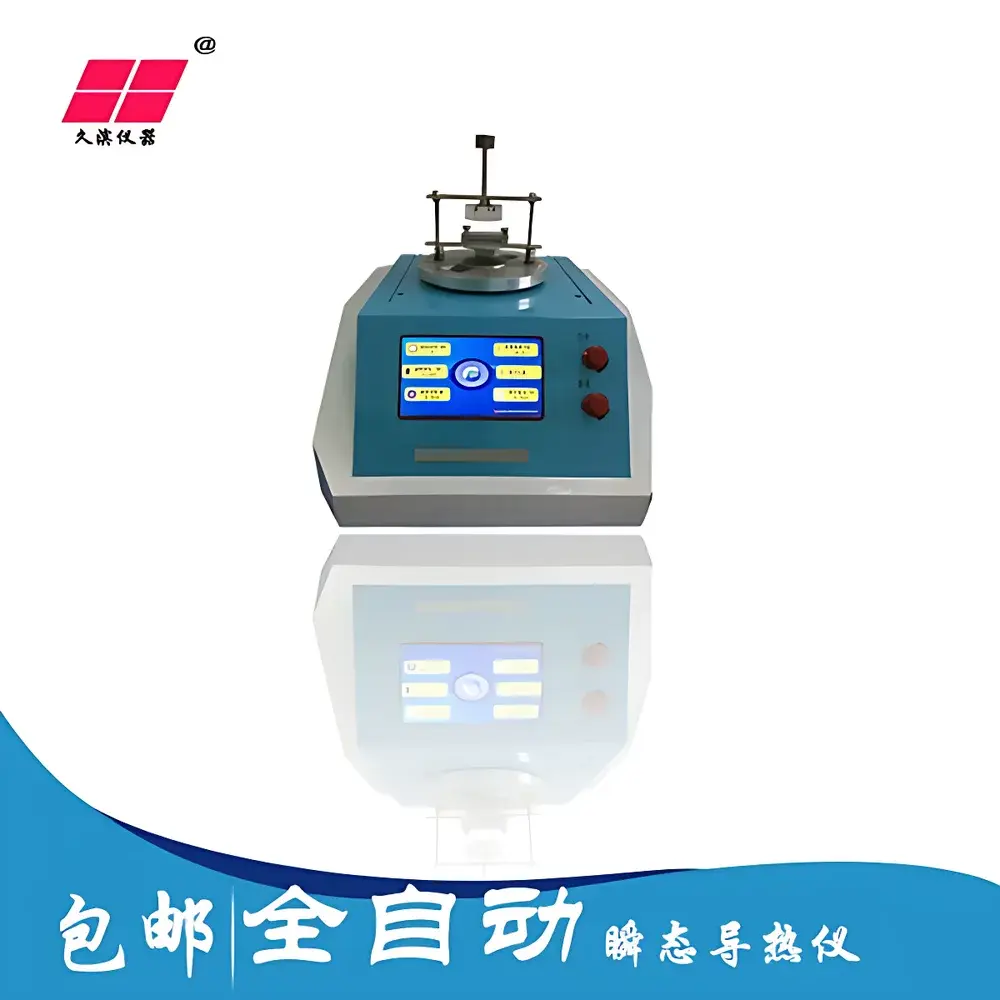
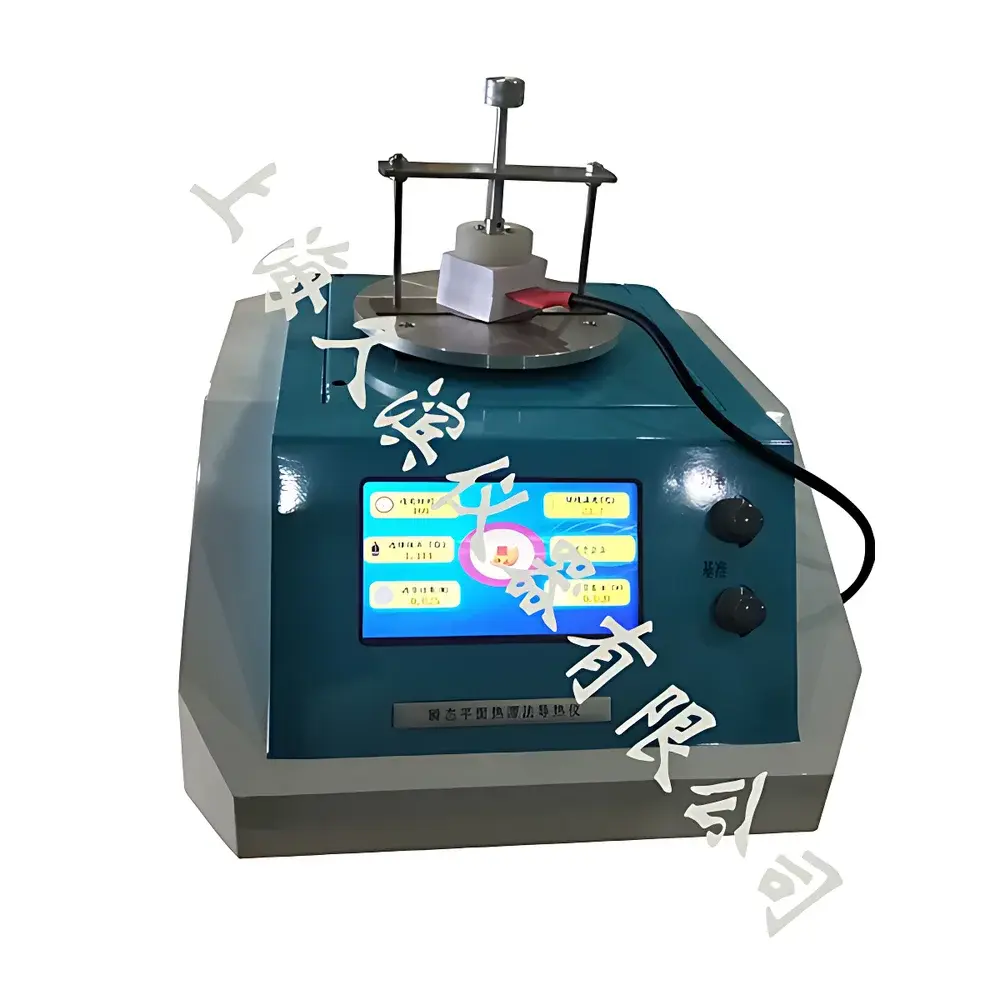
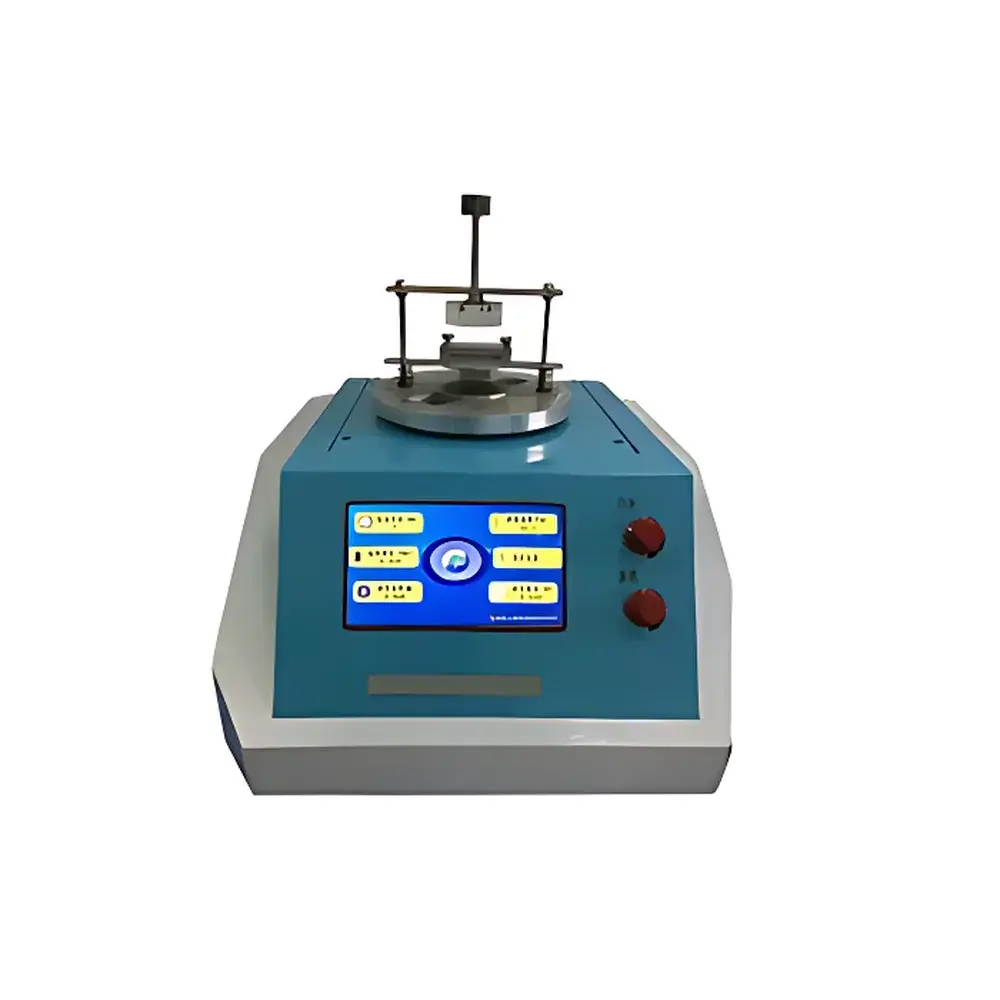
JB-S Transient Plane Source Thermal Conductivity Analyzer by Jiubin Instruments
| Brand | Jiubin Instruments |
|---|---|
| Origin | Shanghai, China |
| Model | JB-S |
| Measurement Principle | Transient Plane Source (TPS) Method |
| Dimensions (L×W×H) | 500 × 800 × 1200 mm |
| Accuracy | ±3% |
| Thermal Conductivity Range | 0.005–300 W/(m·K) |
| Repeatability | ±3% |
| Instrument Type | Benchtop Thermal Conductivity Analyzer |
Overview
The JB-S Transient Plane Source Thermal Conductivity Analyzer is a benchtop instrument engineered for precise, rapid, and non-destructive measurement of thermal conductivity and thermal diffusivity in solid, powder, paste, and thin-film materials. Based on the ISO 22007-2 standard-compliant transient plane source (TPS) method, the system employs a dual-function sensor—acting simultaneously as both heat source and temperature probe—that is sandwiched between two identical sample halves. A short-duration constant-power electrical pulse heats the sensor, and the resulting temperature rise over time is recorded with microsecond resolution. Thermal conductivity is derived from the slope of the temperature vs. square-root-of-time curve in the linear regime, ensuring high physical fidelity and minimal contact resistance influence. Designed for laboratory and quality control environments, the JB-S delivers reliable data across an exceptionally wide dynamic range—from aerogels and polymer foams to graphite composites and metal alloys—without requiring calibration standards or extensive sample preparation.
Key Features
- Transient Plane Source (TPS) methodology compliant with ISO 22007-2 and ASTM D5470 (for interfacial thermal resistance adaptation)
- Wide thermal conductivity coverage: 0.005 to 300 W/(m·K), accommodating insulators, semiconductors, and conductive metals
- High repeatability (±3%) and accuracy (±3%) validated against NIST-traceable reference materials
- Integrated dual-sensor architecture enabling simultaneous thermal conductivity and thermal diffusivity derivation
- Benchtop form factor (500 × 800 × 1200 mm) with rigid aluminum frame and vibration-damped base for stable operation in shared lab spaces
- Automated clamping mechanism ensuring consistent interfacial pressure (adjustable up to 10 kPa) to minimize contact resistance variability
- No requirement for vacuum chambers or cryogenic cooling—measurements performed under ambient atmospheric conditions
Sample Compatibility & Compliance
The JB-S accommodates flat, parallel-faced specimens ranging from 10 mm to 100 mm in diameter and 1 mm to 50 mm in thickness. Compatible material classes include polymers, ceramics, composites, phase-change materials, battery electrode coatings, thermal interface materials (TIMs), graphite foils, and sintered metal powders. For anisotropic samples (e.g., layered composites or extruded plastics), directional measurements can be conducted by reorienting the sensor plane relative to the expected heat flow axis. The instrument supports GLP-compliant workflows through audit-trail-enabled software (see Software & Data Management). All test procedures align with ISO/IEC 17025 requirements for testing laboratories, and raw data files retain full metadata—including timestamp, operator ID, environmental temperature/humidity logs, and sensor calibration history—for regulatory traceability.
Software & Data Management
The proprietary JB-S Control Suite runs on Windows-based workstations and provides real-time visualization of temperature transients, automatic curve fitting using Levenberg–Marquardt nonlinear regression, and uncertainty propagation analysis per GUM (Guide to the Expression of Uncertainty in Measurement). Each test generates a structured .jbsdata file containing raw voltage-time records, fitted parameters, confidence intervals, and compliance flags for ISO 22007-2 validity criteria (e.g., linearity deviation 60 dB). Export options include CSV, PDF reports (with customizable templates), and XML for LIMS integration. The software enforces 21 CFR Part 11-compliant user access control, electronic signatures, and immutable audit trails—ensuring suitability for FDA-regulated environments such as pharmaceutical excipient characterization or medical device thermal safety validation.
Applications
- Thermal management R&D for EV battery modules, power electronics substrates, and LED heat sinks
- QC screening of thermal interface materials (greases, pads, phase-change films) used in semiconductor packaging
- Characterization of insulation performance in building materials (aerogels, vacuum panels, mineral wool)
- Development and qualification of thermally conductive polymer composites for aerospace and automotive housings
- Validation of thermal homogeneity in additive-manufactured metal parts and ceramic matrix composites
- Academic research in condensed matter physics, materials science, and energy storage—supporting publications requiring ISO-standardized thermal transport data
FAQ
What sample preparation is required prior to measurement?
Flat, parallel surfaces are essential; minimal machining or polishing is needed for most solids. Powders must be cold-pressed into pellets at ≥10 MPa to ensure inter-particle contact integrity.
Can the JB-S measure anisotropic materials?
Yes—by rotating the sample orientation relative to the sensor plane, in-plane and through-plane thermal conductivity can be separately quantified.
Is calibration required before each test?
No. The sensor is factory-calibrated using certified reference materials (e.g., Pyroceram 9606, copper); only periodic verification (recommended annually) is necessary.
Does the system support low-temperature or high-temperature operation?
Standard configuration operates from 10 °C to 60 °C ambient; optional environmental chamber integration extends the range to –40 °C to +150 °C.
How is contact resistance accounted for in the TPS calculation?
The mathematical model inherently decouples intrinsic material conductivity from interfacial thermal resistance via multi-parameter fitting of the early-time transient response.



