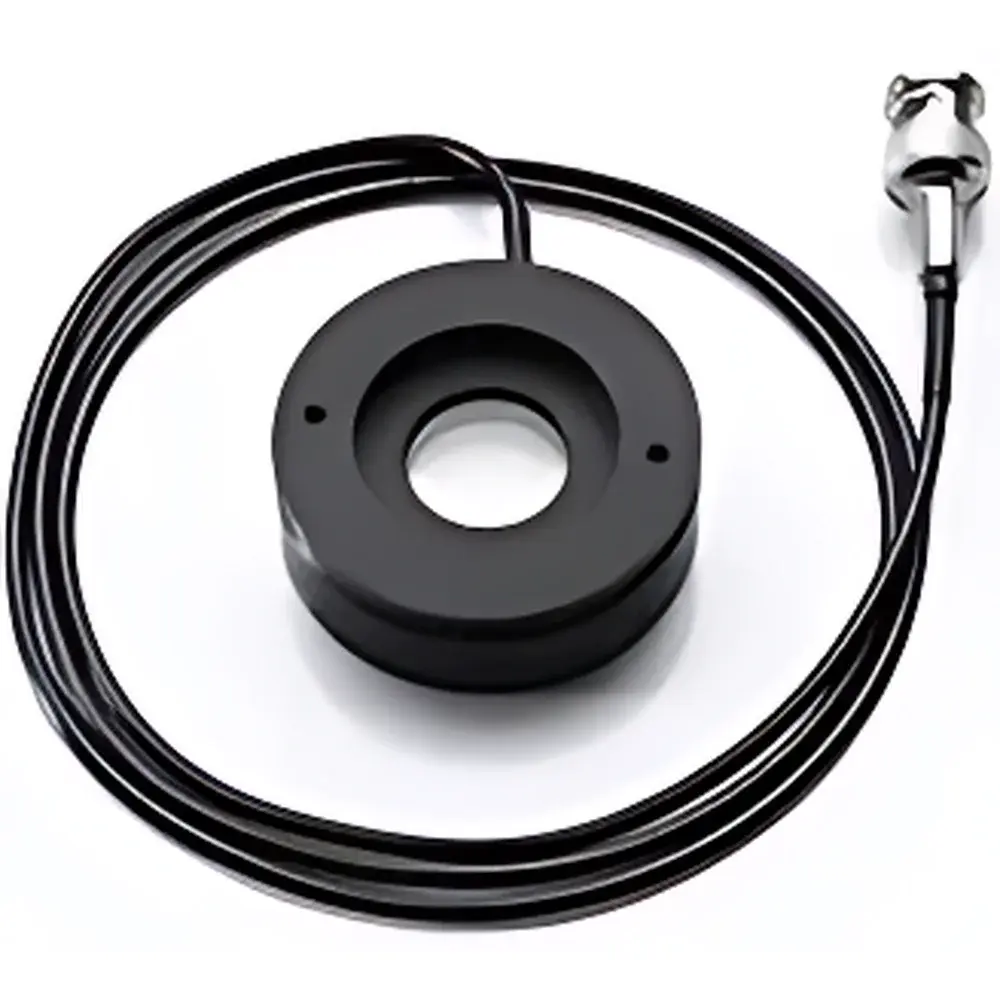
Jenoptik ALM Series Liquid Crystal Amplitude Modulator

| Brand | Jenoptik |
|---|---|
| Origin | USA |
| Model | ALM Series Liquid Crystal Amplitude Modulator |
| Wavelength Range | 730–1600 nm |
| Aperture Options | Standard (custom apertures available) |
| Polarization Requirement | Requires polarized input or use with external polarizers |
| Optional Accessories | Thin-film polarizers (VIS), AR-coated variants |
| Compliance | CE, RoHS |
| Mounting | Standard SM1-threaded housing compatible with Thorlabs/Optomechanics platforms |
| Operating Temperature | 15–35 °C |
| Response Time | <20 ms (typical, dependent on drive voltage slew rate) |
Ask about pricing, availability and specifications.
Overview
The Jenoptik ALM Series Liquid Crystal Amplitude Modulator is a solid-state, voltage-controlled optical component engineered for precise, non-mechanical modulation of light intensity in free-space optical systems. Based on twisted nematic (TN) liquid crystal technology, the ALM operates via the electrically induced reorientation of birefringent mesogens—altering the polarization state of linearly polarized incident light in proportion to the applied AC or DC control voltage (typically 0–5 V RMS or 0–10 V DC, depending on configuration). When integrated between crossed or parallel polarizers—or used with a downstream analyzer—the device functions as a high-stability, analog amplitude attenuator. Unlike acousto-optic or mechanical shutters, the ALM introduces no moving parts, vibration, or acoustic noise, making it ideal for interferometric setups, adaptive optics calibration paths, laser power stabilization loops, and quantum optics experiments requiring low temporal jitter and repeatable extinction ratios.
Key Features
- Solid-state electro-optic architecture with no mechanical wear or alignment drift
- Continuous, analog amplitude control over >30 dB dynamic range (dependent on polarizer extinction ratio and wavelength)
- Wavelength coverage from 730 nm to 1600 nm—optimized for near-infrared laser sources including Ti:Sapphire, Yb-fiber, and quantum cascade lasers
- Standard SM1-threaded housing (1.035″-40) ensures seamless integration into industry-standard optomechanical platforms (e.g., Thorlabs, Newport)
- Low-voltage drive compatibility (0–5 V or 0–10 V options) simplifies interfacing with DAQ systems, function generators, or PID controllers
- Optional factory-installed thin-film polarizers (VIS-optimized) or anti-reflection coatings (730–1600 nm) reduce ghost reflections and improve system throughput
- Thermal stability tested across 15–35 °C ambient range; performance validated under continuous 8-hour operation at rated drive conditions
Sample Compatibility & Compliance
The ALM is designed for use with collimated, linearly polarized beams of diameter ≤ specified aperture (standard: Ø12.7 mm; custom apertures available upon request). It is not intended for high-peak-power pulsed lasers (>10 kW/cm² peak intensity) or UV wavelengths (<350 nm). Device compliance includes CE marking per Directive 2014/30/EU (EMC) and 2011/65/EU (RoHS), confirming conformity with European health, safety, and environmental protection standards. While not classified as medical or industrial safety-critical equipment, its stable transfer function supports traceable calibration workflows aligned with ISO/IEC 17025 laboratory accreditation requirements when paired with NIST-traceable photodetectors and calibrated polarizers.
Software & Data Management
The ALM itself is a passive electro-optic transducer and does not include embedded firmware or digital interfaces. However, it is fully compatible with standard analog control infrastructure: voltage outputs from National Instruments USB-6211, Keysight 33500B series function generators, or Raspberry Pi–based DAC modules (e.g., MCP4725) enable programmable attenuation profiles. Users may implement closed-loop intensity stabilization using feedback from photodiodes and PID algorithms in MATLAB, Python (with PyVISA or NIDAQmx), or LabVIEW. No proprietary drivers or SDKs are required. Audit trails for calibration settings, voltage–transmittance lookup tables, and environmental logs can be maintained externally in accordance with GLP/GMP documentation practices.
Applications
- Laser power stabilization in ultrafast amplifier seeding and cavity dumping systems
- Dynamic contrast control in quantitative phase microscopy and digital holography
- Intensity balancing in multi-channel interferometers (e.g., Mach–Zehnder, Sagnac)
- Real-time exposure control for time-resolved spectroscopy and pump–probe experiments
- Calibration reference in optical density measurement systems compliant with ASTM E275 and ISO 9050
- Beam conditioning in quantum key distribution (QKD) testbeds requiring polarization-encoded intensity modulation
FAQ
Is the ALM suitable for use with femtosecond laser pulses?
Yes—provided pulse energy density remains below damage threshold (≤0.1 J/cm² for 100-fs pulses at 800 nm); dispersion-induced pulse broadening is negligible due to sub-micron LC layer thickness.
Can I operate the ALM without external polarizers?
No. The device modulates polarization state only; amplitude control requires a polarizing element before (for polarization preparation) and/or after (as analyzer) the ALM.
What is the typical rise/fall time?
Measured response time is <20 ms under small-signal step excitation; full-scale switching depends on drive circuit slew rate and LC relaxation dynamics.
Does Jenoptik provide calibration certificates?
Factory calibration data (voltage vs. transmittance at 780 nm, 1064 nm, and 1550 nm) is supplied with each unit; NIST-traceable certification is available as an optional service.
Is thermal management required during extended operation?
No active cooling is needed within the specified ambient temperature range (15–35 °C); however, mounting on thermally stable optical tables is recommended to minimize drift from ambient convection.