
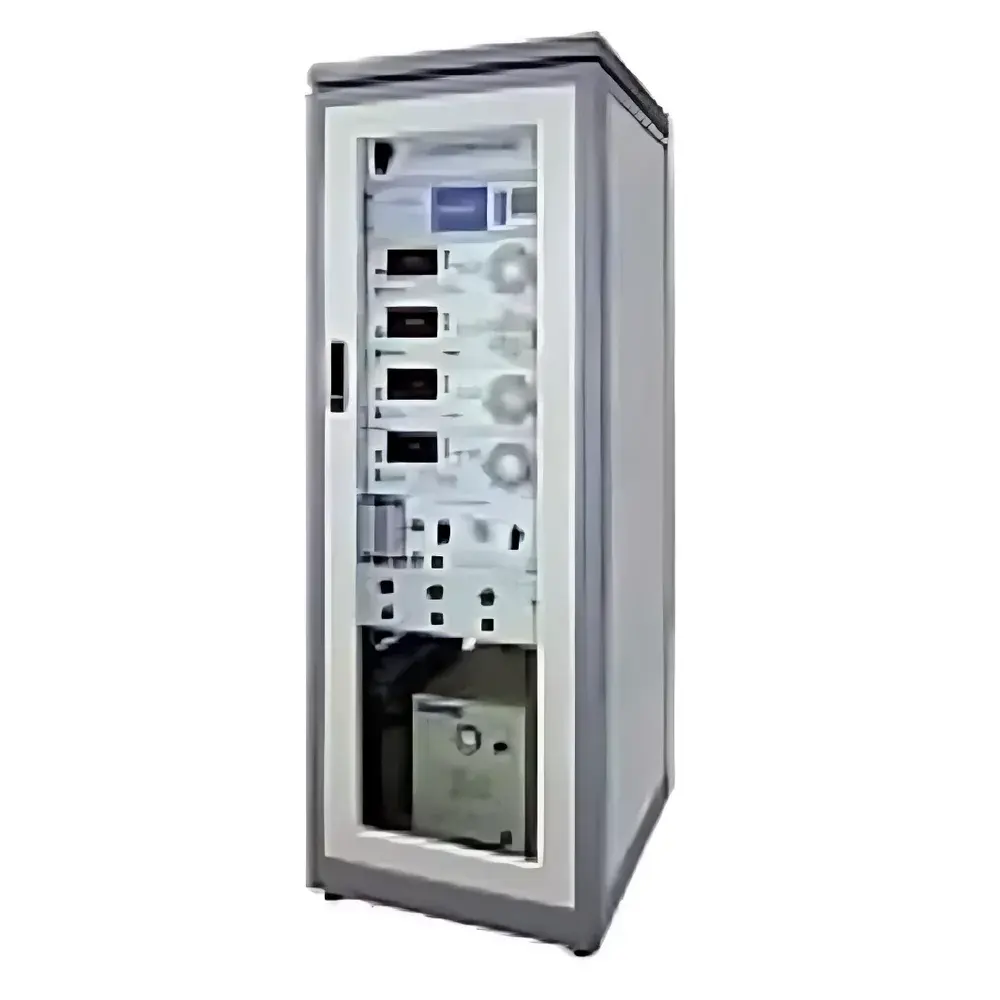
JF-3000 Multi-Component Process Gas Analyzer by Junfang Physical & Chemical
| Brand | Junfang Physical & Chemical |
|---|---|
| Origin | Beijing, China |
| Model | JF-3000 |
| Instrument Type | Online Analyzer |
| Detection Target | Multi-component Gases |
| Minimum Full-Scale Accuracy | ≤±1% F.S. |
| Repeatability | ≤±1% F.S. |
| Resolution | 0.1 ppm |
| Response Time | ≤30 s |
| Zero Drift | ≤±1% F.S. |
| Span Drift | ≤±1% F.S. |
| Linearity Error | ≤±1% F.S. |
| Sample Flow Rate | 0.5 L/min |
| Operating Ambient Temperature Range | 5–40 °C |
| Weight | ~180 kg |
| Dimensions | 1800 × 610 × 700 mm |
Overview
The JF-3000 Multi-Component Process Gas Analyzer is an industrial-grade online gas analysis system engineered for continuous, real-time monitoring of multiple gaseous species in demanding process environments—including cement kilns, lime kilns, coal pulverizers, chemical reactors, and flue gas streams. It operates on a modular sensor architecture, integrating electrochemical, infrared (NDIR), and/or paramagnetic detection modules—configured per application—to deliver simultaneous quantification of CO, CO₂, O₂, NOₓ, SO₂, CH₄, and other process-relevant analytes across 0–100% volume range options. The system employs extractive sampling with heated sample lines, integrated particulate filtration, automatic condensate removal, and programmable probe back-purge to maintain measurement integrity under high-dust, high-moisture, or corrosive conditions. Its design conforms to the functional safety and reliability expectations of continuous emission monitoring systems (CEMS) deployed in ISO 14064-1–aligned GHG reporting frameworks and EPA Method 3A/7E-compliant installations.
Key Features
- True multi-component capability: Simultaneous measurement of up to six gases via configurable sensor modules, each calibrated traceably to NIST-traceable standards.
- Robust extractive sampling train: Includes heated sample line (up to 180 °C), ceramic particulate filter, refrigerated or permeation-based moisture removal, and auto-drain condensate trap—minimizing maintenance intervals and preventing sensor poisoning.
- Intelligent analyzer host: 7-inch high-brightness LCD interface with embedded real-time diagnostics, self-calibration routines (span/zero), and configurable alarm thresholds (10–90% F.S., user-defined).
- Full automation suite: Automatic sampling initiation, timed probe reverse-purge cycles, scheduled zero/span validation, and fault-triggered diagnostic logging reduce operator dependency.
- Industrial I/O architecture: 4–20 mA analog outputs (isolated, HART-enabled), RS-485 Modbus RTU, optional Ethernet/IP or Profibus DP, plus two dry-contact relay outputs (220 VAC / 5 A) for process interlock or alarm signaling.
- Environmental resilience: Validated performance across 5–40 °C ambient; thermal drift <3% over full operating range; IP54-rated enclosure suitable for indoor control room or protected outdoor mounting.
Sample Compatibility & Compliance
The JF-3000 accommodates sample gas temperatures up to 200 °C (with optional high-temp probe), pressures from –10 to +50 kPa(g), and particulate loadings ≤10 mg/m³ post-filtration. It meets key regulatory and quality system requirements for continuous process monitoring: compliant with ISO 14644-1 Class 8 cleanroom-compatible installation practices; supports GLP/GMP audit trails via time-stamped event logs; enables 21 CFR Part 11–compliant data integrity when paired with validated third-party SCADA or DCS platforms. While not certified as a certified reference method (CRM) device per EPA PS-11 or EN 15267, its ±1% F.S. accuracy and repeatability meet typical QA/QC acceptance criteria for process optimization, combustion efficiency control, and pre-CEMS screening applications.
Software & Data Management
The embedded firmware provides local data storage (≥30 days of 1-second resolution measurements), CSV export via USB, and password-protected configuration access. Optional cloud-connectivity module enables secure MQTT-based telemetry to centralized asset management platforms. All calibration events, alarm triggers, and system faults are timestamped and logged with operator ID (if configured), supporting internal quality audits and root-cause analysis. Data output formats include linearized concentration values, raw sensor voltages, and diagnostic flags—structured for seamless ingestion into PI System, Ignition SCADA, or custom MES dashboards.
Applications
- Cement and lime production: Real-time O₂ and CO feedback for kiln combustion optimization and NOₓ precursor control.
- Coal milling and pneumatic conveying: Inerting gas (N₂/CO₂) concentration verification and explosion risk mitigation.
- Chemical synthesis reactors: Stoichiometric ratio monitoring (e.g., CO:H₂ in Fischer–Tropsch feed gas).
- Flue gas desulfurization (FGD) bypass streams: Pre- and post-scrubber SO₂ tracking for scrubber efficiency validation.
- Biogas upgrading plants: CH₄/CO₂/O₂ composition profiling for membrane or PSA system tuning.
- Waste incineration: Post-combustion CO and O₂ trending for compliance with EU Directive 2000/76/EC.
FAQ
What gas species can the JF-3000 measure simultaneously?
The base configuration supports CO, CO₂, and O₂; additional modules enable NO, NO₂, SO₂, CH₄, H₂S, or NH₃—up to six total, depending on sensor availability and cross-interference profiles.
Is the system suitable for high-dust industrial exhaust?
Yes—its dual-stage filtration (ceramic + sintered metal), heated sampling line, and automatic probe purge minimize fouling in cement kiln and metallurgical off-gas applications.
How frequently must calibration be performed?
Factory-recommended interval is quarterly for zero/span checks using certified span gases; automated daily zero validation is supported, and drift-compensation algorithms extend calibration stability between manual interventions.
Can the JF-3000 integrate with existing DCS or PLC systems?
Yes—via isolated 4–20 mA analog outputs, Modbus RTU over RS-485, or optional industrial Ethernet protocols; all signal mappings and scaling parameters are fully configurable in the host UI.
Does the analyzer support remote diagnostics and firmware updates?
Remote access is enabled via Ethernet (SSH/Telnet) or cellular gateway; firmware updates require authenticated .bin file upload and are logged with version hash and timestamp for traceability.
Related Products







