
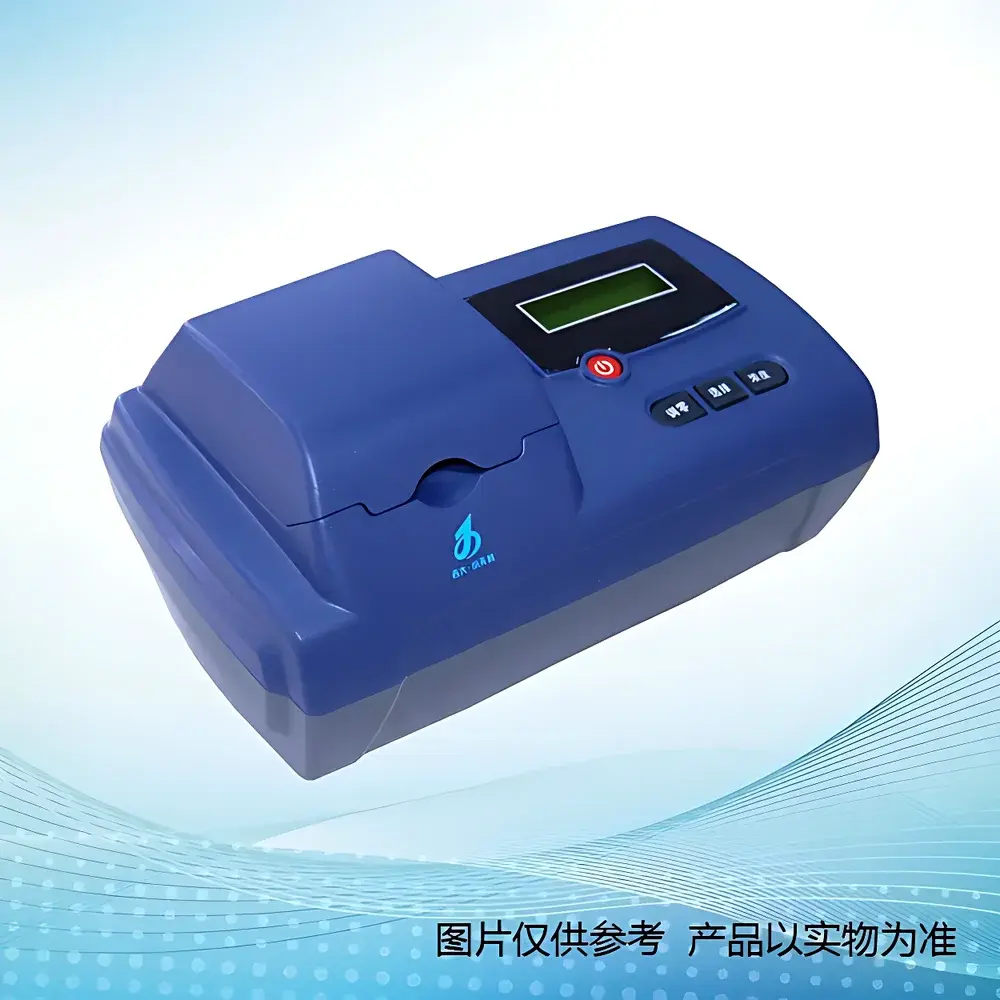
Jiada Xiaotian’e GDYK-221S Portable Benzene and BTEX Field Quantification Analyzer
| Brand | Jiada Xiaotian'e |
|---|---|
| Origin | Jilin, China |
| Manufacturer Type | OEM Manufacturer |
| Regional Classification | Domestic (China) |
| Model | GDYK-221S |
| Pricing | Upon Request |
| Detection Principle | Colorimetric Chemical Reaction (Modified Spectrophotometric Endpoint) |
| Lower Detection Limit | 0.05 mg/m³ |
| Measurement Range | 0.00–1.00 mg/m³ |
| Accuracy | ±5% of Full Scale |
| Power Supply | 9 V Alkaline Battery (≥40 h continuous operation) |
| Auto-Power-Off | Activated after 10 min inactivity |
| Dimensions & Portability | Compact handheld form factor, <300 g mass, ergonomic field-deployable design |
Overview
The Jiada Xiaotian’e GDYK-221S Portable Benzene and BTEX Field Quantification Analyzer is a dedicated, chemically based field instrument engineered for on-site, quantitative determination of benzene, toluene, ethylbenzene, and xylene (collectively BTEX) in indoor and ambient air matrices. Unlike chromatographic or photoionization-based systems, the GDYK-221S employs a standardized, reagent-mediated colorimetric reaction—calibrated against NIST-traceable reference standards—to generate a stable chromophore proportional to analyte concentration. This principle enables rapid, operator-independent quantification without requiring laboratory infrastructure, carrier gases, or consumable columns. The analyzer is specifically validated for use in residential dwellings, office buildings, schools, hospitality venues, and other non-industrial indoor environments where regulatory screening for volatile aromatic hydrocarbons is mandated under national indoor air quality guidelines (e.g., GB/T 18883–2022). Its measurement range (0.00–1.00 mg/m³) aligns with occupational exposure limits (OELs) and health-based reference concentrations established by WHO and China’s Ministry of Ecology and Environment.
Key Features
- Field-validated colorimetric quantification with direct digital readout in mg/m³—no external spectrophotometer required.
- Dedicated chemical reagent packs pre-formulated for benzene and individual BTEX compounds; each pack includes precise dosing capsules to minimize reagent waste and eliminate manual pipetting errors.
- Low-power pulse-driven electronics architecture: single 9 V alkaline battery supports ≥40 hours of cumulative active measurement time; auto-sleep mode engages after 10 minutes of inactivity to preserve battery life.
- Integrated sampling interface compatible with standard 100 mL glass syringes or portable air pumps (flow rate: 100–200 mL/min); no vacuum manifold or calibration gas cylinders needed.
- Ruggedized ABS housing with IP54-rated ingress protection; operating temperature range: 5–40 °C; relative humidity tolerance: 30–85% RH (non-condensing).
- Calibration traceability maintained via factory-applied response curves stored in device firmware; user-accessible zero and span verification using certified blank and standard gas vials (optional accessory).
Sample Compatibility & Compliance
The GDYK-221S is designed exclusively for gaseous-phase sampling of undiluted indoor air. It is not intended for stack emissions, soil vapor, or high-humidity (>90% RH) or particulate-laden environments without optional inline desiccant or filter modules. All reagent formulations comply with GB 26375–2010 (Chemical Reagents for Indoor Air Monitoring) and are classified as non-hazardous transport materials (UN 3082). Instrument performance meets the technical requirements specified in HJ 583–2010 (Environmental Monitoring—Determination of Benzene, Toluene, Ethylbenzene and Xylenes in Ambient Air—Colorimetric Method), and supports documentation protocols aligned with GLP principles for field data integrity. While not FDA 21 CFR Part 11–compliant (as it lacks electronic audit trail functionality), raw measurement logs can be exported manually for inclusion in validated QA/QC workflows.
Software & Data Management
The GDYK-221S operates as a standalone embedded system with no onboard data logging or Bluetooth/Wi-Fi connectivity. All measurements are displayed in real time on a backlit LCD screen and retained in volatile memory until power-off. For traceable recordkeeping, users must manually transcribe results into laboratory notebooks or LIMS-compatible spreadsheets. Optional PC software (GDYK-Link v2.1, Windows only) enables USB-cable transfer of session timestamps and concentration values when used with the GDYK-USB adapter module (sold separately). No cloud synchronization, remote diagnostics, or firmware over-the-air updates are supported—firmware revisions require physical return to authorized service centers.
Applications
- Routine screening of newly renovated residential units prior to occupancy, per GB 50325–2020 (Control Standard for Indoor Environmental Pollution of Civil Construction Projects).
- Post-mitigation verification following VOC abatement treatments (e.g., activated carbon filtration, photocatalytic oxidation).
- Baseline surveys in childcare facilities, elderly care homes, and healthcare waiting areas where vulnerable populations exhibit heightened sensitivity to aromatic hydrocarbons.
- Supporting indoor air quality audits under ISO 16000-6 (Indoor air—Part 6: Determination of volatile organic compounds in indoor and test chamber air—Sampling by active sampling onto sorbent tubes followed by thermal desorption and gas chromatography) as a rapid triage tool preceding lab confirmation.
- Educational demonstrations in environmental science curricula, emphasizing principles of gas-phase chemical detection, stoichiometric reaction kinetics, and exposure assessment methodology.
FAQ
What is the shelf life of the reagent packs?
Unopened reagent packs retain full reactivity for 18 months when stored at 2–8 °C in original foil packaging. Once opened, use within 72 hours under controlled lab conditions.
Can the GDYK-221S distinguish between individual BTEX compounds?
Yes—separate, compound-specific reagent kits are available for benzene, toluene, ethylbenzene, and total xylenes (o-, m-, p-isomers combined); cross-reactivity is minimized through selective derivatization chemistry.
Is calibration required before each use?
No—factory calibration remains stable for 6 months under normal field use. Users are advised to perform zero verification with clean air and span check with 0.50 mg/m³ certified standard every 10 field deployments or weekly, whichever occurs first.
Does the instrument meet international standards such as ISO or ASTM?
The method is harmonized with HJ 583–2010 and references ISO 16017-1 for sampling strategy; however, it is not formally certified to ASTM D5197 or ISO 16000-28 due to its non-chromatographic architecture.
What maintenance is required?
Annual optical path cleaning (lens and cuvette chamber) using isopropyl alcohol and lint-free swabs; no moving parts or replaceable sensors require servicing during standard 3-year operational lifespan.







