
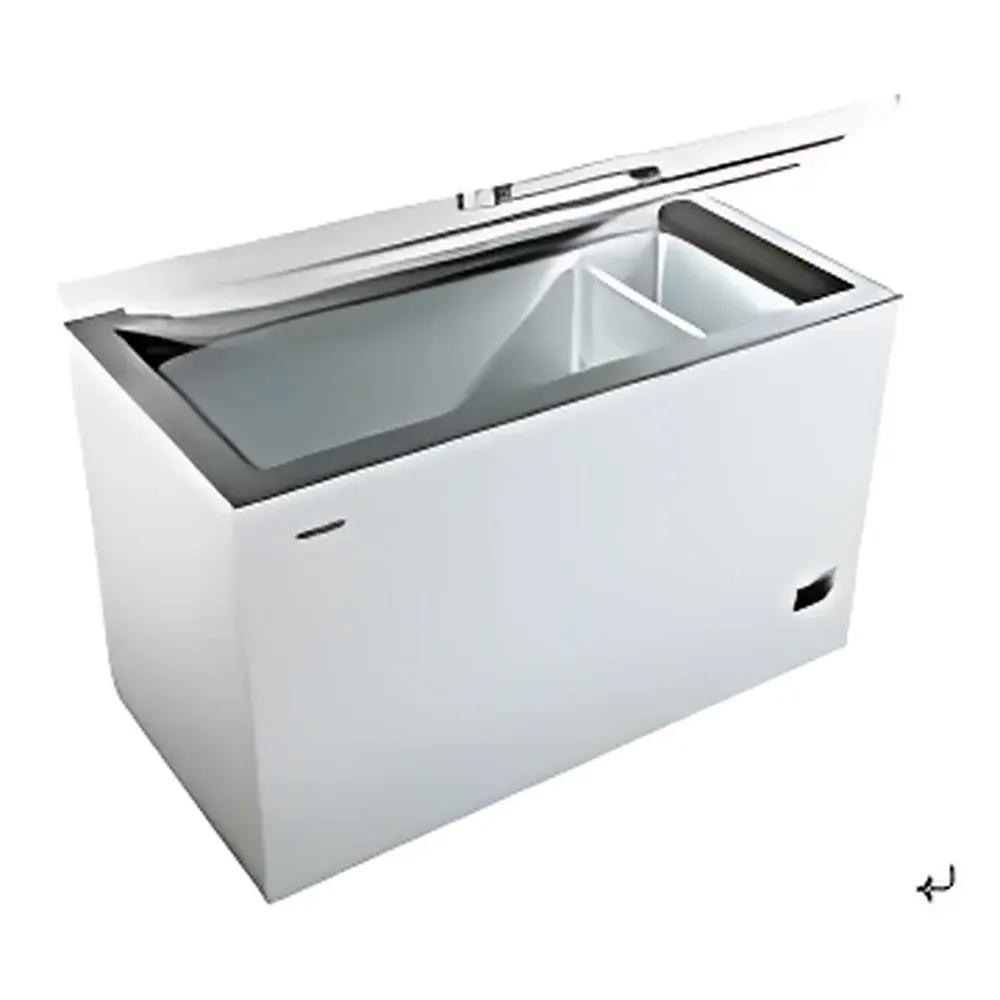
Jianhu Low-Temperature Environmental Chamber
| Origin | Shandong, China |
|---|---|
| Manufacturer Type | Authorized Distributor |
| Origin Category | Domestic (China) |
| Model | Jianhu |
| Pricing | Available Upon Request |
Overview
The Jianhu Low-Temperature Environmental Chamber is an engineered laboratory-grade temperature-controlled enclosure designed for precise thermal conditioning and long-term storage of sensitive biological samples, reagents, pharmaceuticals, electronic components, and calibration standards. Operating on a dual-stage or cascade refrigeration principle—depending on configuration—it achieves stable, uniform, and programmable temperature control across a broad operational range from –95 °C to +150 °C. Unlike standard refrigerated cabinets, this chamber integrates advanced microprocessor-based PID temperature regulation with high-efficiency heat exchange architecture, enabling rapid cooldown, minimal thermal overshoot, and exceptional stability (±0.3 °C typical at steady state). Its all-hydrocarbon refrigerant system complies fully with international environmental directives—including the Montreal Protocol and EU F-Gas Regulation—eliminating ozone-depleting substances and high-global-warming-potential (GWP) fluorocarbons.
Key Features
- Multi-range temperature capability: Six configurable operating bands including 0–8 °C (refrigerated storage), –15–25 °C (cold room simulation), –20–40 °C (freeze-thaw cycling), –30–60 °C (low-temperature material testing), –20–86 °C (extended ultra-low range), and –95–150 °C (broad-spectrum environmental stress screening)
- Dual-fault alarm system: Independent detection and alerting for temperature excursions (high/low limit violation) and sensor failure—ensuring continuous integrity monitoring per GLP and ISO/IEC 17025 requirements
- Redundant audible (piezoelectric buzzer) and visual (LED flash indicator) alarm outputs, configurable via front-panel interface
- High-density polyurethane insulation (≥120 mm thick, CFC-free foaming) providing U-values ≤0.25 W/m²·K for minimized energy consumption and thermal drift
- Imported Danfoss compressors paired with EBM radial-flow condenser fans for enhanced volumetric efficiency, reduced vibration, and extended service life under continuous duty cycles
- Corrosion-resistant stepped stainless-steel interior with removable wire shelving and modular basket compatibility for flexible sample organization
- Φ40 mm pass-through port with silicone gasket seal, enabling external probe integration or uninterrupted monitoring without compromising chamber integrity
- Wide ambient adaptability: Stable operation within 10–32 °C ambient temperatures and 20–80% RH non-condensing conditions
Sample Compatibility & Compliance
The chamber accommodates a wide variety of sample formats—including vials, cryoboxes, Petri dishes, PCB assemblies, polymer specimens, and calibration reference materials—without risk of cross-contamination or condensation-induced degradation. Its sealed, non-frosting evaporator design prevents ice accumulation during repeated thermal cycling. All electrical and thermal safety systems conform to IEC 61010-1:2010 (Safety Requirements for Electrical Equipment for Measurement, Control, and Laboratory Use) and meet CE marking criteria. The temperature control firmware supports audit-trail logging in accordance with FDA 21 CFR Part 11 when connected to validated data acquisition software. Optional validation packages are available for IQ/OQ/PQ documentation aligned with ISO 14644 (cleanroom environments), USP <1058>, and ASTM E2582–21 (thermal stability testing).
Software & Data Management
Equipped with RS-485 Modbus RTU and optional Ethernet (TCP/IP) interfaces, the chamber supports remote monitoring and parameter adjustment via industry-standard SCADA platforms or custom LabVIEW/Python scripts. Internal data logging records temperature setpoints, actual chamber readings, compressor status, alarm events, and door-open duration at user-defined intervals (1 sec to 60 min). Exportable CSV files include timestamped entries with UTC synchronization and digital signature support for traceability. Optional cloud-connected gateway enables real-time dashboard visualization, SMS/email alerts, and automated report generation compliant with internal quality management systems (QMS) and ISO 9001:2015 documentation protocols.
Applications
- Biobanking and blood bank storage (e.g., plasma, platelets, stem cell suspensions at controlled sub-zero conditions)
- Accelerated stability testing of APIs and finished pharmaceutical products per ICH Q1A(R2)
- Thermal aging studies of elastomers, adhesives, and composite materials per ASTM D3045 and ISO 2578
- Environmental stress screening (ESS) of electronic assemblies prior to HALT/HASS qualification
- Calibration lab temperature uniformity mapping per ISO/IEC 17025 Clause 6.4.6
- Vaccine cold chain validation and transport simulation per WHO Technical Report Series No. 992
- Low-temperature reaction kinetics in synthetic chemistry and catalysis research
FAQ
What is the maximum allowable ambient temperature for reliable operation?
The chamber maintains specified performance up to 32 °C ambient temperature, provided relative humidity remains below 80% non-condensing and adequate ventilation space (≥100 mm clearance on all sides) is maintained.
Is the unit suitable for GMP-regulated environments?
Yes—when deployed with optional validation kits and integrated into a documented change control and periodic verification program, it meets baseline requirements for Annex 15 and EU GMP Chapter 3 infrastructure qualification.
Can temperature uniformity be mapped across the working volume?
Absolutely—the chamber’s internal geometry and airflow design support ±0.8 °C uniformity (95% confidence) across the full load volume; third-party mapping services using calibrated thermocouples are available upon request.
Does the system support external data acquisition via analog output?
Yes—standard 4–20 mA and 0–10 V analog outputs are provided for connection to building management systems (BMS) or legacy PLC networks.
What refrigerant is used, and is it compatible with future regulatory timelines?
R-290 (propane) and R-170 (ethane) blends are employed in cascade configurations, both classified as A3 safety group refrigerants with zero ODP and GWP <5—fully aligned with F-Gas Phase-down Schedule and EPA SNAP Program listings through 2030 and beyond.



