
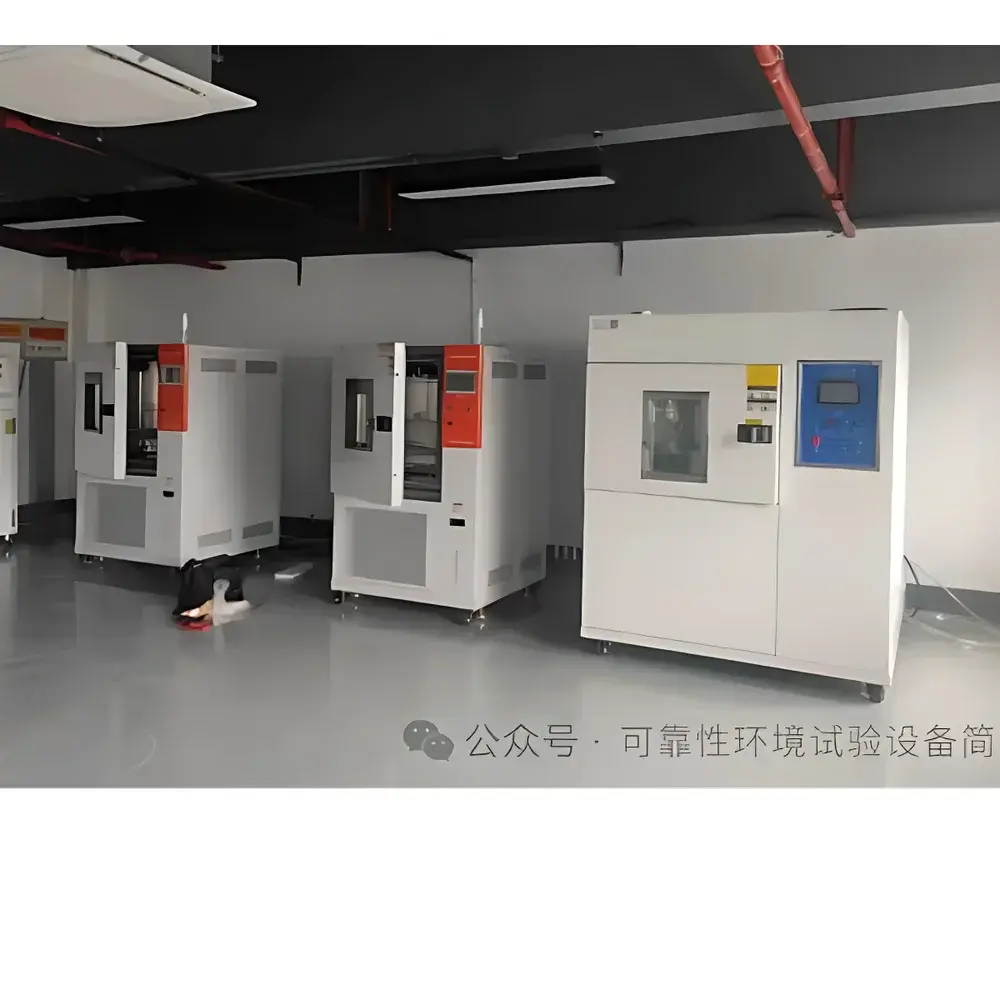
Jianhu Ozone Aging Test Chamber with Wind-Cooled Xenon Arc Weathering Capability
| Brand | Jianhu |
|---|---|
| Origin | Shanghai, China |
| Manufacturer Type | Authorized Distributor |
| Product Category | Domestic |
| Model | JH-OZ-XE Series |
| Price Range | USD 500 – 48,000 |
Overview
The Jianhu Ozone Aging Test Chamber with Wind-Cooled Xenon Arc Weathering Capability is a dual-mode environmental test system engineered for precise evaluation of material degradation under two distinct aging mechanisms: ozone-induced cracking and full-spectrum solar simulation. Unlike generic “combined” chambers marketed without functional integration, this unit features physically isolated operational modes—ozone generation and xenon arc irradiation—each conforming to internationally recognized test standards. The ozone module employs corona discharge ozone generators with closed-loop feedback control (±1.5% FS stability), enabling reproducible exposure at concentrations from 20 to 500 pphm (parts per hundred million) under tightly regulated temperature (−10 °C to +70 °C) and humidity (30–80% RH) conditions. The wind-cooled xenon arc subsystem utilizes a 1.8 kW air-cooled xenon lamp with spectral output filtered to match CIE No. 85 daylight requirements (300–800 nm), coupled with programmable rain/spray and condensation cycles per ISO 4892-2 and ASTM G155. The chamber’s architecture prevents cross-contamination between gas-phase and photolytic test environments—critical for regulatory compliance in automotive elastomer validation and outdoor polymer qualification.
Key Features
- Independent ozone and xenon arc test modes—no shared components or calibration interference
- Ozone concentration control via electrochemical sensor with real-time PID feedback and NIST-traceable calibration certificate
- Wind-cooled 1.8 kW xenon lamp with UV-cut filter, IR rejection optics, and irradiance uniformity ≤ ±5% across specimen plane
- Programmable humidity control (30–95% RH) with steam generator and condensation cycle capability (simulating dew formation per ISO 4892-2 Annex B)
- Stainless steel 316L interior chamber and sample racks—resistant to ozone oxidation and chloride corrosion
- Integrated dynamic tensile fixture (optional) for simultaneous mechanical strain and ozone exposure per ASTM D1149
- Compliance-ready data logging with audit trail, user-level access control, and 21 CFR Part 11–compatible electronic signatures
Sample Compatibility & Compliance
This chamber supports standardized testing of elastomers (NBR, EPDM, CR), thermoplastic vulcanizates (TPV), silicone compounds, and coated metals per major international protocols. For ozone resistance, it meets the physical and procedural requirements of GB/T 7762, ASTM D1149, ISO 1431-1, and DIN 53509-1—including mandatory use of non-reactive sample holders and defined airflow patterns within the test zone. For weathering assessment, it satisfies ISO 4892-2 (xenon arc), ASTM G155 (calibrated irradiance control), and SAE J2527 (automotive exterior materials). All units undergo factory verification against reference materials (e.g., NIST SRM 2241 for ozone; NIST SRM 2242 for UV irradiance) prior to shipment. CE marking covers both EN 61000-6-3 (EMC) and EN 61000-6-4 (emissions), with separate conformity documentation provided for ozone-specific safety (EN 60204-1) and xenon lamp radiation protection (IEC 62471).
Software & Data Management
The embedded Windows-based control system (Jianhu TestSuite v4.2) provides synchronized operation of ozone generation, xenon irradiance, thermal cycling, and humidity profiles. Users define multi-step test sequences—including ramp-and-soak ozone concentration changes, irradiance modulation during wet/dry phases, and conditional triggers (e.g., “terminate if crack length exceeds 0.2 mm per ISO 1431-2 visual assessment”). Raw sensor data (ozone ppm, irradiance W/m²/nm, chamber T/RH) is logged at 1-second intervals and exported in CSV/Excel format. Audit trails record all parameter modifications, user logins, calibration events, and alarm history—fully compliant with GLP and GMP documentation requirements. Optional cloud synchronization enables remote monitoring and automated report generation aligned with ISO/IEC 17025 laboratory accreditation templates.
Applications
This system serves critical validation needs across regulated industries: automotive suppliers use it to qualify engine gaskets, brake hoses, and door seals per OEM specifications (e.g., Ford WERCS, GMW14872); aerospace manufacturers assess O-rings and cable jackets under simulated high-altitude ozone exposure (SAE ARP4761); medical device firms validate silicone tubing and elastomeric stoppers per USP <1031> ozone resistance guidance; and coating formulators accelerate weathering of architectural paints and PV module encapsulants per IEC 61215. Its dual-mode design eliminates the need for separate capital equipment purchases while maintaining metrological integrity—reducing facility footprint and cross-test contamination risk.
FAQ
Can this chamber perform ozone and xenon exposure simultaneously?
No. Simultaneous operation is intentionally prohibited by hardware interlocks and software logic to prevent ozone decomposition by UV photons and ensure measurement traceability per ISO/IEC 17025 Clause 7.8.2.
Does the xenon subsystem meet ASTM G155 spectral power distribution requirements?
Yes. Spectral irradiance is certified per CIE Publication 85:2022, with integrated irradiance (300–400 nm) calibrated to ±2% using a NIST-traceable spectroradiometer.
Is ozone concentration validated with third-party reference standards?
Each unit ships with a calibration certificate referencing NIST Standard Reference Material (SRM) 2241, verified using an independent UV photometric ozone analyzer per EPA Method O-1A.
What maintenance intervals are required for ozone generator and xenon lamp?
Ozone generator electrodes require cleaning every 500 operating hours; xenon lamps are rated for 1,500 hours and must be replaced as a matched pair to maintain spectral balance.
Can test reports generated by this system support FDA submission?
Yes—when operated under validated 21 CFR Part 11 mode with electronic signatures, audit trails, and change-controlled firmware, reports meet FDA eCTD Module 5.3.2.1 requirements for nonclinical laboratory study data.



