
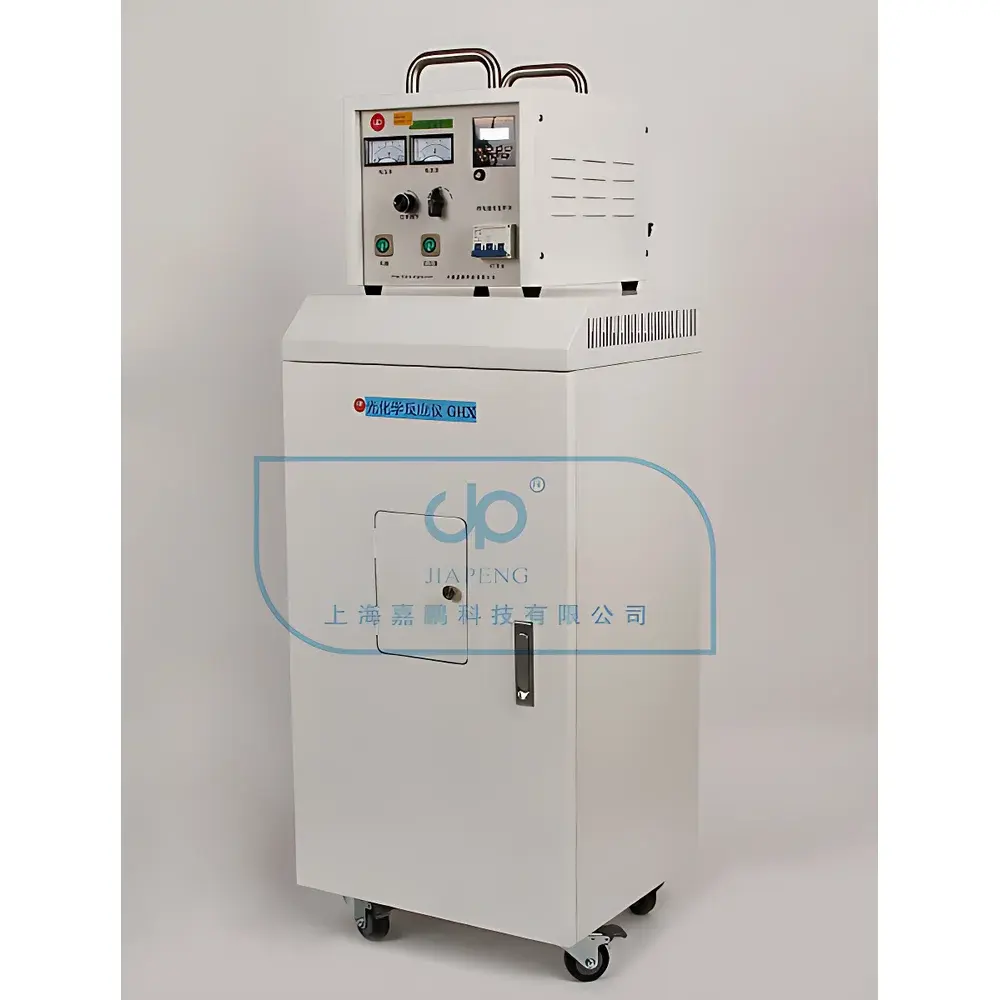
Jiapeng GHX-IV Photochemical Reaction System
| Brand | Jiapeng |
|---|---|
| Origin | Shanghai, China |
| Model | GHX-IV |
| Light Source Type | Mercury Lamp |
| Irradiation Mode | Internal Illumination |
| Power Range | 100–1200 W (continuously adjustable) |
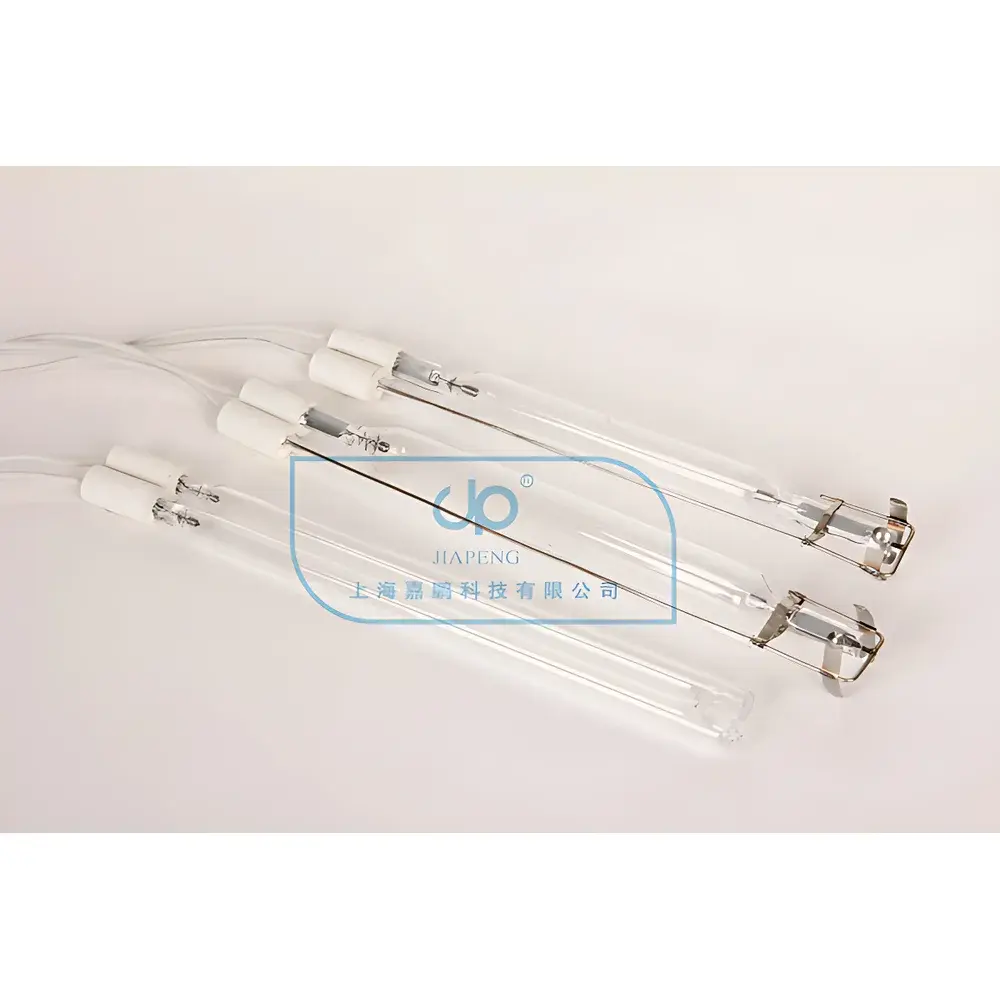
| Lamp Options | Mercury (300/500/1000 W), Xenon (300/500/1000 W), Metal Halide (500 W) |
| Sample Capacity | 8 parallel positions |
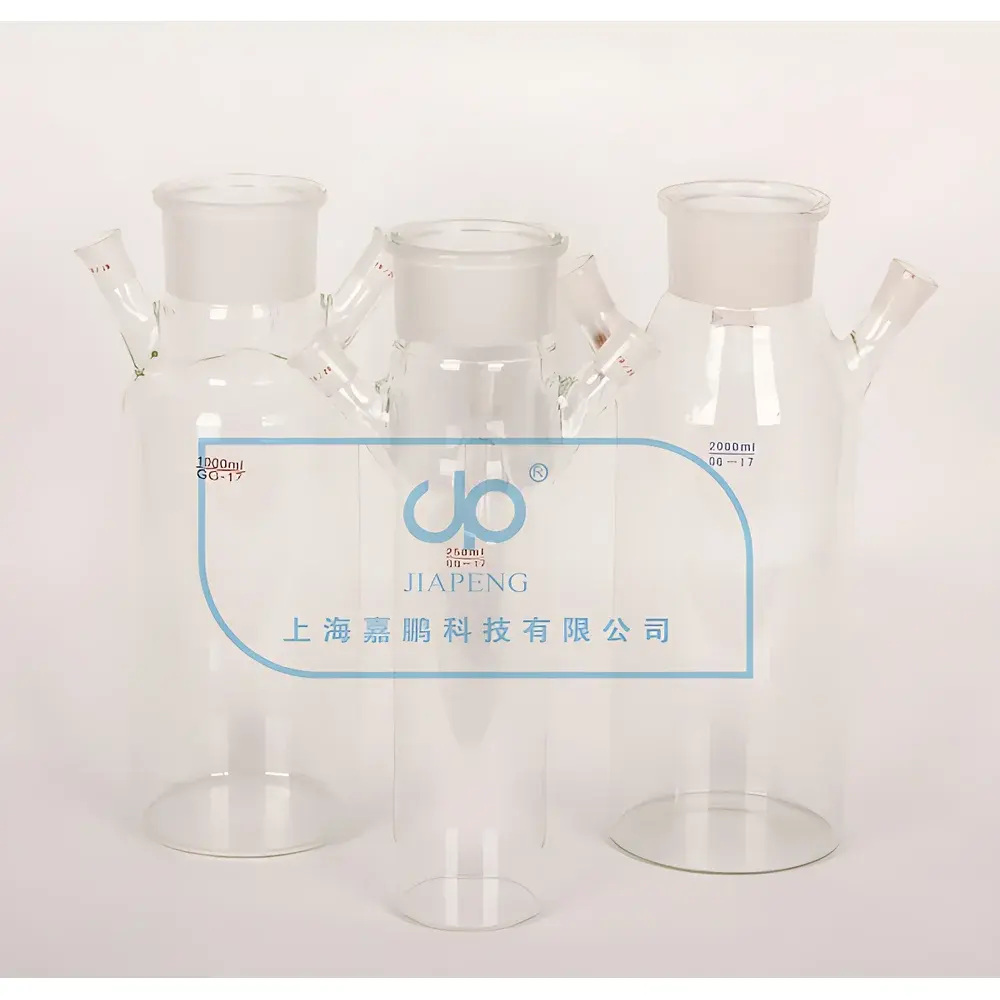
| Reaction Vessel Options | 250 / 500 / 1000 / 2000 / 3000 mL glass reactors |
| Quartz Tube Options | 30 mL or 50 mL |
| Filter Configuration | 16 UV/optical bandpass filters, dual 8-position filter holders |
| Cooling | Dual-layer quartz cold well (Φ70 × 380 mm), low-temperature circulating chiller (–20 °C to 100 °C, >1000 W cooling capacity) |
| Stirring | Magnetic stirring, 0–1800 rpm (8-channel synchronized), temperature control up to 300 °C |
| Timer | 0–999 min (digital microprocessor controller) |
| Safety | Radiation-shielded dark chamber with UV-blocking insertable shutter, hinged observation window, ventilation ports, and integrated cooling fan |
Overview
The Jiapeng GHX-IV Photochemical Reaction System is a modular, benchtop photoreactor engineered for controlled, reproducible photochemical investigations in research laboratories. It operates on the principle of controlled photon delivery to reaction media—enabling quantitative studies of light-driven processes including photocatalysis, radical generation, quantum yield determination, and kinetic profiling under defined spectral and thermal conditions. Unlike simple illumination setups, the GHX-IV integrates irradiation, thermal management, mechanical agitation, and environmental containment into a single coordinated platform. Its internal illumination architecture—where the lamp is positioned centrally within a reflective, radiation-shielded dark chamber—ensures uniform photon flux distribution across multiple sample vessels while minimizing ambient light interference and operator exposure. Designed for compatibility with UV-A, UV-B, UV-C, and visible-range photochemistry, the system supports standardized evaluation of TiO₂-mediated degradation, organic synthesis under photoinduced conditions, and environmental photolysis kinetics—making it suitable for academic, industrial R&D, and regulatory-compliant method development workflows.
Key Features
- Modular multi-lamp support: Interchangeable mercury, xenon, and metal halide lamps (300–1000 W mercury/xenon; 500 W metal halide), all continuously power-adjustable via microprocessor-controlled ballast
- Eight-position parallel reaction station: Synchronized magnetic stirring (0–1800 rpm) across all channels, with independent speed calibration and real-time RPM display
- Dual-layer quartz cold well (Φ70 × 380 mm): Enables active temperature stabilization of reaction mixtures during high-intensity irradiation; compatible with external recirculating chillers
- Radiation-safe dark chamber: Constructed with UV-absorbing interior lining, sliding UV-blocking shutter, hinged observation window with optical-grade acrylic, and passive/active ventilation (integrated cooling fan + dedicated air inlet/outlet ports)
- Intelligent controller: Large LCD interface displaying real-time voltage, current, temperature, timer, and stirring speed; programmable stepwise timing (up to 999 minutes per stage)
- Flexible reactor compatibility: Five standard borosilicate glass reactor volumes (250–3000 mL); optional custom quartz or fused-silica vessels; standardized 30 mL and 50 mL quartz test tubes with 16-band optical filter set (including UVC 254 nm, UVB 312 nm, UVA 365 nm, and visible cutoff filters)
Sample Compatibility & Compliance
The GHX-IV accommodates homogeneous liquid-phase reactions, slurry-based photocatalytic suspensions (e.g., TiO₂ in aqueous or organic media), and gas–liquid interfacial systems using sealed or reflux-capable reactors. All wetted components—including glass reactors, quartz cold wells, and filter holders—are chemically inert to common solvents (acetonitrile, methanol, water, dichloromethane) and stable under prolonged UV exposure. The system meets baseline safety requirements aligned with IEC 61000-6-3 (EMC emission standards) and IEC 61000-6-2 (immunity). While not certified for GLP or GMP environments out-of-the-box, its digital logging capability (via optional RS232/USB data export), audit-ready timer/stirrer parameter recording, and traceable lamp power calibration support alignment with ISO/IEC 17025 documentation practices for method validation. Filter selection enables compliance with ASTM D4173 (photocatalytic activity testing) and ISO 10678 (UV-induced degradation of polymers) when paired with calibrated radiometers.
Software & Data Management
The GHX-IV operates via embedded firmware without proprietary software dependency. All operational parameters—including lamp power (% of max), stirring speed (rpm), set temperature (°C), elapsed time (min:sec), and real-time voltage/current—are displayed and retained in non-volatile memory for post-experiment review. Optional data logging modules (sold separately) enable timestamped CSV export of up to six concurrent parameters via USB or RS232, supporting integration into LIMS or ELN platforms. The controller’s event-triggered timer logic allows multi-stage protocols—for example, pre-stirring at 25 °C for 5 min, followed by UV irradiation at 500 W for 30 min while maintaining 10 °C via chiller feedback—enhancing experimental repeatability across batches and operators.
Applications
- Photocatalytic pollutant degradation kinetics (e.g., methylene blue, phenol, pharmaceutical residues) under simulated solar or monochromatic UV
- Quantum yield measurement of reactive oxygen species (•OH, O₂•⁻, ¹O₂) using chemical actinometry (e.g., potassium ferrioxalate, Reinecke’s salt)
- Photoinduced C–C bond formation, [2+2] cycloadditions, and decarboxylative couplings in synthetic organic chemistry
- Stability assessment of UV-sensitive APIs, polymers, and coatings per ICH Q1B and ISO 4892-3
- Microbial inactivation studies using UVC germicidal irradiation (254 nm) with dose–response modeling
- Development and benchmarking of novel photocatalysts (g-C₃N₄, MOFs, doped TiO₂) under controlled photon flux and thermal conditions
FAQ
Can the GHX-IV operate with both mercury and xenon lamps simultaneously?
No—the system supports one lamp at a time, but lamp sockets and ballasts are mechanically and electrically configured for rapid, tool-free interchange between mercury, xenon, and metal halide sources.
Is the quartz cold well included with the base configuration?
Yes, the dual-layer Φ70 × 380 mm quartz cold well is standard equipment and required for thermal management during high-power irradiation.
Does the system meet FDA 21 CFR Part 11 requirements for electronic records?
The base unit does not include Part 11–compliant audit trails or electronic signatures; however, optional data loggers with user authentication, immutable timestamping, and export encryption can be deployed to support regulated environments.
What is the maximum allowable ambient temperature for continuous operation?
The controller and chamber electronics are rated for continuous use at ambient temperatures up to 35 °C; chiller performance must be verified independently at elevated room temperatures.
Are NIST-traceable irradiance calibrations available for the GHX-IV?
Jiapeng provides factory calibration certificates for lamp output at reference wavelengths (254 nm, 365 nm); third-party NIST-traceable spectral irradiance mapping (W·m⁻²·nm⁻¹) is available upon request through authorized metrology partners.




