
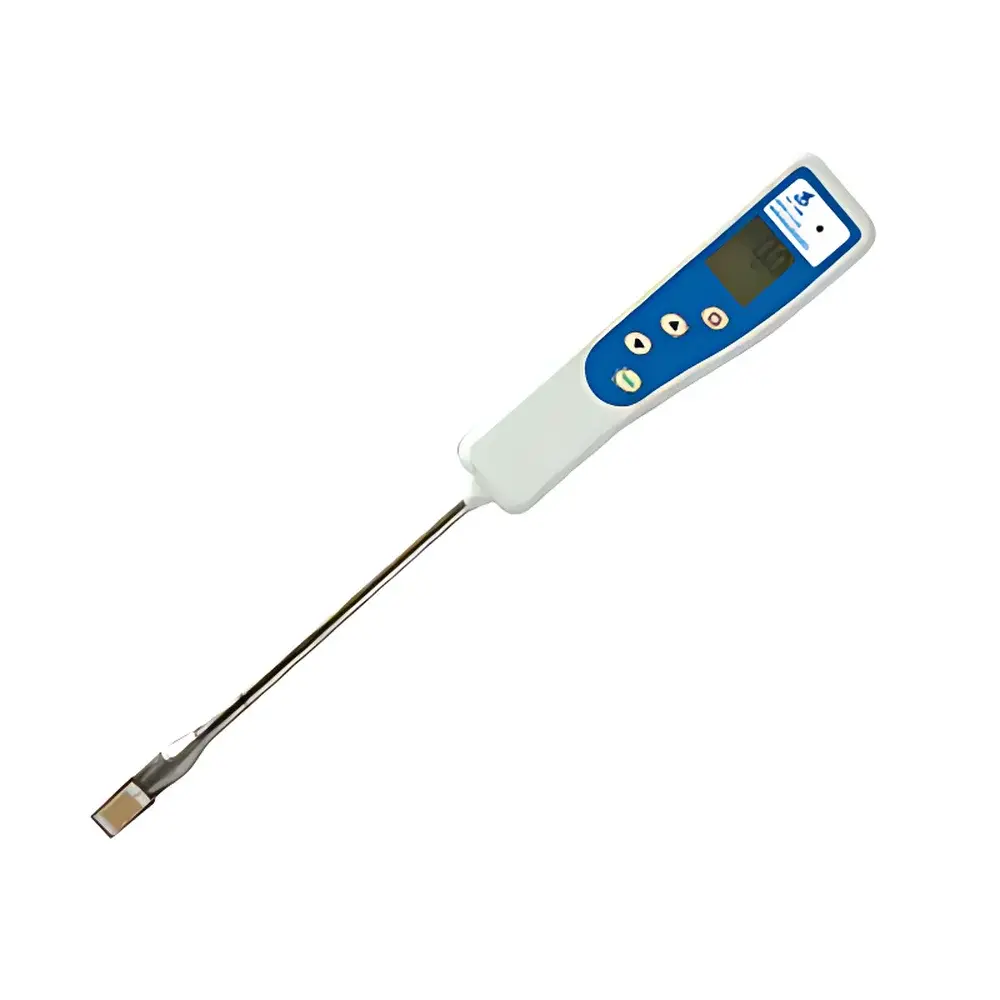
JiDa-Xiaotian’e GDYQ-121SG Edible Oil Quality Analyzer
| Brand | JiDa-Xiaotian'e |
|---|---|
| Origin | Jilin, China |
| Manufacturer Type | Direct Manufacturer |
| Country of Origin | China |
| Model | GDYQ-121SG |
| TPM Resolution | 0.1% |
| TPM Response Time | <15 s |
| Oil Temperature Range | +10 to +200 °C |
| Temperature Accuracy | ±1 °C |
| Temperature Sensor | PTC |
| IP Rating | IP65 |
| Housing Material | ABS |
| Weight | <170 g |
Overview
The JiDa-Xiaotian’e GDYQ-121SG Edible Oil Quality Analyzer is a handheld, field-deployable instrument engineered for rapid, on-site assessment of total polar materials (TPM) in frying oils—a critical indicator of thermal degradation and oxidative stability. It operates on the principle of dielectric constant measurement, correlating changes in oil permittivity with the accumulation of polar compounds (e.g., free fatty acids, polymers, and oxidation byproducts) formed during repeated heating. Unlike laboratory-based methods requiring solvent extraction or chromatography, this analyzer delivers quantitative TPM results in under 15 seconds without sample preparation or consumables—making it suitable for continuous monitoring in commercial kitchens, food manufacturing lines, catering facilities, and quality control checkpoints where real-time decision-making is essential.
Key Features
- IP65-rated enclosure ensures reliable operation in high-humidity, splashing-prone environments typical of fry stations and food processing areas.
- Ergonomic, streamlined housing with anti-slip grip minimizes accidental drop risk and supports extended one-handed use during routine inspections.
- Food-grade, non-leaching probe material eliminates cross-contamination risk and complies with general food contact safety expectations per GB 4806.1–2016 (Chinese national standard for food-contact materials).
- Integrated PTC temperature sensor enables simultaneous real-time oil temperature measurement (range: +10 to +200 °C, accuracy: ±1 °C), supporting temperature-compensated TPM evaluation.
- User-configurable TPM alarm thresholds allow facility-specific compliance with internal SOPs or regional regulatory guidance (e.g., EU Regulation (EC) No 2073/2005, which recommends TPM ≤ 24–27% for discard decisions).
- On-device data retention preserves up to 500 test records with timestamp and temperature metadata; factory reset capability ensures consistent calibration baseline across shifts or operators.
- Adjustable keypad tone and LCD backlight intensity enhance usability under variable ambient lighting—from dim storage rooms to bright daylight kitchen windows.
Sample Compatibility & Compliance
The GDYQ-121SG is validated for use with common edible frying media including soybean oil, palm oil, sunflower oil, canola oil, and blended frying fats. It is not intended for use with highly viscous or non-edible industrial lubricants, silicone oils, or aqueous emulsions. While not certified to ISO/IEC 17025 or accredited for regulatory submission, its TPM measurement correlates with reference ASTM D7467–22 (Standard Test Method for Determination of Total Polar Compounds in Used Cooking Oils by Fourier Transform Infrared Spectroscopy) within typical operational ranges. Instrument design adheres to basic electrical safety requirements per GB 4793.1–2018 (equivalent to IEC 61010-1) and environmental resilience standards appropriate for Class II industrial equipment.
Software & Data Management
Data management is performed locally via the built-in memory module. No proprietary software, USB interface, or cloud connectivity is provided; all records remain on-device and are viewable in chronological order on the LCD display. Timestamped entries include TPM value (%), measured temperature (°C), and pass/fail status relative to user-defined limits. Audit trail functionality is limited to manual logbook correlation—this instrument does not support FDA 21 CFR Part 11-compliant electronic records, GLP/GMP audit trails, or automated export. For regulated environments requiring traceability, users must implement complementary procedural controls (e.g., operator sign-off, printed verification logs).
Applications
- Routine TPM screening during active frying operations in fast-food chains, hotel kitchens, and institutional cafeterias.
- Pre-shift verification of oil condition prior to batch cooking in meat processing or snack production lines.
- Training and verification tool for HACCP teams assessing critical control point (CCP) adherence at oil change intervals.
- Field audits by food safety inspectors performing on-site verification of oil management practices against local health code provisions.
- Research and development labs evaluating comparative oxidative stability of new oil formulations under simulated frying cycles.
FAQ
What does TPM stand for, and why is it important in frying oil management?
TPM stands for Total Polar Materials—the sum of all oxidized, polymerized, and hydrolyzed compounds generated as edible oils degrade under heat and oxygen exposure. Elevated TPM levels (>24–27%) correlate strongly with reduced frying performance, off-flavors, increased acrylamide formation, and potential health concerns. Monitoring TPM is a globally accepted proxy for oil service life.
Can the GDYQ-121SG be calibrated in the field?
Yes—users may perform two-point calibration using reference oil samples of known TPM concentration (e.g., fresh oil = 0%, degraded oil = ~30%). Calibration parameters are stored in non-volatile memory and persist through power cycles.
Is the probe suitable for immersion in hot oil during active frying?
Yes—its IP65 rating and thermal design permit direct immersion into oils up to 200 °C. The streamlined probe geometry minimizes residual oil retention and facilitates rapid wipe-down between measurements.
Does the device meet international food safety certification requirements?
It is not CE-marked, UKCA-certified, or FDA-listed. Its use supports internal quality assurance but does not substitute for laboratory analysis required in formal regulatory submissions or third-party certification schemes.





