
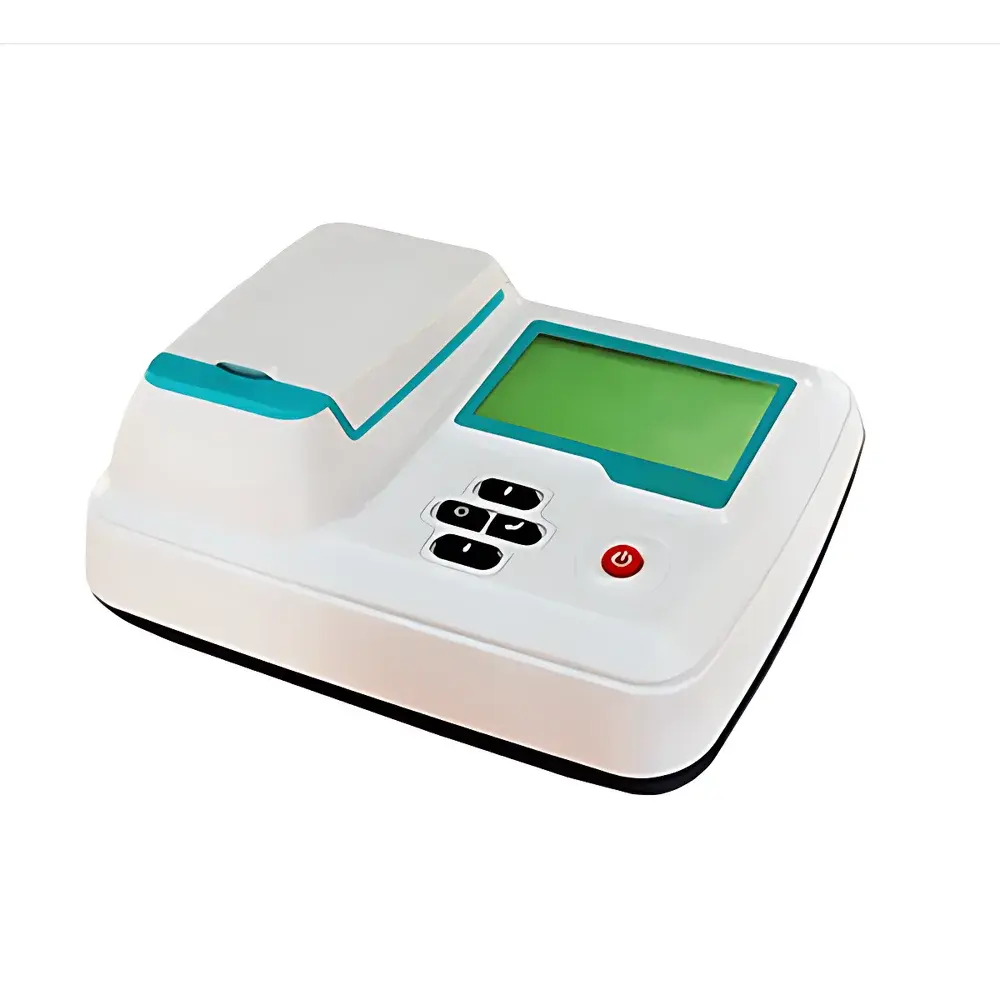
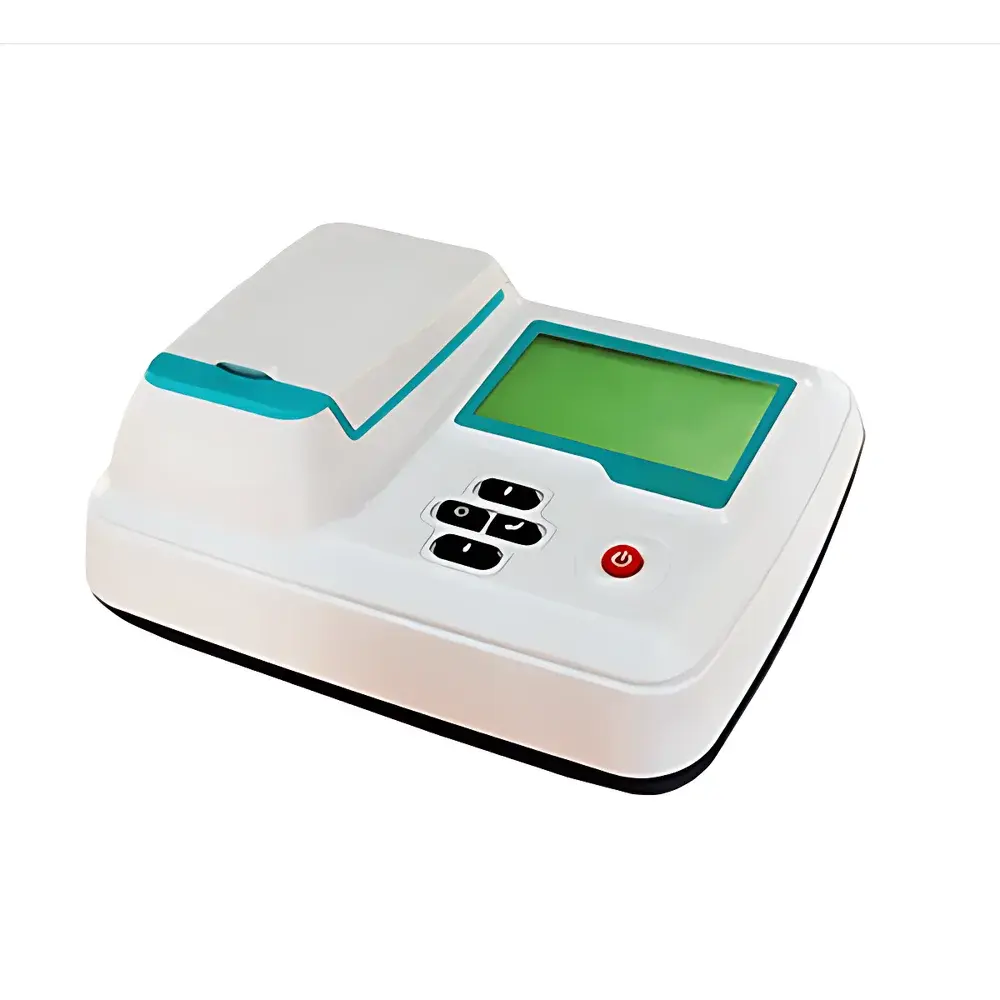
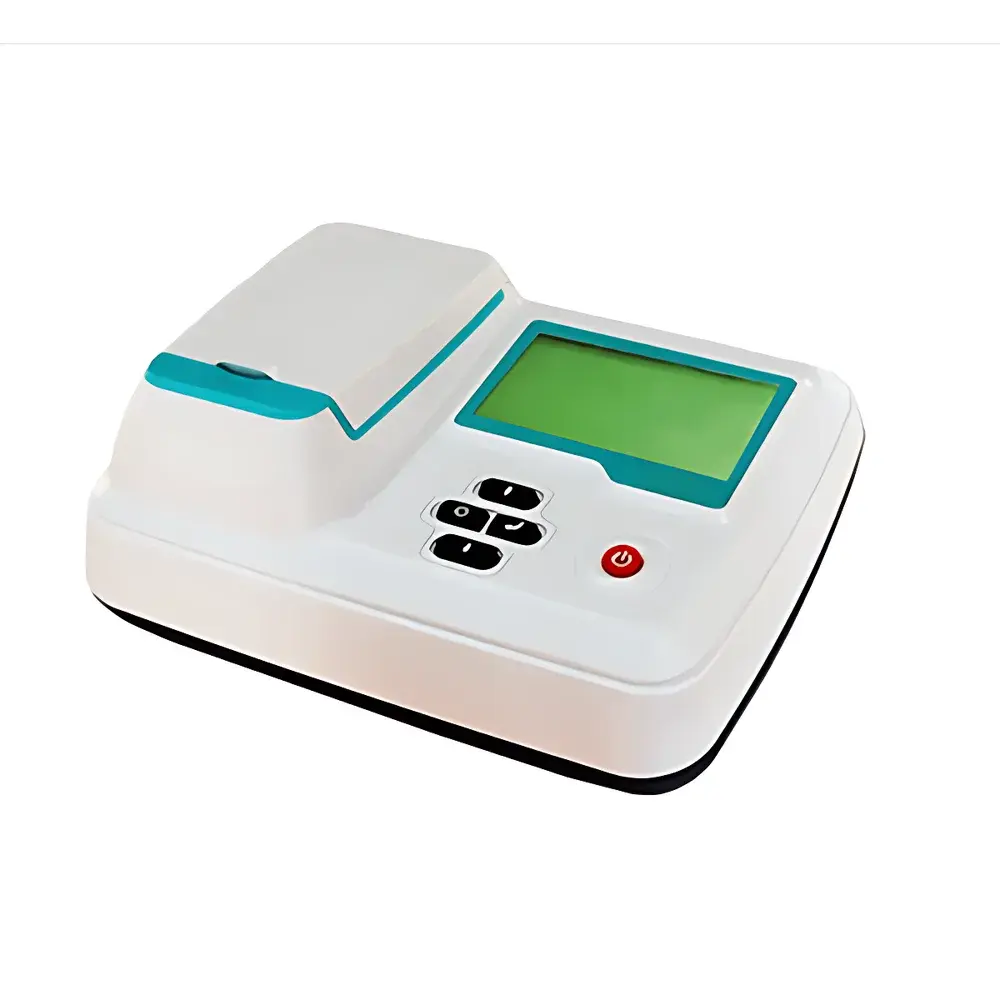
Jilin University & Little Swan GDYS-302S Portable Total Nitrogen (TN), Ammonia Nitrogen (NH₃-N), and Nitrate Nitrogen (NO₃⁻-N) Analyzer
| Brand | Jilin University & Little Swan |
|---|---|
| Origin | Shanghai, China |
| Manufacturer Type | Authorized Distributor |
| Country of Origin | China |
| Model | GDYS-302S |
| Weight | 1.7 kg |
| Operating Temperature | 5–40 °C |
| Power Supply | AC 220 V ± 22 V, 50 Hz ± 1 Hz |
| Repeatability | ±5% |
| Accuracy (Measurement Error) | ±5% |
| Light Source | High-brightness LED |
| Wavelengths | 430 nm, 538 nm |
| Absorbance Range | 0.000–2.000 Abs |
| Absorbance Stability | ≤0.005 Abs/h |
| Detector | Integrated Photodiode Sensor |
| Sample Cell | Cylindrical Glass Cuvette, 16 mm Inner Diameter |
| Display | 4.7-inch TFT LCD with Chinese UI |
| Data Interface | USB + RS-232 (COM) |
| Battery | Rechargeable Li-ion, 7.4 V / 900 mAh |
| Power Consumption | 5 W |
Overview
The Jilin University & Little Swan GDYS-302S Portable Tri-Nitrogen Analyzer is a field-deployable, spectrophotometric instrument engineered for the simultaneous or independent quantification of total nitrogen (TN), ammonia nitrogen (NH₃-N), and nitrate nitrogen (NO₃⁻-N) in water samples. It operates on the principle of colorimetric analysis—where nitrogen-containing species are chemically converted into stable, light-absorbing chromophores under controlled reaction conditions, followed by absorbance measurement at two discrete wavelengths (430 nm and 538 nm). The system employs dual-wavelength photometry to minimize matrix interference and enhance analytical robustness in complex environmental matrices such as surface water, groundwater, wastewater effluent, and aquaculture systems. Designed for both on-site deployment and laboratory bench use, the GDYS-302S integrates optical, electronic, and chemical subsystems into a single ruggedized platform weighing only 1.7 kg, enabling rapid, standardized nitrogen speciation without reliance on centralized lab infrastructure.
Key Features
- Integrated optical architecture: Co-located high-stability LEDs (430 nm and 538 nm), precision-machined cylindrical sample chamber (16 mm ID glass cuvette), and calibrated photodiode detector—ensuring optical path consistency and long-term signal reproducibility (stability ≤0.005 Abs/h).
- Sealed, single-vessel reaction-measurement protocol: Eliminates sample transfer between digestion, color development, and detection steps—reducing contamination risk and operator-induced variability.
- Built-in calibration curves: Pre-programmed, factory-validated absorbance-concentration algorithms for TN, NH₃-N, and NO₃⁻-N; eliminates requirement for daily standard curve preparation while maintaining traceability to NIST-traceable reference materials.
- Dual-power operation: Supports continuous AC operation (220 V ± 22 V, 50 Hz) and autonomous field use via internal rechargeable Li-ion battery (7.4 V / 900 mAh), with real-time state-of-charge monitoring and low-battery warning.
- Intuitive human interface: 4.7-inch TFT LCD with native Chinese menu navigation, direct concentration readout (mg/L as N), and on-device data management—including timestamped storage of up to 1,000 test records with sample ID, operator name, and method selection.
- Comprehensive connectivity: Dual communication ports (USB 2.0 and RS-232) enable bidirectional data exchange and remote firmware updates; compatible with Windows-based desktop software for audit-ready reporting and Excel (.xlsx) export.
Sample Compatibility & Compliance
The GDYS-302S accepts clarified liquid samples within pH 4–10 and turbidity < 5 NTU. It complies with core elements of ISO 10304-1 (determination of dissolved anions), ISO 7150-1 (ammonia nitrogen in water), and APHA Standard Methods 4500-NH₃ F and 4500-NO₃⁻ E. While not certified to GLP or FDA 21 CFR Part 11 out-of-the-box, its data logging architecture—including immutable timestamps, operator ID fields, and non-editable raw absorbance values—supports alignment with GLP documentation requirements when deployed within validated laboratory workflows. All reagent kits are manufactured under ISO 9001-certified quality systems and include lot-specific certificate of analysis.
Software & Data Management
Onboard firmware supports measurement execution, parameter configuration (e.g., wavelength selection, blank subtraction mode), statistical review (mean, SD, CV%), and encrypted local storage. The companion PC software provides full audit trail functionality: user login authentication, change logs for method parameters, electronic signature capture for report approval, and export of compliant reports in PDF and Excel formats. All exported datasets retain embedded metadata (instrument ID, firmware version, calibration date, environmental temperature at time of test), satisfying minimum data integrity criteria for environmental monitoring programs governed by national water quality standards (e.g., China’s GB 3838-2002, US EPA Method 353.2 equivalents).
Applications
- Field monitoring of nutrient loading in rivers, lakes, and reservoirs during seasonal algal bloom assessments.
- Routine QA/QC testing in municipal wastewater treatment plants—tracking NH₃-N removal efficiency across nitrification/denitrification stages.
- Regulatory compliance sampling for agricultural runoff and livestock wastewater per provincial discharge limits.
- Research-grade nitrogen speciation in soil leachate and hydroponic nutrient solutions.
- Emergency response screening following industrial spills involving nitrogenous compounds (e.g., urea, ammonium nitrate).
FAQ
Does the GDYS-302S require daily recalibration with standard solutions?
No. The instrument uses pre-loaded, multi-point calibration curves validated against certified reference materials; routine verification with a single mid-range check standard is recommended before each batch of samples.
Can the device measure nitrite nitrogen (NO₂⁻-N) independently?
Not natively. The GDYS-302S is configured for TN, NH₃-N, and NO₃⁻-N only. Nitrite determination requires separate instrumentation or adaptation using supplementary reagent modules (not included).
Is the glass cuvette reusable, and what is its expected lifetime?
Yes—the 16 mm ID cylindrical glass cell is designed for ≥500 cleanings with mild detergent and deionized water; thermal shock resistance allows use across the full 5–40 °C operating range.
How is data security ensured during USB transfer to a host computer?
All exported files are generated as write-protected Excel workbooks containing unalterable metadata; no raw firmware or calibration coefficients are exposed during data extraction.
What maintenance is required beyond routine cleaning?
Annual verification of LED intensity and photodiode linearity by authorized service centers is advised; no user-serviceable optical components exist within the sealed optical module.
Related Products







