
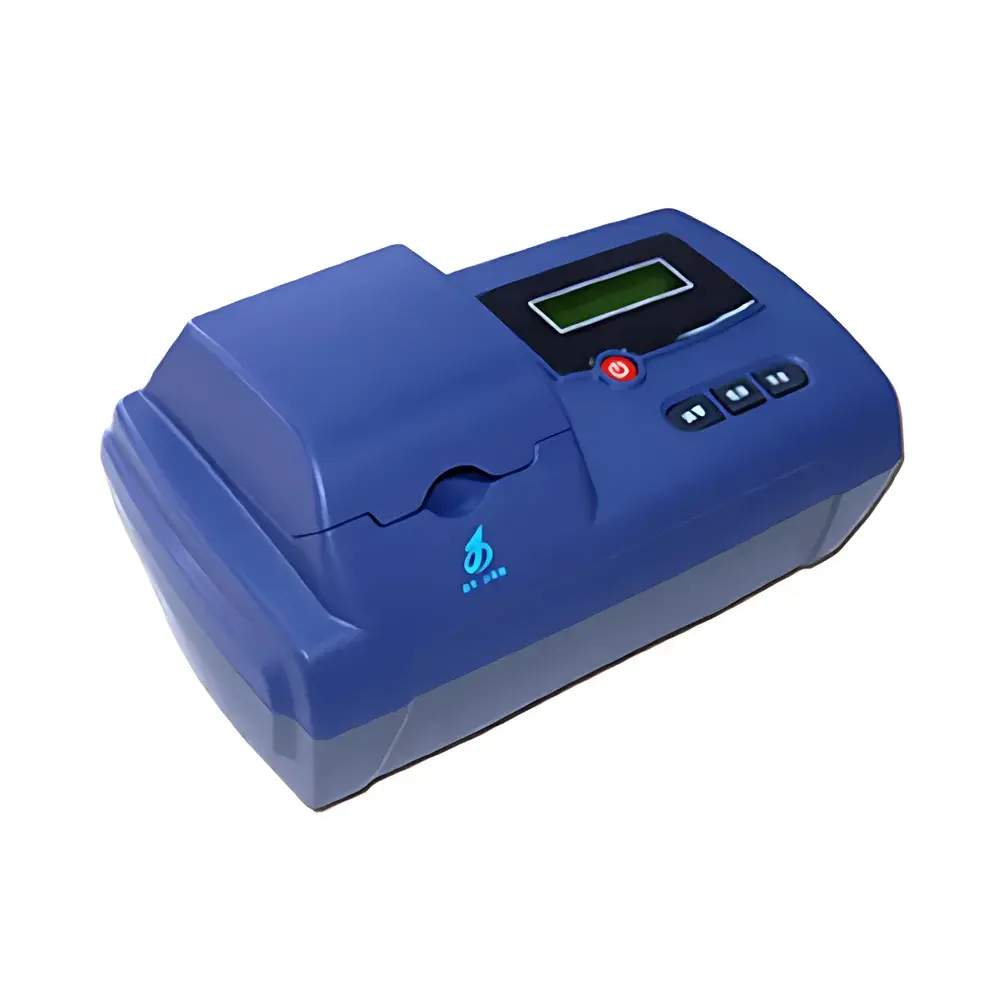
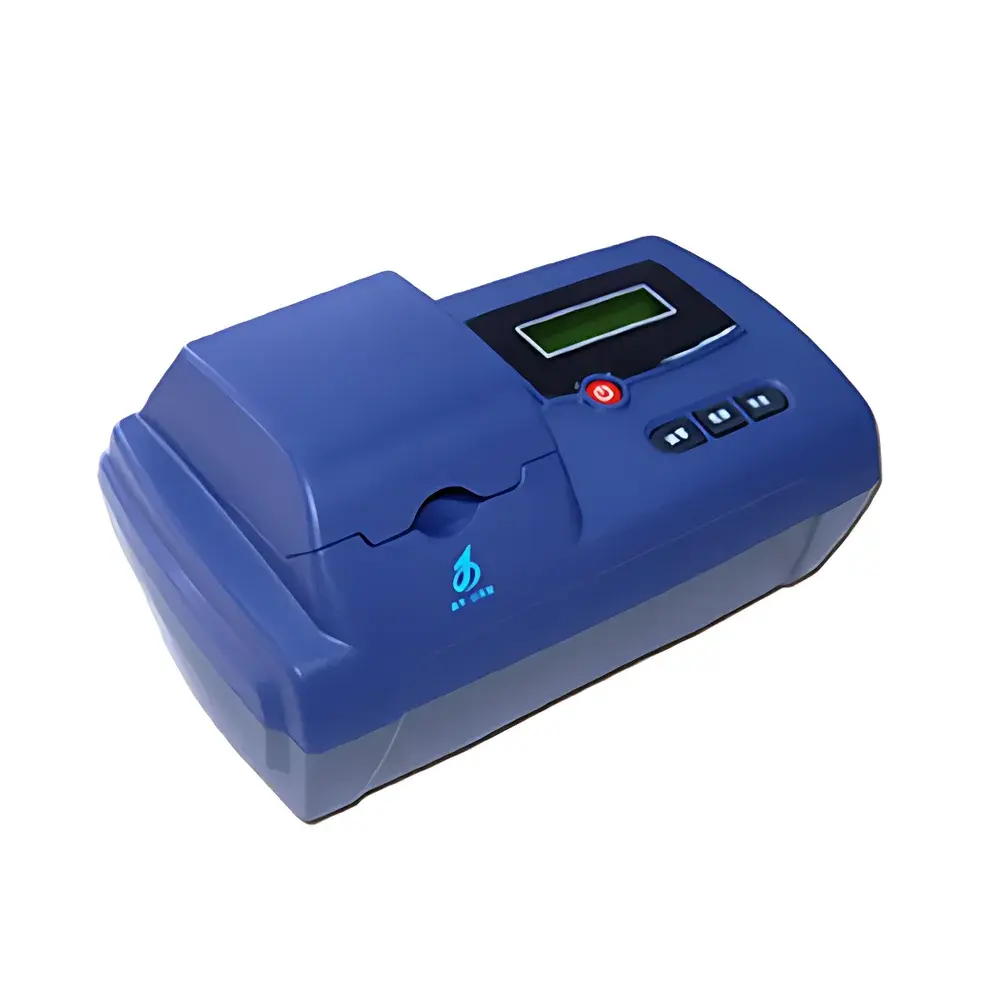
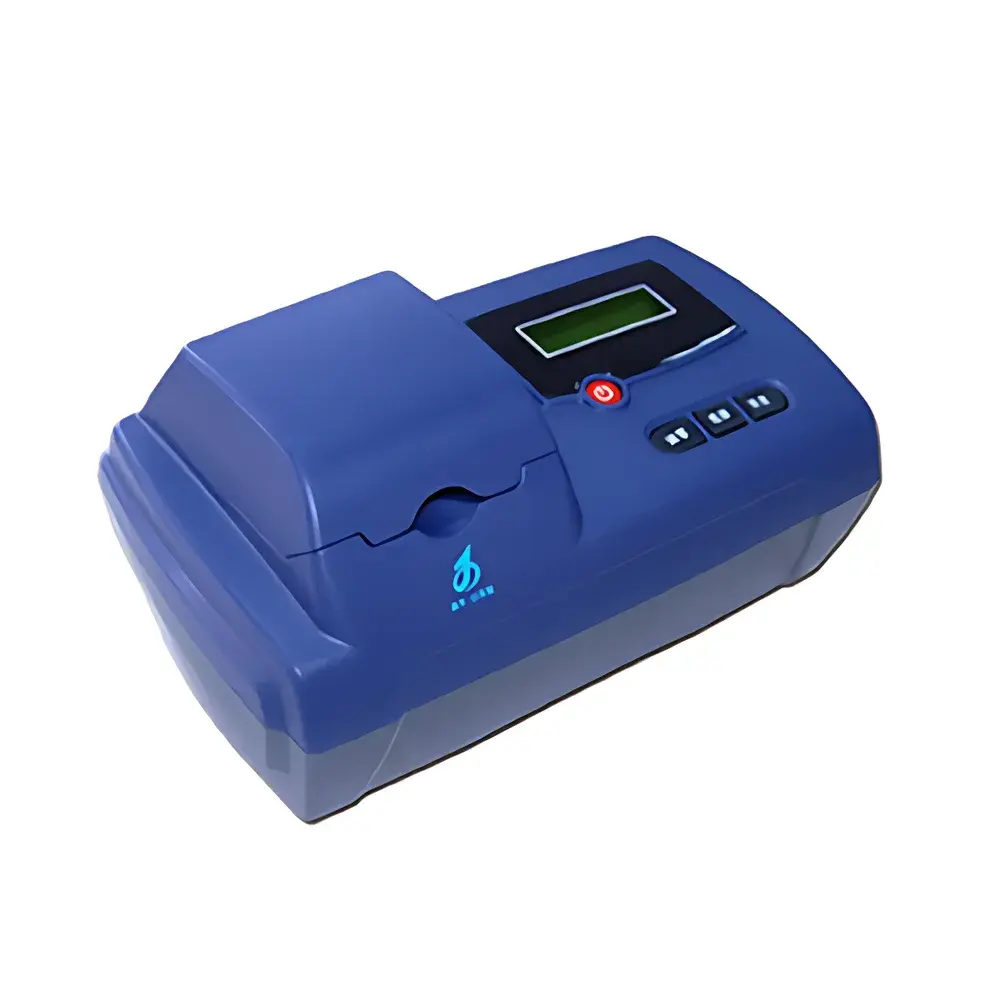
Jilin University & Little Swan Portable Aquaculture Water Quality Analyzer GDYS-501SC
| Brand | Jilin University & Little Swan |
|---|---|
| Origin | Shanghai, China |
| Manufacturer Type | Authorized Distributor |
| Country of Origin | China |
| Model | GDYS-501SC |
| Power Supply | 9 V DC (alkaline or rechargeable battery) |
| Operating Temperature | 0 °C to 40 °C |
| Optical Wavelengths | 520 nm and 538 nm |
| Photometric Range | 0.000–2.000 Abs |
| Photometric Stability | ±0.005 Abs/h |
| Measurement Principle | Fixed-wavelength colorimetry with integrated optical path |
| Sample Vessel | Cylindrical sealed cuvette (direct measurement post-reaction) |
| Preloaded Calibration Curves | Yes, factory-calibrated for target analytes |
| Reagent Format | Dry-powder or liquid-stabilized prepackaged reagents |
| Compliance | Designed to support ASTM D1292 (pH), ASTM D3867 (nitrite-N), ASTM D1688 (ammonia-N), ISO 5815-1 (dissolved oxygen), and GB/T 5750.5–2023 (Chinese national standards for drinking water quality) |
Overview
The Jilin University & Little Swan Portable Aquaculture Water Quality Analyzer GDYS-501SC is a field-deployable, fixed-wavelength colorimetric instrument engineered for rapid, on-site quantification of critical water quality parameters in aquaculture environments. It operates on the principle of absorbance-based colorimetry, where target analytes—ammonia nitrogen (NH₃-N), nitrite nitrogen (NO₂⁻-N), dissolved oxygen (DO), sulfide (S²⁻), and pH—are chemically converted into stable colored complexes within a sealed cylindrical reaction vessel. The integrated optical module employs high-stability light-emitting diodes (LEDs) at 520 nm and 538 nm, selected to match the absorption maxima of common chromogenic reactions used in standard methods (e.g., Nesslerization for ammonia, diazotization for nitrite, indigo carmine for DO). With no moving parts in the photometric path and pulse-driven LED excitation, the system achieves long-term signal stability (±0.005 Abs/h) and an effective optical lifetime exceeding 100,000 hours. Its compact, ruggedized housing and low-power 9 V DC operation enable uninterrupted use across hatcheries, pond margins, recirculating aquaculture systems (RAS), and transport vehicles—without reliance on mains power or climate-controlled labs.
Key Features
- Integrated optical architecture: Monolithic LED–filter–detector assembly eliminates alignment drift and mechanical wear; no calibration required between measurements.
- Direct-in-cuvette methodology: All color development and photometric reading occur within the same disposable or reusable cylindrical cuvette, minimizing cross-contamination and volumetric transfer error.
- Factory-loaded calibration curves: Pre-programmed, multi-point working curves for each parameter eliminate the need for daily standard solution preparation—reducing operator dependency and procedural variability.
- Dual-power capability: Operates on standard 9 V alkaline batteries or optional internal rechargeable Li-ion battery (with state-of-charge monitoring and low-battery alert).
- Rugged field design: IP54-rated enclosure, shock-absorbing casing, and operating temperature range of 0 °C to 40 °C ensure reliability under humid, dusty, or temperature-fluctuating farm conditions.
- Prepackaged reagent kits: Each test includes individually dosed, moisture-barrier-sealed reagents compliant with shelf-life specifications per GB/T 5750.5–2023; no glassware cleaning or stock solution dilution required.
Sample Compatibility & Compliance
The GDYS-501SC is validated for use with raw, filtered, or centrifuged water samples from freshwater and brackish aquaculture systems—including earthen ponds, concrete raceways, net pens, and RAS biofilters. It accommodates turbidities up to 50 NTU without filtration (for NH₃-N and NO₂⁻-N assays), and supports pH measurement across the full aquaculture-relevant range (6.0–9.0). All assay chemistries adhere to internationally referenced methodologies: ammonia-N follows ASTM D1426 (modified Nessler), nitrite-N conforms to ASTM D3867 (Griess reaction), dissolved oxygen uses the indigo carmine reduction method aligned with ISO 5815-1, and sulfide analysis implements methylene blue spectrophotometry per APHA 4500-S²⁻ B. While not certified under FDA 21 CFR Part 11, the device supports GLP-aligned documentation when paired with external lab notebooks or LIMS-integrated reporting workflows.
Software & Data Management
The GDYS-501SC features an embedded microcontroller with non-volatile memory capable of storing up to 500 measurement records, each timestamped and tagged with parameter ID, sample ID (user-entered alphanumeric code), and battery status. Data export is performed via USB-C interface using vendor-provided PC software (Windows-compatible), which generates CSV-structured files compatible with Excel, JMP, or laboratory information management systems (LIMS). Audit trails—including instrument self-diagnostics, zero-check logs, and curve validation timestamps—are retained internally and exportable. Firmware updates are delivered via signed binary packages to maintain traceability and prevent unauthorized modification—supporting routine QA/QC verification in regulated production facilities.
Applications
- Real-time monitoring of ammonia spikes during feeding cycles or after partial water exchange.
- Routine screening of nitrite accumulation in juvenile fish tanks to preempt brown blood disease.
- Verification of dissolved oxygen saturation levels prior to stocking or during thermal stratification events.
- Emergency assessment of hydrogen sulfide presence following sediment disturbance or anaerobic sludge buildup.
- Baseline water profiling during site selection or pre-stocking certification for shrimp or tilapia farms.
- Training and extension services for cooperative aquaculturists requiring standardized, low-barrier QC protocols.
FAQ
Can the GDYS-501SC be used for seawater applications?
Yes—when configured with salinity-tolerant reagent formulations and calibrated against marine-certified reference standards (e.g., CRM-SEAWATER-AMMONIA), though default factory curves are optimized for freshwater and low-salinity (<5 ppt) systems.
Is user calibration of the optical system possible?
No—optical gain and dark-current compensation are factory-performed and locked; users may only verify performance using supplied blank and check standards.
What is the shelf life of the reagent kits?
Unopened kits retain full potency for 18 months when stored at 2 °C–25 °C and protected from direct sunlight and humidity; desiccant integrity must be confirmed prior to first use.
Does the instrument meet ISO/IEC 17025 requirements for accredited testing?
While the GDYS-501SC itself is not accredited, its documented measurement uncertainty, traceable calibration, and adherence to ASTM/ISO reference methods allow laboratories to incorporate it into ISO/IEC 17025-compliant test procedures when validated per Clause 7.2.
How often should the optical window be cleaned?
After every 20 measurements—or immediately after handling oily or particulate-laden samples—using lint-free wipes moistened with deionized water; ethanol cleaning is prohibited to avoid polymer lens degradation.
Related Products







