
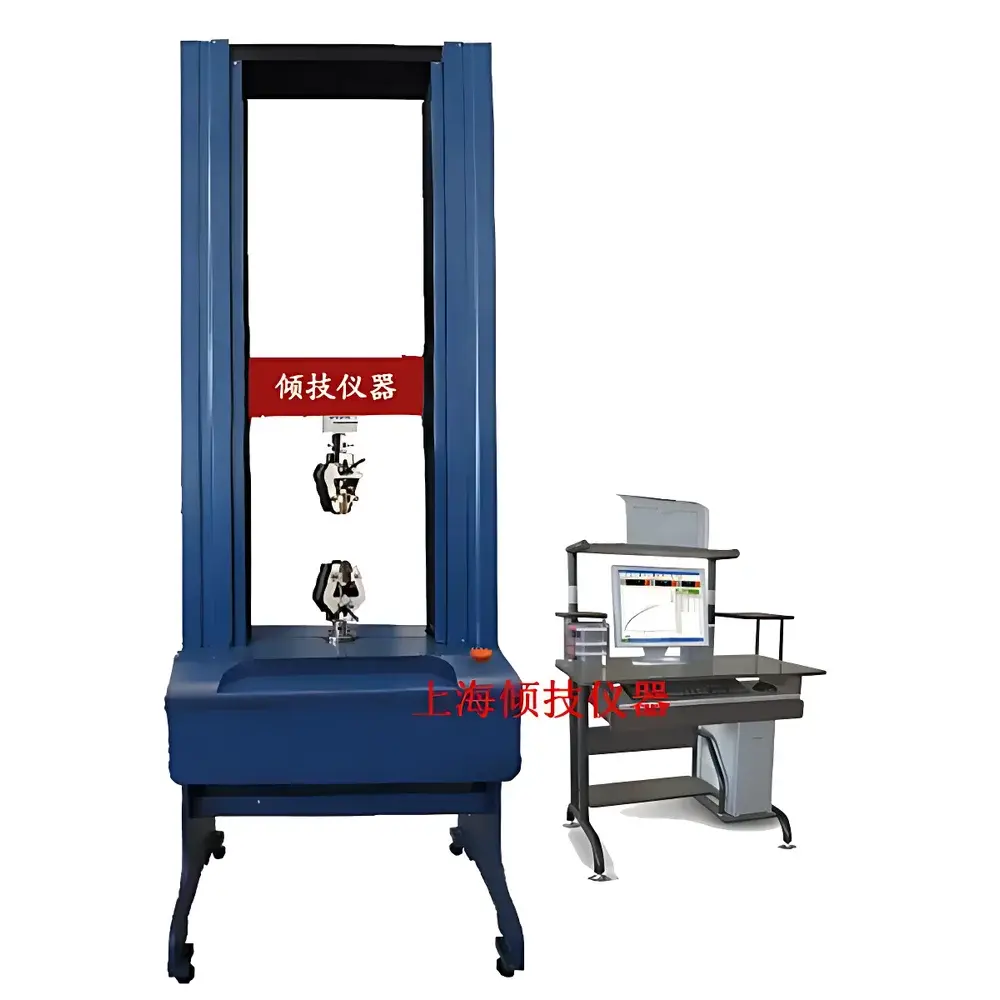
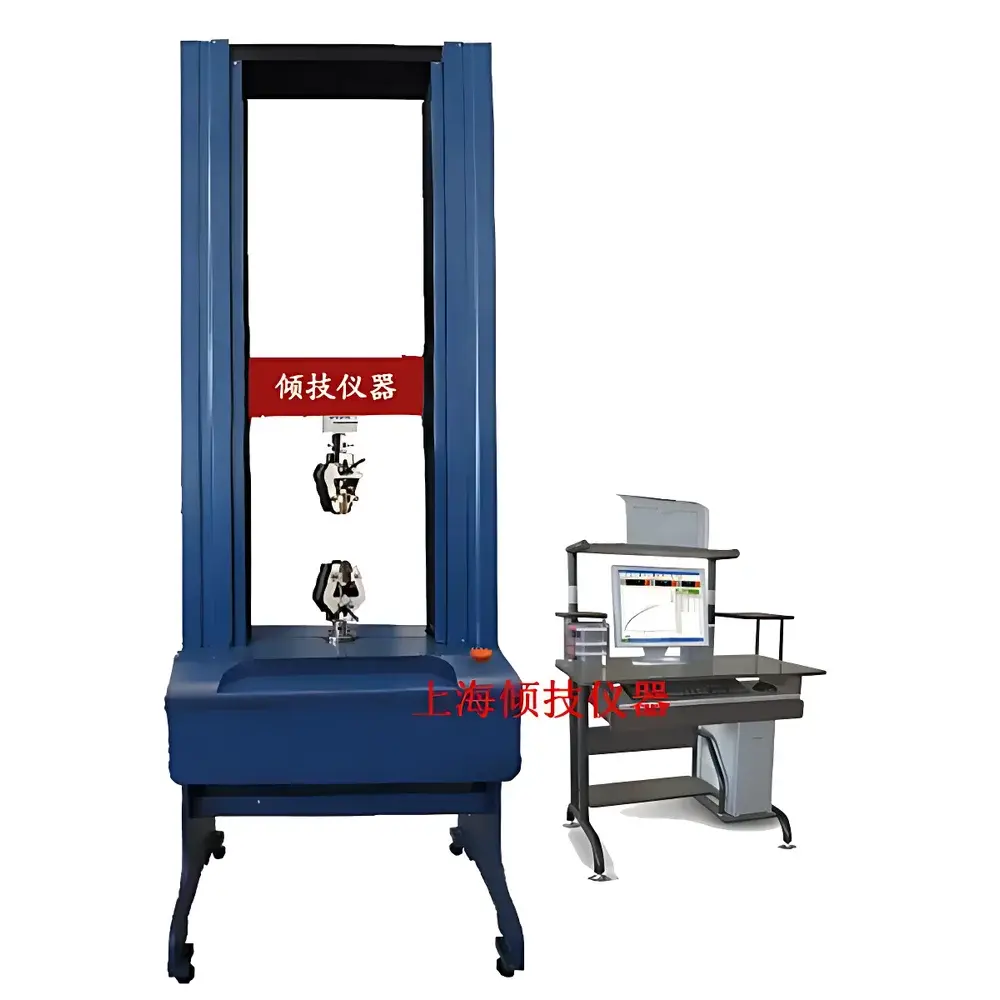
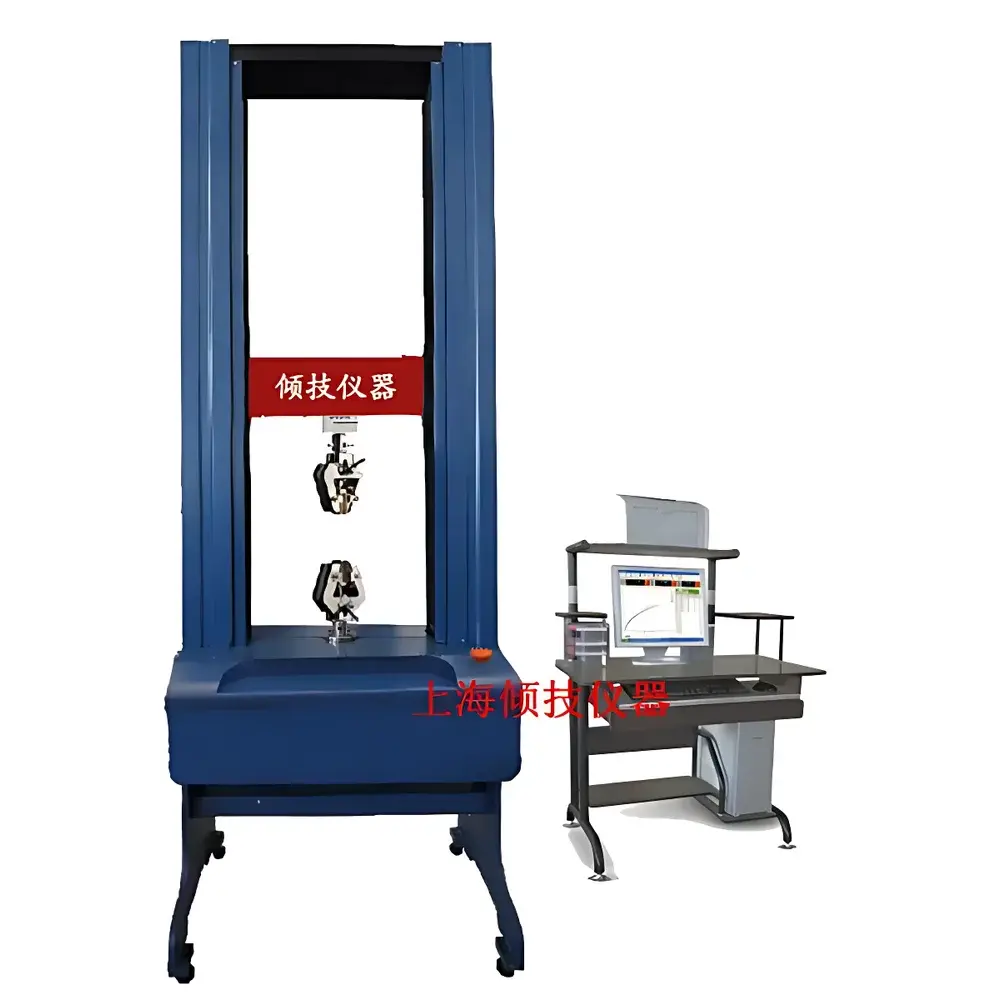
Jinhui QJ211 Advanced Electronic Tensile Testing Machine
| Origin | Shanghai, China |
|---|---|
| Manufacturer Type | Authorized Distributor |
| Origin Category | Domestic (PRC) |
| Model | QJ211 |
| Quotation | USD 6,750 (FOB Shanghai) |
| Instrument Type | Electromechanical Universal Tensile Tester |
| Max Test Load | 200 kN |
| Force Measurement Range | 1%–100% of Full Scale (FS) |
| Force Accuracy | ±0.5% of reading |
| Travel Distance | 800 mm |
| Displacement Resolution | 0.001 mm |
| Speed Range | 0.001–500 mm/min (programmable, closed-loop controlled) |
| Speed Accuracy | ±0.5% of set value |
| Crosshead Effective Width | 420 mm |
| Load Cell | High-precision USA-made strain-gauge sensor (500,000-count resolution, no internal range switching) |
| Control System | Panasonic全数字 AC servo drive & controller |
| Software Platform | Full-digital closed-loop test management system supporting constant load, constant strain, constant displacement, and multi-step ramp profiles |
| Safety Features | Dual-mode overload protection (10% over full scale), electronic limit switches, real-time software diagnostics, automatic return-to-start |
| Power Supply | 220 VAC, 50 Hz, 750 W |
| Dimensions (L×W×H) | 690 × 465 × 1970 mm |
| Net Weight | 280 kg |
| Compliance | ASTM E4, ASTM E8, ISO 6892-1, GB/T 228.1–2021, JJG 475–2018 |
Overview
The Jinhui QJ211 Advanced Electronic Tensile Testing Machine is a high-fidelity electromechanical universal testing system engineered for precision mechanical characterization of metallic and non-metallic materials under uniaxial loading conditions. Based on the fundamental principles of Hooke’s Law and standardized force-displacement transduction, the instrument delivers traceable, repeatable measurements of tensile strength, yield point, elongation at break, modulus of elasticity, compressive yield, flexural modulus, peel adhesion, and shear resistance. Its architecture integrates a rigid dual-column frame, a high-resolution servo-driven crosshead actuator, and a calibrated load cell conforming to Class 0.5 accuracy per ISO 7500-1 and JJG 475–2018 metrological verification standards. Designed specifically for Tier-1 automotive component validation, the QJ211 meets the mechanical test protocol requirements defined in SAE J2334 (fatigue life of fasteners), ISO 1421 (tensile properties of rubber), and ISO 527-2 (plastics tensile testing), enabling laboratories to generate auditable data for IATF 16949-compliant quality systems.
Key Features
- Full-scale load capacity up to 200 kN with seamless auto-ranging across 3 kN, 5 kN, 10 kN, 20 kN, and 30 kN sub-ranges — no manual range switching required
- True 500,000-count force resolution maintained uniformly across the entire measurement span, eliminating step-change errors during low-load or high-load transitions
- Panasonic digital AC servo control system ensuring velocity stability within ±0.5% of setpoint across the full 0.001–500 mm/min speed range
- Real-time closed-loop feedback architecture supporting advanced test modes: constant stress rate (MPa/s), constant strain rate (%/min), constant displacement rate (mm/min), and programmed multi-step loading sequences
- Integrated safety architecture including hardware-based electronic limit switches, software-driven overload cutoff (>110% FS), and automatic post-test return-to-initial-position functionality
- Modular fixture interface compatible with standardized wedge-action grips, pneumatic clamps, peel fixtures (90°/180°), bend supports, and custom-engineered tooling for automotive fasteners, seatbelt webbing, brake hose assemblies, and stamped chassis components
Sample Compatibility & Compliance
The QJ211 accommodates specimens ranging from ultra-thin polymer films (≥10 µm thickness) to structural aluminum castings and high-strength steel fasteners (M6–M24). It supports standardized specimen geometries per ASTM E8/E8M (metals), ISO 527-2 (plastics), ISO 179-1 (impact-modified composites), and GB/T 1040.2 (film tensile testing). All force, displacement, and strain data are traceable to national metrological standards via NIM-certified calibration certificates. The system complies with GLP documentation requirements through built-in audit trail logging (user actions, parameter changes, calibration events), electronic signatures, and time-stamped raw data export in .csv and .tdms formats — fully aligned with FDA 21 CFR Part 11 readiness when deployed with validated software configuration.
Software & Data Management
The proprietary test control software provides a deterministic Windows-based interface with dual-mode operation: guided wizard mode for routine QC testing and expert scripting mode for R&D protocol development. Real-time stress-strain curves update at ≥1 kHz sampling rate, with synchronized video capture optional via USB3.0 interface. Data analysis modules include automatic yield point detection (0.2% offset method), tangent modulus calculation, fracture energy integration, and statistical reporting (mean, SD, CV%, min/max) across batched specimens. Export formats support direct integration into LIMS platforms and comply with ISO/IEC 17025 clause 7.7 requirements for result reporting integrity. Calibration records, maintenance logs, and user access permissions are managed within a role-based access control (RBAC) framework.
Applications
Primary use cases include mechanical validation of automotive subsystems: tensile strength and elongation of airbag fabric and propellant casings; peel adhesion of laminated instrument panel substrates; compression resilience of NVH damping foams; shear resistance of structural adhesive bonds in battery enclosures; and cyclic fatigue performance of suspension bushings. Additional applications span aerospace composite layup qualification (ASTM D3039), medical device wire tensile testing (ISO 15378), and packaging integrity assessment (ASTM F88 seal strength). The system is routinely deployed in accredited third-party labs (CNAS-CL01), OEM engineering centers, and university materials science departments conducting ASTM E2383-compliant interlaboratory round-robin studies.
FAQ
What international standards does the QJ211 comply with for automotive component testing?
The system conforms to ASTM E4 (load verification), ASTM E8/E8M (tensile testing of metals), ISO 6892-1 (metallic materials tensile testing at ambient temperature), and SAE J2334 (corrosion fatigue of automotive fasteners). Calibration and verification procedures follow ISO/IEC 17025 and JJG 475–2018.
Is the software compliant with FDA 21 CFR Part 11 for regulated environments?
Yes — when configured with electronic signature modules, audit trail logging, and secure user authentication, the software meets core Part 11 requirements for electronic records and signatures in pharmaceutical and medical device manufacturing QA/QC labs.
Can the system perform cyclic fatigue testing?
While primarily designed for static and quasi-static tests, the QJ211 supports limited low-cycle fatigue (LCF) protocols (≤10⁴ cycles) using programmable load reversal sequences. For high-cycle fatigue (HCF), dedicated servo-hydraulic systems are recommended.
What after-sales support is provided for international customers?
We provide remote commissioning assistance, annual metrological recalibration guidance, on-site technician dispatch (subject to travel agreement), and lifetime firmware updates. Spare parts inventory is maintained in Rotterdam and Singapore distribution hubs.
Does the system support automated reporting in multiple languages?
The software interface is English-only, but test reports can be exported in UTF-8 encoded .csv or PDF formats compatible with multilingual localization workflows in downstream ERP or PLM systems.



