
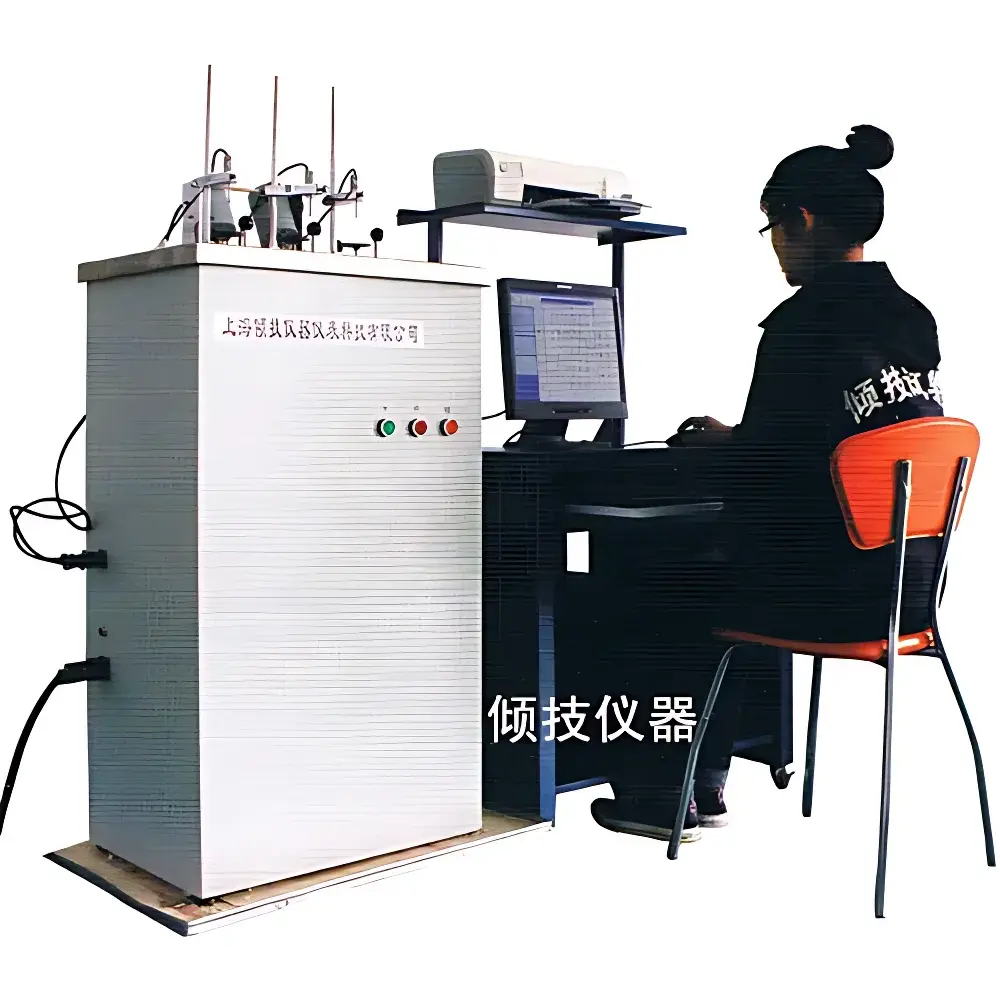
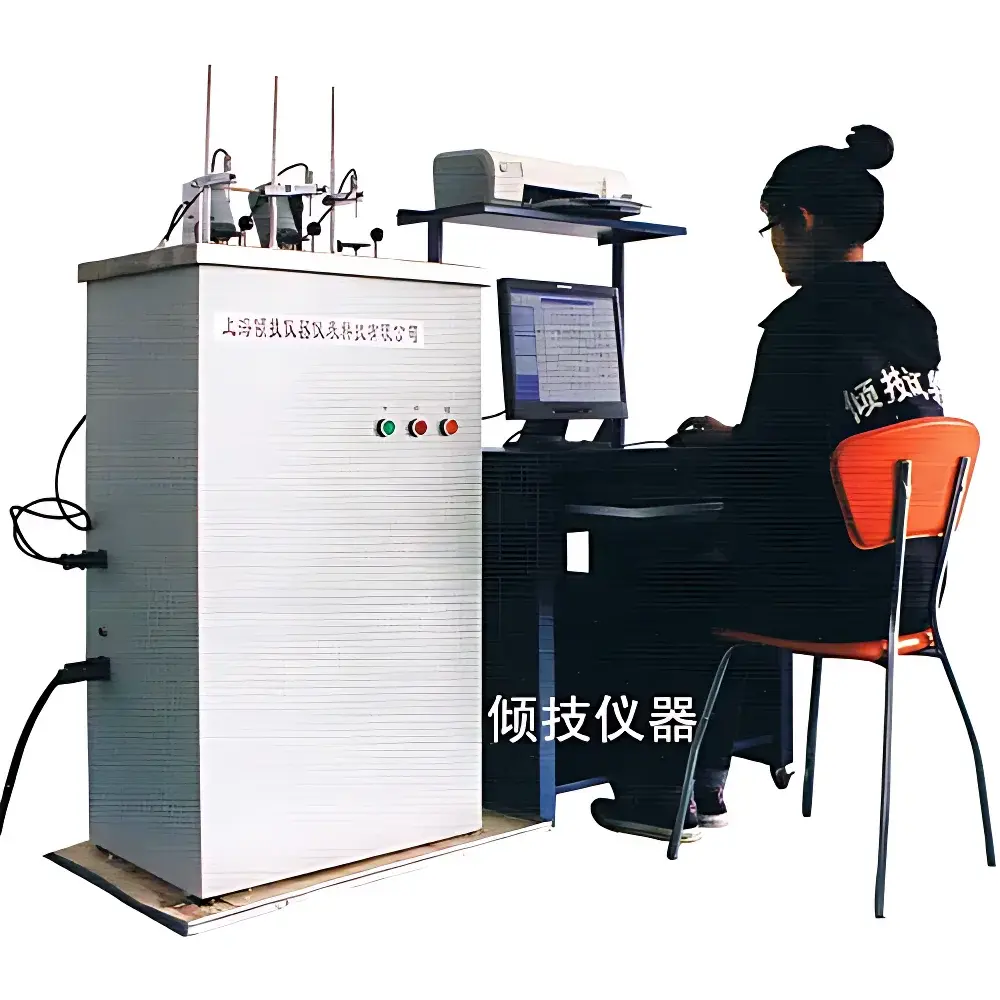
Jinhui Vicat Softening Point & Heat Deflection Temperature Tester QJWK-507
| Origin | Shanghai, China |
|---|---|
| Manufacturer Type | Authorized Distributor |
| Origin Category | Domestic (PRC) |
| Model | Fengxian |
| Price | USD 6,450 (FOB Shanghai) |
| Temperature Range | Ambient to 300 °C |
| Heating Rate Options | (12 ± 1) °C/6 min or (5 ± 0.5) °C/6 min |
| Temperature Accuracy | ±1 °C |
| Deformation Measurement Range | 0–1 mm |
| Deformation Resolution | 0.01 mm |
| Heat Transfer Medium | Methyl Silicone Oil |
| Heating Power | 4 kW |
| Cooling Modes | Natural convection above 150 °C |
| Power Supply | AC 220 V, 20 A, 50 Hz |
| Dimensions (L×W×H) | 540 × 520 × 1360 mm |
Overview
The Jinhui Vicat Softening Point & Heat Deflection Temperature Tester QJWK-507 is a dual-function thermal analysis instrument engineered for precise determination of two critical thermomechanical properties of polymeric materials: the Vicat Softening Temperature (VST) and the Heat Deflection Temperature (HDT). Based on standardized penetration and bending deformation principles under controlled thermal ramping, the system applies a defined load to a specimen immersed in a thermally stable silicone oil bath while monitoring dimensional response as temperature increases. VST measurement follows the needle penetration method per ISO 306 and ASTM D1525, whereas HDT evaluation adheres to the three-point bending configuration specified in ISO 75 and ASTM D648. Designed for routine quality control laboratories and R&D facilities, the QJWK-507 delivers high reproducibility in thermoplastic and thermoset characterization—particularly for PVC-U pipe fittings, engineering resins, and cable insulation compounds.
Key Features
- Dual-standard compliance: Fully supports GB/T 1633 (VST), GB/T 1634 (HDT), GB 8802 (PVC-U), ISO 75, ISO 306, and ISO 2507—enabling global test report acceptance.
- Programmable heating control: Two selectable linear ramp rates—(12 ± 1) °C/6 min (120 ± 10) °C/h for rapid screening and (5 ± 0.5) °C/6 min (50 ± 5) °C/h for high-resolution transition detection—with digital PID regulation ensuring ±1 °C thermal uniformity across the bath.
- High-resolution deformation sensing: Integrated LED-based or dial indicator transduction system with 0.01 mm resolution and full-scale range of 0–1 mm, calibrated traceably to NIST-traceable reference standards.
- Thermal stability architecture: 4 kW high-efficiency heating element coupled with methyl silicone oil (flash point >300 °C) ensures homogeneous heat transfer and minimal thermal lag; optional water-cooling circuit enables rapid cooldown from 300 °C to <150 °C within 20 minutes.
- Modular mechanical design: Robust stainless-steel frame with ergonomic height (1360 mm) and compact footprint (540 × 520 mm) facilitates integration into ISO 17025-accredited lab environments with limited bench space.
Sample Compatibility & Compliance
The QJWK-507 accommodates standard test specimens per ISO and ASTM geometries: rectangular bars (10 × 10 × ∼120 mm) for HDT and cylindrical discs (≥10 mm diameter, 3–6 mm thickness) for VST. It supports both flat and edge loading configurations and accepts common polymer classes including PVC-U, PP, PE, ABS, PC, and filled composites. All operational parameters—including ramp rate, load selection (10 N or 50 N for VST; 0.455 MPa or 1.82 MPa for HDT), and endpoint criteria—are configurable to meet method-specific requirements in GB, ISO, and ASTM documents. The system’s thermal calibration protocol aligns with ILAC-G8 and EURACHEM guidelines, and its deformation sensor verification conforms to ISO/IEC 17025 clause 6.5.2 for measuring equipment metrological traceability.
Software & Data Management
While the base QJWK-507 operates via front-panel digital controller with LED display, optional PC interface (RS-232 or USB) enables data logging using compliant Windows-based software. The software records time-temperature-deformation triplets at user-defined intervals (1–30 s), generates ASTM-compliant test reports with automatic VST/HDT endpoint calculation, and exports CSV/PDF for audit-ready archiving. Audit trail functionality meets GLP and FDA 21 CFR Part 11 requirements when configured with user authentication, electronic signatures, and immutable log files—supporting regulatory submissions for medical device polymers or construction-grade PVC certification.
Applications
- Quality assurance of thermoplastic piping systems (e.g., PVC-U pressure pipes per EN 1452/ISO 15874).
- Routine validation of cable jacketing materials under IEC 60811-3-1 thermal endurance protocols.
- Comparative thermal stability assessment during polymer formulation development (e.g., plasticizer effects on VST shift).
- Third-party testing labs performing accredited VST/HDT services per ISO/IEC 17025 scope.
- Educational use in polymer science laboratories for hands-on instruction in thermomechanical behavior.
FAQ
Does the QJWK-507 comply with ASTM D648 and ASTM D1525?
Yes—the instrument’s mechanical loading geometry, temperature ramp control, and deformation measurement subsystem satisfy all apparatus requirements in both standards.
Is methyl silicone oil supplied with the unit?
No—users must procure ISO 22866-grade methyl silicone oil (e.g., Dow Corning 200 Fluid, 50 cSt) separately; viscosity grade affects thermal response time and must be selected per test standard recommendations.
Can the system perform simultaneous multi-sample testing?
No—it is configured for single-test-batch operation (up to 3 specimens per run, depending on fixture type), consistent with ISO 75-1 and ISO 306 sampling protocols requiring independent thermal equilibration.
What maintenance is required to sustain metrological validity?
Annual recalibration of temperature sensor (Pt100) and deformation transducer is recommended; silicone oil should be replaced every 12 months or after 500 test cycles to prevent oxidative degradation and viscosity drift.
Is technical support available outside mainland China?
Yes—authorized service partners provide installation supervision, operator training, and remote diagnostics in Southeast Asia, the Middle East, and Latin America; spare parts logistics are supported via regional hubs in Singapore and Dubai.



