
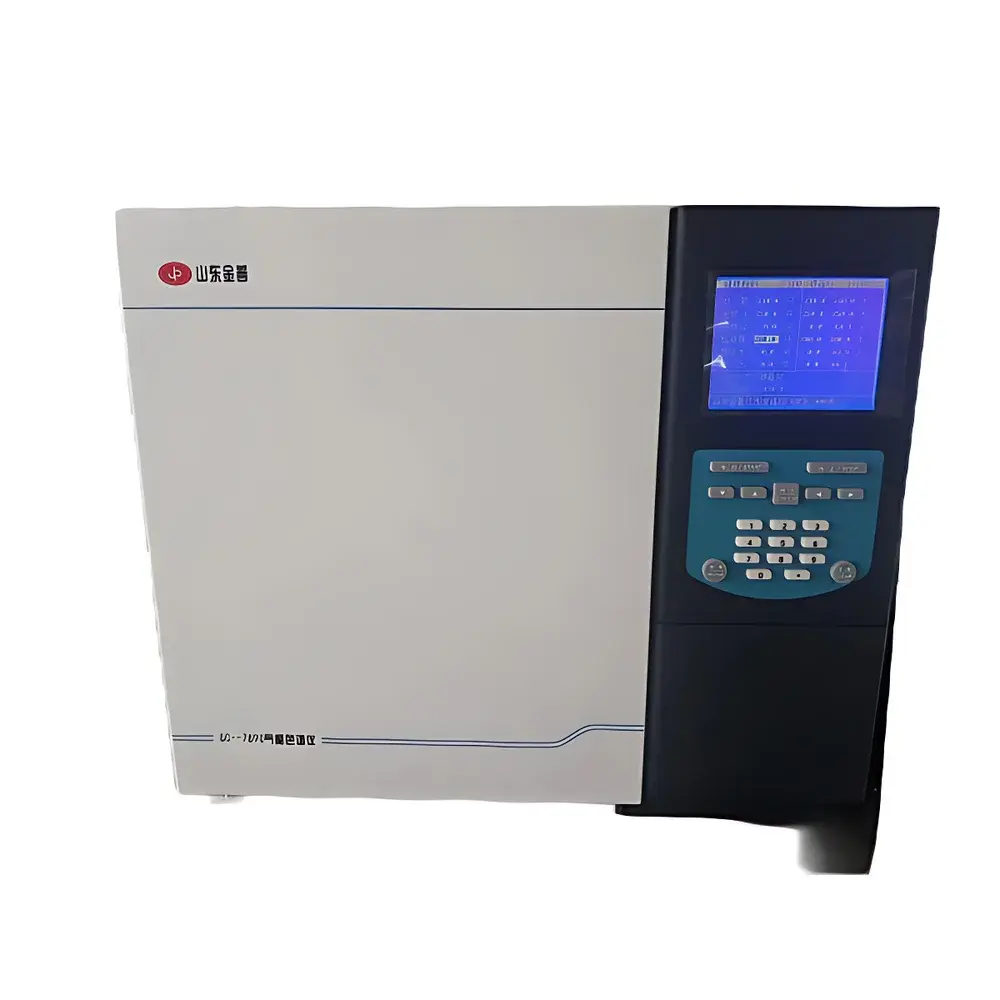
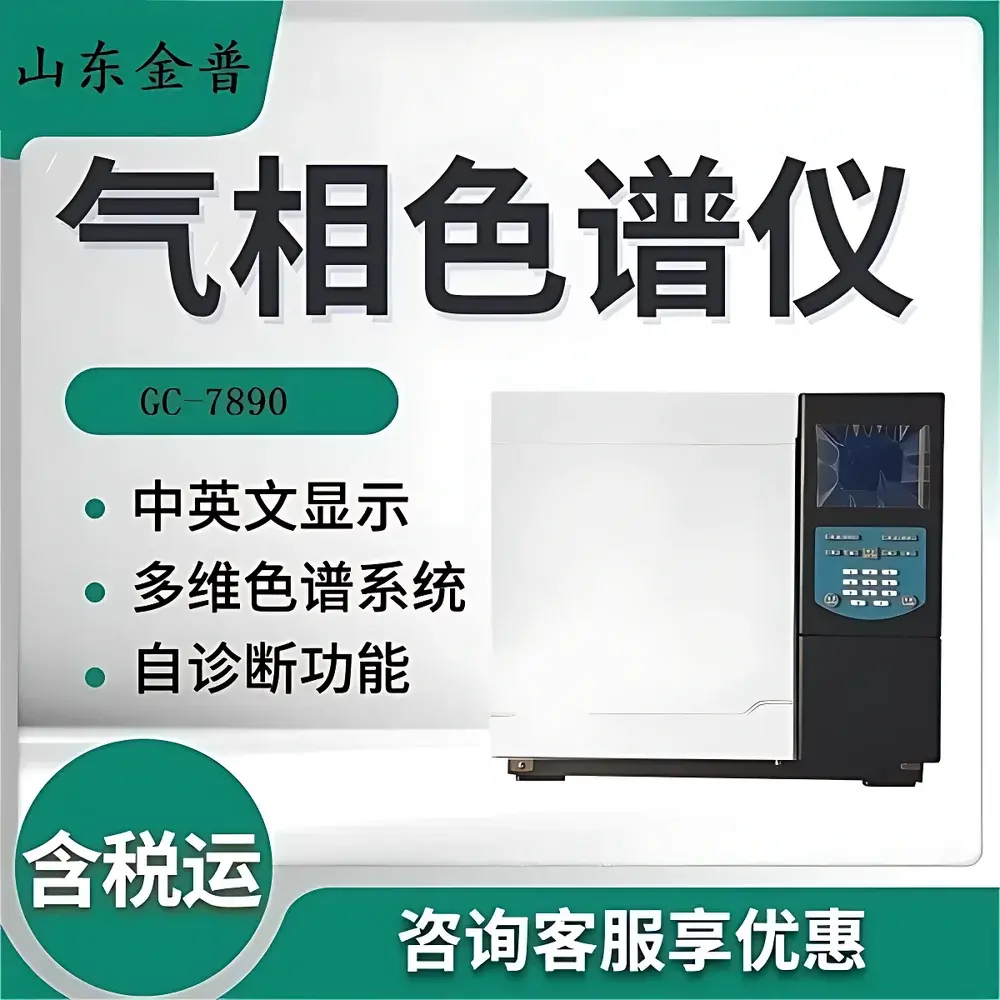
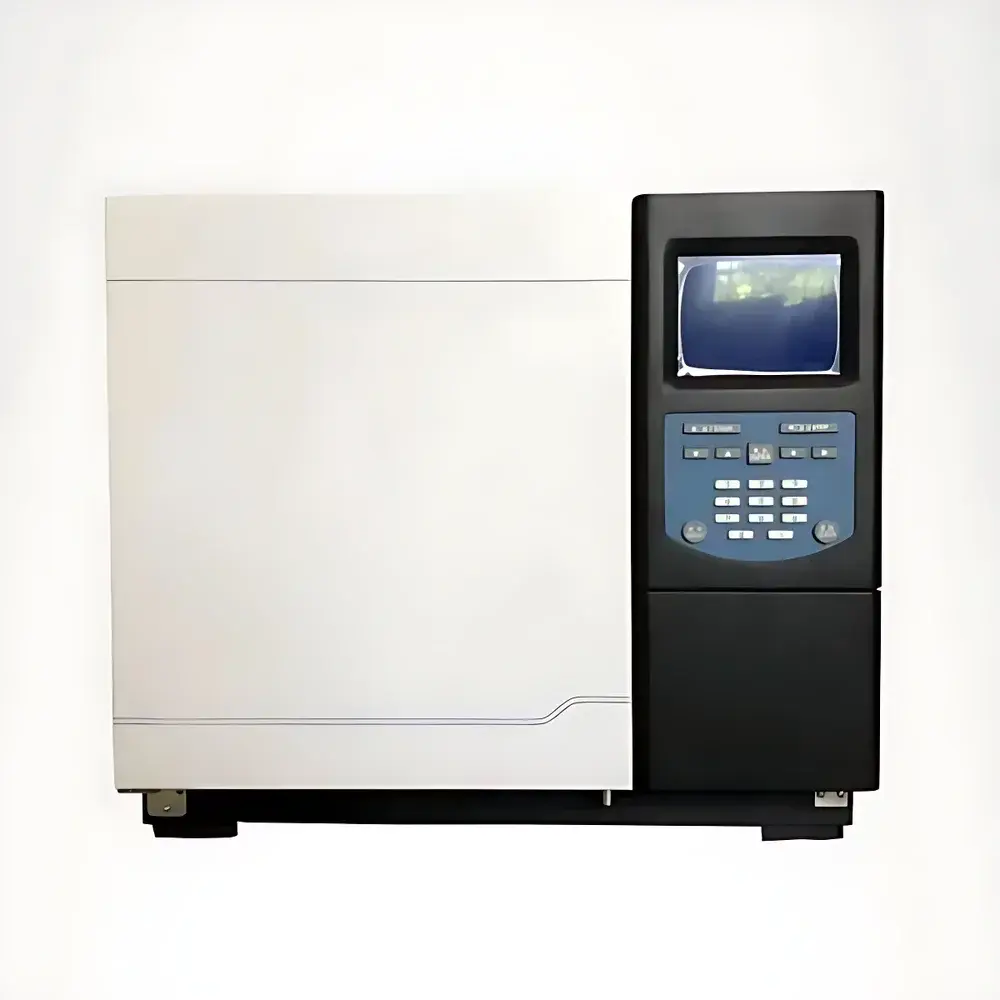
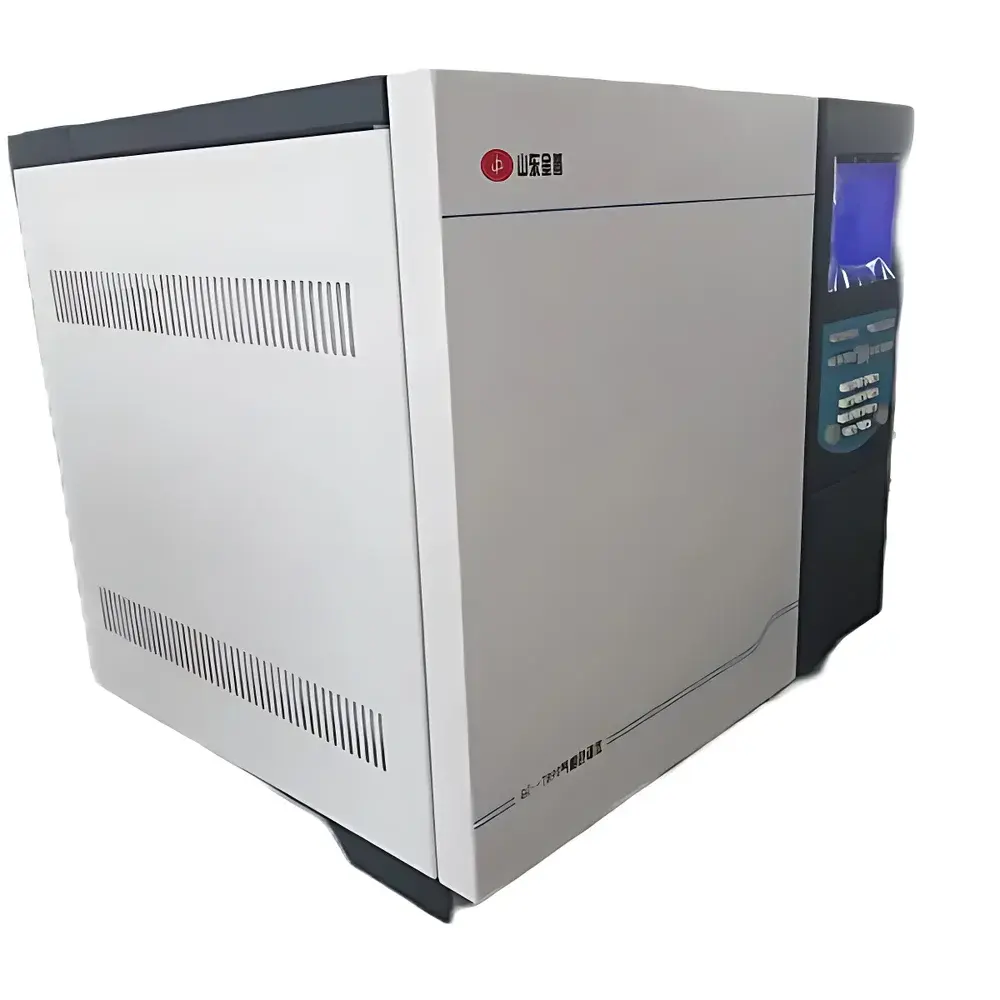
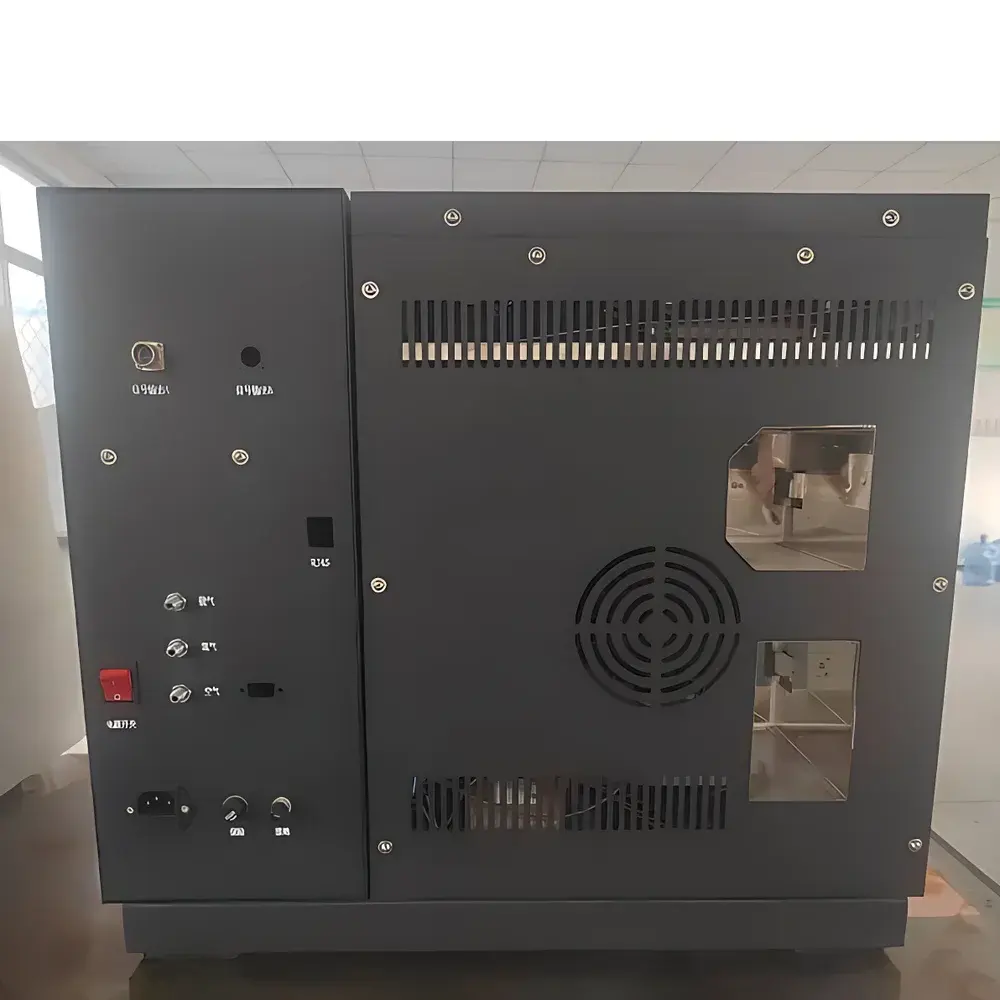
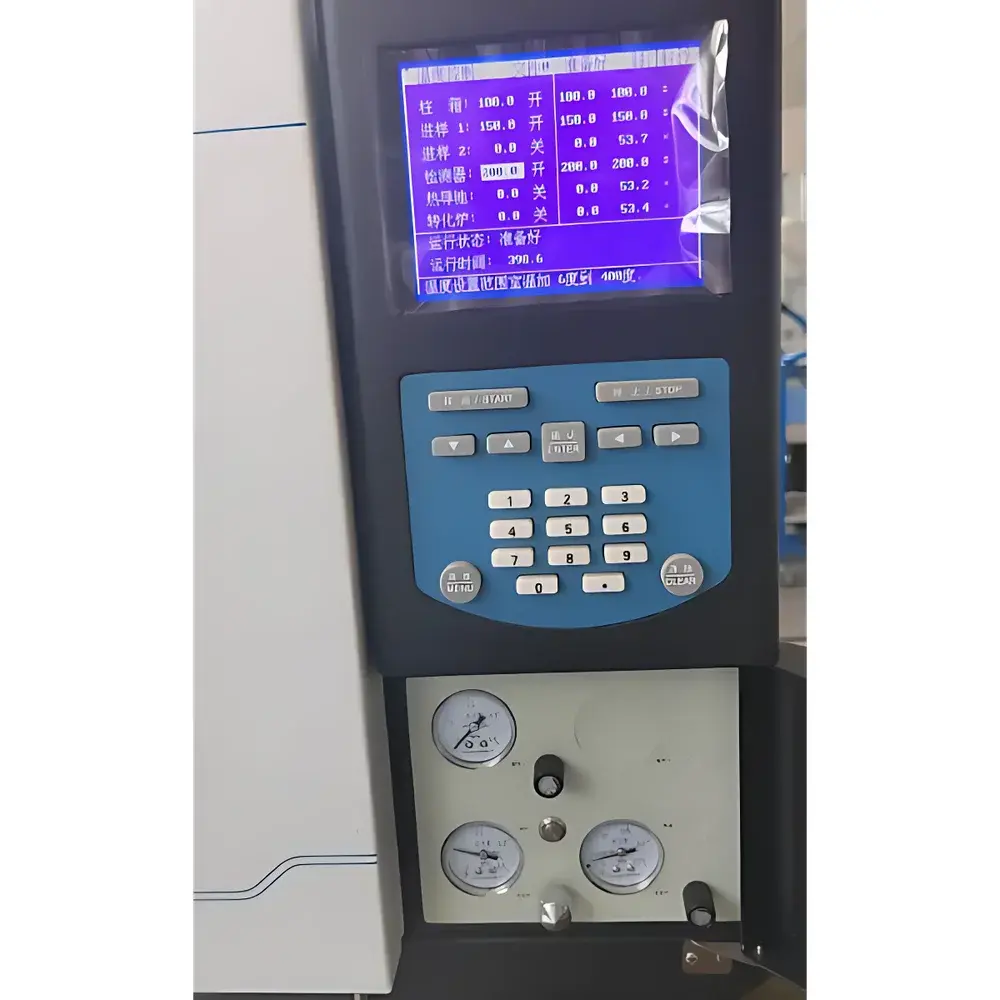
Jinpu GC-7890 Coal Spontaneous Combustion Tendency Analyzer (Mine-Specific Gas Chromatograph)
| Brand | Jinpu |
|---|---|
| Origin | Shandong, China |
| Model | GC-7890 |
| Instrument Type | Laboratory Gas Chromatograph |
| Application Field | Coal Mining Industry |
| Detection Targets | H₂, O₂, N₂, CO, CO₂, CH₄, C₂H₄, C₂H₆, C₂H₂ |
| Minimum Detectable Concentrations | H₂ ≤ 5 ppm |
| TCD Sensitivity | ≥ 2500 mV·mL/mg (n-hexadecane) |
| FID Detection Limit | 5 × 10⁻¹² g/s (n-hexadecane) |
| Column Oven Temp Range | 10–399 °C (1 °C increment) |
| Control Accuracy | ±0.1 °C |
| Detector Temp Range | 10–399 °C |
| TCD Control Accuracy | ±0.01 °C |
| Data Acquisition | 24-bit A/D, USB interface, 6–50 Hz sampling rate, dynamic range 10⁶ |
| Dimensions | 606 × 450 × 450 mm (W×H×D) |
| Weight | 45 kg |
| Power Supply | 220 V, 50 Hz, 2100 W |
Overview
The Jinpu GC-7890 Coal Spontaneous Combustion Tendency Analyzer is a purpose-built gas chromatograph engineered for early detection and quantitative profiling of critical gaseous markers associated with coal oxidation and spontaneous combustion in underground mining environments. Operating on the principle of capillary or packed-column gas chromatography with dual parallel detection pathways, the system separates and quantifies nine key gases—H₂, O₂, N₂, CO, CO₂, CH₄, C₂H₄, C₂H₆, and C₂H₂—in a single analytical run. Its design directly addresses the operational constraints of mine ventilation air monitoring: high particulate load, variable moisture content, and the need for rapid, field-deployable laboratory-grade analysis. The instrument implements a validated three-channel separation strategy—employing TCD for permanent gases (H₂, O₂, N₂) and dual-FID detection (with nickel catalytic methanizer) for CO, CO₂, and hydrocarbons—ensuring minimal co-elution and robust baseline stability under real-world sample matrix conditions.
Key Features
- Dual-detector architecture: Independently optimized thermal conductivity detector (TCD) and flame ionization detector (FID), each housed in thermally isolated compartments with independent temperature control (±0.01 °C for TCD; ±0.1 °C for FID).
- Mine-adapted gas handling: Integrated stainless-steel wire-mesh particulate filter upstream of all flow paths, mitigating column and valve fouling from coal dust-laden samples without compromising retention time reproducibility.
- Triple-channel, time-resolved injection: Six-port rotary valves with fixed-volume sampling loops enable sequential introduction of sample fractions onto dedicated columns—TCD channel for light gases, FID channel for CO/CO₂ (post-nickel conversion), and parallel FID channel for C₁–C₂ hydrocarbons—eliminating cross-talk and enhancing quantification fidelity.
- Thermally uniform column oven: Large-volume chamber with perforated internal airflow distribution plates ensures axial and radial temperature homogeneity across the full 10–399 °C operating range, critical for retention time stability and method transferability between shifts.
- Fail-safe operational safeguards: Automated shutdown protocols triggered by carrier gas interruption, power loss, or column oven overtemperature (>400 °C threshold), preserving column integrity and detector longevity.
- Modular detector configuration: Plug-and-play detector modules allow field-replacement without recalibration; optional EPC (Electronic Pressure Control) upgrade enables precise, software-controlled carrier gas flow and split ratio management.
Sample Compatibility & Compliance
The GC-7890 is validated for direct analysis of undiluted or pre-concentrated mine atmosphere samples collected via Tedlar® bags, stainless-steel canisters, or online duct-mounted sampling probes. Sample introduction is compatible with standard 1/16″ OD stainless-steel or fused-silica transfer lines rated to 200 °C. The system meets functional requirements outlined in GB/T 20964–2007 (Chinese national standard for coal spontaneous combustion tendency testing) and supports method development aligned with ASTM D1945 (Standard Test Method for Analysis of Natural Gas by Gas Chromatography) and ISO 6974-2 (Natural gas — Determination of composition with defined uncertainty — Part 2: Gas-chromatographic method for nitrogen, carbon dioxide and C₁ to C₅ hydrocarbons). While not certified to IEC 60079-0 for intrinsic safety, the analyzer is designed for installation in surface-based mine laboratory environments compliant with Class I, Division 2 hazardous area classifications per NEC Article 500.
Software & Data Management
Bundled with a Windows-native, 24-bit USB data acquisition workstation, the GC-7890 delivers high-fidelity signal digitization at selectable sampling rates (6–50 Hz) and a dynamic range of 10⁶. Peak integration employs second-derivative baseline correction and adaptive retention time windowing to accommodate minor thermal drift during extended unattended operation. All raw chromatograms, method files, calibration curves, and audit logs are stored in a proprietary but exportable binary format (.GCX), with CSV and PDF report generation supporting GLP-compliant documentation. Optional 21 CFR Part 11-compliant software package provides electronic signatures, role-based user access control, and immutable audit trails for method changes, calibration events, and result approvals—essential for QA/QC departments operating under ISO/IEC 17025 or MSHA-mandated quality systems.
Applications
- Quantitative monitoring of CO, C₂H₄, and C₂H₂ evolution profiles during coal oxidation experiments (e.g., ASTM D5402 hot-stage testing).
- Routine analysis of return-air samples from longwall faces and sealed areas to assess fire risk indices (e.g., Graham’s Ratio, Bambach Ratio, or modified Fire Index).
- Verification of inertization efficacy by tracking O₂ depletion and N₂/CH₄ ratios in goaf zones treated with N₂ or CO₂ injection.
- Calibration and validation of in-situ multi-gas sensors deployed in continuous emission monitoring systems (CEMS) for underground ventilation networks.
- Forensic investigation of post-ignition atmospheres to differentiate smoldering vs. flaming combustion phases based on hydrocarbon signature patterns.
FAQ
What carrier gases are supported, and how does the choice affect detection sensitivity?
Helium or argon may be used for TCD analysis of H₂, O₂, and N₂; hydrogen is recommended as carrier for FID-based hydrocarbon detection to maximize response factor and minimize analysis time. Argon is required for H₂ quantification via TCD due to optimal thermal conductivity differential.
Can the GC-7890 be integrated into an automated mine-wide gas monitoring network?
Yes—the instrument supports RS-232 and optional Ethernet connectivity for remote status polling and scheduled batch runs. Integration with SCADA platforms requires third-party OPC UA or Modbus TCP middleware; analog output (0–5 V DC) is available for real-time CO concentration relay.
Is column maintenance feasible onsite, or must it be returned to the manufacturer?
Column trimming, conditioning, and replacement are fully serviceable by trained personnel using standard GC tools. Pre-packed coal-analysis columns (e.g., Hayesep Q + Molecular Sieve 5A composites) are stocked by Jinpu’s global distribution partners and ship with retention time verification certificates.
How frequently must the nickel catalyst in the methanizer be regenerated or replaced?
Under typical mine-air sampling (≤100 ppb CO), the Ni catalyst maintains >95% conversion efficiency for ≥12 months. Regeneration is performed in situ via H₂ purge at 380 °C for 2 hours; replacement kits include activity-tested pellets with certificate of conformance.
Does the system support EPA Method TO-15 or similar ambient air protocols?
While optimized for coal-mine matrices, the GC-7890’s hardware platform satisfies core TO-15 performance criteria (e.g., MDLs, retention time stability, linear dynamic range) when configured with appropriate cryo-focusing and capillary columns; method validation per EPA guidance is user-responsible.
Related Products





