
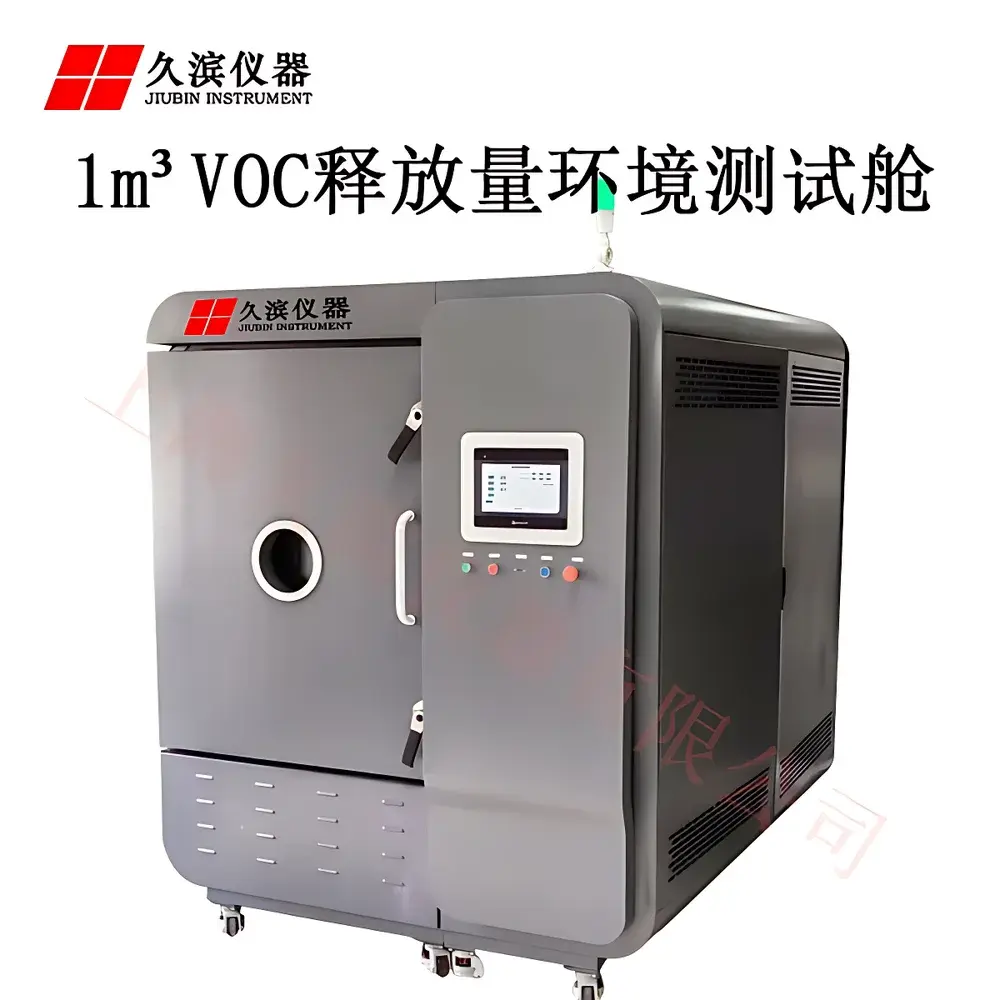
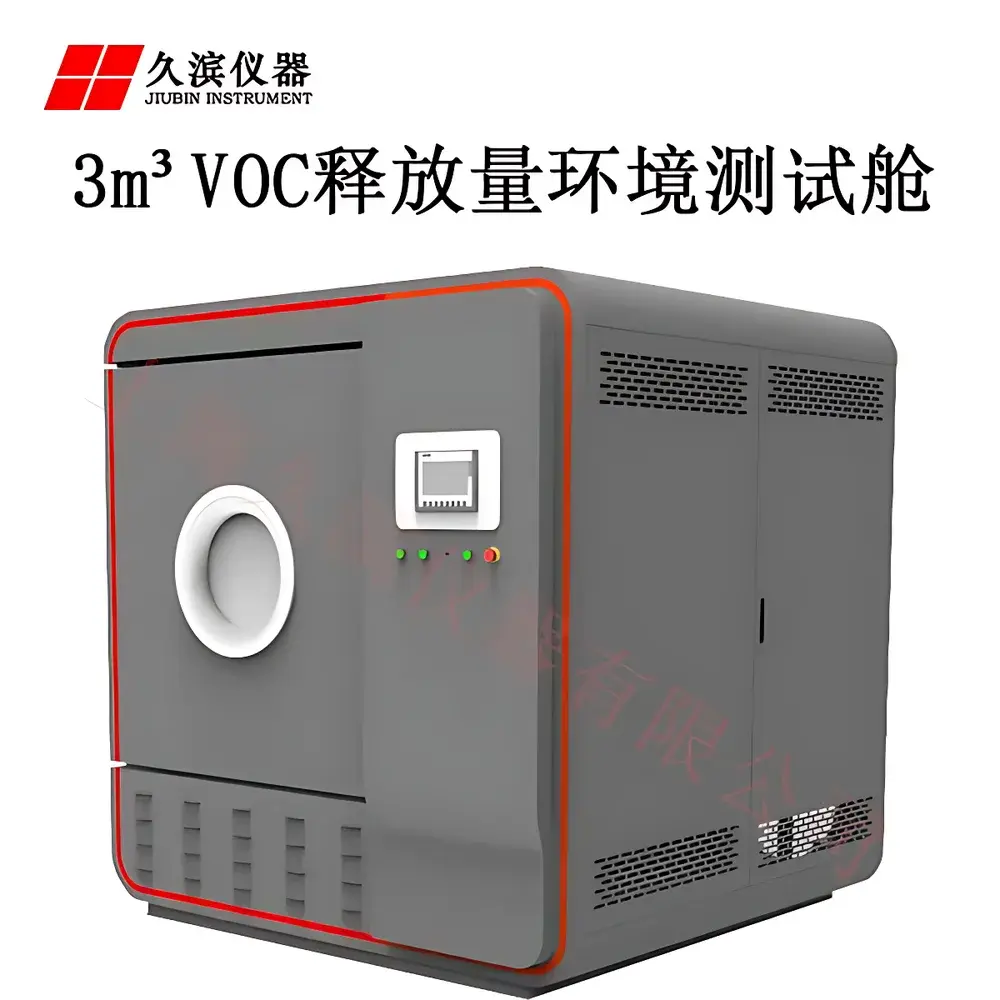
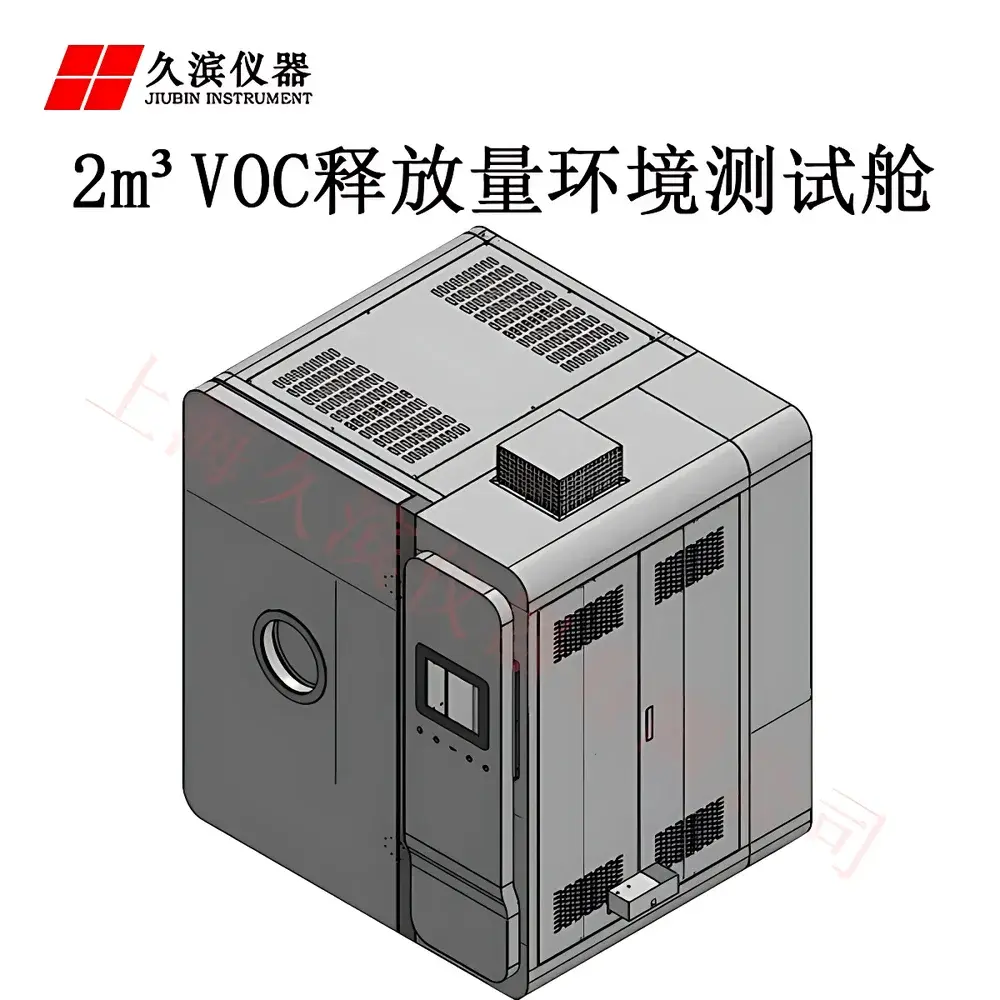
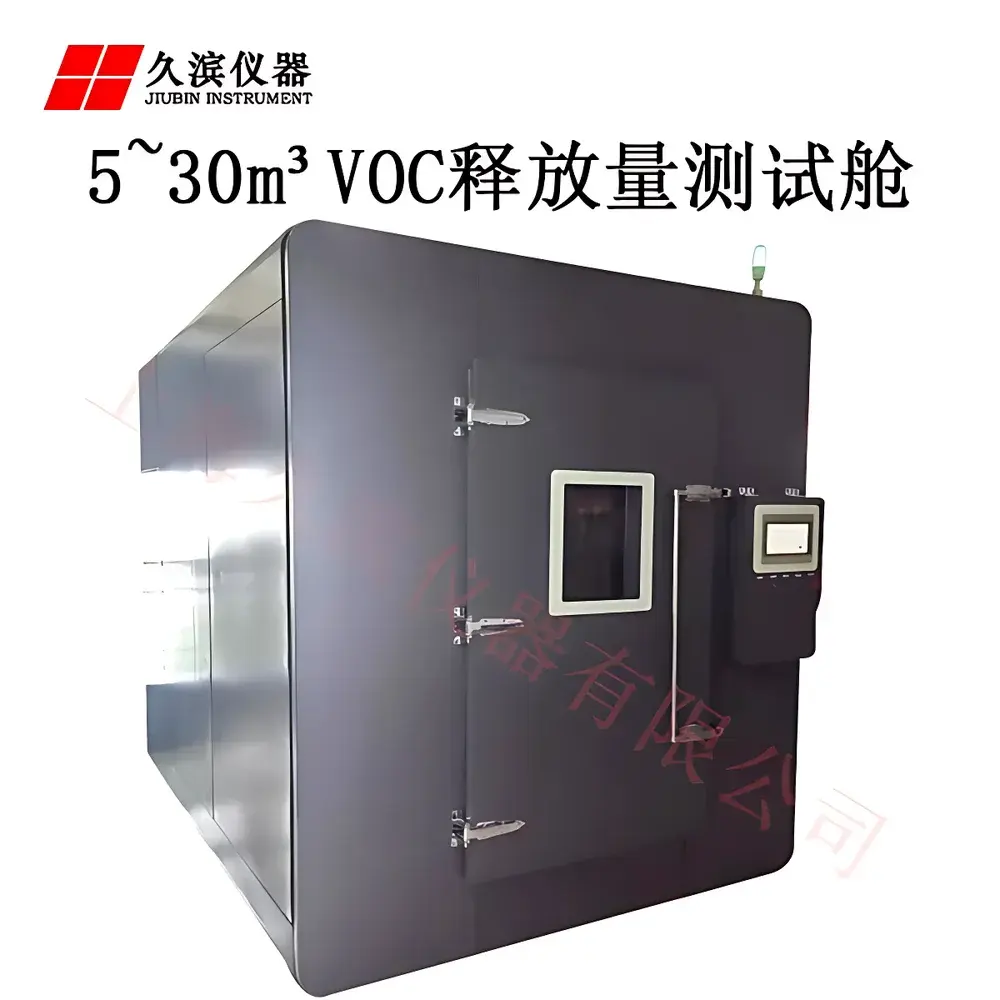
Jiubin JB-60L Formaldehyde & TVOC Emission Test Chamber for Wallcoverings and Automotive Interior Components (Compliant with GB 18585–2023)
| Brand | Jiubin Instruments |
|---|---|
| Origin | Shanghai, China |
| Model | JB-60L |
| Measurement Principle | Photometric Method (Formaldehyde-Specific Chromogenic Reaction) |
| Chamber Volume | 60 L |
| Applicable Standards | GB 18585–2023, GB/T 27630–2011, ISO 16000-9, VDA 278, DIN 53165, ASTM D5116 |
| Temperature Control Range | 15–30 °C (±0.5 °C uniformity) |
| Relative Humidity Control Range | 30–70 % RH (±3 % RH stability) |
| Air Exchange Rate | Adjustable 0.5–2.0 h⁻¹ (certified flow meter calibrated per ISO 5167) |
| Internal Construction | Electropolished 316L stainless steel |
| Sampling Port | Dual 6-mm Swagelok®-compatible ports with inert PFA tubing interface |
| Power Supply | 220 VAC ±10 %, 50 Hz |
Overview
The Jiubin JB-60L Formaldehyde & Total Volatile Organic Compounds (TVOC) Emission Test Chamber is a precision-engineered environmental simulation system designed to quantify emissions from wallcoverings, automotive interior trim, adhesives, laminates, and other low-emitting materials under controlled thermal and humidity conditions. It operates on the principle of dynamic headspace sampling coupled with photometric quantification—specifically, formaldehyde is derivatized with acetylacetone under acidic catalysis to form a stable yellow chromophore (3,5-diacetyl-1,4-dihydrolutidine), measured spectrophotometrically at 412 nm. TVOCs are collected via sorbent tube (e.g., Tenax TA) and subsequently analyzed by thermal desorption–gas chromatography–mass spectrometry (TD-GC-MS) or flame ionization detection (FID), in accordance with ISO 16000-6 and ISO 16000-9 protocols. The chamber complies fully with the latest Chinese national standard GB 18585–2023 for wallpaper safety evaluation, as well as automotive OEM requirements including VDA 278 and GB/T 27630–2011 for vehicle cabin air quality.
Key Features
- 60-liter electropolished 316L stainless-steel chamber volume optimized for representative sample surface-area-to-volume ratio (SA:V = 0.5–2.0 m²/m³), ensuring compliance with ISO 16000-9 conditioning geometry requirements.
- High-stability dual-loop climate control system maintaining temperature within ±0.5 °C and relative humidity within ±3 % RH across the entire chamber volume—verified by NIST-traceable PT100 sensors and independent validation reports.
- Programmable air exchange rate (0.5–2.0 h⁻¹) regulated via mass flow controllers (MFCs) calibrated to ISO 5167; real-time airflow monitoring integrated into the control interface with audit trail logging.
- Dual inert sampling ports (6 mm Swagelok® compatible) configured for simultaneous formaldehyde photometry and TVOC sorbent tube collection—minimizing cross-contamination and enabling parallel analytical workflows.
- Integrated data acquisition module supporting time-synchronized logging of temperature, RH, airflow, and chamber pressure at 1-second intervals; exportable in CSV/Excel format compliant with GLP documentation standards.
- Modular design allows seamless integration with external analytical instruments (e.g., HPLC-UV, GC-FID, GC-MS) via standardized pneumatic and electrical interfaces (24 VDC, RS-485 Modbus RTU).
Sample Compatibility & Compliance
The JB-60L accommodates flat-sheet specimens up to 400 × 400 mm (maximum thickness 20 mm) or automotive component assemblies (e.g., door panels, center consoles, headliners) mounted on adjustable stainless-steel fixtures. Sample loading follows strict preconditioning protocols per GB 18585–2023: 24-hour stabilization at 23 °C / 50 % RH prior to emission testing. The chamber meets ISO/IEC 17025 calibration traceability requirements for emission testing laboratories and supports full audit readiness for CNAS, CMA, and FDA 21 CFR Part 11–aligned electronic records (when paired with validated third-party LIMS or instrument control software). All internal surfaces are passivated and non-outgassing—certified via blank-run verification (<0.5 µg/m³ formaldehyde background, <2 µg/m³ TVOC baseline over 24 h).
Software & Data Management
The embedded controller features a 7-inch industrial touchscreen HMI with intuitive workflow navigation, preloaded test templates for GB 18585–2023, VDA 278, and ISO 16000 series methods. All operational parameters—including setpoints, deviations, alarm events, and sensor diagnostics—are timestamped and stored locally with optional encrypted USB export. The system supports secure remote monitoring via Ethernet (TCP/IP) and generates PDF-formatted test reports containing raw sensor data, calibration certificates, chamber performance validation summaries, and calculated emission rates (µg/m²·h for formaldehyde; mg/m²·h for individual VOCs or total VOC). Audit trails comply with ALCOA+ principles (Attributable, Legible, Contemporaneous, Original, Accurate, Complete, Consistent, Enduring, Available) for regulatory submissions.
Applications
- Regulatory conformance testing of wallpapers, vinyl wall coverings, and textile-based architectural finishes per GB 18585–2023.
- Evaluation of VOC and formaldehyde emissions from automotive interior materials (seats, dashboards, carpets, insulation foams) against OEM specifications (VW TL 52257, Ford WSS-M99P1165-A, GMW 15635).
- QC/QA screening of adhesives, sealants, laminating films, and composite substrates in furniture and building product manufacturing.
- Research-grade emission kinetics studies—including temperature-dependent release profiles, aging simulations, and humidity-accelerated degradation modeling.
- Validation of low-VOC material substitutions in medical device housings, pharmaceutical packaging linings, and cleanroom-compatible components.
FAQ
What is the minimum detectable formaldehyde concentration in the JB-60L chamber?
The photometric method achieves a limit of quantitation (LOQ) of 10 µg/m³ under standard 1-hour sampling at 1.0 h⁻¹ air exchange, verified using NIST SRM 2788 formaldehyde gas standard.
Can the chamber be used for ozone or NOx emission testing?
No—the JB-60L is specifically engineered for carbonyl and hydrocarbon VOC analysis; reactive gases such as ozone require dedicated UV-photolysis-resistant chambers and chemiluminescent detection systems.
Is third-party calibration certification included with purchase?
Yes—each unit ships with a factory-issued calibration certificate covering temperature, RH, and airflow sensors, traceable to CNAS-accredited metrology labs; annual recalibration services are available under service contract.
Does the system support automated multi-point sampling over extended durations (e.g., 72 h)?
Yes—via programmable sequence mode, the controller triggers timed sampling events (up to 99 cycles) and logs corresponding environmental parameters; external autosamplers may be synchronized via dry-contact I/O signals.
How is chamber leakage verified prior to test execution?
A built-in pressure decay test function applies ±100 Pa differential pressure and monitors decay rate over 5 minutes; acceptance criterion is ≤0.5% per minute, conforming to ISO 16000-9 Annex B.







