
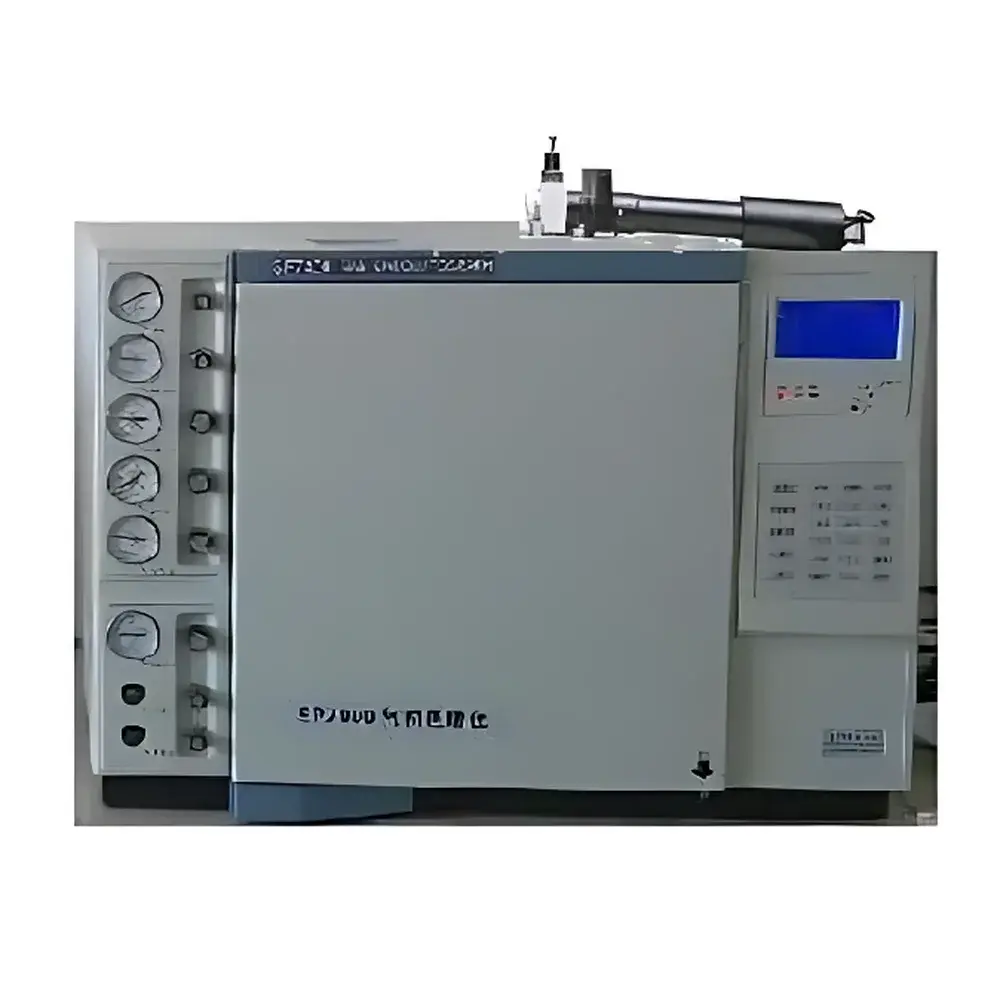
JK-8000 Trace Sulfur Analyzer for Beer Quality Control
| Origin | Beijing, China |
|---|---|
| Manufacturer Type | Authorized Distributor |
| Origin Category | Domestic (PRC) |
| Model | JK-8000 Trace Sulfur Analyzer for Beer Sulfur Compound Profiling |
| Pricing | Available Upon Request |
Overview
The JK-8000 Trace Sulfur Analyzer is a dedicated gas chromatographic system engineered for the precise quantification of volatile sulfur compounds (VSCs) in beer and related brewing matrices. It operates on the principle of headspace gas chromatography coupled with flame photometric detection (GC-FPD), a method widely recognized for its selectivity, sensitivity, and reproducibility in sulfur-species analysis. The instrument is configured to resolve and quantify key off-flavor contributors—including dimethyl sulfide (DMS), hydrogen sulfide (H₂S), sulfur dioxide (SO₂), and 3-methyl-2-butenethiol (MBT)—at sub-ppb to low-ppb concentration levels. Its design prioritizes robustness in routine QC environments, supporting method compliance with established brewing industry protocols and analytical guidelines referenced in ASBC Methods of Analysis (Section 17), EBC Analytica, and ISO 24291:2022 (Beer — Determination of dimethyl sulfide content). The system integrates thermally stable GC oven control, programmable headspace autosampler timing, and FPD optimized for sulfur-specific chemiluminescence at 394 nm.
Key Features
- Dedicated GC-FPD configuration with dual-column capability: Carbopak B HT100 for baseline separation of DMS, SO₂, and H₂S; and Chromasorb 101/DC-200 FEP-packed column for ultra-trace MBT analysis
- Programmable headspace sampler with temperature-controlled vial incubation (30–120 °C), pressurization control (0–30 psi), and precise loop injection (0.5–2.0 mL)
- Flame photometric detector featuring sulfur-selective optical filter (394 ± 5 nm), high-gain linear response (0.1–1000 ng S/s), and real-time signal stabilization
- Integrated GC oven with ramp precision of ±0.1 °C and isothermal hold stability <0.05 °C over 60 min
- Pre-configured, validated analytical methods aligned with ASBC Beer-17A (DMS), ASBC Beer-17B (H₂S), and internal MBT photolysis screening protocols
- Modular hardware architecture supporting future upgrades to electronic pressure control (EPC) and multi-detector configurations (e.g., simultaneous FPD + TCD)
Sample Compatibility & Compliance
The JK-8000 accommodates standard 10–22 mL crimp-top headspace vials and supports direct analysis of unfiltered beer, centrifuged supernatants, and stabilized wort samples. Sample introduction requires no derivatization or pre-concentration—enabling rapid turnaround (<12 min per run) and minimal analyst intervention. Method validation data demonstrate linearity (r² ≥ 0.999) across 0.1–500 ppb for DMS, 0.5–200 ppb for H₂S, 1–1000 ppb for SO₂, and 0.05–50 ppb for MBT. System suitability criteria meet ASBC-recommended RSD limits (<3% for retention time, <5% for peak area). Instrument operation adheres to GLP-compliant documentation practices; audit trails, user access logs, and electronic signature support are implemented via optional LIMS integration modules compliant with FDA 21 CFR Part 11 Annex 11 requirements.
Software & Data Management
Control and data acquisition are managed through a Windows-based chromatography data system (CDS) offering method editor, sequence scheduler, peak integration engine, and customizable report templates. All raw data files (.cdf) are stored with embedded metadata including instrument ID, operator login, sample ID, injection timestamp, and calibration history. Software supports automated calibration curve generation using internal standard (e.g., deuterated DMS-d₆) or external standard approaches. Quantitative results are exportable to CSV, PDF, and XML formats compatible with enterprise quality management systems (QMS). Optional 21 CFR Part 11 module provides role-based permissions, electronic signatures, and immutable audit trail generation for regulated breweries operating under GMP frameworks.
Applications
- Monitoring DMS evolution during wort boiling, fermentation, and post-fermentation storage to optimize thermal processing and prevent “cooked vegetable” taint
- Quantifying yeast-derived H₂S in early fermentation samples to guide strain selection and nutrient supplementation strategies
- Verifying SO₂ dosing accuracy in final filtration and packaging stages to ensure oxidative stability without sensory impact
- Photostability assessment: detecting MBT formation in packaged beer exposed to UV/visible light (350–500 nm), supporting packaging material qualification and shelf-life modeling
- Root-cause investigation of sulfur-related off-flavors in customer complaints or production deviations
- Raw material screening: malt, hops, and water sulfur profiles as part of supplier quality assurance programs
FAQ
What sulfur compounds can the JK-8000 reliably quantify?
The system is validated for DMS, H₂S, SO₂, and MBT in beer matrices. Additional VSCs (e.g., methanethiol, dimethyl disulfide) may be resolved with method adaptation and column optimization.
Is the JK-8000 compliant with international brewing standards?
Yes—its core methodology aligns with ASBC Beer-17 series, EBC Method 9.27, and ISO 24291. Full validation documentation is provided upon installation.
Can the system be integrated into an existing LIMS or QMS environment?
Yes, via ASTM E1384-compliant data export and optional 21 CFR Part 11-compliant CDS modules.
What maintenance intervals are recommended for sustained performance?
FPD jet cleaning every 100 injections; GC liner replacement every 250 injections; annual detector alignment and oven calibration verification.
Does the system support unattended overnight analysis?
Yes—the headspace autosampler and GC-CDS support fully scheduled sequences of up to 96 samples with auto-shutdown and alarm notification capabilities.





