
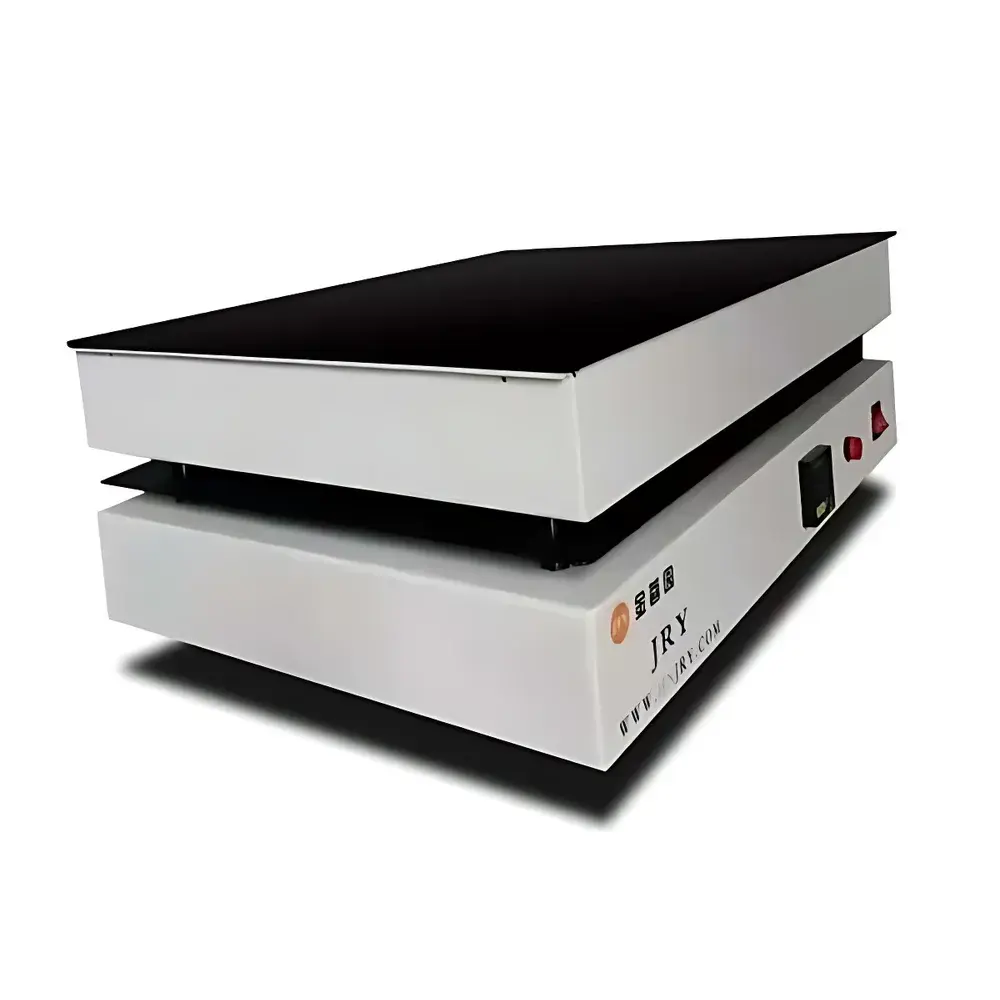
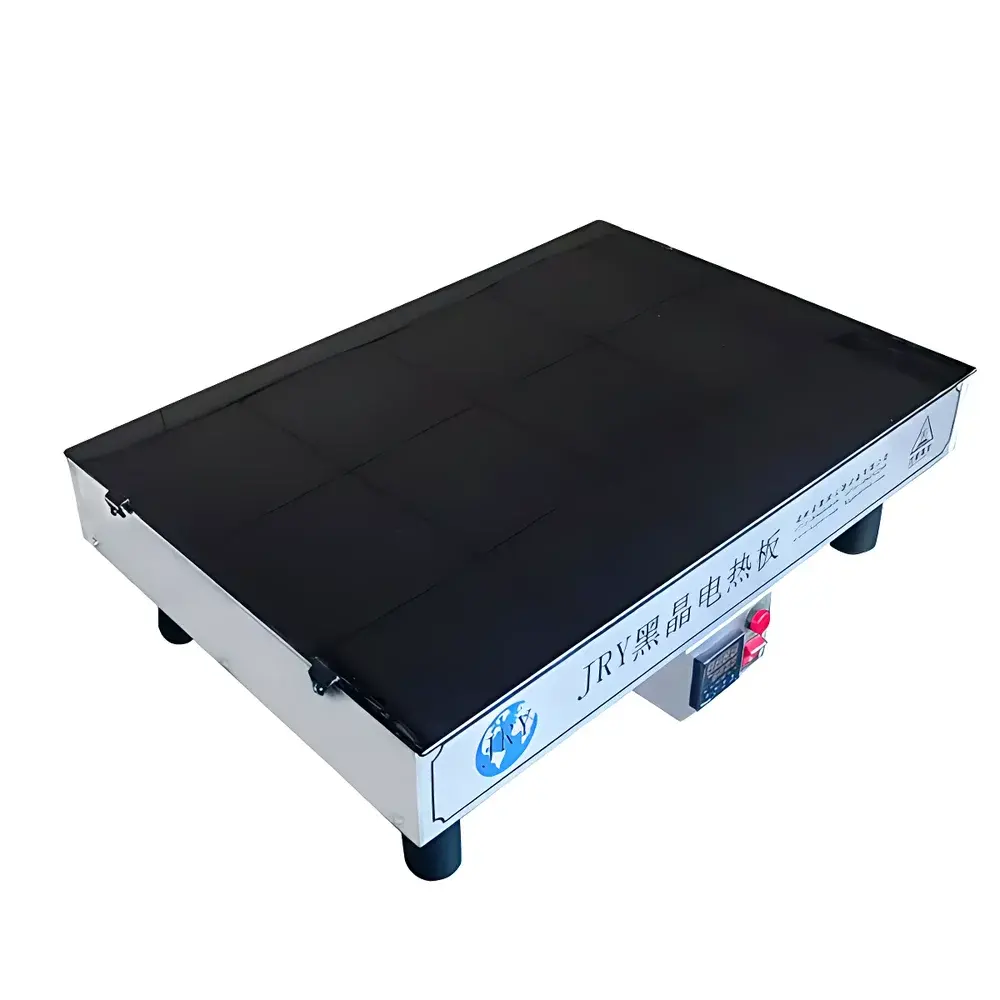
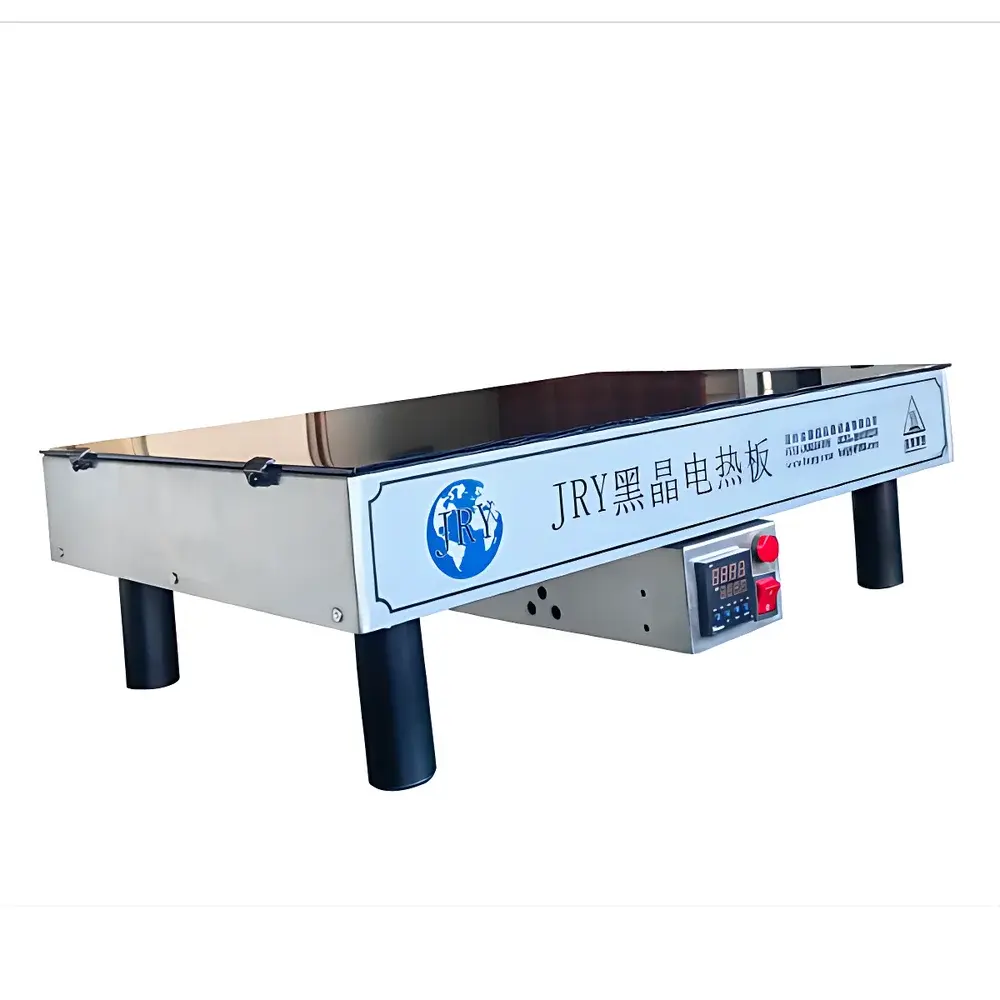
JRY JRY-HJ-400×600 Black Crystal Ceramic Electric Heating Plate
| Brand | JRY |
|---|---|
| Origin | Hunan, China |
| Manufacturer Type | Direct Manufacturer |
| Product Origin | Domestic (China) |
| Model | JRY-HJ-400×600 |
| Price | USD 850 (FOB) |
| Heating Power | 2 kW |
| Max. Heating Temperature | 450 °C |
| Temperature Uniformity | ±2 °C |
| Surface Dimensions | 400 × 600 mm |
| Heating Zone Dimensions | 400 × 600 mm |
| Display Type | Digital LED |
Overview
The JRY JRY-HJ-400×600 Black Crystal Ceramic Electric Heating Plate is a robust, laboratory-grade thermal platform engineered for precise, uniform, and contamination-free sample preparation and digestion workflows. Designed around a monolithic black crystal ceramic heating surface—chemically inert, acid-alkali resistant, and thermally stable up to 450 °C—the unit eliminates open-flame hazards while delivering consistent conductive heat transfer across its full 400 mm × 600 mm active zone. Unlike conventional aluminum or stainless-steel hotplates, the black crystal ceramic surface resists pitting, etching, and thermal shock, ensuring long-term calibration stability and minimal maintenance in aggressive chemical environments (e.g., HNO₃, HCl, HF-based digestions). Its embedded resistive heating elements employ circumferential distribution architecture to minimize radial thermal gradients, enabling simultaneous multi-vessel processing with high spatial reproducibility—critical for EPA Method 3050B, ISO 11466, and ASTM D5191-compliant digestion protocols.
Key Features
- Monolithic black crystal ceramic top plate: Non-porous, corrosion-resistant surface rated for continuous operation at ≤450 °C; compatible with Teflon, quartz, borosilicate, and PFA vessels.
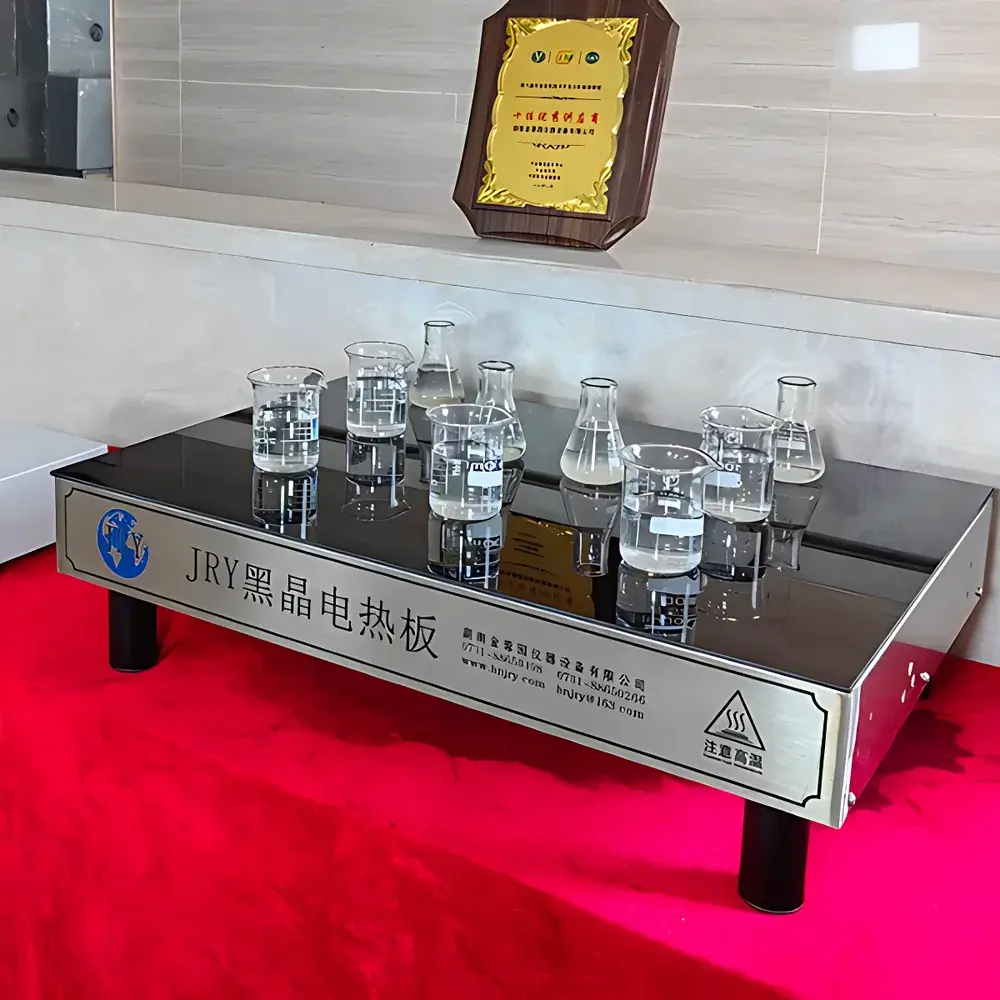
- Full-surface heating zone (400 × 600 mm): Supports up to twelve 50-mL digestion tubes or four standard 1000-mL beakers without thermal shadowing.
- PID-based digital temperature control with adaptive tuning: Achieves ±0.5 °C setpoint repeatability over 48-hour continuous operation; includes auto-tuning and manual gain adjustment modes.
- Integrated safety architecture: Ground-fault circuit interrupter (GFCI), overtemperature cutoff (OTC) at 470 °C, and residual current device (RCD) protection compliant with IEC 61000-4-5 surge immunity standards.
- Enclosure: Cold-rolled steel chassis with epoxy-polyester dual-layer anti-corrosion coating (salt-spray tested per ASTM B117 for ≥500 hr).
- Digital LED interface: Dual-display showing real-time surface temperature and setpoint; intuitive 3-button navigation with password-protected parameter lockout for GLP environments.
Sample Compatibility & Compliance
The JRY-HJ-400×600 accommodates standard laboratory glassware (including tall-form digestion vessels, Kjeldahl flasks, and reflux condenser assemblies) as well as polymer-based containers (e.g., PTFE, PFA, and quartz crucibles). Its flat, non-reactive surface ensures no metal ion leaching during trace-metal analysis workflows—validated per USP heavy metals testing requirements. The unit conforms to ISO 9001:2015 manufacturing and service processes, and its electrical safety design meets IEC 61010-1:2010 (Edition 3) for laboratory equipment. While not intrinsically rated for Class I Div 1 hazardous locations, it may be deployed in fume hoods certified to ANSI/ASHRAE 110–2016 performance criteria when used with appropriate ventilation controls.
Software & Data Management
This model operates as a standalone analog-digital hybrid instrument with no embedded firmware or network connectivity. All temperature logging, alarm history, and operational metadata must be recorded manually or via external data acquisition systems (e.g., USB-connected thermocouple loggers with NIST-traceable calibration). For regulated environments requiring audit trails (e.g., FDA 21 CFR Part 11 or EU Annex 11), users are advised to integrate the unit into validated LIMS or ELN platforms using RS-232 or optional 4–20 mA analog output modules (sold separately). Calibration certificates—including as-found/as-left data against NIST-traceable reference thermometers—are provided with each unit and updated annually per internal SOP-HEAT-003.
Applications
- Acid digestion of environmental solids (soils, sediments, sludges) per EPA SW-846 Methods 3050B, 3051A, and 3052.
- Sample evaporation and concentration in geochemical and clinical laboratories (e.g., urine, serum, tissue homogenates).
- Pre-drying of filter papers, gravimetric crucibles, and desiccation trays prior to ashing.
- Controlled solvent removal in organic synthesis workflows where inert atmosphere compatibility is required (when used under nitrogen purge hoods).
- Heating baths for viscosity measurement cells and density pycnometers requiring stable thermal soak conditions.
FAQ
What is the maximum recommended operating temperature for extended use?
Continuous operation at 450 °C is permissible; however, for optimal ceramic longevity and thermal stability, sustained use above 400 °C should be limited to ≤4 hours per cycle.
Is the heating surface compatible with hydrofluoric acid (HF) exposure?
Yes—the black crystal ceramic composition exhibits negligible etching after 72-hour static immersion in 40% HF at 25 °C, per internal ASTM C282-22 validation testing.
Does the unit support external temperature probe feedback control?
No; temperature regulation is based solely on embedded surface thermistors. External probe integration requires third-party PID controllers with 0–10 V or 4–20 mA input capability.
Can this heating plate be mounted in a vertical orientation?
No—horizontal placement only. Vertical mounting compromises thermal convection balance and voids the manufacturer warranty.
What calibration documentation is included upon delivery?
Each unit ships with a factory calibration report (traceable to CNAS-accredited labs), including surface uniformity mapping at 100 °C, 250 °C, and 450 °C, plus uncertainty budgets per GUM (JCGM 100:2008).



