
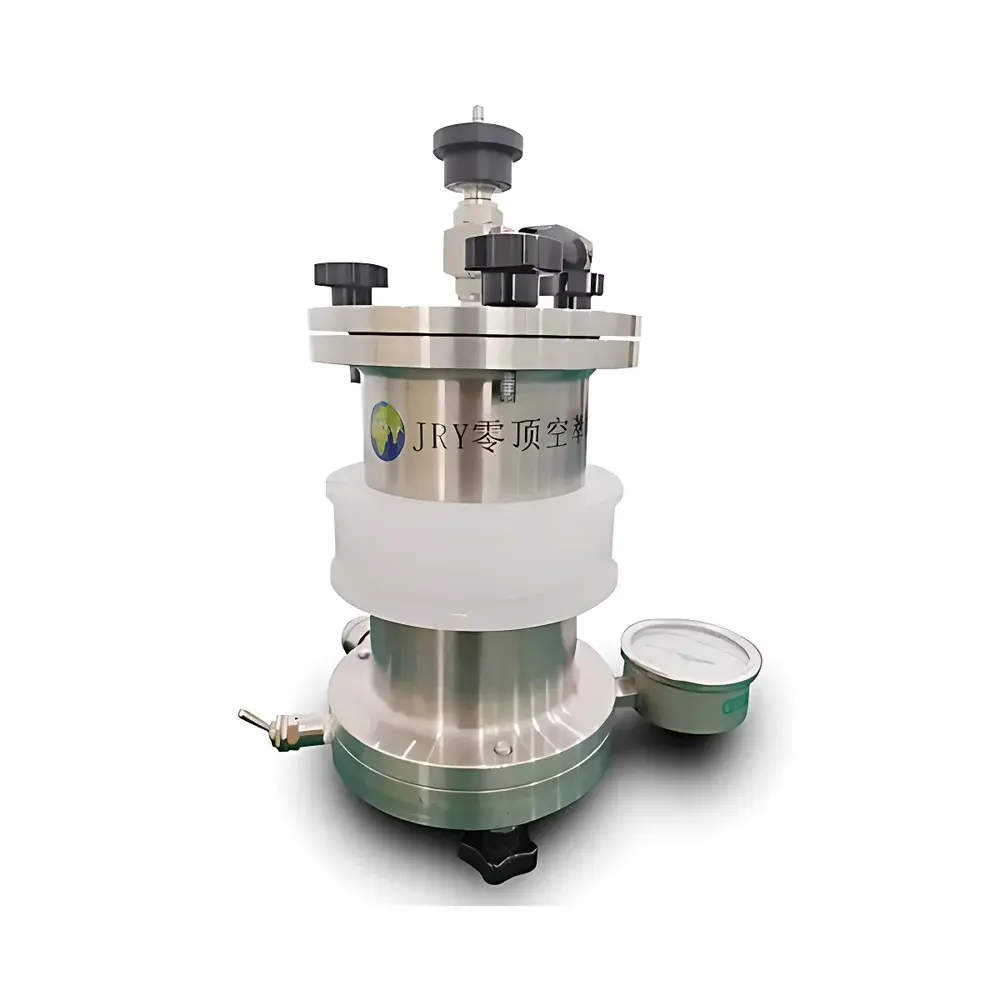
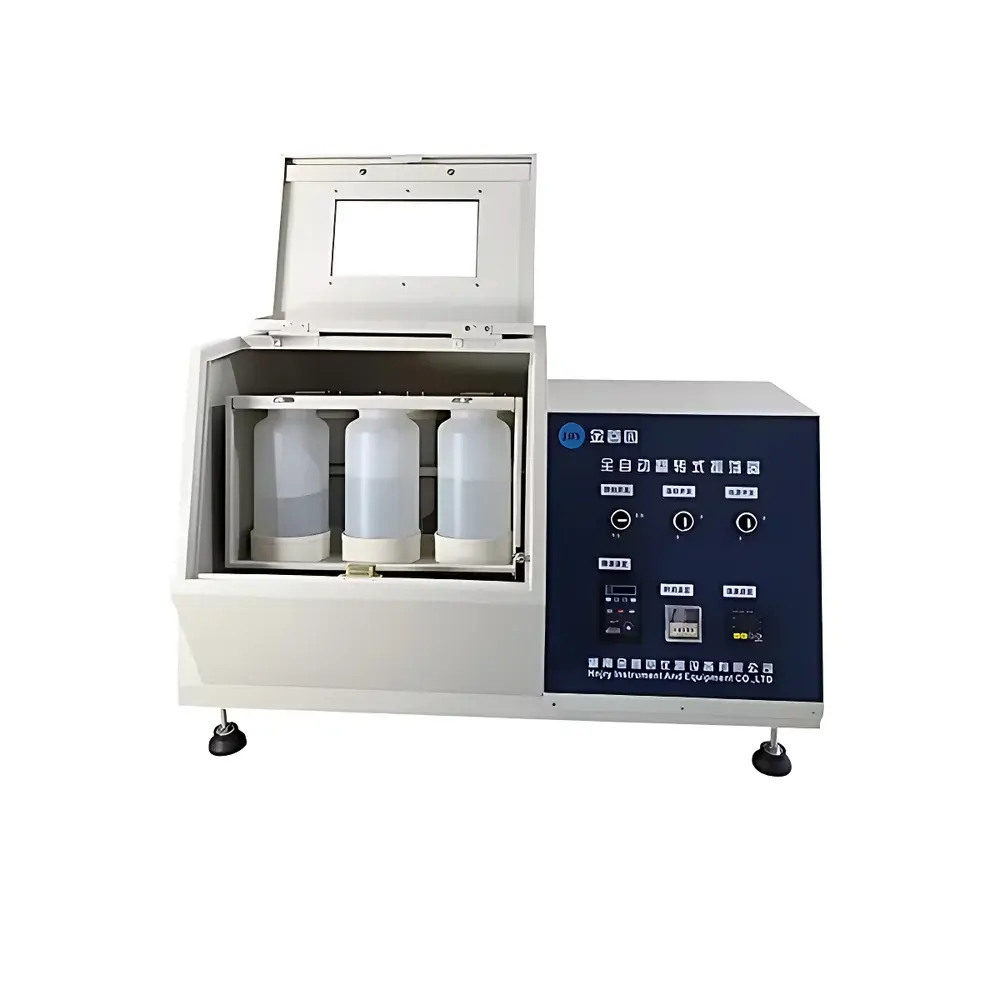
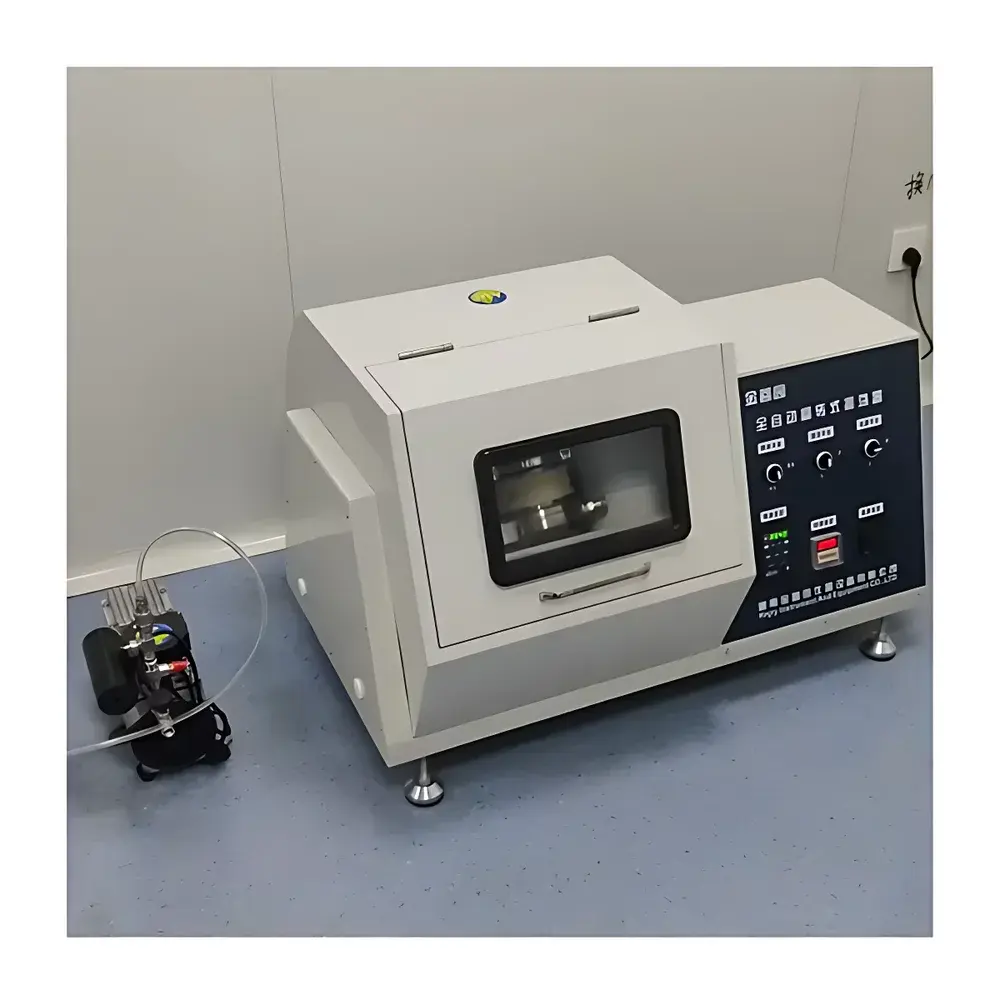
JRY ZHE Zero-Headspace Extractor (Model JRY-LD)
| Brand | JRY |
|---|---|
| Origin | Hunan, China |
| Manufacturer Type | Manufacturer |
| Product Origin | Domestic |
| Model | JRY-LD |
| Pricing | Upon Request |
| Material | 316 Stainless Steel |
| Capacity | 550 mL |
| Diameter | 90 mm |
| Pressure Rating | >50 psi |
| Operating Temperature | Stable at 4 °C long-term |
| Pressure Gauge | 0–60 psi oil-filled gauge |
| Internal Coating | SLO/FLO fluoropolymer coating for smooth piston actuation |
| Piston Actuation Pressure | 5–10 psi |
Overview
The JRY ZHE Zero-Headspace Extractor (Model JRY-LD) is a precision-engineered laboratory device designed to perform controlled, reproducible extraction of volatile organic compounds (VOCs) from solid waste and soil matrices in compliance with U.S. EPA Method 1311 (TCLP), ASTM D5528, and China’s HJ/T 299–2007 — the Standard Test Method for Extraction of Toxic Substances from Solid Waste Using Nitric/Sulfuric Acid Mixture. Unlike conventional leaching vessels, the ZHE eliminates headspace above the sample–extractant interface by employing a sealed, piston-driven compression system. This zero-headspace configuration prevents volatilization loss during agitation and ensures quantitative recovery of analytes with high vapor pressure—critical for accurate VOC assessment in regulatory leachate testing. The instrument operates on the principle of static pressurized equilibrium extraction: after sample and acidified extractant are loaded into the chamber, the piston is hydraulically advanced to displace residual air, establishing an inert, gas-tight environment prior to tumbling or rotation. This architecture directly addresses the thermodynamic limitations inherent in open-vessel extraction protocols.
Key Features
- Robust 316 stainless steel construction ensures chemical resistance to aggressive nitric/sulfuric acid mixtures and long-term structural integrity under cyclic pressure loading.
- 550 mL nominal capacity chamber with 90 mm internal diameter optimizes surface-to-volume ratio for uniform mass transfer while accommodating standard regulatory sample masses (e.g., 100 g dry weight per EPA 1311).
- Oil-filled 0–60 psi pressure gauge provides stable, vibration-dampened readout of internal chamber pressure; calibrated traceability supports audit-ready documentation.
- SLO/FLO fluoropolymer internal coating minimizes piston stiction and wear, enabling consistent 5–10 psi actuation force across >10,000 operational cycles without lubricant contamination risk.
- Rated for continuous operation at 4 °C—compatible with cold-chain preservation protocols for thermally labile analytes and field-sampled matrices requiring refrigerated stabilization pre-extraction.
- Pressure-rated >50 psi design exceeds the maximum transient overpressure observed during endothermic acid–matrix reactions, eliminating rupture risk during exothermic dissolution events.
Sample Compatibility & Compliance
The JRY-LD ZHE accommodates heterogeneous solid waste specimens—including municipal solid waste incineration ash, contaminated soils, construction debris, and stabilized sludge—without particle size pre-reduction beyond regulatory sieve specifications (e.g., <9.5 mm per HJ/T 299). It is validated for use with both aqueous acidic extractants (e.g., 5.7 mM HNO₃ + 4.9 mM H₂SO₄, pH ≈ 5.0) and synthetic precipitation leaching procedure (SPLP) solutions. Device geometry and sealing mechanics conform to ISO/IEC 17025 requirements for method validation control, and its pressure containment system satisfies ASME BPE-2021 mechanical safety thresholds for Class I laboratory pressure vessels. Documentation packages include material certification (ASTM A240), pressure test reports, and coating adhesion verification per ASTM D4541.
Software & Data Management
While the JRY-LD ZHE is a manually operated mechanical extractor (no embedded electronics or firmware), it integrates seamlessly into GLP-compliant workflows via standardized operating procedures (SOPs) aligned with FDA 21 CFR Part 11 Annex 11 principles. Users log piston actuation pressure, dwell time, rotation speed (when coupled with compatible tumblers), and ambient storage temperature in bound laboratory notebooks or validated LIMS platforms. Batch-level metadata—including lot numbers of certified reference materials (CRMs), extractant preparation dates, and analyst initials—is maintained to support full traceability required for CNAS-accredited environmental testing laboratories.
Applications
- Regulatory leaching assessment of VOCs (e.g., benzene, chloroform, tetrachloroethylene) from landfill-bound waste per HJ/T 299–2007 and EPA SW-846 Method 1311.
- Stability testing of immobilized heavy metals (As, Cd, Pb, Cr) in treated soils under simulated acid rain exposure.
- Method development for emerging contaminants (e.g., PFAS precursors, nitrosamines) where headspace equilibration introduces significant analytical bias.
- Interlaboratory comparison studies requiring inter-operator reproducibility in static pressurized extraction conditions.
- Validation of alternative leaching protocols for circular economy applications—e.g., assessing leachability of recycled construction aggregates or biochar-amended soils.
FAQ
What regulatory methods explicitly require zero-headspace extraction?
EPA Method 1311 (TCLP) permits—but does not mandate—zero-headspace devices; however, HJ/T 299–2007 specifies ZHE use for VOCs, and ASTM D5528 recommends headspace elimination for compounds with Henry’s law constants >10⁻³ atm·m³/mol.
Can the JRY-LD be sterilized for microbiological leaching studies?
Yes—autoclaving at 121 °C for 20 min is permissible due to 316 SS thermal stability and SLO/FLO coating’s continuous-use rating up to 200 °C; verify seal elastomer compatibility separately.
Is calibration of the pressure gauge required before each use?
Per ISO/IEC 17025, gauge calibration must be performed annually against NIST-traceable deadweight testers; daily zero-check is recommended prior to batch processing.
How does piston actuation pressure affect extraction efficiency?
5–10 psi ensures complete air displacement without compacting low-density matrices; pressures >15 psi may reduce effective porosity and hinder diffusive mass transfer in clay-rich soils.
Does the ZHE comply with GMP documentation requirements?
Yes—the mechanical design enables unambiguous operator action logging, and all components carry permanent serial markings compatible with equipment qualification (IQ/OQ/PQ) protocols.



