
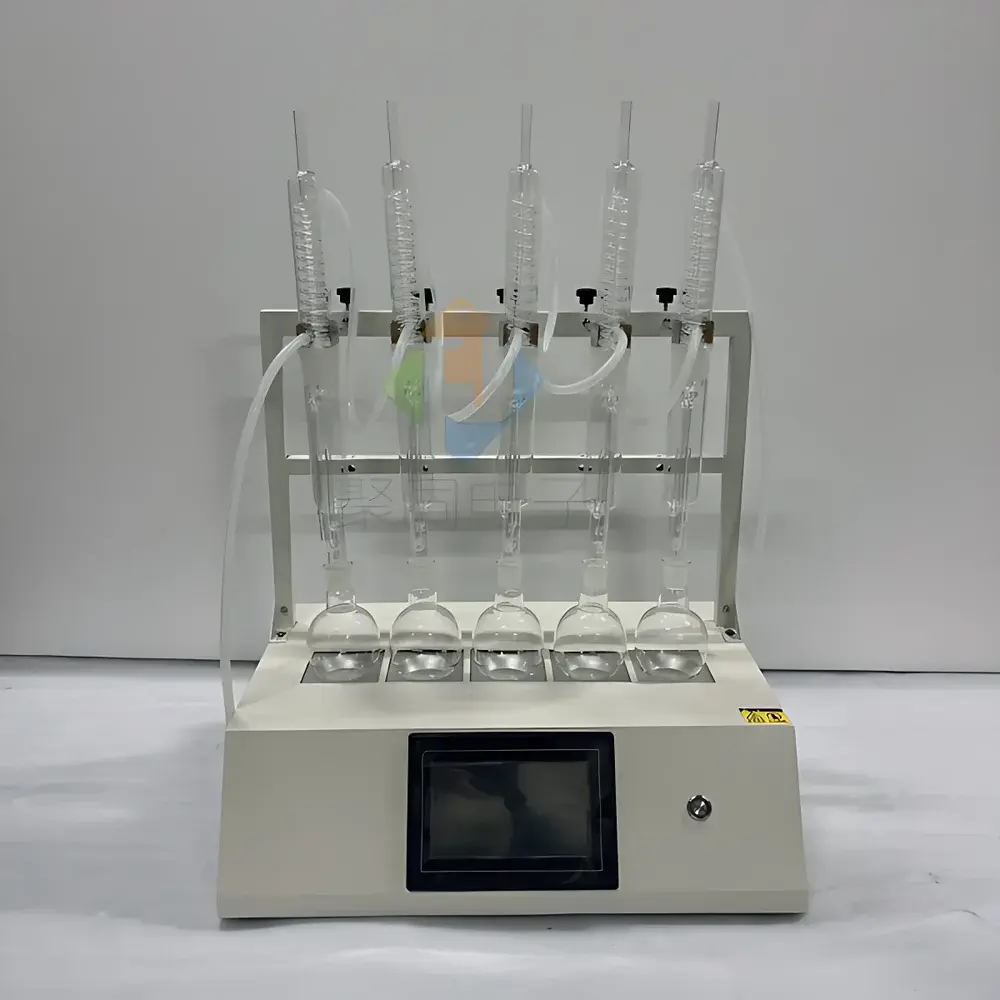
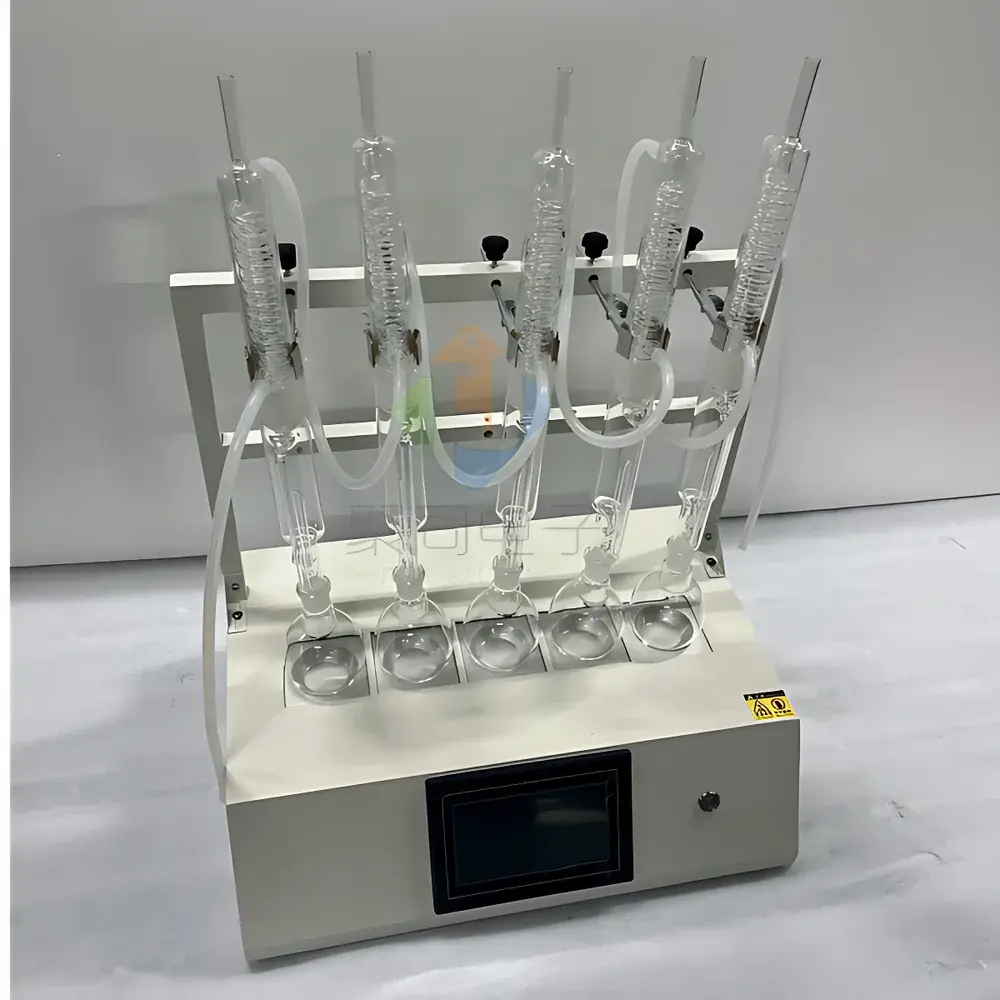
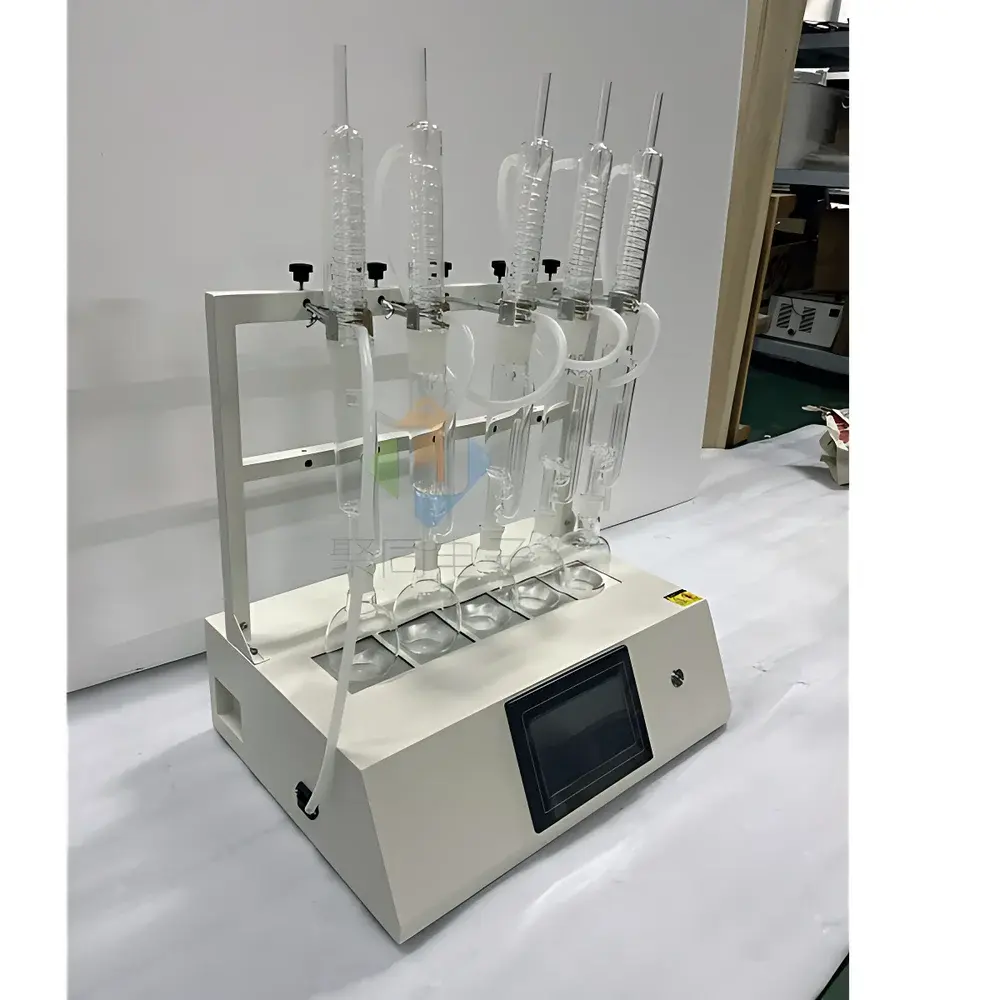
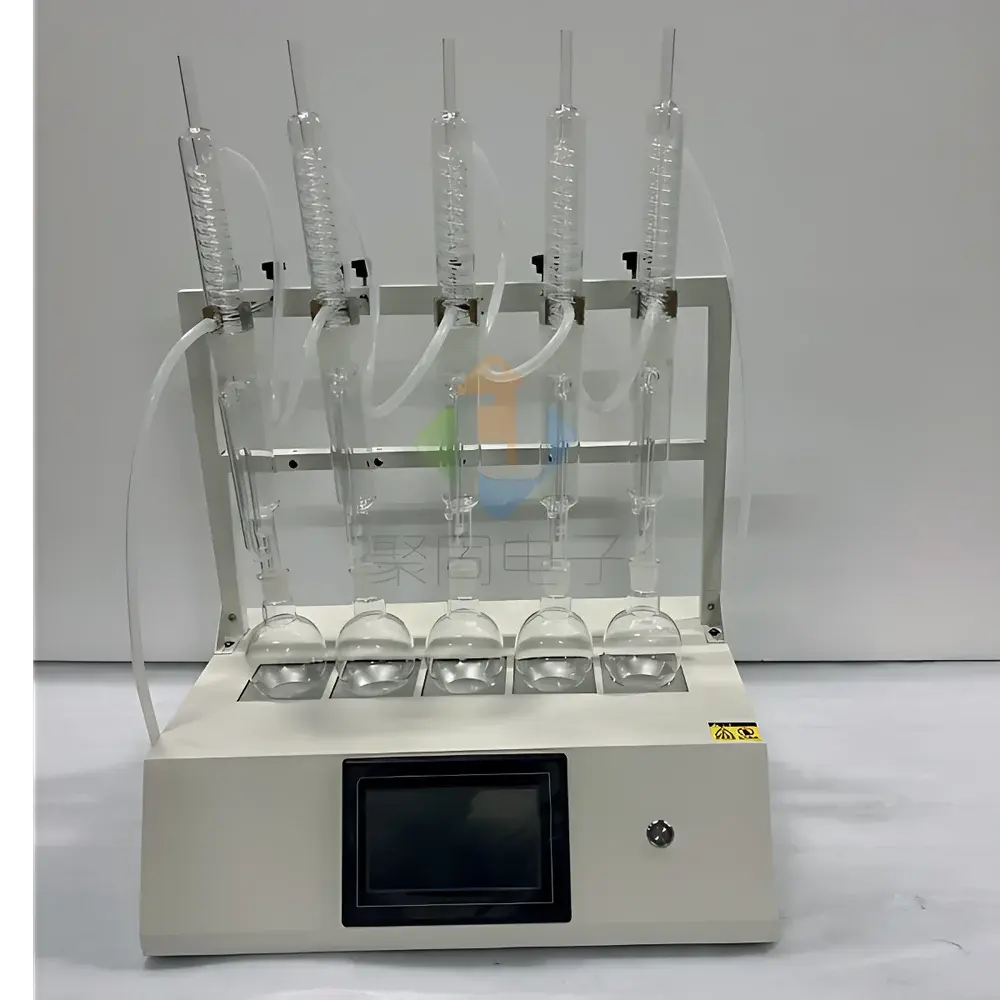
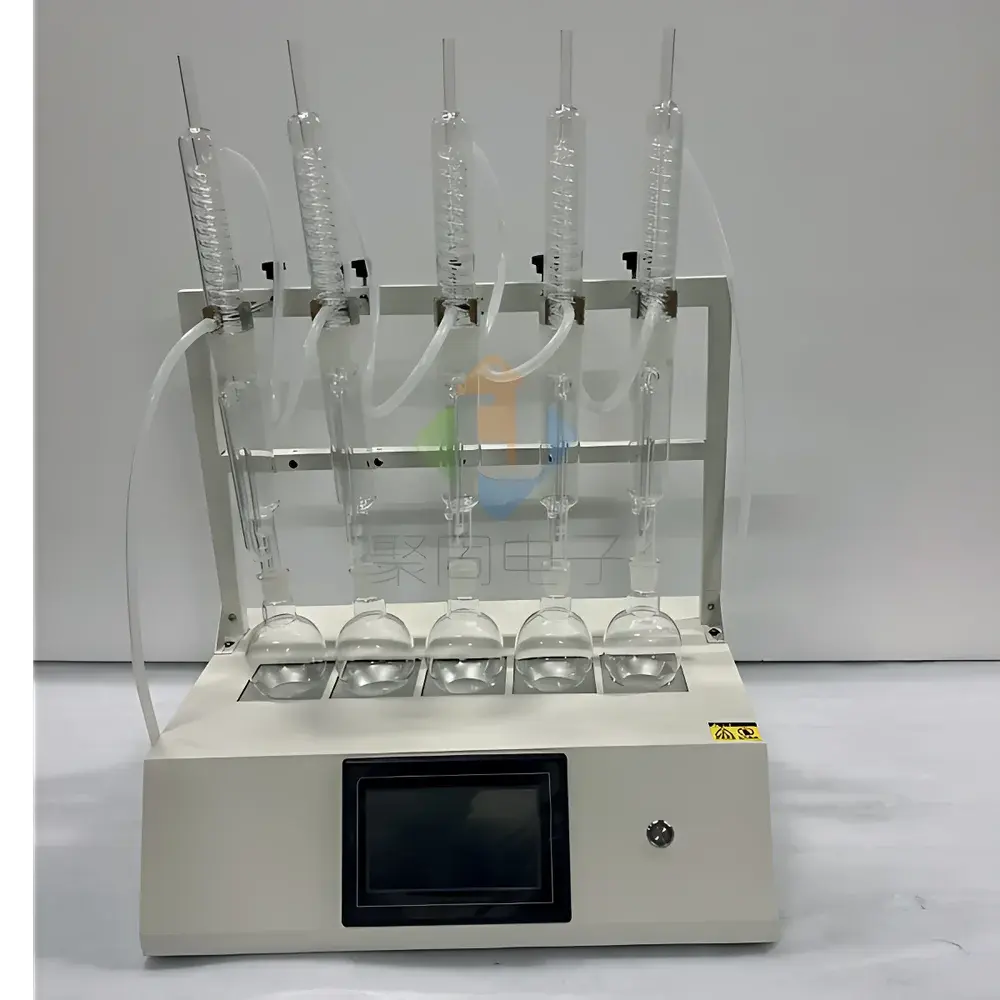
JTONE JT-SXT-02N / JT-SXT-04N / JT-SXT-06N Soxhlet Fat Analyzer
| Brand | JTONE |
|---|---|
| Origin | Hunan, China |
| Model | JT-SXT-02N / JT-SXT-04N / JT-SXT-06N |
| Extraction Chamber Volume | Not specified |
| Receiver Flask Volume | 500 mL |
| Temperature Range | Ambient +5 °C to 280 °C |
| Temperature Control Accuracy | ±0.5 °C |
| Number of Parallel Extraction Channels | 2 / 4 / 6 |
| Heating Power | 300 W / 500 W / 800 W |
| Sample Capacity per Thimble | 0.5–20 g |
| Extractor Flask Volume | 250 mL (150 mL optional) |
| Power Supply | 220 V ±10 V, 50 Hz |
Overview
The JTONE JT-SXT Series Soxhlet Fat Analyzer is a benchtop laboratory instrument engineered for precise, standardized determination of crude fat content in solid and semi-solid matrices—primarily foodstuffs, agricultural commodities, feedstuffs, and botanical materials—according to the classical Soxhlet extraction principle. It operates on gravimetric methodology: lipids are selectively dissolved from dried, ground samples using refluxing organic solvents (e.g., petroleum ether, diethyl ether, or hexane), continuously extracted via siphon action into a pre-weighed receiver flask, then recovered by distillation, dried under controlled thermal conditions, and quantified by mass difference. This method conforms to internationally recognized standards including AOAC Official Method 920.39, ISO 6496:1999, GB/T 14772–2008, and USP <467> residual solvent guidelines where applicable. The system integrates heating, solvent reflux, condensation, and automatic solvent recovery within a single compact architecture, minimizing manual intervention while ensuring repeatability across multi-channel configurations.
Key Features
- Metal-block heating system with uniform thermal distribution and rapid response—eliminates hot spots common in water-bath-based Soxhlet systems;
- Electrically isolated circuitry and extraction chamber—enhances operational safety and reduces risk of solvent ignition during prolonged heating cycles;
- Large backlit LCD microprocessor controller displaying real-time temperature, setpoint, countdown timer, and elapsed heating time simultaneously;
- Adjustable temperature control (ambient +5 °C to 280 °C, ±0.5 °C accuracy) enables optimization for diverse solvents with varying boiling points (e.g., petroleum ether BP ~40–60 °C, chloroform BP 61 °C);
- Programmable extraction duration with auto-shutdown function—ensures consistent exposure time and prevents over-extraction or thermal degradation;
- Integrated solvent recovery mode: rotating valve configuration allows seamless transition between extraction and distillation phases without disassembly;
- Modular channel design supports 2-, 4-, or 6-sample parallel processing—ideal for high-throughput QC labs performing routine compliance testing;
- Thimble-compatible sample handling (0.5–20 g per unit) with standardized filter paper cartridge geometry compatible with ASTM D3273 and ISO 11086 specifications;
- High-efficiency air-cooled condenser with optimized reflux ratio ensures minimal solvent loss and stable siphon cycling over extended runs (typically 6–24 h).
Sample Compatibility & Compliance
The JT-SXT analyzer accommodates heterogeneous particulate samples—including milled grains, roasted nuts (e.g., peanuts), dairy powders, animal feed pellets, and plant tissues—provided they are homogenized, desiccated (<10% moisture), and loaded into certified low-linting thimbles. It complies with regulatory frameworks governing food composition analysis: GB/T 14772–2008 (China National Standard for Crude Fat Determination), AOAC 920.39 (Animal Feed), ISO 6496:1999 (Animal Feeding Stuffs), and aligns with GLP documentation requirements when paired with calibrated analytical balances and traceable temperature validation protocols. While not inherently 21 CFR Part 11 compliant, audit-ready data logs can be generated externally using validated third-party software for GMP-aligned environments.
Software & Data Management
The JT-SXT series operates via embedded firmware without proprietary PC software. All operational parameters—including temperature setpoint, extraction duration, and real-time thermal feedback—are logged internally and viewable on-device. For full traceability, users are advised to record start/end times, initial/final flask weights, ambient humidity, and solvent lot numbers in laboratory notebooks or LIMS-integrated spreadsheets. Optional external USB data loggers (not supplied) may interface via RS-232 port (available on select configurations) to capture time-stamped temperature profiles for internal QA audits. No cloud connectivity or remote monitoring is supported—consistent with ISO/IEC 17025 Clause 5.9.1 requirements for instrument independence and data integrity.
Applications
- Quantitative crude fat assessment in peanut kernels before/after steaming or boiling—supporting studies on lipid migration, thermal stability, and nutritional retention (per published research correlating 1.5 h steam exposure with ~3.1 g/100 g dry basis fat reduction);
- Routine quality control of edible oilseed meals (soybean, rapeseed, sunflower) in agri-processing facilities;
- Validation of fat removal efficiency in defatted protein isolates used in functional food formulations;
- Research into lipid oxidation kinetics during accelerated shelf-life testing of snack foods and baked goods;
- Method transfer and verification studies between reference laboratories performing inter-laboratory comparisons under ISO 5725 guidance.
FAQ
What solvents are compatible with the JT-SXT system?
Commonly used solvents include petroleum ether (40–60 °C fraction), diethyl ether, and n-hexane. Chlorinated solvents such as chloroform may be used but require enhanced ventilation and corrosion-resistant components not standard on base models.
Is the instrument suitable for liquid or high-moisture samples?
No. Samples must be dried to ≤10% moisture prior to loading. High-water-content matrices cause emulsion formation, incomplete lipid dissolution, and erratic siphoning—leading to non-reproducible results.
How is temperature calibration verified?
Users should perform periodic verification using a NIST-traceable digital thermometer inserted into the heating block’s sensor port (if accessible) or via immersion in a glycerol bath monitored alongside the display reading. Calibration certificates are not provided but may be obtained through third-party metrology services.
Can the 250 mL receiver flasks be substituted with smaller volumes?
Yes—150 mL flasks are optionally available and maintain full compatibility with all JT-SXT variants. Minimum volume must accommodate expected fat yield plus 30% headspace for safe reflux.
Does the system meet explosion-proof certification requirements?
No. The JT-SXT is rated for general laboratory use in well-ventilated fume hoods. It does not carry ATEX, UL, or IECEx hazardous area certifications and must never be operated outside Class I, Division 2 environments.



