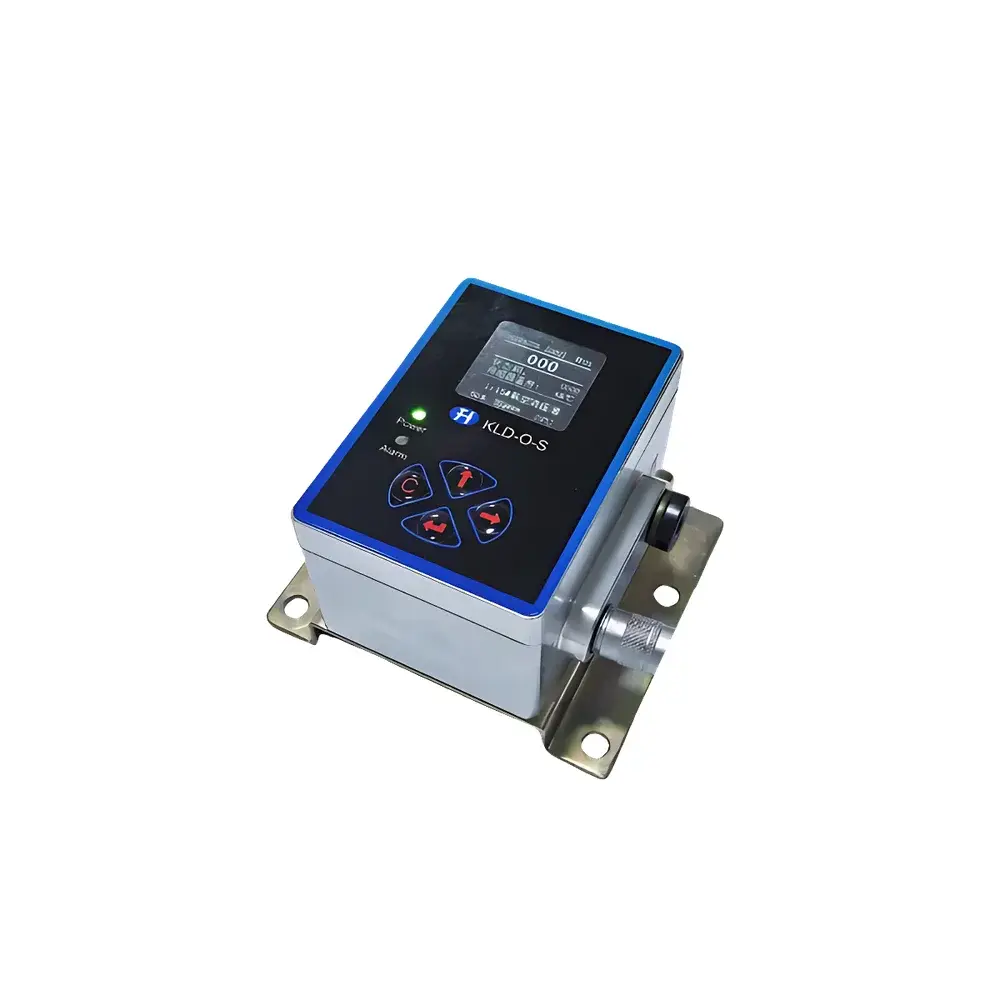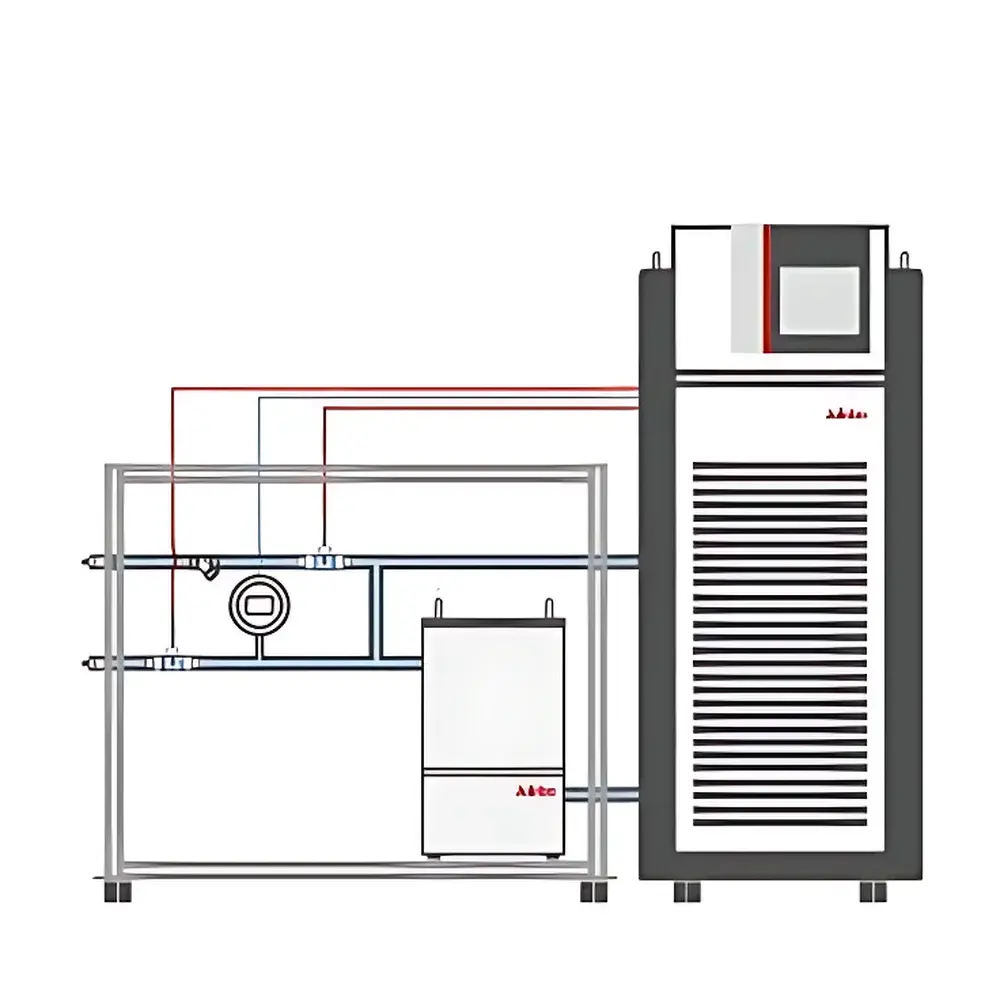
JULABO DCD Series DC/DC Converter and Inverter Performance Test Bench
| Brand | JULABO |
|---|---|
| Origin | Germany |
| Model | DCD / DCD-45 / DCD-50 |
| Temperature Range | −35 °C to +95 °C |
| Flow Rate | 1–30 L/min |
| Temperature Stability | ±0.01 °C to ±0.1 °C |
| Display | 5.7″ TFT Touchscreen (0.01 °C resolution) |
| Heating Power | 5–6 kW |
| Cooling Power (at 20 °C) | 3.5–7.5 kW |
| Pump Flow | 35–76 L/min |
| Pump Pressure | 0.48–3.2 bar |
| Compressor Type | Single-stage, air-cooled or water-cooled |
| Heat Exchanger | Secondary circuit equipped on DCD-45/DCD-50 |
| Circulating Medium | Automotive-grade antifreeze |
| Dimensions (W×D×H) | 33×59×67 cm (DCD), 53×66.5×126 cm (DCD-45/DCD-50) |
Overview
The JULABO DCD Series DC/DC Converter and Inverter Performance Test Bench is a purpose-engineered thermal management platform designed for functional validation and endurance testing of power electronics in automotive and industrial electrification systems. It operates on the principle of closed-loop liquid temperature control—using precisely regulated antifreeze-based coolant to simulate real-world vehicle cooling circuits, ambient thermal loads, and transient thermal boundary conditions. Unlike generic chillers or heating circulators, the DCD system integrates dynamic thermal actuation with synchronized hydraulic parameter monitoring (flow rate, pressure, temperature) to replicate operational stress profiles experienced by DC/DC converters and inverters during drive cycles, regenerative braking, and high-power charging events. Its architecture supports both steady-state characterization and accelerated life-cycle testing under ISO 16750-4 (electrical loads), SAE J1762 (automotive environmental test standards), and OEM-specific thermal soak protocols.
Key Features
- Industrial 5.7″ TFT color touchscreen interface with intuitive HMI navigation, supporting multi-language operation and context-sensitive parameter guidance.
- EHC (Enhanced Heat Exchange) segmented impulse technology enables rapid thermal ramping—achieving >3 K/min cooling/heating rates across the full operating range without compromising long-term reliability.
- ACC (Active Cooling Control) algorithm maintains sub-zero refrigeration capacity even at elevated setpoints (e.g., +85 °C), eliminating thermal overshoot during hot-to-cold transitions.
- ICC (Intelligent Cascade Control) delivers temperature stability of ±0.01 °C at critical setpoints—validated per DIN EN ISO/IEC 17025 traceable calibration procedures.
- Dual-mode intelligent circulation pump: configurable for constant-pressure or constant-flow operation, with programmable pressure ramps up to 3.2 bar and flow resolution of 0.1 L/min.
- Hydraulically sealed wetted path compatible with ethylene glycol/water mixtures (up to 60% concentration), eliminating corrosion risk and ensuring compatibility with OEM-specified coolants.
- Integrated inline filtration (5 µm nominal rating) prevents particulate ingress into test units—critical for protecting sensitive semiconductor modules and gate drivers.
- Front-access service panel for operational controls; rear-mounted fluid and I/O connections ensure clean lab integration and compliance with ISO 14644-1 Class 8 cleanroom spatial requirements.
- Multi-protocol communication interfaces: EtherCAT, Modbus TCP, CAN bus (optional), and analog I/O (0–10 V / 4–20 mA) for seamless integration into automated test stands and HIL environments.
Sample Compatibility & Compliance
The DCD Series accommodates a wide range of power electronic modules—including silicon (Si) and silicon carbide (SiC) based DC/DC converters (up to 10 kW output), traction inverters (up to 200 kW), and wireless charging control units. Its modular thermal interface supports standardized cold plate mounting (SAE J2344 compliant), direct immersion testing (with optional adapter kits), and dual-loop configurations for independent primary/secondary circuit control. The system meets CE marking requirements under the EU Machinery Directive 2006/42/EC and Low Voltage Directive 2014/35/EU. All firmware and control logic are developed in accordance with IEC 61508 SIL2 functional safety principles. Data logging and audit trails comply with FDA 21 CFR Part 11 and GLP/GMP Annex 11 when used with JULABO’s optional Traceability Software Package.
Software & Data Management
JULABO’s proprietary DCD-Soft Suite provides real-time visualization of all monitored parameters (temperature, flow, pressure, power consumption) with synchronized timestamping at 100 ms intervals. Users can define complex thermal profiles—including step, ramp, dwell, and cyclic sequences—with conditional triggers (e.g., “hold at −40 °C until converter efficiency drops below 92%”). Raw data exports to CSV, MATLAB (.mat), and HDF5 formats support post-test statistical analysis (Cpk, Weibull, FMEA linkage). Optional cloud synchronization enables remote diagnostics, predictive maintenance alerts (based on compressor runtime and pressure deviation trends), and centralized fleet-wide test log archiving aligned with ISO/IEC 17025 documentation requirements.
Applications
- Functional verification of bidirectional DC/DC converters in 48 V mild-hybrid and 800 V BEV architectures.
- Thermal derating studies for SiC inverters under combined electrical load and ambient temperature stress (−40 °C to +95 °C).
- Validation of thermal interface material (TIM) performance under dynamic cycling conditions.
- Environmental stress screening (ESS) per AEC-Q100 Grade 0/1 specifications for power module qualification.
- Development of thermal management algorithms for vehicle energy control units (VECU) and battery management systems (BMS).
- Support for ISO 26262 ASIL-B compliant hardware-in-the-loop (HIL) test benches requiring deterministic thermal response.
FAQ
What coolant types are certified for use with the DCD Series?
Automotive-grade ethylene glycol/water mixtures (typically 50:50 or 60:40 v/v) meeting ASTM D3306 or OEM-specified specifications (e.g., BMW LL-04, VW G13). Propylene glycol blends are supported upon request with prior validation.
Can the DCD-45 and DCD-50 operate in a secondary loop configuration?
Yes—both models include an integrated secondary heat exchanger enabling decoupled control of primary (chiller) and secondary (device-under-test) circuits, essential for maintaining stable inlet temperatures despite variable heat loads.
Is remote monitoring and control available out-of-the-box?
Standard Ethernet connectivity supports web-based supervision via HTTP/HTTPS. Full remote scripting, alarm notification, and firmware updates require the optional DCD-Remote Module (part no. DCD-RM-KIT).
How is temperature uniformity verified across the test loop?
JULABO supplies factory-calibrated PT100 sensors at inlet/outlet ports and optional internal loop monitoring points. Uniformity validation reports (±0.03 °C max deviation over 1 m loop length) are included with each system commissioning certificate.
Does the system support automated test sequence execution?
Yes—via DCD-Soft’s built-in sequencer or external integration using Modbus TCP commands. Sequence files may be imported/exported and version-controlled using Git-compatible metadata tagging.