
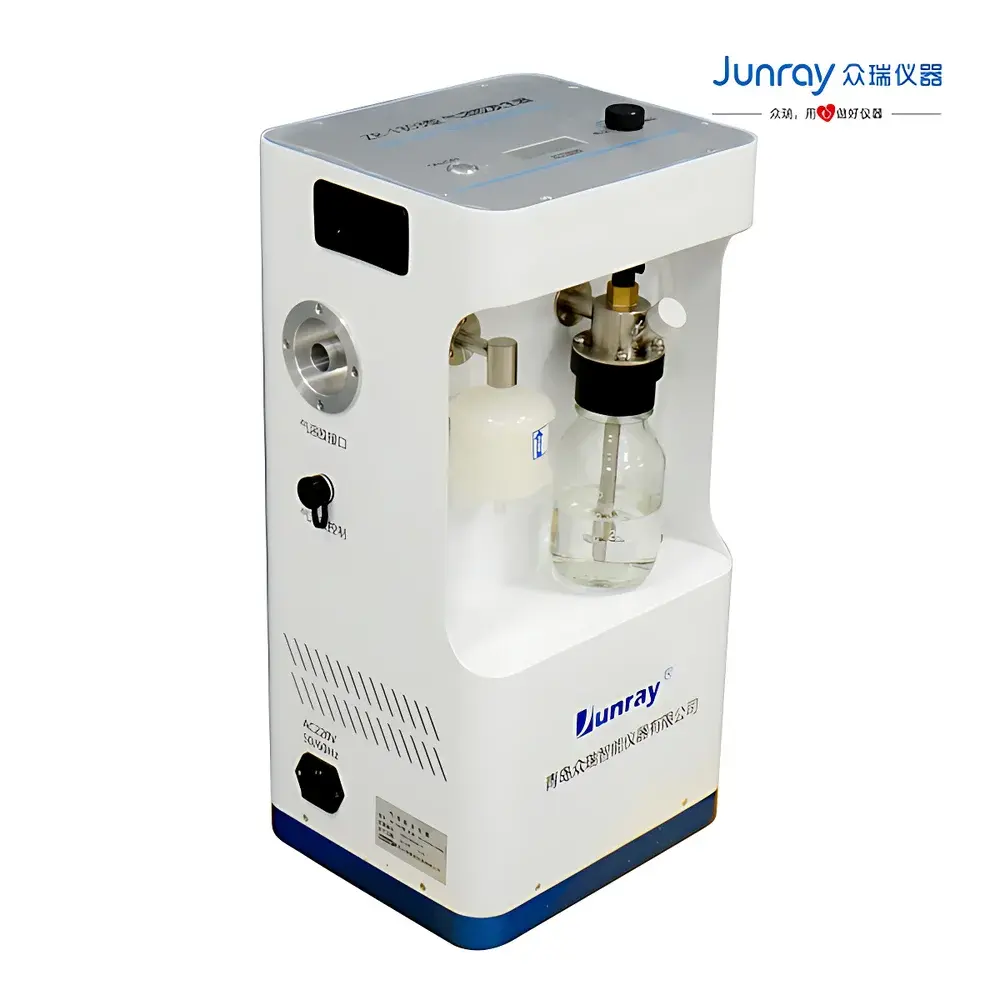
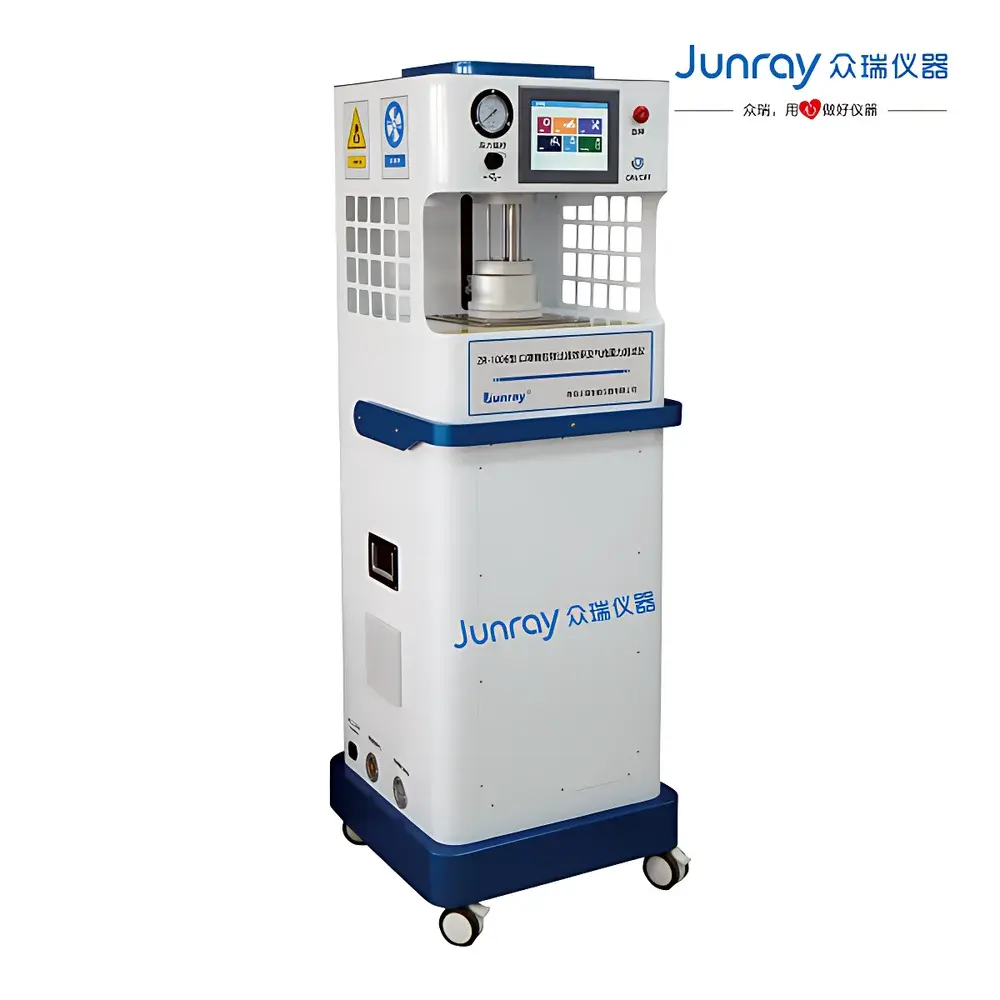
Junray ZR-1303 Aerosol Generator
| Brand | Junray |
|---|---|
| Origin | Shandong, China |
| Manufacturer Type | Direct Manufacturer |
| Country of Origin | China |
| Model | ZR-1303 |
| Price Range | USD 1,400 – 7,200 (FOB) |
| Aerosol Output Concentration | 0–200 µg/L |
| Aerosol Generation Principle | Laskin Nozzle Atomization |
| Compatible Test Agents | PAO-4, DOP, DEHS, Ondina Oil |
| Display | Segment LCD for Real-Time Airway Pressure Monitoring |
| Pump Type | Brushless Diaphragm Pump |
| Compliance | GB/T 13554–2020, YY/T 1556–2017, ISO 14644-3, EN 1822-5 |
Overview
The Junray ZR-1303 Aerosol Generator is an engineered solution for controlled, repeatable generation of polydisperse oil-based aerosols—primarily PAO-4 (Polyalphaolefin), DOP (Di-Octyl Phthalate), DEHS (Di-Ethyl-Hexyl-Sebacate), and Ondina oil—for integrity testing of high-efficiency particulate air (HEPA) and ultra-low penetration air (ULPA) filters. It operates on the Laskin nozzle principle: pressurized gas (typically clean, dry compressed air or nitrogen) passes through precisely machined nozzles to shear liquid test agent into fine droplets, forming a stable, reproducible aerosol cloud with a mass median aerodynamic diameter (MMAD) typically centered near 0.3 µm—optimal for challenging HEPA filter efficiency validation per ISO 14644-3 and EN 1822-5. Designed for both laboratory calibration environments and field-based cleanroom qualification, the ZR-1303 delivers traceable aerosol output across its full 0–200 µg/L concentration range, supporting quantitative leak detection via photometer or particle counter-based scanning protocols.
Key Features
- Brushless diaphragm pump architecture ensures zero carbon particulate emission, eliminating internal contamination risks and maintaining baseline air purity in sensitive test setups.
- Segment-type LCD display provides real-time monitoring of critical pneumatic parameters—including upstream airway pressure—enabling immediate operator verification of system readiness and consistent atomization conditions.
- Optimized dual-stage air filtration (pre-filter + coalescing filter) upstream of the Laskin nozzles prevents nozzle clogging and extends service intervals, particularly when using viscous or additive-containing test agents.
- Dual-mode concentration control: manual fine-tuning via precision needle valve for rapid setup; or closed-loop integration with compatible photometers (e.g., TSI 8130A, Palas MFP-3000) for automated feedback-regulated output—ensuring compliance with dynamic challenge requirements in GMP cleanroom certification.
- Modular liquid reservoir with top-access injection port allows quick, spill-free replenishment of test agents without disassembly or system depressurization.
- Rugged stainless-steel and anodized aluminum housing meets IP54 ingress protection for reliable operation in industrial QA/QC labs and mobile validation teams.
Sample Compatibility & Compliance
The ZR-1303 is validated for use with standard aerosol challenge agents specified in international and national standards, including PAO-4 (per ASTM F51–22), DOP (per older USP references), DEHS (ISO 14644-3 Annex B), and pharmaceutical-grade Ondina oil. Its output stability and particle size distribution conform to GB/T 13554–2020 (High Efficiency Air Filters), YY/T 1556–2017 (Medical Device Cleanroom Testing), and ISO 14644-3:2019 (Testing Methods for Cleanrooms). The unit supports audit-ready documentation workflows required under FDA 21 CFR Part 11 (when paired with compliant data loggers) and aligns with EU GMP Annex 1 (2022) expectations for filter integrity verification in sterile manufacturing environments.
Software & Data Management
While the ZR-1303 operates as a standalone hardware generator, its analog 0–10 V or 4–20 mA output interface enables seamless integration into centralized validation platforms (e.g., DeltaV, Siemens Desigo CC, or custom LabVIEW-based systems). When connected to compatible photometers with digital communication (RS-232/USB), the generator can participate in automated test sequences that record time-stamped aerosol concentration, pressure, and duration—supporting electronic batch records (EBRs) and GLP/GMP-compliant data archiving. Internal firmware includes configurable alarm thresholds for low-pressure or over-pressure events, logged with timestamps for root-cause analysis during qualification audits.
Applications
- HEPA/ULPA filter leak testing in pharmaceutical cleanrooms (Grade A/B/C/D), biotech isolators, and aseptic processing suites.
- Performance verification of laminar flow hoods, biosafety cabinets (BSCs), and gloveboxes per NSF/ANSI 49 and EN 12469.
- Calibration and challenge validation of airborne particle counters (e.g., Met One, PMS, TSI models) against ISO 21501-4 reference spectra.
- Filter media R&D—evaluating capture efficiency, loading behavior, and pressure drop characteristics under standardized polydisperse challenges.
- Regulatory submission support for FDA pre-approval inspections (PAIs), EMA certification audits, and NMPA registration dossiers requiring documented filter integrity methodology.
FAQ
What aerosol agents are certified for use with the ZR-1303?
PAO-4, DOP, DEHS, and Ondina oil are fully supported. Agent selection must comply with local regulatory restrictions (e.g., DOP is prohibited in several EU jurisdictions due to REACH concerns; DEHS or PAO-4 are preferred alternatives).
Does the ZR-1303 require external compressed air?
Yes—it requires a clean, dry, oil-free compressed air or nitrogen supply at 0.4–0.7 MPa (4–7 bar), filtered to ≤0.01 µm and dew point ≤−40°C, per ISO 8573-1 Class 2:2:2.
Can the ZR-1303 be used for quantitative leak testing per ISO 14644-3?
Yes—its stable 0–200 µg/L output range and Laskin nozzle design meet the “controlled polydisperse challenge” requirement for photometric scanning, provided paired instrumentation (e.g., TSI 8130A) is calibrated and traceable to NIST standards.
Is firmware upgradable in the field?
Firmware updates are performed via USB interface using Junray’s authorized configuration utility; version history and update logs are retained for 21 CFR Part 11 audit trails.
What maintenance intervals are recommended?
Nozzle inspection and cleaning every 50 operational hours; diaphragm pump service every 5,000 hours; full system calibration annually or per IQ/OQ protocol—documented in accordance with ISO/IEC 17025.







