
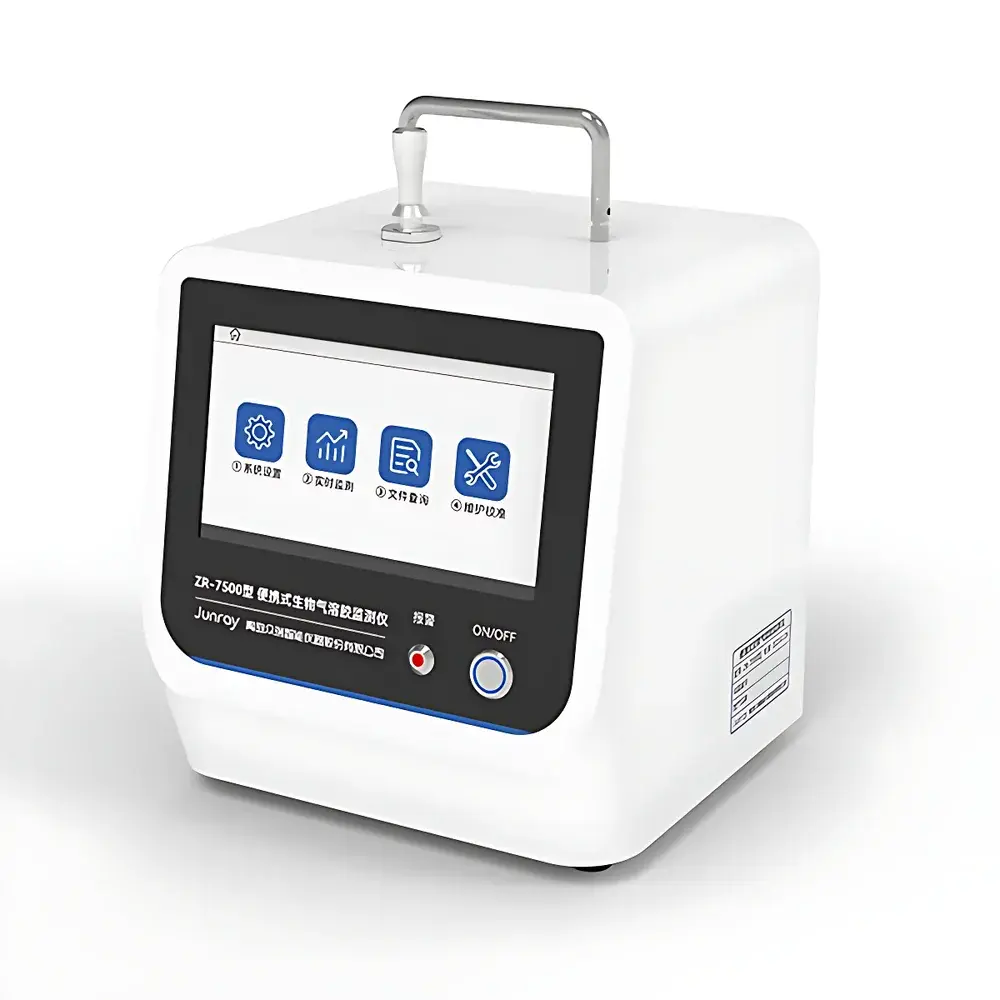
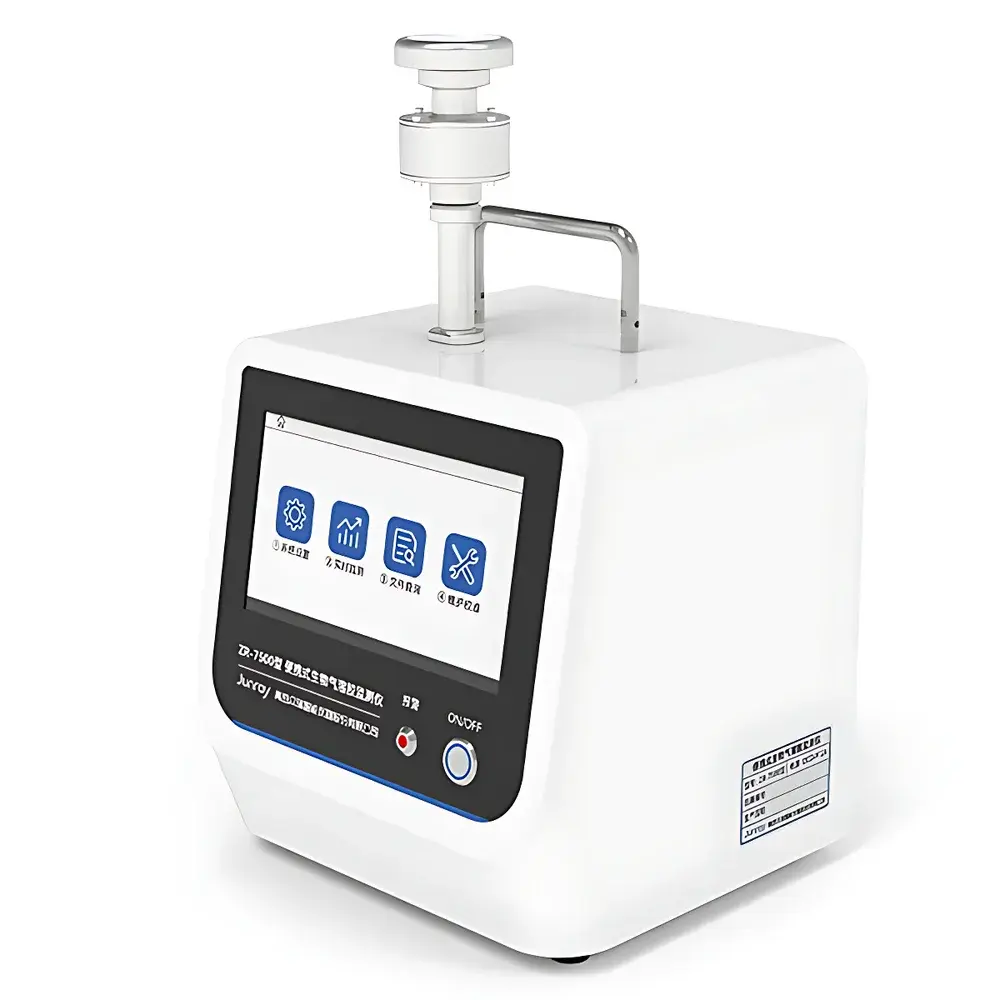
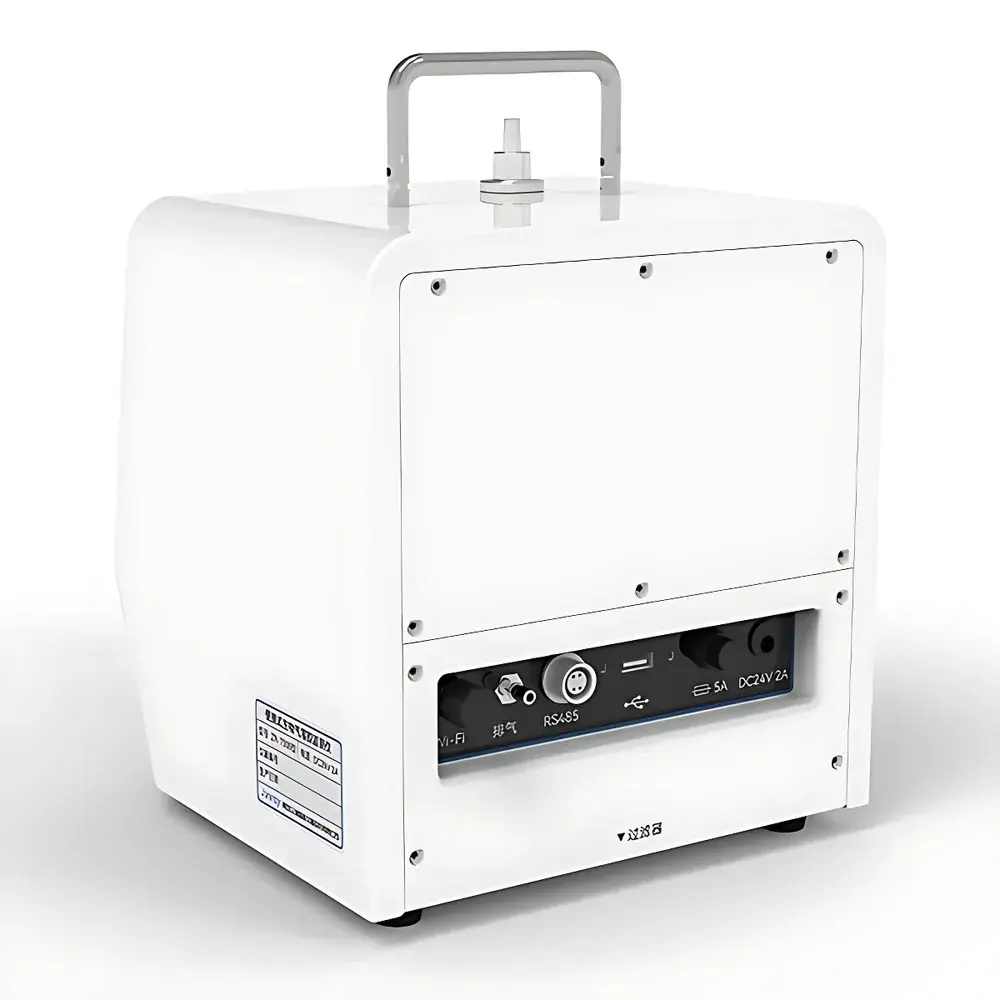
Junray ZR-7500 Portable Bioaerosol Monitor
| Brand | Junray |
|---|---|
| Origin | Shandong, China |
| Manufacturer Type | Direct Manufacturer |
| Instrument Type | Laboratory-Grade Portable Monitor |
| Detection Principle | Laser-Induced Fluorescence (LIF) |
| Sample Throughput | Continuous real-time sampling at 1.0 L/min |
| Fluorescence Excitation | 280 nm UV laser diode |
| Emission Detection Range | 300–600 nm (dual-channel spectral discrimination) |
| Alarm Output | Audible buzzer + visual LED indicator |
| Interface | 7-inch capacitive touchscreen with embedded control firmware |
| Data Logging | Internal SD card (up to 32 GB), timestamped CSV export |
| Power Supply | Rechargeable Li-ion battery (≥8 h operation) or AC adapter (100–240 VAC) |
Overview
The Junray ZR-7500 Portable Bioaerosol Monitor is a laboratory-grade, field-deployable instrument engineered for real-time detection and quantification of viable and non-viable biological particles in airborne samples. It operates on the principle of laser-induced fluorescence (LIF), leveraging the intrinsic fluorophores—primarily tryptophan, NAD(P)H, and riboflavin—naturally present in microbial cells (bacteria, fungal spores, viruses, and allergenic fragments). A 280 nm ultraviolet laser diode excites these endogenous biomolecules, generating characteristic fluorescence emission spectra between 300 nm and 600 nm. Dual-channel photodetector architecture enables spectral discrimination between biological and non-biological scatterers (e.g., dust, pollen, soot), significantly reducing false positives compared to single-wavelength or light-scattering-only approaches. Designed for continuous monitoring at 1.0 L/min volumetric flow rate, the ZR-7500 delivers second-scale response time and supports autonomous operation in controlled environments where rapid microbiological assessment is critical—such as cleanrooms, pharmaceutical isolators, food processing lines, hospital HVAC ducts, and public transportation hubs.
Key Features
- Real-time bioaerosol quantification without culture-based incubation—results available within seconds of particle aspiration
- Dual-channel fluorescence spectral analysis to differentiate biogenic signals from abiotic interferents (e.g., mineral dust, cellulose fibers, combustion aerosols)
- Configurable alarm thresholds with simultaneous audible (85 dB) and visual (multi-color LED ring) alerts upon exceedance of user-defined background baselines
- Integrated 7-inch capacitive touchscreen interface running embedded Linux firmware; supports touch-driven parameter adjustment, live histogram display, and historical trend review
- Onboard data logging with automatic timestamping (UTC-synchronized), storing up to 30 days of minute-averaged concentration data on removable SD card (up to 32 GB)
- Battery-powered portability: rechargeable lithium-ion pack enables ≥8 hours of continuous operation; also compatible with universal AC input (100–240 VAC, 50/60 Hz)
Sample Compatibility & Compliance
The ZR-7500 is validated for ambient and conditioned air streams across temperature ranges of 5–40 °C and relative humidity ≤85% non-condensing. It complies with ISO 14644-1 Class 5–8 cleanroom monitoring requirements when deployed in static or dynamic sampling configurations. While not a direct replacement for ISO 14698-1 microbiological risk assessment, its output serves as an early-warning surrogate metric aligned with EU GMP Annex 1 (2022) expectations for continuous environmental monitoring (CEM) of viable particle load. The instrument’s optical design avoids reliance on culturability, thus capturing both culturable and non-culturable (VBNC) microorganisms—a key advantage over traditional impactor-based methods. All firmware and data handling routines adhere to ALCOA+ principles (Attributable, Legible, Contemporaneous, Original, Accurate, Complete, Consistent, Enduring, Available) for audit readiness under GLP and GMP frameworks.
Software & Data Management
Data acquisition and visualization are managed through the embedded ZR-View™ firmware, supporting real-time scatter plots, time-series concentration graphs, and customizable alarm logs. Exported CSV files include columns for timestamp (ISO 8601), total fluorescent particle count (particles/m³), high/low channel intensity ratios, pump status, battery level, and alarm event flags. Optional PC-based ZR-Link™ desktop application (Windows 10/11) enables batch analysis, multi-instrument synchronization, and report generation compliant with FDA 21 CFR Part 11 requirements—including electronic signatures, audit trail logging, and role-based access control. Raw spectral data is preserved in HDF5 format for third-party spectral library matching or machine learning model training.
Applications
- Pharmaceutical manufacturing: continuous monitoring of Grade A/B cleanroom air during aseptic filling operations
- Food & beverage production: verification of air quality in packaging zones and cold storage facilities
- Healthcare infrastructure: early detection of airborne pathogen surges in operating theaters, isolation rooms, and emergency departments
- Public health surveillance: mobile deployment in airports, schools, and mass transit systems for outbreak preparedness
- Research laboratories: comparative studies of bioaerosol dynamics under varying ventilation regimes or disinfection protocols
- Environmental health assessments: baseline characterization of outdoor-to-indoor bioaerosol infiltration in urban buildings
FAQ
Does the ZR-7500 identify specific microbial species?
No—it provides real-time total bioaerosol concentration based on intrinsic fluorescence signatures. Species-level identification requires downstream sequencing or MALDI-TOF MS.
Can it distinguish between bacteria and fungal spores?
It differentiates broad classes using spectral ratio algorithms (e.g., tryptophan-to-NADH intensity ratio), but does not perform taxonomic classification.
Is calibration traceable to national standards?
Yes—factory calibration uses NIST-traceable polystyrene latex (PSL) microspheres and fluorescent reference aerosols (e.g., tyrosine-doped PSL); certificate provided with each unit.
What maintenance is required?
Annual optical alignment verification and quarterly inlet filter replacement; no consumables beyond standard HEPA pre-filters.
Is remote monitoring supported?
Via optional Ethernet/Wi-Fi module (ZR-Net add-on), enabling integration into BMS or SCADA platforms using Modbus TCP or HTTP API.
Related Products







