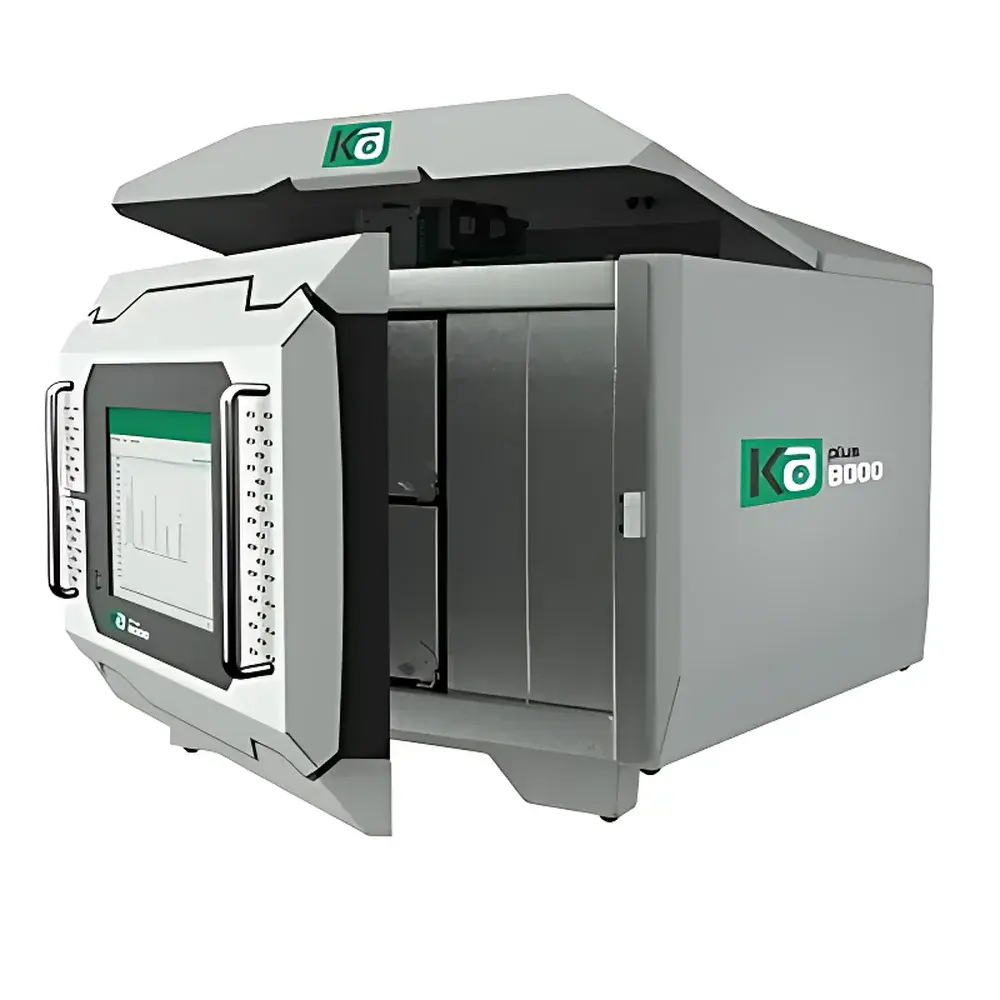
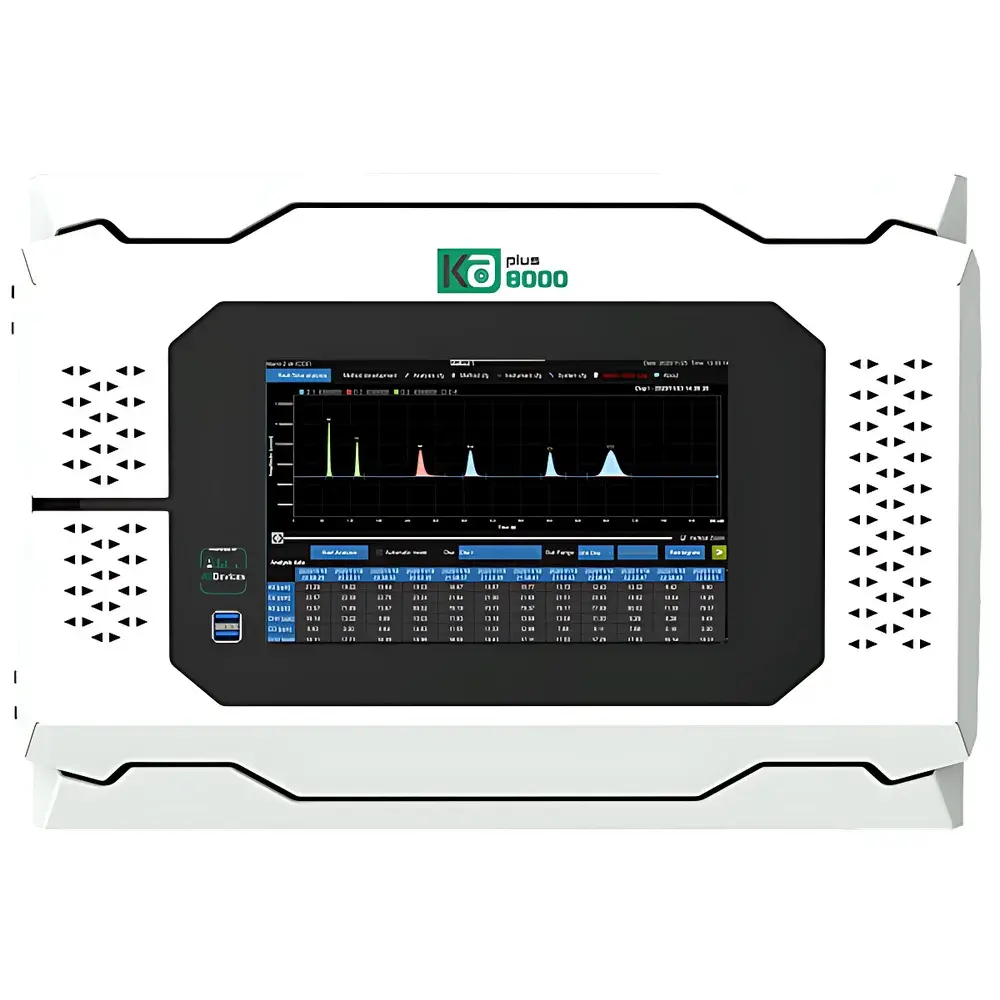
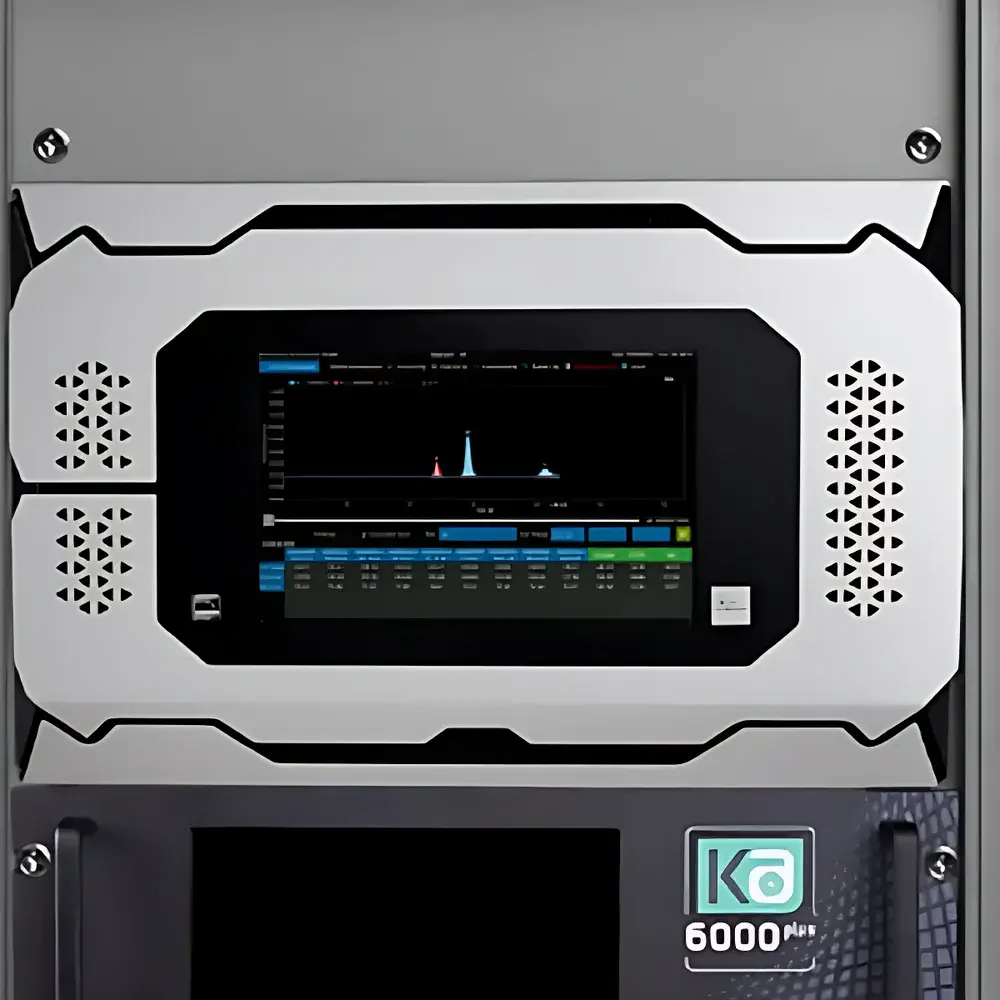
KA 8000Plus Online Gas Chromatograph
| Brand | KA |
|---|---|
| Origin | Canada |
| Model | KA 8000Plus |
| Repeatability | <1% RSD |
| Detection Limit | 0.5 ppb |
| Detector Type | Enhanced Plasma Discharge Detector (EPD) |
| Column Oven Temperature Range | –4 °C to 450 °C |
| Carrier Gas Requirement | Ultra-High-Purity Gases |
| Regulatory Status | Import-Class Industrial Instrument |
Overview
The KA 8000Plus Online Gas Chromatograph is a high-integrity, modular analytical platform engineered for continuous, unattended operation in demanding industrial process environments and regulated laboratory settings. Built upon a robust gas chromatographic architecture, it employs capillary or packed column separation coupled with real-time detection via the proprietary Enhanced Plasma Discharge Detector (EPD)—a patented technology validated by the China National Intellectual Property Administration. Unlike conventional flame-based or radioactive detectors, the EPD operates on stable, non-radioactive plasma excitation principles, enabling selective elemental emission spectroscopy across a broad spectral window (190–800 nm). This allows simultaneous multi-wavelength monitoring and quantitative analysis of volatile and semi-volatile organic compounds, permanent gases, sulfur- and nitrogen-containing species, halogenated hydrocarbons, and trace moisture—without requiring multiple detector configurations or column switching.
Key Features
- Modular, field-serviceable architecture designed for minimal downtime: all major subsystems—including oven, detector, injector, and gas control modules—are mechanically and thermally isolated, supporting hot-swap replacement without system purge or recalibration.
- Patented independently temperature-controlled column oven with ±0.1 °C stability over the full –4 °C to 450 °C operating range; includes dual-zone thermal profiling capability for complex gradient elution protocols.
- Electronic Pressure Control (EPC) with sub-mbar precision and dynamic flow compensation, eliminating mechanical regulators and ensuring retention time reproducibility across variable backpressure conditions.
- Liplock™ zero-dead-volume fitting system—certified leak-tight to <1×10⁻⁹ atm·mL/s helium—ensures chromatographic integrity during long-term unattended operation.
- Embedded digital signal processing platform with FPGA-accelerated peak deconvolution, baseline correction, and real-time spectral library matching (NIST-compatible).
- EPD detector with dual operational modes: Emission Mode (for absolute quantification of element-specific emissions) and Tracer Mode (for ultra-trace isotopic or labeled compound tracking); linear dynamic range spans 12 orders of magnitude (ppt to % v/v).
Sample Compatibility & Compliance
The KA 8000Plus accommodates gaseous, liquefied, and vaporized liquid samples delivered via standardized 1/8″ or 1/4″ stainless-steel tubing interfaces. It supports direct injection, loop injection, and automated multi-port valve sequencing for multi-stream process monitoring. Sample introduction is compatible with standard gas standards (NIST-traceable), certified reference materials (CRMs), and custom calibration blends. The instrument meets design requirements for Class I Div 1 hazardous area installations (optional ATEX/IECEx certification available). Its firmware and data handling architecture support compliance with FDA 21 CFR Part 11 (electronic records/signatures), ISO/IEC 17025:2017 (testing laboratories), ASTM D1945, D1946, D3588, and USP <621> for chromatographic method validation. Audit trails, user access controls, and electronic signature workflows are fully configurable.
Software & Data Management
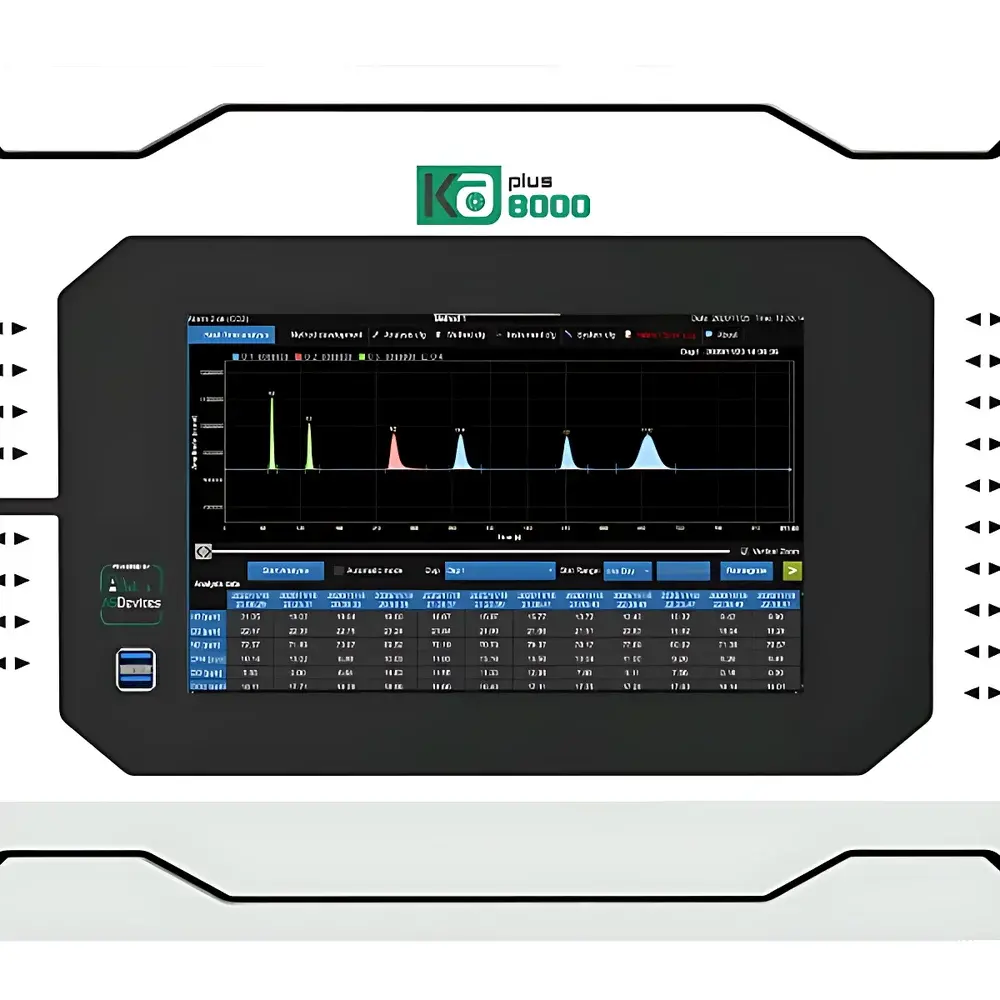
The KA ChromaSuite™ software suite provides integrated instrument control, method development, real-time chromatogram visualization, and automated report generation. It features a role-based permission system aligned with GLP/GMP practices, including electronic lab notebook (ELN) integration via OPC UA and secure SQL database logging. All raw chromatographic data—including full EPD spectral snapshots, pressure/temperature logs, and valve timing sequences—are stored in vendor-neutral HDF5 format with embedded metadata (timestamp, operator ID, method version, calibration status). Remote diagnostics, predictive maintenance alerts, and over-the-air firmware updates are supported through TLS 1.3–secured cloud gateway (on-premise deployment optional).
Applications
- Semiconductor manufacturing: real-time monitoring of ultra-high-purity electronic specialty gases (e.g., NF3, SiH4, BCl3) for ppq-level impurities (O2, H2O, CO, CO2, total hydrocarbons).
- Air separation units (ASUs): continuous analysis of oxygen/nitrogen/argon purity, hydrocarbon dewpoint safety verification, and acetylene breakthrough detection.
- Natural gas & petrochemical streams: compositional analysis per GPA 2145/GPA 2172, Wobbe index calculation, sulfur speciation (H2S, COS, mercaptans), and BTX quantification.
- Environmental monitoring: EPA Method TO-15/TO-17 compliant ambient air analysis for VOCs, benzene/toluene/ethylbenzene/xylene (BTEX), and ozone precursors.
- Food & tobacco: headspace analysis of residual solvents (e.g., ethylene oxide, chloromethane), flavor volatiles, and off-odor compounds at sub-ppb levels.
FAQ
What makes the EPD fundamentally different from traditional GC detectors?
The EPD generates analyte-specific atomic/molecular emission spectra via low-power, stabilized plasma discharge—eliminating combustion flames, radioactive sources, or photomultiplier tubes. Its spectral selectivity enables compound identification independent of retention time, improving confidence in complex matrices.
Can the KA 8000Plus operate in explosion-hazardous areas?
Yes—when equipped with optional ATEX Zone 1 or IECEx Ex d/ib IIB T4 certified enclosures and intrinsically safe gas supply modules.
Is method transfer from legacy GC systems supported?
ChromaSuite includes a retention time alignment engine and column characterization database that facilitates migration of ASTM, ISO, or internal methods with <±0.5% retention shift verification.
How is calibration traceability maintained?
Integrated calibration gas management logs cylinder lot numbers, expiration dates, and gravimetric composition certificates; all calibrations are linked to NIST SRM references and archived with full uncertainty budgets.
What maintenance intervals are recommended for unattended operation?
Plasma electrode cleaning every 6 months; column bake-out every 3 months; EPD quartz window inspection quarterly; full system performance qualification (SPQ) annually per ISO/IEC 17025 Annex A.3.