
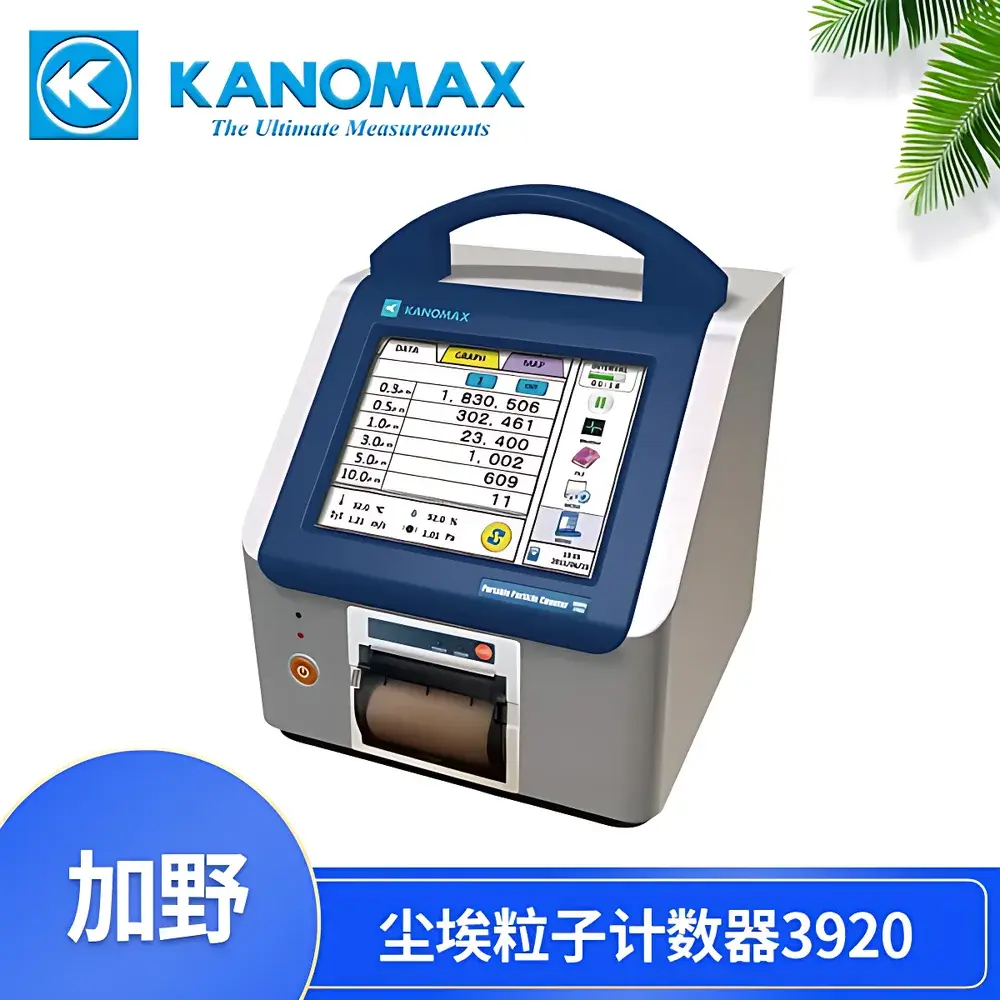
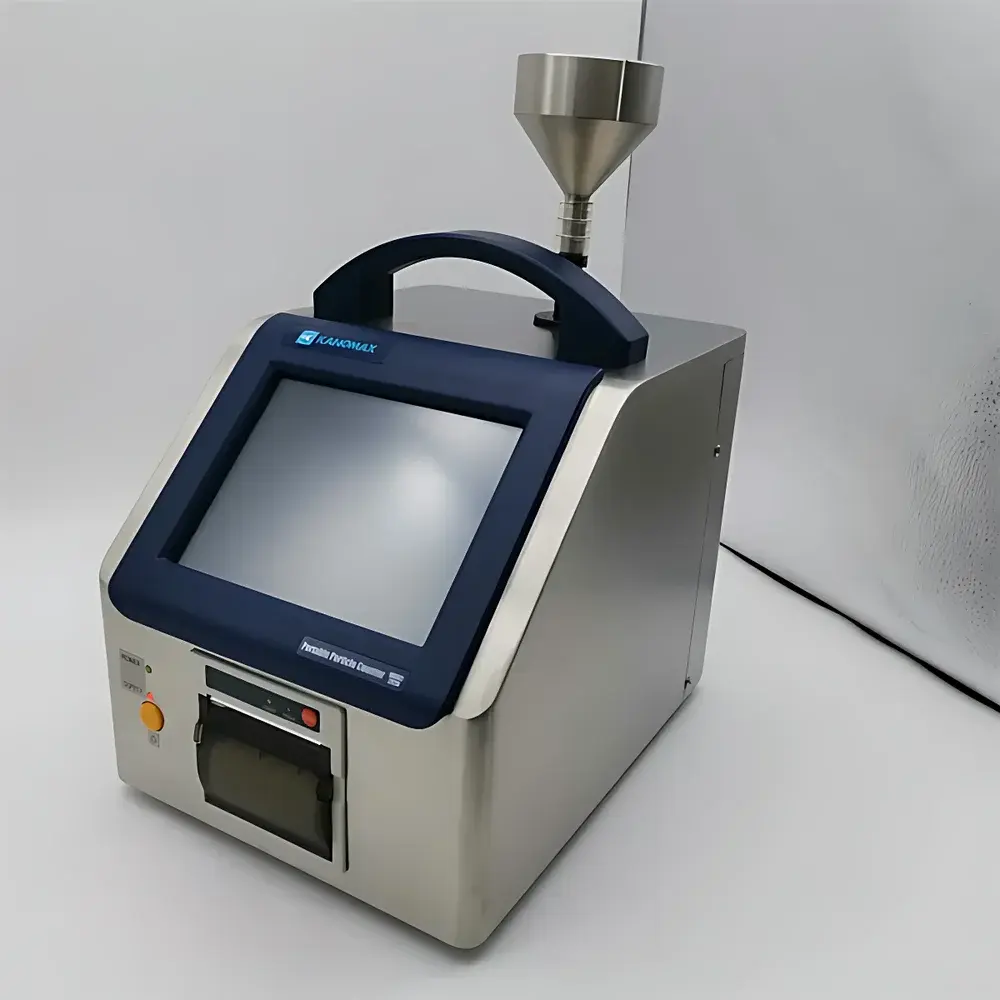
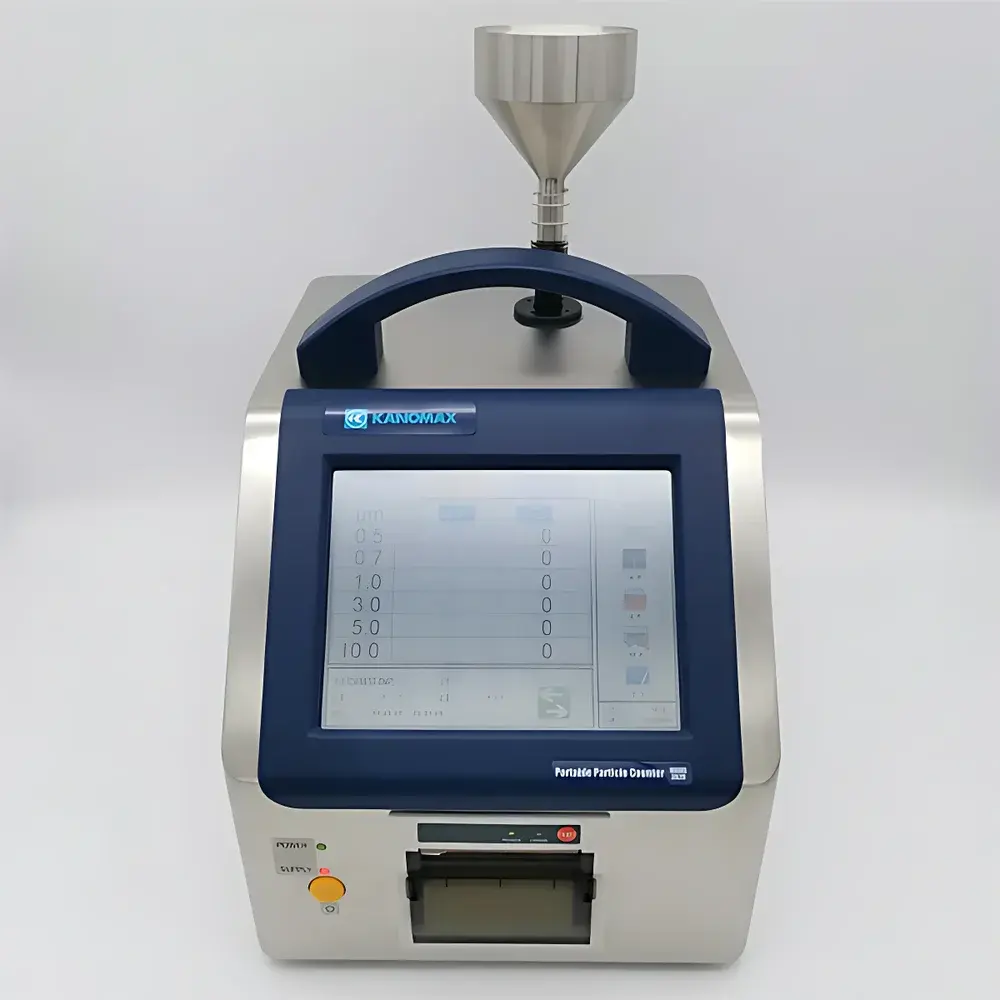
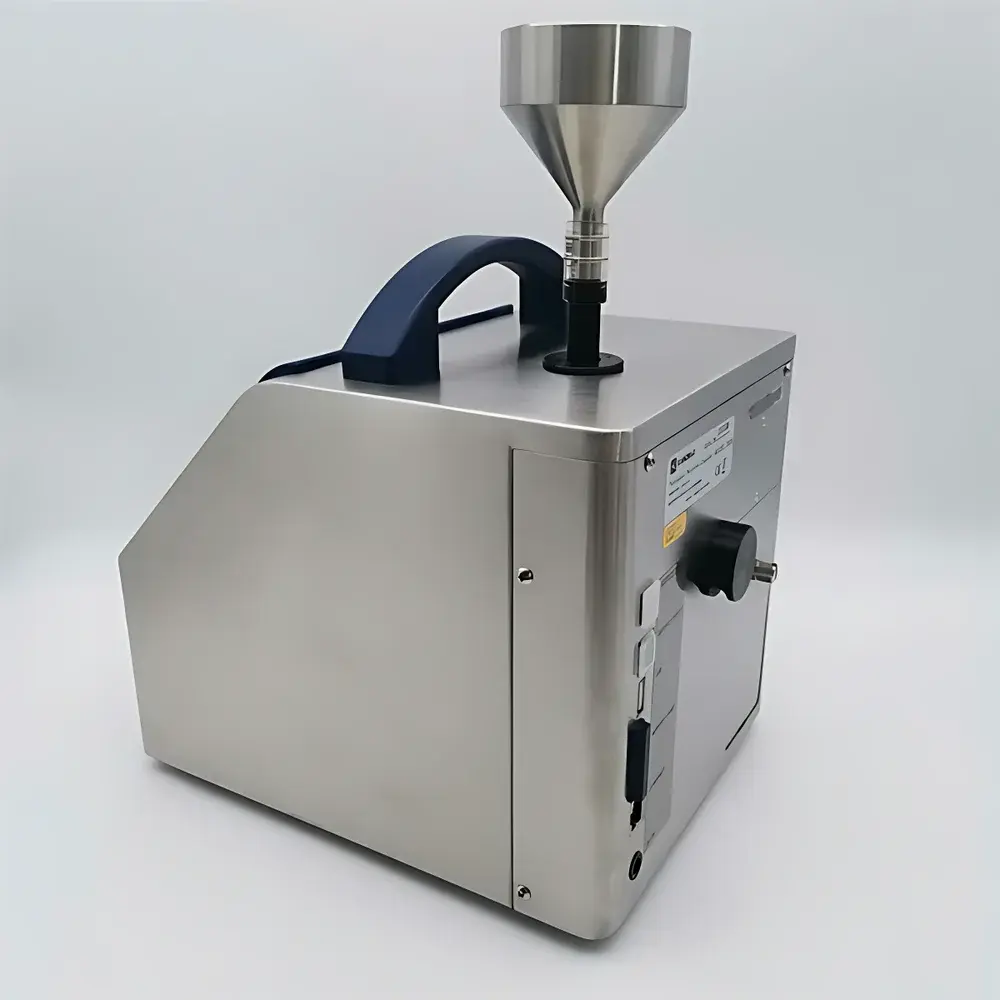
Kanomax 3920+ High-Flow Airborne Particle Counter (100 L/min)
| Brand | Kanomax |
|---|---|
| Origin | Japan |
| Model | 3920+ |
| Flow Rate | 100 L/min |
| Flow Accuracy | < ±1 particle/5 min |
| Timing Error | < ±30% FS |
| Repeatability | ≤ ±10% FS |
| Size Distribution Error | ≤ ±30% |
| Indication Error | < ±30% FS |
| Particle Sizing Channels | 0.5, 0.7, 1.0, 3.0, 5.0, 10.0 µm |
| Counting Efficiency | 50 ± 20% @ 0.5 µm (ISO 21501-4 compliant) |
| Max Concentration | 300,000 particles/ft³ |
| Size Resolution | < 15% @ 0.5 µm (ISO 21501-4) |
| Zero Count | Compliant with JIS B 9921 |
| Data Storage | 10,000 measurement records with geotagging (map code) |
| Compliance | ISO 14644-1:2015, ISO 14644-2:2015, EU GMP Annex 1 (2022), USP <788>, FDA 21 CFR Part 11 (audit trail, electronic signature, user access control), GB/T 16292–2010, GB 50333–2013 |
Overview
The Kanomax 3920+ is a high-precision, 100 L/min airborne particle counter engineered for rigorous environmental monitoring in regulated cleanroom and controlled environments. Utilizing a calibrated laser diode light source and optimized optical sensing geometry, it detects and classifies particles via light scattering principles in accordance with ISO 21501-4. Its high volumetric sampling rate enables statistically robust particle concentration measurements within short acquisition times—critical for rapid qualification of ISO Class 3–8 cleanrooms per ISO 14644-1:2015 and EU GMP Annex 1 (2022). Designed for pharmaceutical manufacturing, biotechnology facilities, semiconductor fabrication, and medical device assembly, the 3920+ delivers traceable, repeatable data required for compliance-driven validation protocols and routine environmental monitoring programs.
Key Features
- 100 L/min high-flow sampling—reduces measurement time by up to 3.5× compared to standard 28.3 L/min instruments, improving throughput during cleanroom certification and filter leak testing.
- Six simultaneous particle size channels (0.5, 0.7, 1.0, 3.0, 5.0, and 10.0 µm) with configurable thresholds; supports user-defined sizing bins within 0.5–10.0 µm range per ISO 21501-4 calibration traceability.
- Integrated thermal printer for real-time, timestamped hardcopy output—fully compliant with 21 CFR Part 11 requirements when paired with instrument-generated audit logs.
- 6.4-inch full-color capacitive touchscreen interface with intuitive navigation, bilingual (English/Chinese) display, and context-sensitive error prompts.
- Dual hot-swappable lithium-ion battery modules enabling >4 hours continuous operation—ideal for extended mapping surveys or mobile applications across multi-zone facilities.
- Stainless steel housing (AISI 304) with IP54-rated ingress protection; designed for durability in cleanroom gowning rooms, pass-through chambers, and production floor environments.
- Ethernet and USB 2.0 interfaces support remote configuration, live data streaming, and secure firmware updates via local network or isolated lab LAN.
Sample Compatibility & Compliance
The 3920+ is validated for use with isokinetic sampling probes and conductive polyurethane tubing (2 m standard length) to maintain representative aerosol transport without electrostatic deposition loss. It meets critical regulatory and industry standards including ISO 14644-1:2015 (cleanroom classification), ISO 14644-2:2015 (monitoring requirements), EU GMP Annex 1 (2022) for sterile manufacturing, USP for particulate matter in injectables, and GB/T 16292–2010 for pharmaceutical cleanroom testing. Its firmware implements full 21 CFR Part 11 functionality—including role-based user authentication, immutable audit trails, electronic signatures, and tamper-evident data encryption—ensuring data integrity for FDA, EMA, and NMPA inspections. All calibrations are traceable to NIST-traceable reference aerosols and certified by Kanomax Japan’s ISO/IEC 17025 accredited calibration laboratory.
Software & Data Management
Data acquisition, analysis, and reporting are managed through Kanomax’s proprietary CleanView™ PC software (included), which supports automated report generation in PDF and CSV formats compliant with ALCOA+ principles (Attributable, Legible, Contemporaneous, Original, Accurate, Complete, Consistent, Enduring, Available). Each stored record (up to 10,000 entries) includes embedded metadata: GPS-derived map code (for spatial referencing on facility floor plans), operator ID, sampling location tag, environmental sensor inputs (optional temp/RH/pressure), and instrument status flags. External storage via USB mass storage mode allows secure export to air-gapped systems. Audit logs capture all configuration changes, user logins, calibration events, and print actions—with timestamps synchronized to NTP servers over Ethernet.
Applications
- Cleanroom classification and routine monitoring per ISO 14644-1, supporting qualification of Grade A–D environments in pharmaceutical aseptic processing.
- HEPA and ULPA filter integrity testing using upstream challenge and downstream scanning protocols (e.g., EN 1822-4, IEST-RP-CC034.3).
- Environmental monitoring in isolators, RABS, and laminar flow hoods during process simulation and media fill studies.
- Particle source identification and dispersion analysis in semiconductor fab tool exhausts and microelectronics packaging lines.
- Validation of HVAC system performance during commissioning, recommissioning, and periodic requalification.
- Research-grade airborne particulate characterization in aerospace clean assembly bays and precision optics laboratories.
FAQ
Does the 3920+ support 21 CFR Part 11-compliant electronic signatures and audit trails?
Yes—the instrument firmware and CleanView™ software implement full Part 11 functionality, including user authentication, electronic signatures with biometric or token-based options, and immutable audit logs with hash-verified data integrity.
Can the 3920+ be used for ISO Class 3 (Class 1) cleanroom certification?
Yes—its 100 L/min flow rate and low counting uncertainty (<±10% repeatability) meet statistical sampling requirements defined in ISO 14644-1:2015 Annex B for ultra-low-concentration environments.
Is external temperature/humidity/pressure sensing integrated or optional?
Environmental sensors (air velocity, temperature, relative humidity, differential pressure) are optional add-ons via RS-485 or analog input modules—fully supported in CleanView™ for correlated environmental trending.
What is the calibration interval recommendation and traceability basis?
Kanomax recommends annual recalibration at an ISO/IEC 17025-accredited laboratory; factory calibration uses PSL reference particles traceable to NIST SRM 1963 and ISO 21501-4 test protocols.
How is data security ensured during network transmission?
Ethernet communication employs TLS 1.2 encryption for remote control and data transfer; local USB exports are signed with SHA-256 digital signatures to prevent unauthorized modification.







