
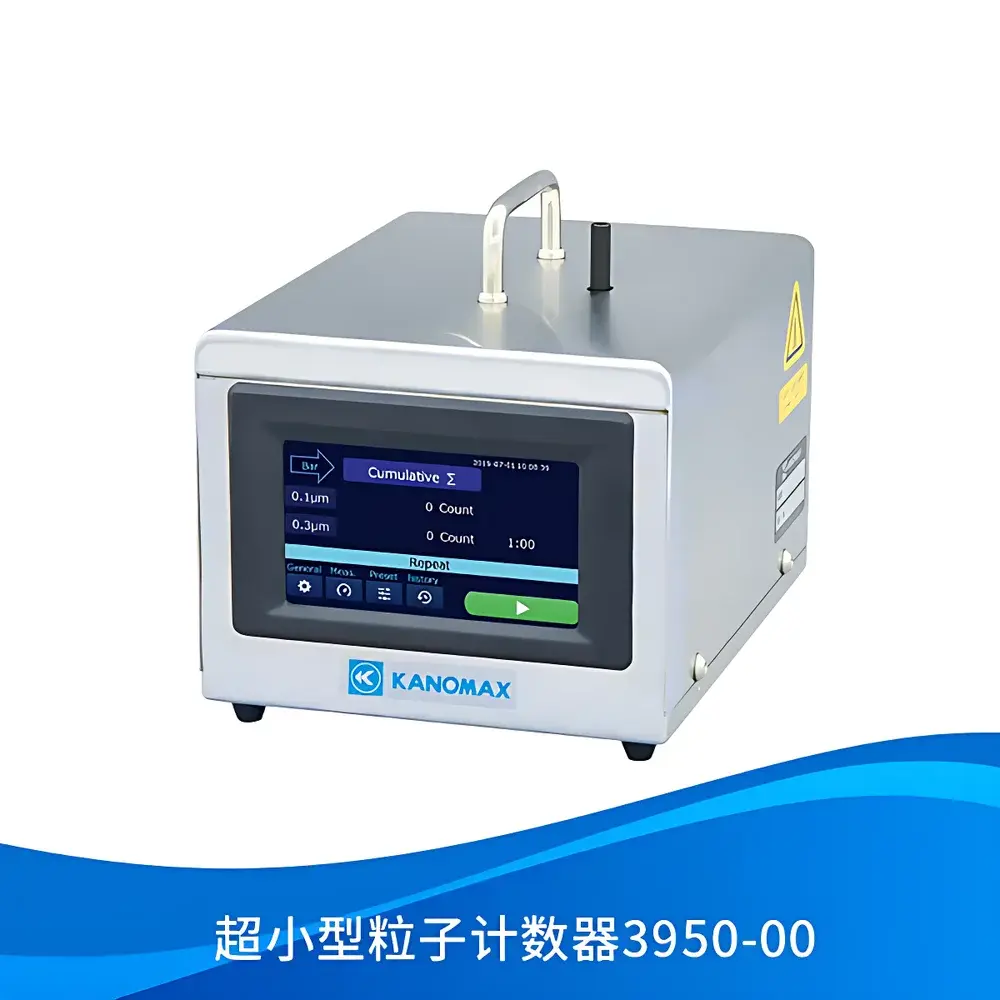
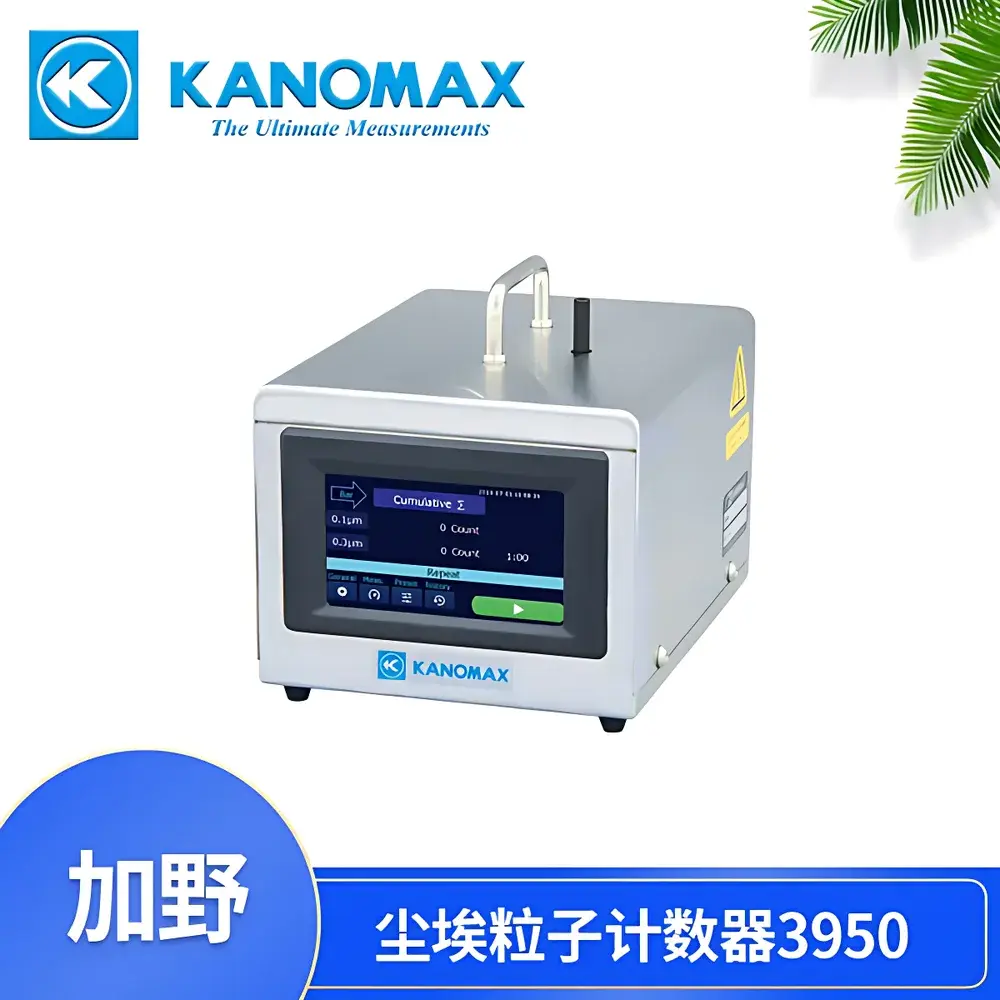
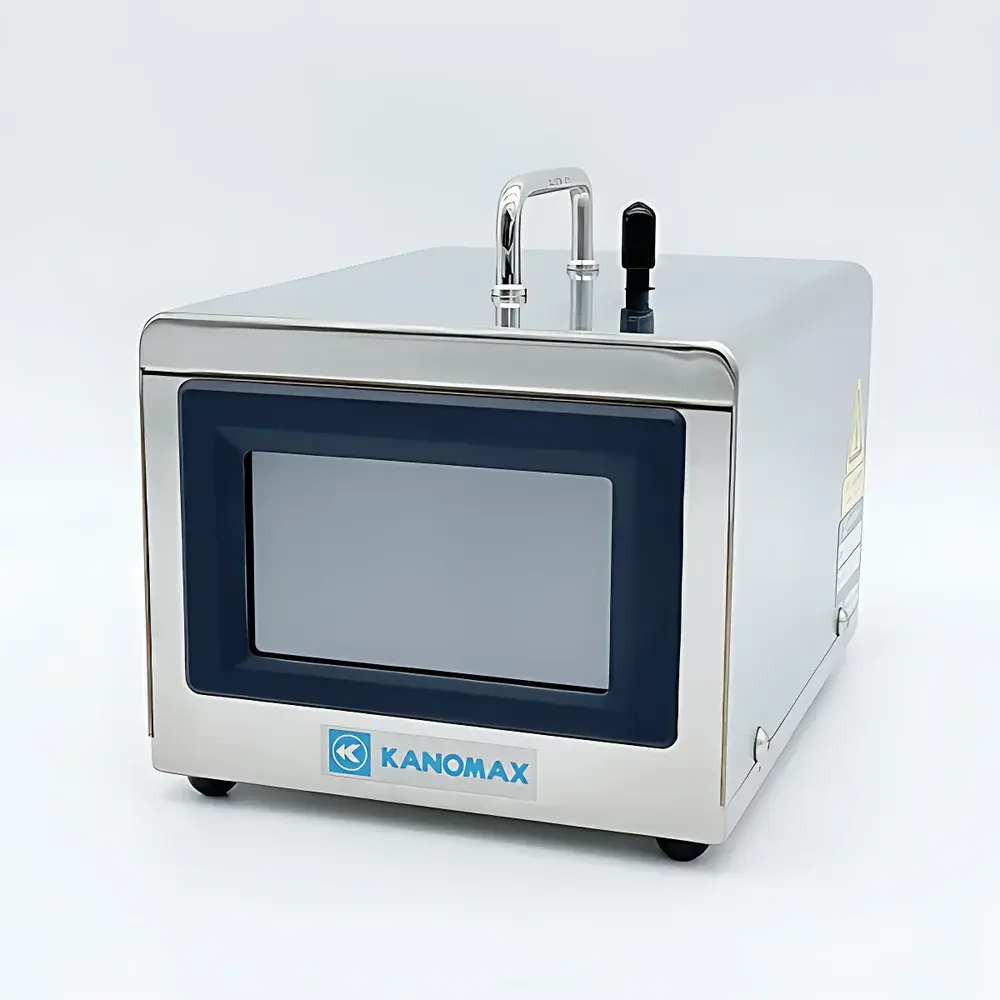
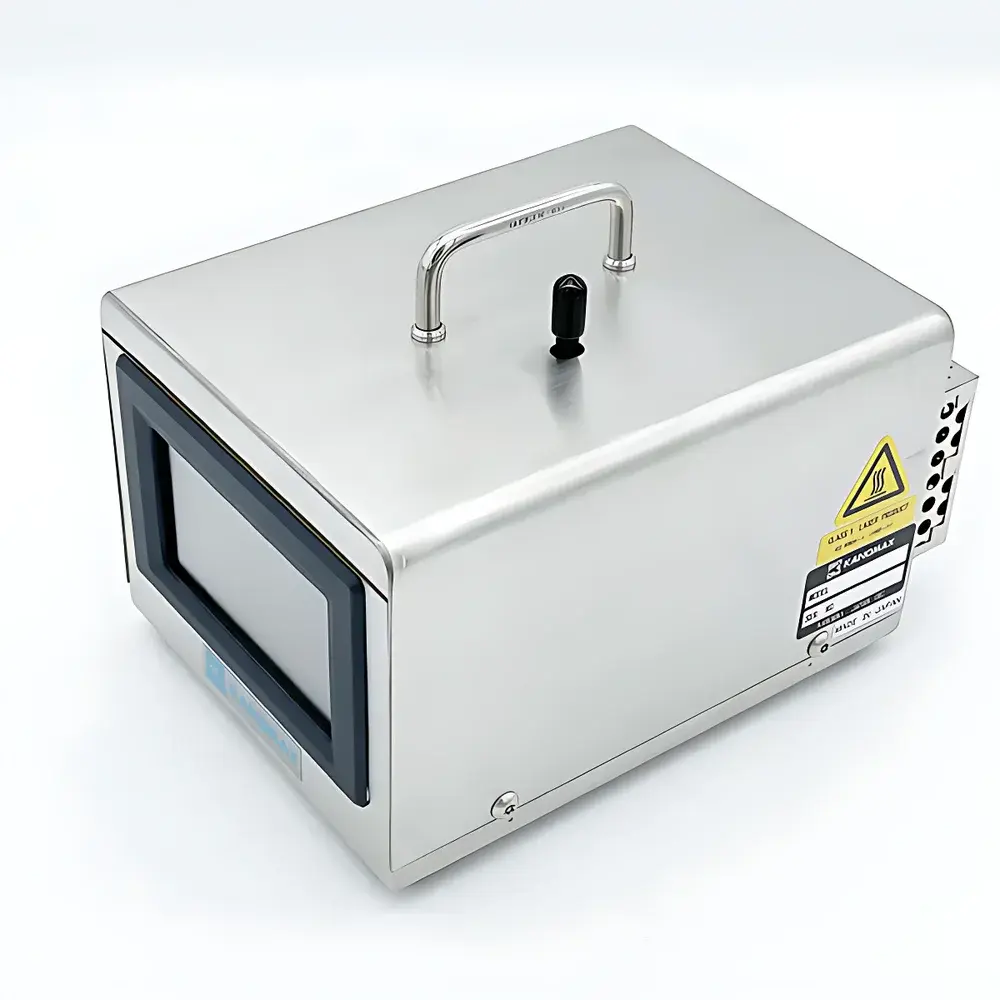
KANOMAX 3950-00 Ultra-High-Sensitivity 0.1 µm Particle Counter for Semiconductor Cleanroom Monitoring
| Brand | KANOMAX |
|---|---|
| Origin | Japan |
| Model | 3950-00 |
| Flow Rate | 2.83 L/min (0.1 CFM) |
| Flow Accuracy | ±5% |
| Timing Accuracy | ±1 s per 6 min |
| Repeatability | ±5% |
| Size Distribution Error | ±15% |
| Indication Error | ±30% |
| Particle Detection Channels | 0.1 µm and 0.3 µm |
| Counting Efficiency | 50 ± 20% at 0.1 µm (PSL), 100 ± 10% at 0.15–0.2 µm (PSL) |
| Maximum Concentration | 10⁷ particles/m³ |
| False Count Rate | <1 count per 35 min |
| Size Resolution | ≤15% (relative to 0.3 µm PSL) |
| Display | 4.3″ color TFT touchscreen |
| Communication | USB (Host/Device), Ethernet, RS-485 (9600–38400 baud) |
| Data Storage | up to 10,000 records in CSV format |
| Operating Environment | 15–35 °C, 0–85% RH (non-condensing) |
| Dimensions | 150 × 163 × 228 mm |
| Weight | 3.4 kg |
| Compliance | JIS B9921, ISO 21501-4 |
Overview
The KANOMAX 3950-00 is an ultra-compact, high-sensitivity optical particle counter engineered specifically for real-time airborne particulate monitoring in semiconductor-grade clean environments. It employs single-particle light scattering (SPLS) detection with a high-efficiency laser diode and precision photodetector assembly optimized for sub-0.2 µm resolution. Unlike conventional 0.3 µm–focused counters, the 3950-00 achieves reliable detection down to 0.1 µm using calibrated polystyrene latex (PSL) reference standards and advanced signal discrimination algorithms—enabling early identification of process-critical nanoparticles generated during photolithography, etching, and wafer handling. Its 2.83 L/min (0.1 CFM) volumetric flow rate meets ISO 21501-4 and JIS B9921 requirements for laboratory and embedded sensor applications, while its compact footprint (150 × 163 × 228 mm) and 3.4 kg mass allow seamless integration into track-in systems, mini-environments, FOUP load ports, and tool-integrated environmental monitoring (IEM) architectures.
Key Features
- True dual-channel detection at 0.1 µm and 0.3 µm—critical for distinguishing nucleation-mode contaminants from agglomerates in EUV lithography zones
- 4.3″ full-color resistive touchscreen interface with intuitive icon-driven navigation and real-time histogram visualization
- Embedded sampling pump with ±5% flow accuracy across operating temperature and pressure ranges; no external vacuum source required
- Configurable measurement modes: single-shot, repetitive, continuous, differential (∆), cumulative (∑), and ISO/GB-compliant reporting sequences
- On-device data logging (up to 10,000 records in CSV) with timestamped location tagging (99 predefined site IDs)
- Industrial-grade communication suite: isolated RS-485 (Modbus RTU compatible), 10/100 Mbps Ethernet (TCP/IP), and dual-role USB (printer/storage host + PC device)
- Robust mechanical architecture rated for continuous operation in Class 1–Class 10 cleanrooms (ISO 14644-1); conformal-coated PCBs and sealed optical chamber
Sample Compatibility & Compliance
The 3950-00 is validated for use with ambient air, nitrogen-purged tool exhaust streams, and dry compressed air lines common in front-end semiconductor fabrication. It complies with ISO 21501-4:2018 for light-scattering airborne particle counters—including mandatory calibration traceability to NIST-traceable PSL standards, size resolution verification (≤15% CV at 0.3 µm), and false count validation (<1 count per 35 minutes). JIS B9921 certification confirms performance equivalence for Japanese fab qualification protocols. The instrument supports GLP/GMP-aligned audit trails when connected via Ethernet to centralized monitoring platforms compliant with FDA 21 CFR Part 11 (electronic signatures, user access controls, and immutable record retention).
Software & Data Management
KANOMAX provides optional PC-based configuration and analysis software (KANOMAX ParticleView™) supporting real-time remote monitoring, automated report generation (PDF/CSV), and trend analysis with configurable alarm thresholds per channel and location. All communication interfaces support standard industrial protocols: Modbus RTU over RS-485 for PLC integration, HTTP/RESTful API over Ethernet for MES/SCADA ingestion, and USB CDC ACM for direct serial emulation. Data files include full metrological metadata—flow rate, temperature, humidity, pump status, and calibration expiration date—ensuring full traceability under ISO/IEC 17025 quality systems.
Applications
- In-situ monitoring of photomask storage cabinets and reticle inspection tools
- Real-time feedback control of ULPA filter integrity in mini-environments (e.g., SMIF pods, EFEMs)
- Tool-specific particle baseline establishment prior to chamber maintenance or recipe changes
- Validation of chemical vapor deposition (CVD) and atomic layer deposition (ALD) purge efficiency
- Supporting ISO 14644-2 surveillance testing and contamination control plans (CCPs) per SEMI S2/S8
- Integration into automated material handling systems (AMHS) for dynamic cleanroom zoning
FAQ
What is the minimum detectable particle size, and how is it verified?
The 3950-00 is calibrated and verified to detect particles ≥0.1 µm using NIST-traceable PSL standards per ISO 21501-4 Annex B. Counting efficiency is specified as 50 ± 20% at 0.1 µm and 100 ± 10% at 0.15–0.2 µm.
Can this unit operate continuously in a Class 1 cleanroom?
Yes—the housing meets IP52 ingress protection, internal components are conformally coated, and thermal management ensures stable operation at 15–35 °C and ≤85% RH without condensation.
Does the device support automated data export to a central LIMS or MES platform?
Yes—via Ethernet using TCP/IP socket communication or Modbus TCP; preconfigured templates are available for Siemens Desigo, Rockwell FactoryTalk, and Thermo Fisher SampleManager integrations.
Is calibration certificate included with shipment?
Each unit ships with a factory calibration report traceable to JCSS-accredited laboratories; optional annual recalibration services are available with ISO/IEC 17025-certified certificates.
How is pump performance maintained over time in high-dust environments?
The integrated diaphragm pump features a replaceable inlet filter and self-diagnostic flow monitoring; drift compensation algorithms adjust counting logic based on real-time flow telemetry.







