
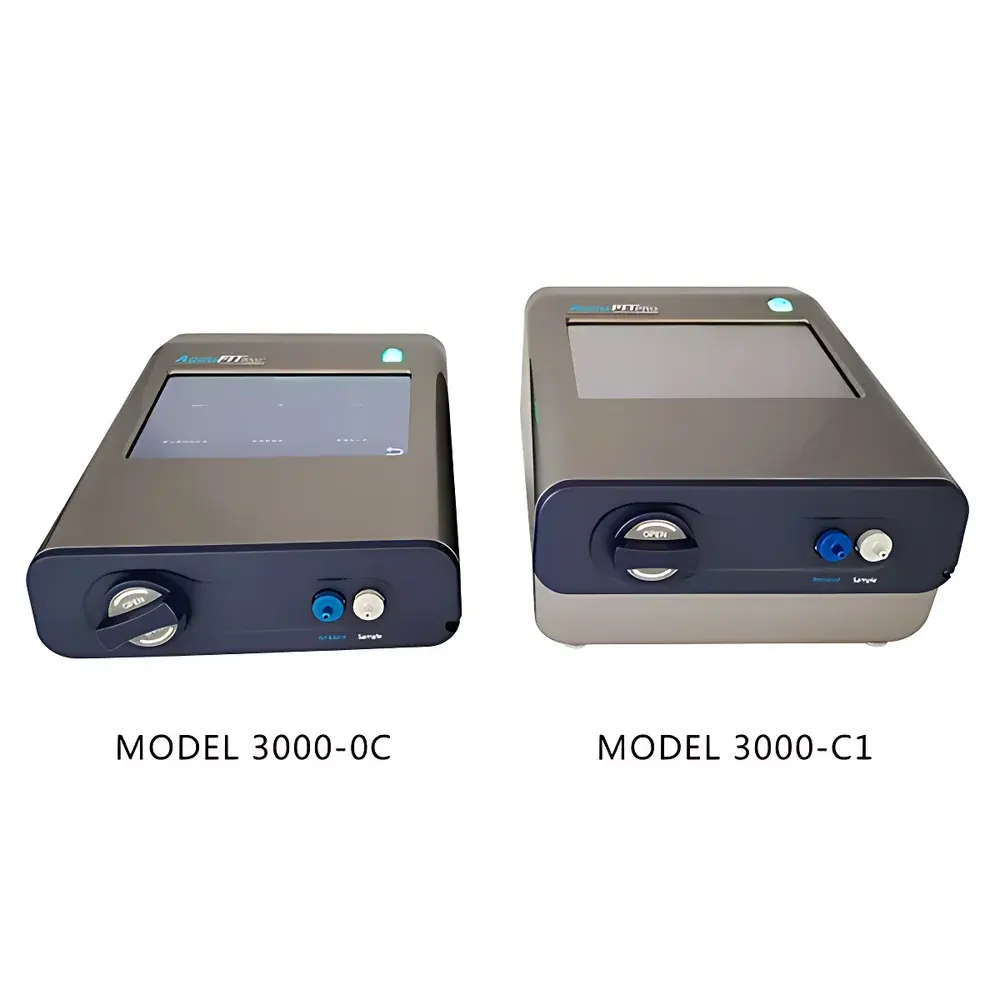
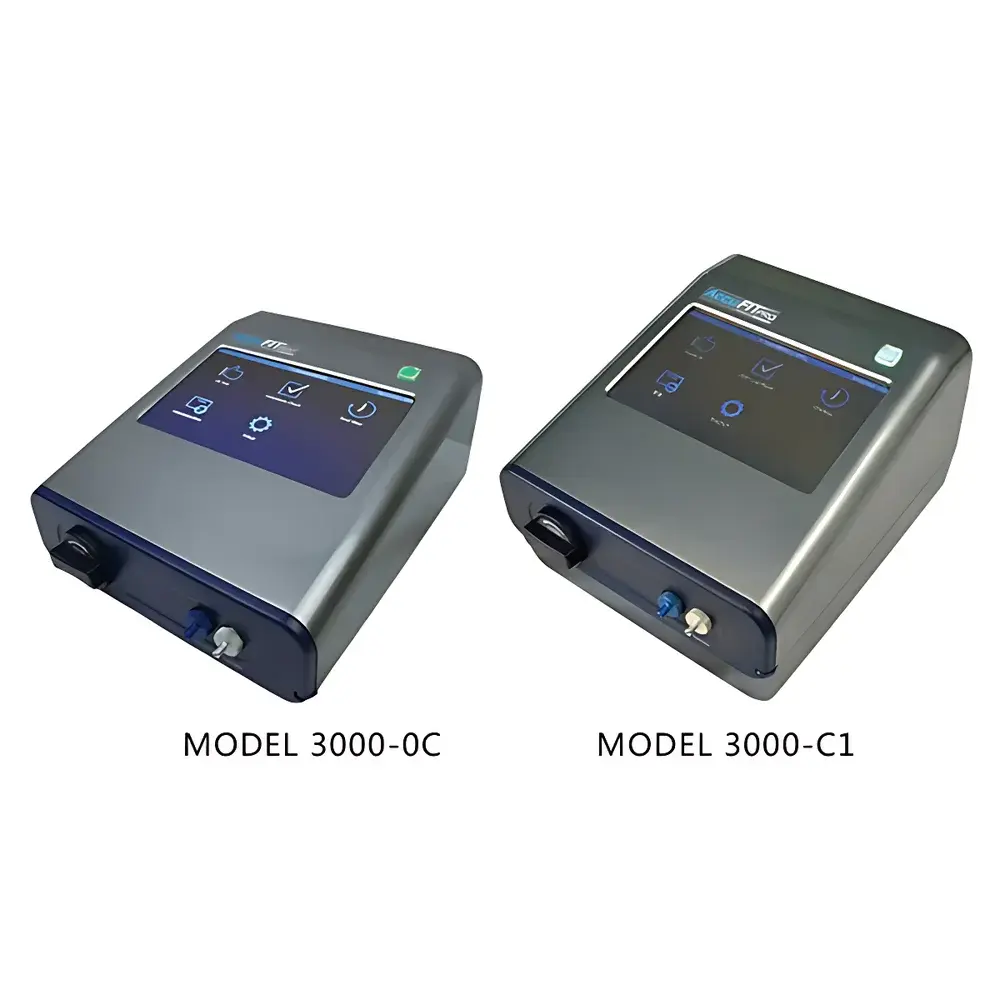
Kanomax AccuFIT 9000 Respirator Fit Tester (Models 3000-0C & 3000-C1)
| Brand | Kanomax |
|---|---|
| Origin | Japan |
| Model | 3000-0C, 3000-C1 |
| Particle Size Range | 0.02–1.0 µm (3000-0C), 0.015–1.0 µm (3000-C1) |
| Sampling Flow Rate | 100 cm³/min |
| Total Flow Rate | 700 cm³/min |
| Concentration Range | 0–100,000 particles/cm³ |
| Fit Factor Calculation | Direct Cout/Cin ratio |
| Test Agent | ≥99.5% isopropanol or ethanol |
| Display | 7-inch full-color touchscreen |
| Operating Temperature | 10–35 °C |
| Relative Humidity | 20–85% RH (non-condensing) |
| Power Supply | AC 110–240 V, 50/60 Hz |
| Dimensions (W×H×D) | 208×117×262 mm (3000-0C), 208×152×263 mm (3000-C1) |
| Weight | 2.3 kg (3000-0C), 3.1 kg (3000-C1) |
| Compliance Standards | OSHA 1910.134, CSA Z94.4, ANSI/AIHA Z88.10, HSE INDG 479, GB 19083–2010, GB 2626–2019, GB/T 32610–2016 |
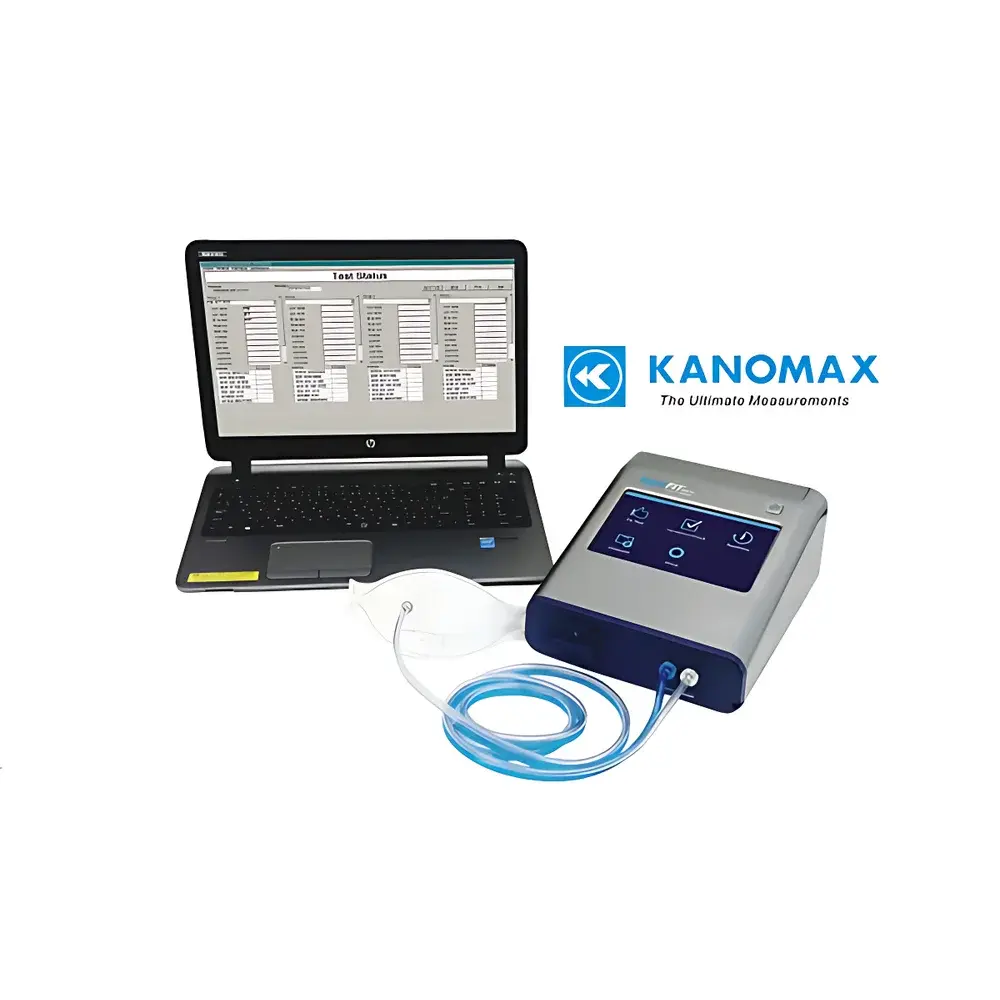
| Software | Windows 7/8/10, .NET Framework 3.5, Excel-compatible reporting |
| Communication | USB, Ethernet, Wi-Fi |
| Multi-unit Control | Up to 4 units per PC |
Overview
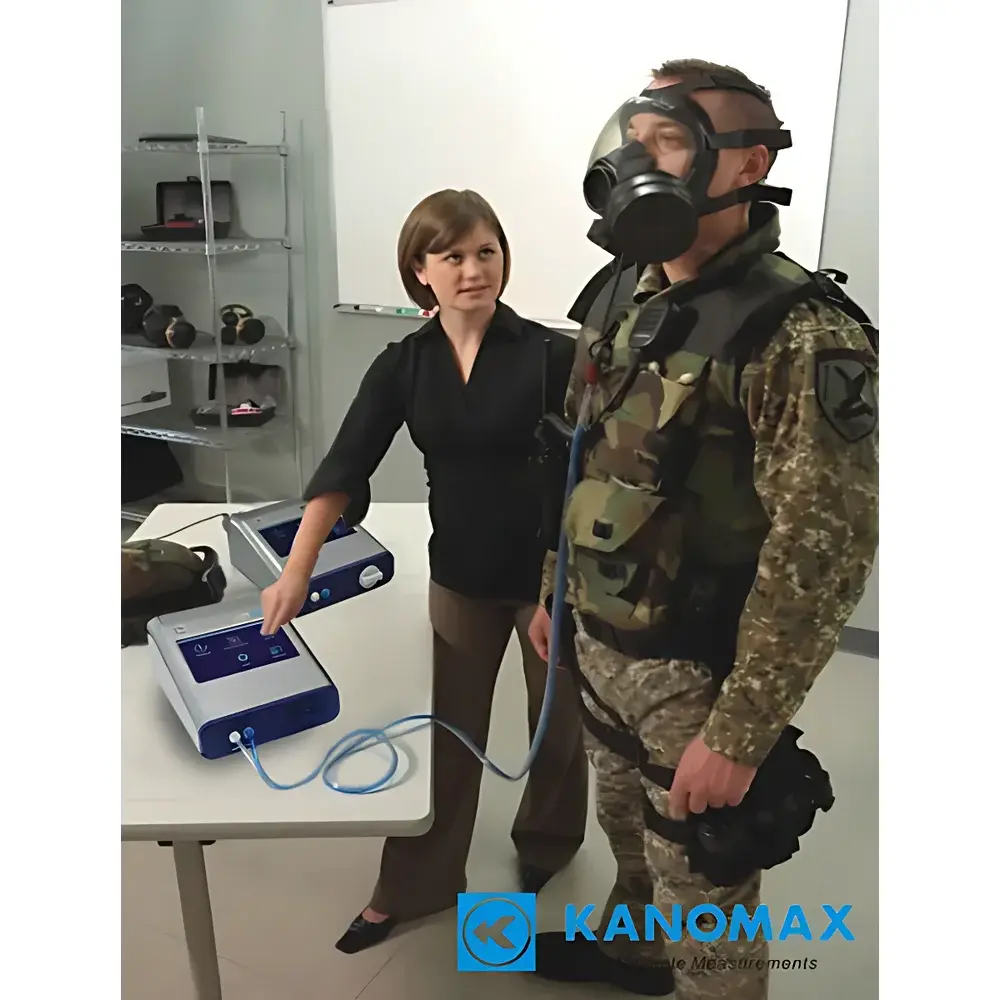
The Kanomax AccuFIT 9000 Respirator Fit Tester (Models 3000-0C and 3000-C1) is a quantitative, condensation particle counter (CPC)-based instrument engineered for precise, real-time assessment of respirator facepiece fit in occupational health and clinical safety environments. Unlike qualitative methods relying on subjective sensory detection (e.g., saccharin or Bitrex® challenge agents), the AccuFIT 9000 employs ultrafine aerosol generation and high-sensitivity CPC detection to quantify the inward leakage ratio (Cin/Cout)—enabling objective calculation of the Fit Factor (FF). The principle rests on generating a stable, monodisperse challenge aerosol (0.015–1.0 µm) upstream of the respirator, then simultaneously measuring ambient particle concentration (Cout) and intramask concentration (Cin) via dual sampling ports. The resulting FF = Cout/Cin provides traceable, auditable numerical evidence of seal integrity—critical for regulatory compliance and worker protection validation.
Key Features
- Quantitative fit testing based on condensation particle counting (CPC) technology with sub-20 nm lower detection limit (3000-C1) and dynamic range up to 100,000 particles/cm³.
- Dedicated N95 test mode compliant with NIOSH 42 CFR Part 84 criteria; additionally supports DS2, DL2, RS2, RL2, and custom protocol configurations aligned with OSHA, CSA, and ANSI/AIHA standards.
- Integrated 7-inch full-color resistive touchscreen with six-language UI (English, Japanese, Chinese, French, Spanish, Portuguese), enabling intuitive operation without external PC dependency during field deployment.
- Multi-interface connectivity: USB 2.0, 10/100 Mbps Ethernet, and IEEE 802.11 b/g/n Wi-Fi—supporting both standalone use and centralized networked testing.
- Robust architecture designed for industrial and healthcare settings: operating range 10–35 °C and 20–85% RH (non-condensing); IP-rated internal airflow management minimizes cross-contamination risk between ambient and intramask sampling paths.
- Modular accessory ecosystem including certified test kits for 3M, Honeywell, MSA, Scott, HSP, and PAPR/SCBA systems—ensuring compatibility across disposable, reusable, half-face, full-face, and powered air-purifying respirators.
Sample Compatibility & Compliance
The AccuFIT 9000 accommodates all respirator classes regulated under international and national frameworks: N95, KN95, FFP2, P2, P3, DS/DL/RS/RL series, and medical-grade filtering facepieces (e.g., GB 19083–2010 Type I/II/IIR). Its quantitative methodology satisfies mandatory requirements for annual fit testing under OSHA 1910.134 Appendix A, CSA Z94.4 Clause 6.4.3, and China’s GB 2626–2019 Clause 6.6 (Fit Testing). The instrument’s traceable measurement chain—including calibrated isopropanol vapor generation, laminar-flow sampling manifolds, and NIST-traceable CPC calibration—supports GLP-compliant documentation and FDA 21 CFR Part 11–ready audit trails when used with validated software protocols.
Software & Data Management
The included Windows-based AccuFIT Control Software (v3.x) enables synchronized control of up to four instruments from a single workstation. All test sessions are timestamped, operator-ID logged, and stored in encrypted binary format with optional export to Microsoft Excel (.xlsx) for statistical analysis or LIMS integration. Reports include raw particle counts, calculated Fit Factors per test exercise (e.g., normal breathing, deep breathing, head side-to-side), pass/fail status per applicable standard threshold (e.g., FF ≥ 100 for N95), and digital signature fields for QA/QC sign-off. Data files support SHA-256 hash verification to ensure immutability during regulatory audits.
Applications
This system is deployed across diverse high-stakes environments requiring verifiable respiratory protection: hospital infection control programs validating surgical N95 use during pandemic response; semiconductor cleanroom personnel certification; pharmaceutical manufacturing under GMP Annex 1; mining and construction sites adhering to MSHA/OSHA respirator programs; fire department SCBA fit verification; and national metrology institutes performing inter-laboratory comparison studies. Its portability, battery-free AC operation, and rapid (<3 min/test) cycle time make it suitable for mobile occupational health clinics and large-scale workforce screening initiatives.
FAQ
What distinguishes quantitative fit testing (QNFT) from qualitative methods?
QNFT provides numerically traceable Fit Factors derived from physical particle concentration measurements; qualitative tests rely on human sensory perception and cannot quantify leakage magnitude or support statistical process control.
Does the 3000-C1 require calibration before each use?
No—routine zero-checks using the supplied zero-count filter and daily verification with isopropanol challenge are sufficient; annual NIST-traceable calibration by an accredited service provider is recommended per ISO/IEC 17025.
Can the device test PAPR and SCBA systems?
Yes—its dual-port sampling architecture and configurable flow rates accommodate high-flow demand respirators, including blower-assisted PAPRs and open-circuit SCBAs, provided appropriate adapter kits are installed.
Is the software compatible with modern Windows OS versions?
Yes—the latest AccuFIT Control Software supports Windows 10 and 11 (64-bit) with .NET Framework 3.5 enabled; legacy Windows 7 installations remain fully functional.
How is data integrity maintained during multi-user deployments?
Each test session records operator ID, respirator model, subject ID, date/time, environmental conditions, and raw sensor outputs—enabling full forensic reconstruction of every test event per ISO 15197 and CLIA requirements.
Related Products







