
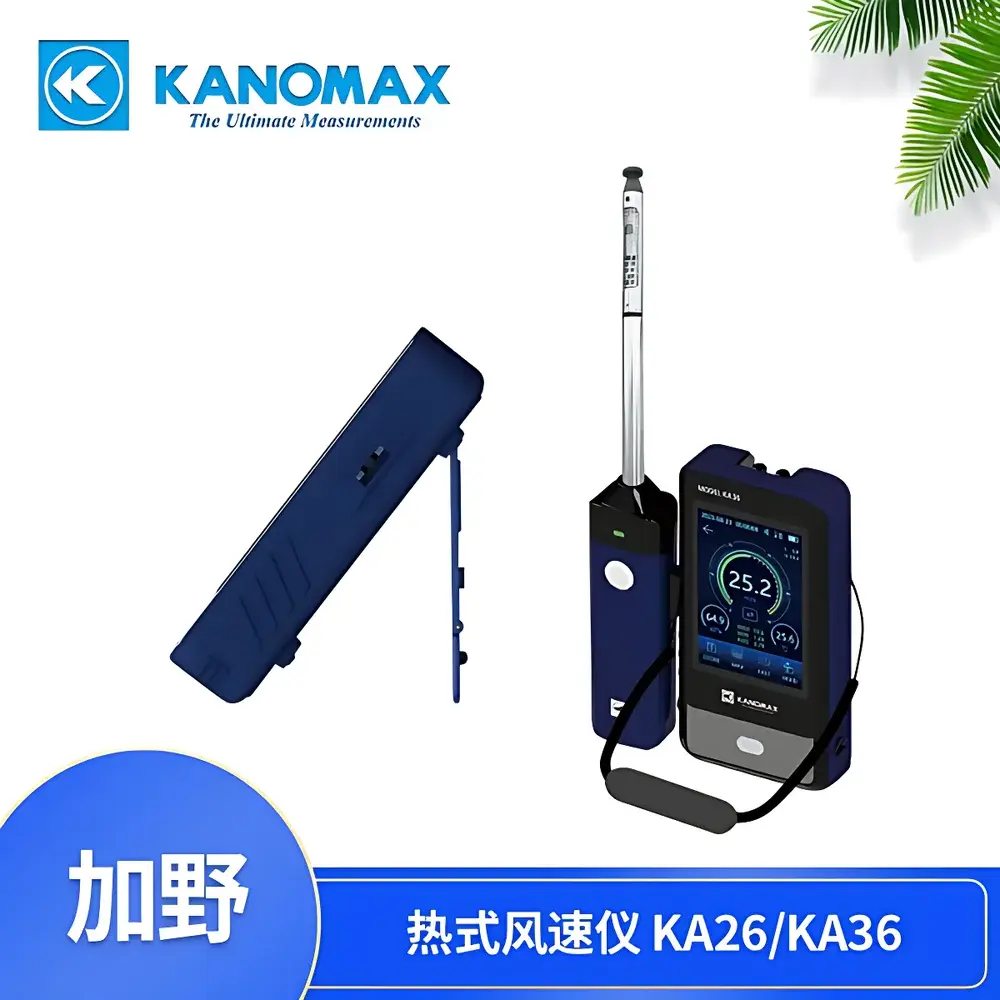
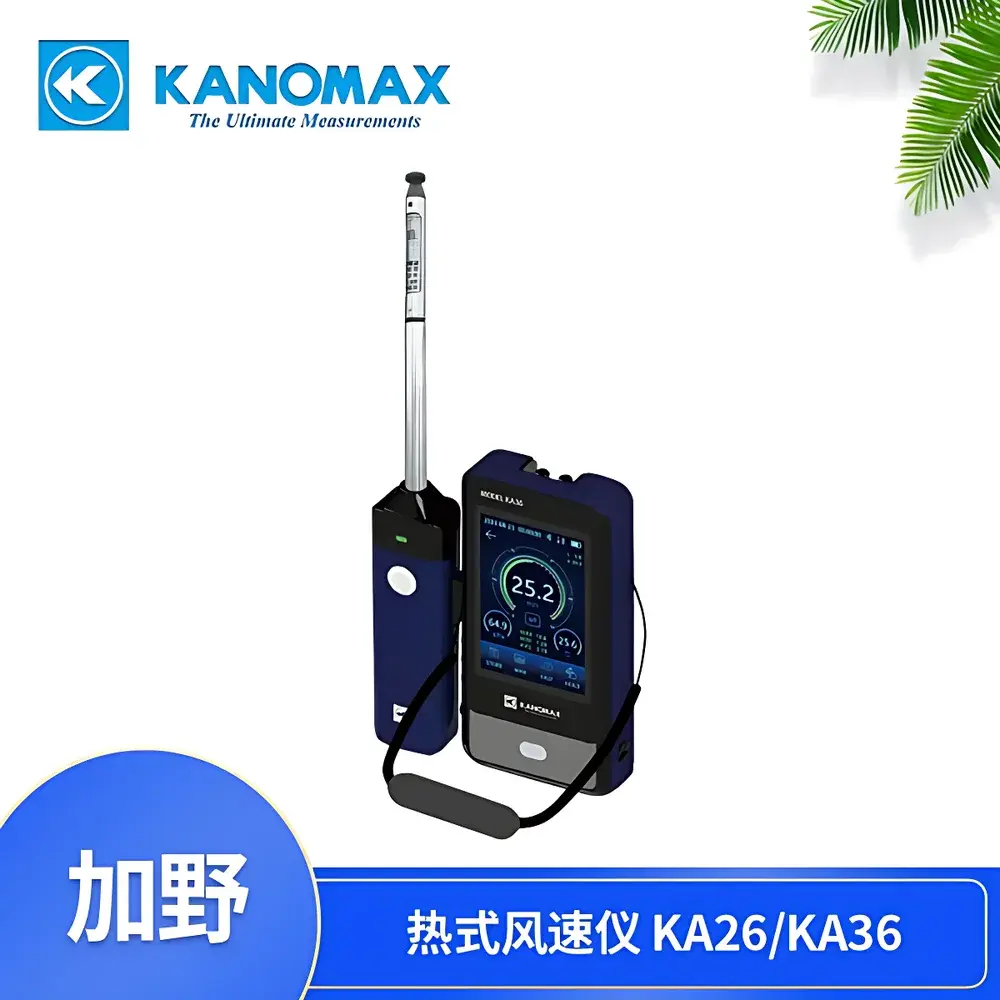
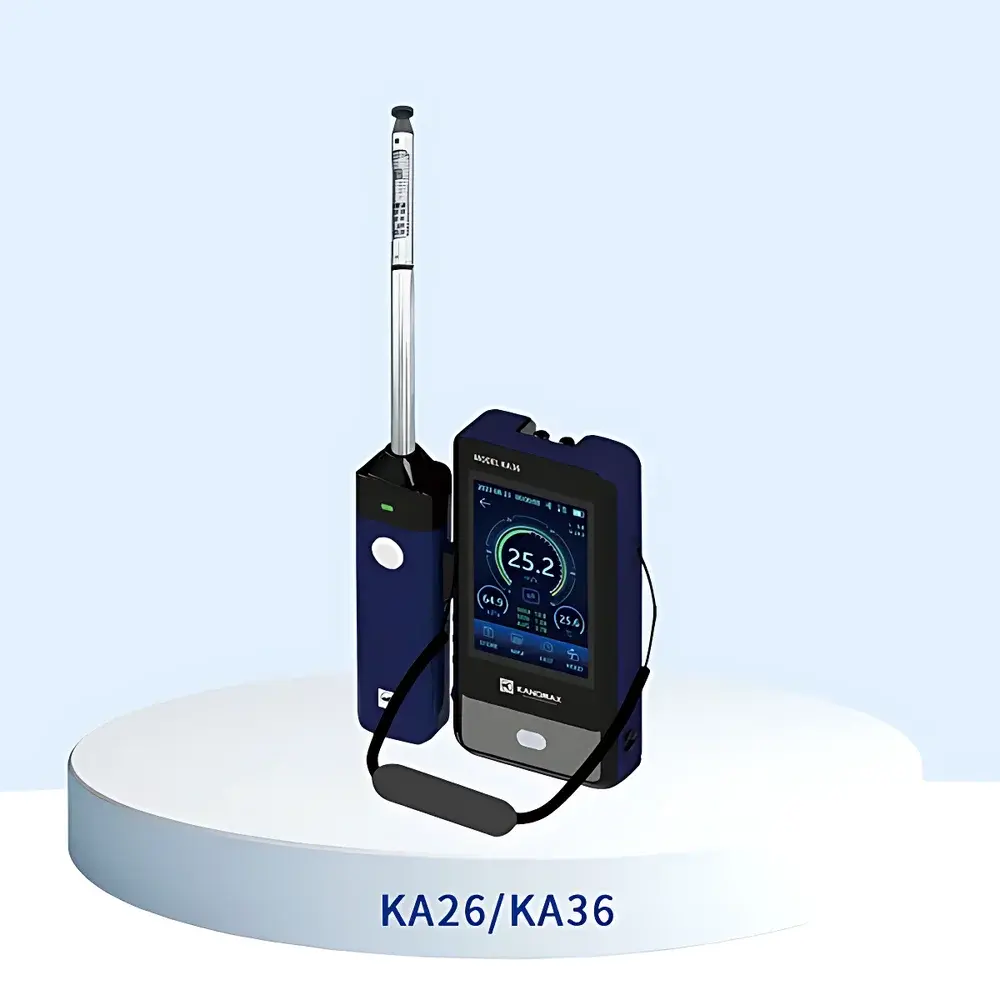
Kanomax KA26/KA36 Thermal Anemometer
| Brand | Kanomax |
|---|---|
| Origin | Japan |
| Instrument Type | Thermal Anemometer |
| Model | KA26 / KA36 |
| Velocity Range | 0.00–50.0 m/s |
| Velocity Resolution | 0.01 m/s (0.00–9.99 m/s), 0.1 m/s (10.0–50.0 m/s) |
| Temperature Range | −20.0–100.0 °C |
| Temperature Resolution | 0.1 °C |
| Pressure Range | −5.00 to +5.00 kPa |
| Pressure Resolution | 0.01 kPa |
| Velocity Accuracy | ±3% of reading or ±0.015 m/s, whichever is greater |
| Temperature Accuracy | ±0.3 °C (0.0–60.0 °C), ±0.5 °C (−20.0–0.0 °C and 60.0–100.0 °C) |
| Pressure Accuracy | ±0.1 kPa |
| Response Time | ~1 s (velocity & pressure), ~30 s (temperature) |
| Display | 3.5-inch resistive touchscreen |
| Data Storage | 5,000 records |
| Communication | Bluetooth 5.0, USB-C |
| Battery Life | Approx. 10 hours (at 5 m/s, 20 °C) |
| Operating Environment (Body) | 5–40 °C |
| Operating Environment (Probe) | −20–100 °C |
| Storage Temperature | −30–60 °C |
| Weight | ~600 g |
| Probe Extension | Adjustable from 260 mm to 1240 mm via telescoping rod |
Overview
The Kanomax KA26 and KA36 are precision-engineered thermal anemometers designed for reliable, multi-parameter environmental airflow characterization in industrial hygiene, HVAC commissioning, cleanroom monitoring, and indoor air quality (IAQ) assessment. Based on constant-temperature anemometry (CTA), these instruments measure air velocity by detecting convective heat loss from a heated sensor element—enabling high sensitivity across low-to-moderate flow regimes (0.00–50.0 m/s) with minimal flow disturbance. Unlike cup or vane anemometers, thermal sensors respond rapidly (~1 second) and maintain accuracy regardless of flow direction, making them ideal for duct traverses, diffuser testing, and laminar airflow validation where directional insensitivity and dynamic response are critical. Both models integrate simultaneous measurement of velocity, temperature, and differential pressure—supporting comprehensive air system diagnostics per ASHRAE Standard 111, ISO 16813, and EN 13779 requirements.
Key Features
- Triple-parameter sensing: Real-time concurrent acquisition of air velocity (0.00–50.0 m/s), temperature (−20.0–100.0 °C), and differential pressure (±5.00 kPa) in a single handheld unit.
- 3.5-inch resistive touchscreen display with dual-view mode: Simultaneous digital readout and analog bar graph visualization for intuitive trend interpretation and transient event capture.
- Bluetooth 5.0 wireless probe communication: Eliminates cable constraints during duct, ceiling void, or high-bay testing; enables probe placement up to 10 m from the main unit (line-of-sight dependent).
- Modular, telescoping probe assembly: Interchangeable sensor heads with 260–1240 mm extendable rod; no external fixtures required for remote sampling—ideal for ISO Class 5–8 cleanroom ISO 14644-3 compliance checks.
- Configurable limit-based alarm system: User-defined upper/lower thresholds trigger visual highlighting and audible alerts when measurements exceed preset criteria—supporting pass/fail workflows aligned with GMP Annex 1 and FDA 21 CFR Part 211 environmental monitoring protocols.
- On-device statistical processing: Automatic calculation and display of min/max/average values over user-defined intervals—essential for ISO 16813 ventilation rate verification and ASHRAE 62.1 system performance reporting.
Sample Compatibility & Compliance
The KA26/KA36 is calibrated for clean, dry air applications and is not intended for use in corrosive, condensing, or particulate-laden airstreams without appropriate filtration or protection. Its sensor design complies with IEC 61000-4 electromagnetic immunity standards and meets CE marking requirements for portable measuring instruments. The device supports traceable calibration documentation per ISO/IEC 17025-accredited laboratories. While not intrinsically safe, it is suitable for non-hazardous environments per ATEX Category 3G (Zone 2) when used per manufacturer guidelines. Data logging functionality satisfies basic GLP audit trail needs, though full 21 CFR Part 11 electronic record compliance requires integration with validated third-party software platforms.
Software & Data Management
Data export is supported via USB-C interface (mass storage mode) and Bluetooth pairing to Kanomax’s proprietary PC application (Windows 10/11 compatible). The software enables batch download of up to 5,000 stored records—including timestamps, parameter values, and alarm flags—with CSV and PDF report generation. Raw data files include metadata such as probe ID, measurement mode, and user-configured limits. Firmware updates are delivered through the same interface, ensuring long-term alignment with evolving metrological best practices. No cloud synchronization or subscription services are embedded—data sovereignty remains fully under end-user control.
Applications
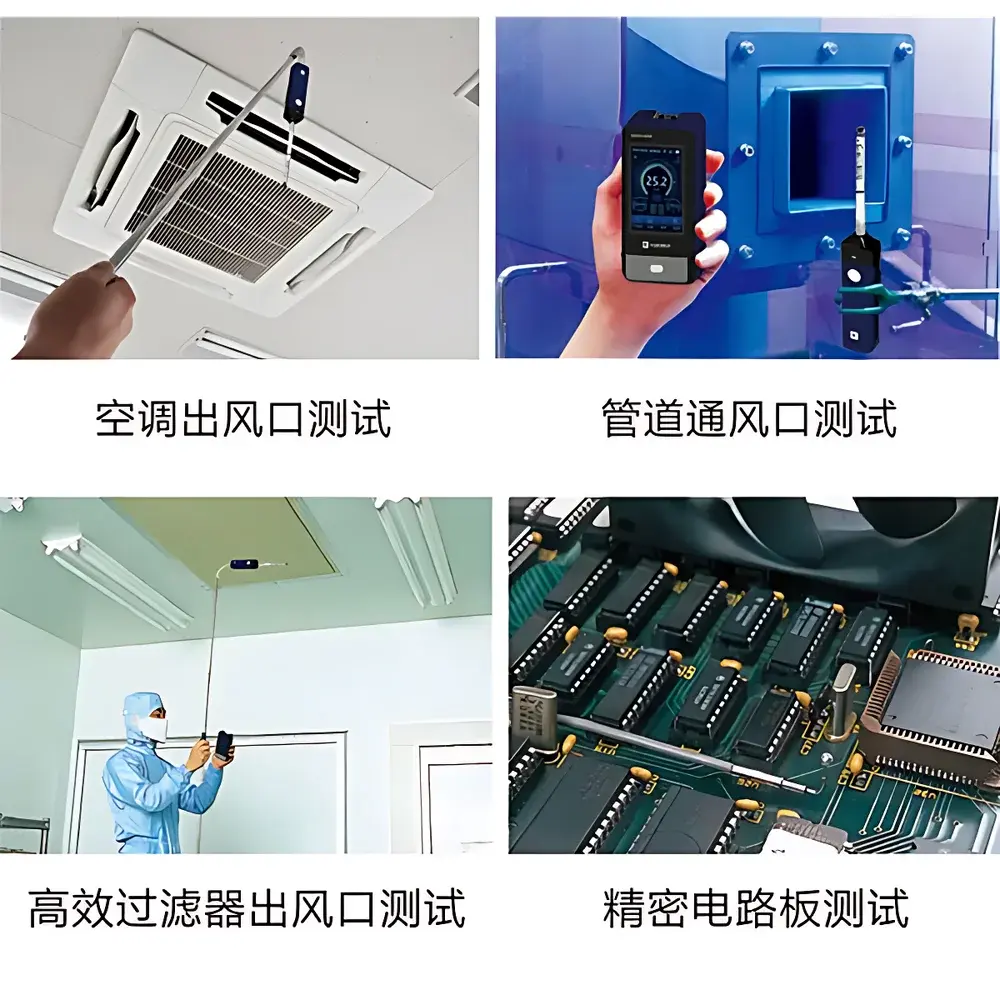
- HVAC system balancing and TAB (Testing, Adjusting, Balancing) per NEBB and AABC standards.
- Cleanroom airflow uniformity mapping and ISO 14644-3 classification surveys.
- Industrial exhaust hood face velocity verification per OSHA 1910.145 and ANSI Z9.5.
- IAQ investigations including thermal comfort (PMV/PPD) modeling and ventilation rate estimation (CO₂ dilution method support).
- Lab fume hood certification, biosafety cabinet inflow testing, and pharmaceutical facility environmental monitoring.
- Academic and research applications requiring portable, multi-sensor field instrumentation with traceable metrology.
FAQ
What is the difference between the KA26 and KA36 models?
The KA36 includes a calibrated differential pressure port and bundled 1.5 m silicone pressure tubing; the KA26 measures only velocity and temperature.
Can the instrument be calibrated in-house?
Field calibration is not supported; periodic recalibration must be performed by an ISO/IEC 17025-accredited service center using NIST-traceable standards.
Is the probe suitable for high-temperature ducts?
Yes—the probe sensor operates continuously at up to 100.0 °C; however, the main body must remain within 5–40 °C ambient conditions.
Does the device meet FDA or EU GMP requirements for environmental monitoring?
It provides compliant measurement capability but requires documented SOPs, calibration records, and qualified software to fulfill full 21 CFR Part 11 or EU Annex 1 regulatory expectations.
How is battery life affected during continuous Bluetooth transmission?
Bluetooth operation reduces nominal battery life by approximately 15%; average runtime remains ≥8.5 hours under typical field-use conditions.
Related Products







