
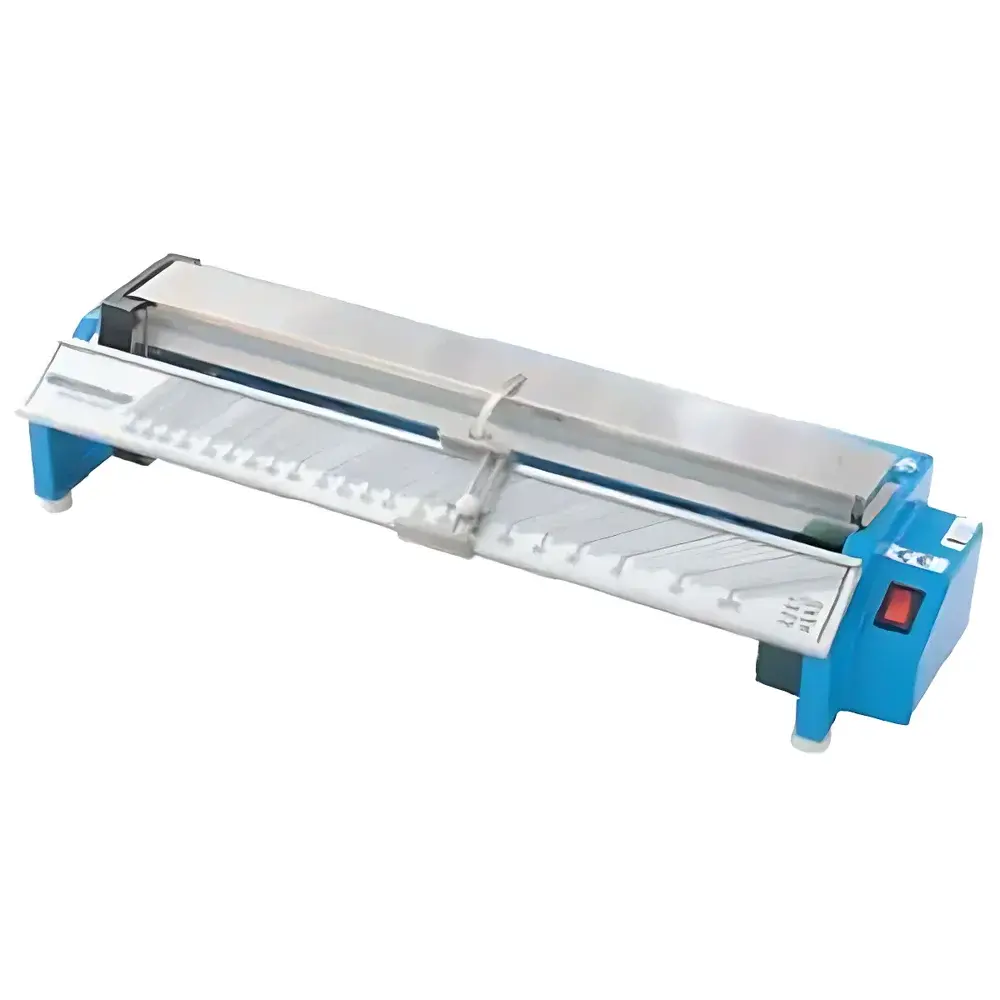
KARG Kofler HB Hot-Block Melting Point Apparatus
| Brand | KARG |
|---|---|
| Origin | Germany |
| Model | Kofler HB |
| Type | Hot-block melting point apparatus |
| Principle | Kofler hot-plate method (linear temperature gradient) |
| Application | Rapid qualitative and semi-quantitative melting point determination of organic crystalline solids |
Overview
The KARG Kofler HB Hot-Block Melting Point Apparatus is a precision-engineered thermal analysis instrument designed for rapid, visual determination of melting behavior in organic crystalline materials. It operates on the classical Kofler hot-plate principle: a metal block with a precisely controlled linear temperature gradient—from ambient to approximately 300 °C—enables simultaneous observation of sample melting across a continuous thermal profile. Unlike capillary tube-based digital melting point systems, the Kofler HB relies on direct contact between sample and heated surface, offering immediate visual feedback without sample encapsulation or complex calibration routines. This makes it particularly valuable in teaching laboratories, quality control environments, and preliminary material screening where speed, simplicity, and interpretability are prioritized over absolute ASTM E324-compliant endpoint precision.
Key Features
- Robust stainless-steel hot-block construction with high thermal mass for stable gradient formation and minimal drift during extended operation.
- Manually adjustable gradient slope via dual-zone heating control, enabling optimization for low-melting (e.g., fatty acids, pharmaceutical intermediates) or high-melting compounds (e.g., dyes, polymers).
- Integrated optical magnifier with LED illumination for real-time observation of melt onset, meniscus formation, and complete liquefaction under standardized viewing conditions.
- No consumables required—samples are applied directly onto the polished block surface using a glass rod or microspatula, eliminating capillary tube preparation and associated variability.
- Compliance-ready design: temperature scale is traceably calibrated against NIST-traceable reference standards; documentation supports GLP audit trails when paired with laboratory logbooks.
Sample Compatibility & Compliance
The Kofler HB accommodates solid organic compounds in powder, crystalline, or flake form—including APIs, excipients, polymers, natural products, and synthetic intermediates—with typical sample masses ranging from 0.1 to 2 mg. It is unsuitable for hygroscopic, thermally unstable (e.g., peroxides), or highly volatile substances that may decompose or sublime prior to melting. While not intended for regulatory submission-grade quantification per USP <741> or Ph. Eur. 2.2.14, the instrument fulfills ISO 6383-1:1989 requirements for comparative melting point assessment and serves as a validated pre-screening tool prior to DSC or automated capillary-based analysis. Its mechanical simplicity ensures long-term reliability in non-GMP environments and aligns with ISO/IEC 17025 clause 6.4.7 for equipment suitability verification.
Software & Data Management
The Kofler HB is a standalone analog instrument with no embedded firmware or digital interface. Temperature readings are interpreted visually from the engraved linear scale along the block’s length, referenced to certified calibration points (e.g., 60 °C, 100 °C, 150 °C, 200 °C). Users maintain manual records in bound notebooks or LIMS-integrated spreadsheets. For laboratories operating under FDA 21 CFR Part 11, the apparatus may be operated within a documented procedure specifying operator training, daily gradient verification using reference substances (e.g., caffeine, urea, indomethacin), and periodic recalibration by an accredited metrology provider. No electronic data capture or audit trail functionality is provided—consistent with its role as a primary qualitative thermal indicator.
Applications
- Educational demonstration of polymorphism and eutectic behavior in undergraduate chemistry labs.
- Rapid identity verification of raw materials in pharmaceutical QC workflows, especially when cross-referenced with pharmacopoeial monographs.
- Batch-to-batch consistency checks for fine chemical manufacturers producing chiral intermediates or specialty esters.
- Pre-DSC screening to identify decomposition onset versus true melting in heat-sensitive APIs.
- Forensic identification of unknown white powders based on characteristic melt morphology and temperature range.
FAQ
Is the Kofler HB suitable for regulatory submissions under ICH Q5 or USP <741>?
No—it provides comparative, operator-dependent results and does not meet the repeatability, accuracy, or documentation requirements for formal regulatory filings. It is intended for internal screening and educational use.
Can it measure decomposition temperatures?
Yes, discoloration, bubbling, or charring observed along the gradient can indicate thermal degradation; however, definitive assignment requires complementary TGA or DSC analysis.
What reference standards are recommended for daily verification?
Caffeine (mp 235–238 °C), urea (mp 132–135 °C), and salicylic acid (mp 158–161 °C) are commonly used due to their well-characterized melt behavior and stability.
Does the instrument require annual recalibration?
Per ISO/IEC 17025, recalibration frequency must be risk-assessed; most users perform annual verification with accredited reference materials and adjust interval based on usage intensity and historical performance data.



