
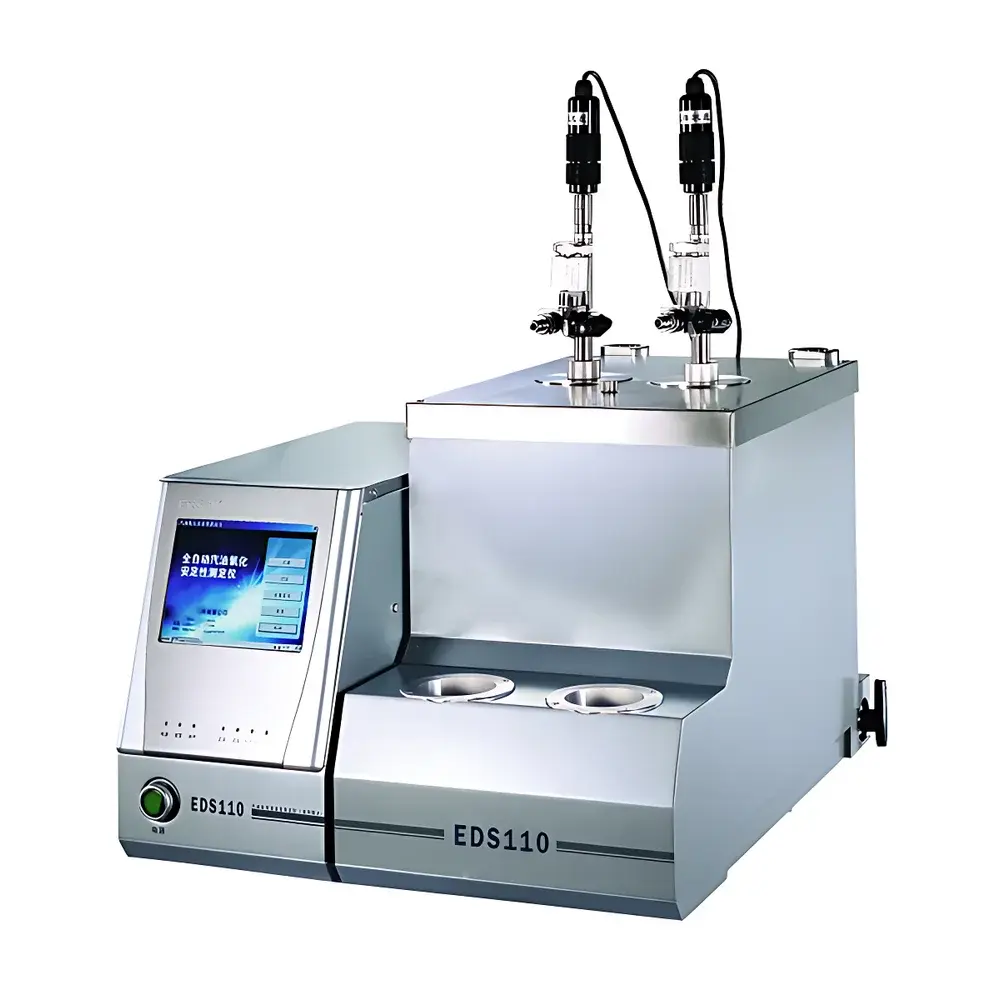
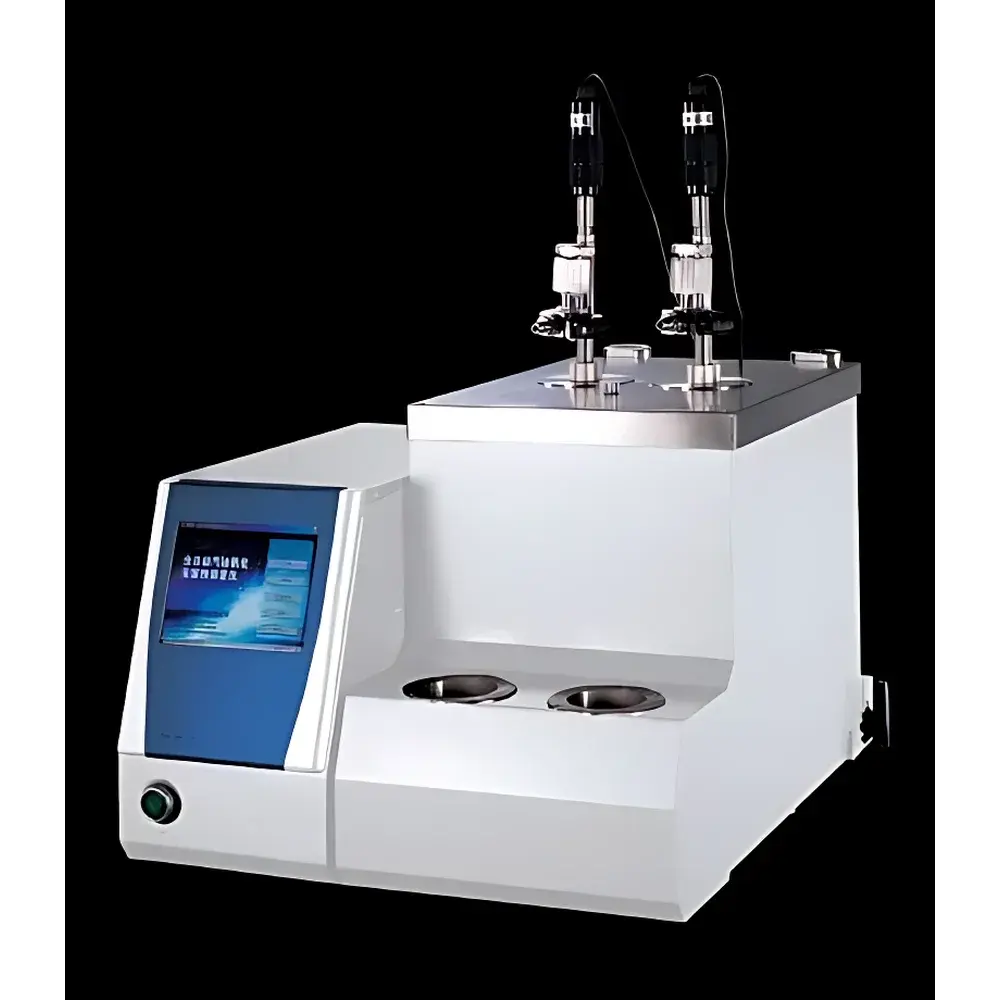
KARRIE EOX110 Fully Automated Gasoline Oxidation Stability Tester
| Brand | KARRIE |
|---|---|
| Model | EOX110 |
| Origin | Shenzhen, China |
| Compliance | GB/T 8018, ISO 7536, ASTM D525 |
| Temperature Range | Ambient to 100 °C (independently controlled dual metal baths) |
| Pressure Range | 0–1.6 MPa |
| Display | 6.4″ color TFT LCD with touch interface |
| Power Supply | AC 220 V, 50 Hz |
| Total Power Consumption | 2700 W (main heater: 1000 W |
| auxiliary heater | 1500 W) |
| Dimensions (L×W×H) | 580 × 480 × 450 mm |
| Weight | 50 kg |
| Operating Environment | 0–40 °C |
| Storage Temperature | −20–50 °C |
| Temperature Resolution | 0.1 °C |
| Oxygen Inlet Tubing ID | 6 mm |
| Safety Relief | Automatic venting at >3 MPa |
Overview
The KARRIE EOX110 Fully Automated Gasoline Oxidation Stability Tester is an engineered solution for determining the oxidative resistance of gasoline and other light distillate fuels under accelerated aging conditions. It operates on the principle of the Rancimat-type pressurized oxygen induction time (OIT) method, in strict accordance with internationally recognized standards—including GB/T 8018 (China), ISO 7536 (Petroleum products — Determination of oxidation stability of gasoline — Induction period method), and ASTM D525 (Standard Test Method for Oxidation Stability of Gasoline (Induction Period Method)). The instrument subjects fuel samples to elevated temperature and high-purity oxygen pressure within a sealed, corrosion-resistant oxygen bomb, monitoring real-time pressure decay over time. The oxidation induction period—the time elapsed until a defined inflection point in the pressure–time curve—is quantified as the primary metric of fuel stability. This measurement is critical for refining process control, additive package evaluation, storage life prediction, and regulatory compliance in petroleum product quality assurance.
Key Features
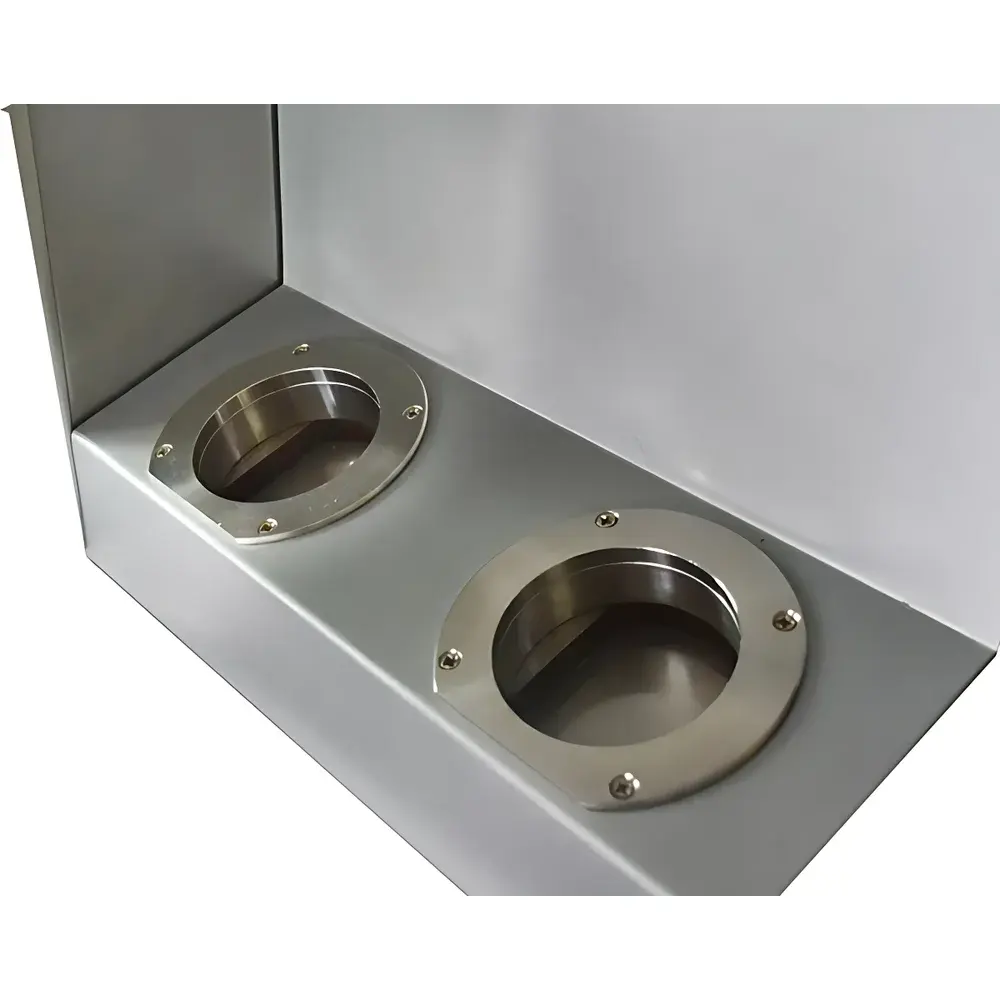
- Dual Independent Metal Baths: Two thermally isolated heating zones enable simultaneous or staggered testing of two samples under identical or differing temperature setpoints (ambient to 100 °C), each with ±0.2 °C thermal stability and 0.1 °C display resolution.
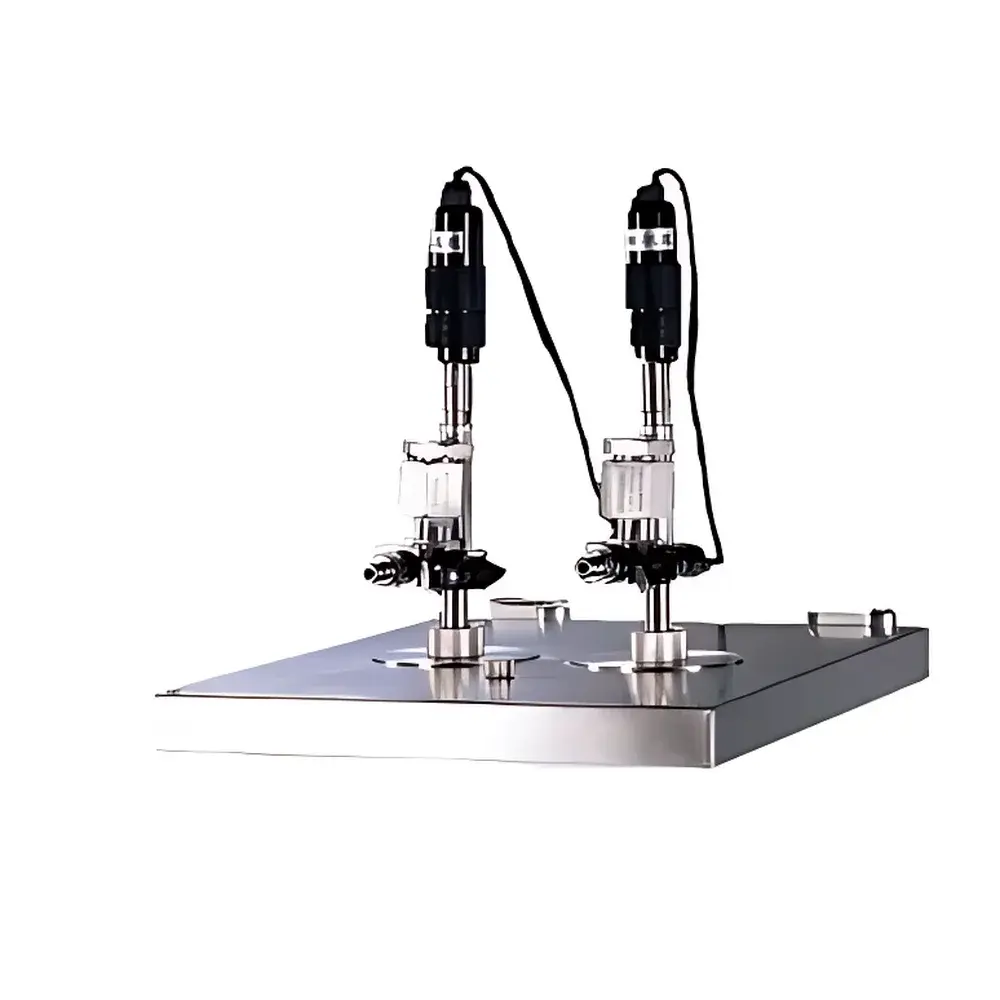
- High-Integrity Oxygen Bomb System: Two ISO 7536–compliant oxygen bombs fabricated from seamless SUS316 stainless steel, precision-machined for uniform wall thickness and leak-tight integrity. Each bomb integrates a calibrated pressure transducer, quick-connect gas fittings, and a mechanical safety rupture disc rated for automatic pressure relief above 3 MPa.
- Automated Oxygen Handling Sequence: Programmable three-stage gas protocol: initial pressurization to target pressure (e.g., 700 kPa), regulated depressurization via integrated flow-controlled exhaust valve with acoustic dampening, followed by secondary pressurization and automated leak verification prior to bath immersion.
- Embedded Dual-Controller Architecture: Hybrid control system combining a real-time microcontroller (for sensor acquisition, valve actuation, and thermal regulation) with an industrial-grade Windows CE 5.0 panel PC (256 MB RAM, 2 GB flash storage). Ensures deterministic timing for pressure sampling (≥10 Hz) and eliminates OS-level latency in critical safety logic.
- True-Color Human Interface: 6.4″ 24-bit TFT LCD with resistive touch overlay, supplemented by optional USB keyboard/mouse support. Interface supports both Chinese and English language modes without firmware reflash.
Sample Compatibility & Compliance
The EOX110 is validated for use with gasoline, reformulated gasoline blends (including ethanol-gasoline mixtures up to E15), and other volatile hydrocarbon fractions meeting distillation specifications per ASTM D86 or ISO 3405. Sample volume is standardized at 50 mL per test per bomb. All wetted components—including oxygen inlet tubing (ID 6 mm), sealing O-rings (fluoroelastomer FKM), and sample cups—are chemically inert to hydrocarbons and oxygen at elevated temperatures. The system satisfies traceability requirements for ISO/IEC 17025-accredited laboratories: pressure sensors are field-calibratable using the supplied pressure correction kit; temperature uniformity across the metal bath is verified per ASTM E220. Routine operation aligns with GLP documentation practices, supporting audit-ready data integrity when paired with compliant LIMS integration.
Software & Data Management
The embedded software provides full lifecycle test management: method setup (temperature, target pressure, max test duration), real-time pressure–time curve visualization, automatic inflection point detection using second-derivative thresholding, and configurable pass/fail criteria. Raw data (timestamped pressure, temperature, valve status) are stored in CSV format with metadata (operator ID, sample ID, calibration date). Export options include USB mass storage, RS-232 serial transmission, and Ethernet (RJ-45) for TCP/IP-based LIMS connectivity. The system supports direct printing via parallel (LPT) port to laser printers. Audit trail functionality logs all user actions, parameter changes, and error events—consistent with FDA 21 CFR Part 11 expectations for electronic records when deployed in regulated environments.
Applications
- Quality control of finished gasoline at refineries and blending terminals
- Evaluation of antioxidant efficacy (e.g., hindered phenols, amines) during additive development
- Stability assessment of biofuel blends exposed to long-term storage or seasonal temperature variation
- Root-cause analysis of premature gum formation or sediment generation in distribution networks
- Supporting technical service investigations for field complaints related to fuel degradation
FAQ
Does the EOX110 comply with ASTM D525 for regulatory reporting?
Yes—its hardware configuration, pressure control fidelity, temperature uniformity, and test sequence logic fully satisfy the apparatus and procedural requirements of ASTM D525, including mandatory pre-test leak verification and defined pressure decay detection thresholds.
Can the oxygen bombs be interchanged with those from other manufacturers?
Yes—the bombs conform dimensionally and functionally to ISO 7536, enabling mechanical and operational compatibility with major international instruments (e.g., Parr, IKA, Herzog) without adapter modification.
Is remote diagnostics or firmware update supported?
Firmware updates are performed via USB drive; remote desktop access is not implemented to preserve system integrity and cybersecurity posture in laboratory IT environments.
What maintenance intervals are recommended for pressure sensors and seals?
Pressure transducers should be verified annually using the included calibration kit; FKM O-rings are replaced after every 50 test cycles or upon visual inspection for compression set or cracking.
How does the system handle ambient temperature fluctuations during extended testing?
The dual-bath thermal mass and PID-controlled auxiliary heating ensure ±0.5 °C stability over 48-hour tests, even with ambient drift between 15–35 °C, as verified per ISO 17025 clause 5.4.2.





