
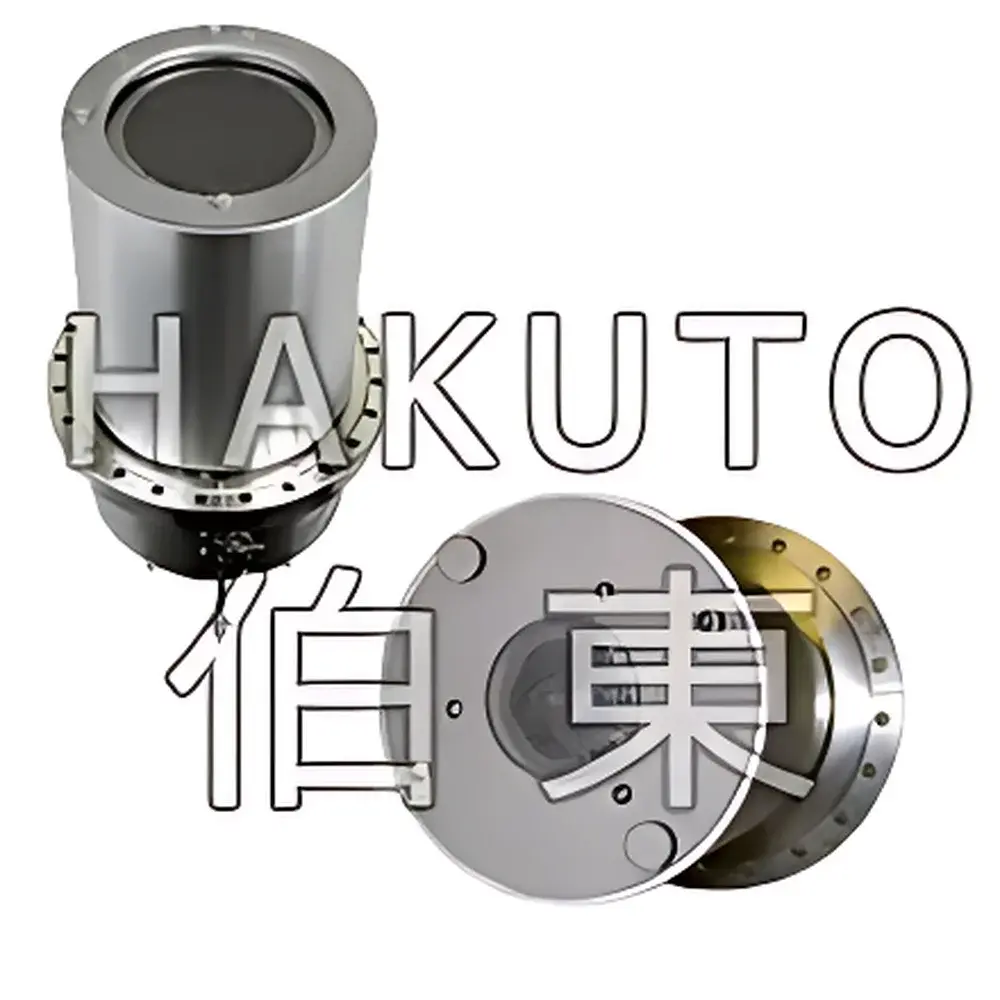
Kaufman RFICP Series Radio Frequency Ion Source
| Brand | Kaufman |
|---|---|
| Origin | USA |
| Manufacturer Type | Authorized Distributor |
| Origin Category | Imported |
| Model | RFICP |
| Pricing | Upon Request |
| Discharge Type | RF (Radio Frequency) |
| Anode Configuration | RF Electrode |
| Beam Current Range | 100–1500 mA |
| Ion Kinetic Energy | 100–1200 V |
| Grid Diameter | 4–30 cm |
| Beam Modes | Focused, Collimated, Divergent |
| Gas Compatibility | Ar, Kr, Xe, O₂, N₂, H₂, and other process gases |
| Operating Pressure | < 0.5 mTorr |
| Neutralizer | LFN-2000 |
| Length | 12.7–39 cm |
| Diameter | 13.5–59 cm |
| Flow Rate | 3–50 sccm |
Overview
The Kaufman RFICP Series Radio Frequency Ion Source is a high-performance, filament-free ion generation system engineered for precision surface engineering and thin-film manufacturing in vacuum environments. Unlike thermionic or hollow-cathode ion sources, the RFICP design utilizes inductively coupled plasma (ICP) excitation via radio frequency (13.56 MHz typical) to ionize process gases—eliminating consumable filaments and enabling extended operational lifetime, superior beam stability, and reduced contamination risk. The source operates under low-pressure conditions (< 0.5 mTorr), generating a well-defined, electrostatically extracted ion beam whose energy (100–1200 eV) and current (up to 1500 mA) are independently controlled via grid voltage and RF power modulation. Its modular architecture supports integration into thermal evaporation, electron-beam deposition, sputtering, and standalone etching platforms—making it a foundational tool for advanced optical coatings, semiconductor passivation layers, MEMS fabrication, and functional surface activation.
Key Features
- Filament-free RF-driven plasma generation ensures >10,000 hours of continuous operation without cathode degradation or replacement downtime
- Electrostatic beam extraction with three-grid configuration enables precise control over ion energy distribution (FWHM < 15 eV) and angular divergence (< ±3° for collimated mode)
- Scalable aperture design across five models (RFICP-40 to RFICP-380) accommodates applications from R&D benchtop systems to large-area industrial coating chambers
- Integrated LFN-2000 low-energy electron neutralizer maintains charge balance during beam delivery, preventing substrate charging and ensuring uniform ion flux on insulating surfaces
- Full turnkey package includes RF generator, matching network, beam controller, neutralizer power supply, and interlocked safety interface compliant with IEC 61000-6-2/6-4 EMC standards
- Gas-flexible operation supports reactive (O₂, N₂, H₂) and inert (Ar, Kr, Xe) species—enabling both physical sputtering and chemically assisted surface modification
Sample Compatibility & Compliance
The RFICP series is compatible with substrates ranging from silicon wafers and fused silica optics to flexible polymer films and metallic foils. Its low-energy, high-uniformity beam minimizes subsurface damage while delivering controllable ion fluence (1 × 10¹⁴ – 1 × 10¹⁷ ions/cm²) required for atomic-layer-level surface treatment. The system conforms to ASTM F2613-21 (Standard Guide for Ion Beam Surface Modification), ISO 10110-7 (Optical elements — Surface imperfections), and supports GLP/GMP-compliant process documentation when paired with validated data acquisition firmware. All electrical subsystems meet UL 61010-1 and CE Machinery Directive 2006/42/EC requirements; RF emissions comply with FCC Part 18 and CISPR 11 Class A limits.
Software & Data Management
Kaufman’s RFICP Control Suite (v4.2+) provides real-time monitoring and closed-loop regulation of RF forward/reflected power, grid voltages, neutralizer emission current, and gas flow rates via RS-485 or Ethernet TCP/IP. The software supports recipe-based operation with up to 99 programmable steps per run, timestamped event logging, and audit-trail functionality aligned with FDA 21 CFR Part 11 requirements—including electronic signatures, user role permissions, and immutable data export in CSV or HDF5 format. Optional LabVIEW™ and Python SDKs enable seamless integration into automated cluster tools and MES-driven production lines.
Applications
- Ion Beam Assisted Deposition (IBAD): Enhances film density, adhesion, and optical transmission in e-beam and thermal evaporated coatings—critical for high-efficiency LED DBR stacks and laser mirror coatings
- In-situ Pre-Cleaning (PC): Removes native oxides and hydrocarbon contaminants prior to sputter deposition, improving interfacial bonding in Cu/Ta/SiO₂ multilayers
- Surface Modification & Activation (SM): Increases surface energy and wettability of polymers (e.g., PET, PI) for improved ink adhesion or biocompatible coating anchoring
- Ion Beam Sputter Deposition (IBSD): Enables stoichiometric transfer of complex oxides (e.g., ITO, ZnO:Al) and nitrides (TiN, Si₃N₄) with sub-nanometer thickness control
- Ion Beam Etching (IBE): Delivers anisotropic, maskless patterning of Si, GaAs, quartz, and diamond-like carbon with etch rates of 1–20 nm/min and selectivity >10:1 vs. photoresist
FAQ
Does the RFICP require water cooling?
Yes—models RFICP-100 and above incorporate integrated deionized water cooling channels rated for ≤30 °C inlet temperature and ≥2 L/min flow rate to maintain stable plasma impedance and grid thermal integrity.
Can the RFICP operate with reactive gases like oxygen without electrode erosion?
Yes—the RF-driven plasma avoids direct cathode exposure to reactive species; all wetted components use oxygen-compatible stainless steel 316L and alumina ceramics, validated for >500-hour O₂ operation at 500 W RF power.
What vacuum compatibility does the RFICP series support?
The source is rated for base pressures down to 1 × 10⁻⁸ Torr and compatible with turbomolecular pumping systems using DN63–DN250 CF flanges per model size; bake-out capable to 150 °C.
Is remote diagnostics available?
Yes—embedded Ethernet port supports SNMP-based health monitoring, including grid voltage drift detection, RF match failure alerts, and neutralizer emission decay trending with predictive maintenance thresholds.




